Nara was Japan's first permanent capital from 710–794 AD and is now home to 370,000 people and over 1,200 freely roaming sika deer. The deer are the draw — they will bow, headbutt you for crackers, and occasionally eat your map. It is exactly what it sounds like, and it is excellent. Most visitors from Kyoto or Osaka can see the essential sights in three to four hours, though the experience easily stretches to a half day. The question isn't whether to go — it's how to fit it into your existing itinerary without wasting time.
How to get to Nara from Kyoto or Osaka
From Kyoto: Take the Kintetsu Nara Line directly from Kintetsu-Kyoto Station (not Kyoto Station). Journey time is 35–45 minutes depending on time of day. Cost is around 720 JPY. This is the fastest and most convenient route — the train deposits you at Kintetsu Nara Station, a 10-minute walk from Nara Park where most sights cluster. An alternative is the JR Nara Line from Kyoto Station to JR Nara Station (45 minutes, same price), but this involves a longer walk to the park.
From Osaka Namba: The Kintetsu Nara Line runs direct to Kintetsu Nara Station in approximately 40 minutes for around 560 JPY. This is the standard route for Osaka-based visitors.
From Osaka (JR): If you're traveling on a JR Pass, use the Osaka Loop Line to Tennoji Station, then transfer to the Yamato-ji Line to JR Nara Station (total journey approximately one hour, about 800 JPY if buying individual tickets). This route is slower but included on most JR Pass variants.
Book nothing. Trains run every 10–15 minutes on the Kintetsu lines during daylight hours. Arrive at Nara Park between 9am and 11am to avoid mid-afternoon crowds, which peak from noon to 2pm.
What the deer actually do — and what you need to know
The sika deer roaming Nara Park are designated as natural monuments under Japanese law. They are wild animals, not tame pets, but they have been living alongside humans in the park for centuries and are entirely accustomed to visitors. They will approach you without hesitation.
The main interaction is straightforward: you buy shika senbei (special crackers, approximately 200 JPY per bundle of ten) from any of the vendors scattered through the park. Hold the crackers and the deer will notice. They will walk up to you. Some will bow — a trained behaviour performed in exchange for food — by lowering their front legs and dropping their heads. This looks exactly like politeness. It is not. It is operant conditioning. A deer that has successfully bowed to 500 tourists understands the exchange rate perfectly. Other deer in the group may ignore the bow protocol entirely and simply grab at the crackers in your hands.
What the guides don't specify clearly: the deer will also headbutt you (gently, usually), nibble your clothes, and create a competitive scramble if you produce crackers and lose control of them. Keep your crackers hidden until you are ready to feed, and be prepared to have a deer nose its way into your backpack. Several visitors per day report minor scratches from deer hooves or antlers. Most interactions are completely benign. Some are confrontational.
The peak season for pushy behaviour is August through October, when male deer are in rut (the breeding season) and have antlers in full growth. Antlers begin to harden in late summer, and the deer become territorially competitive. In October, the city stages an annual Shika-no-Tsunokiri ceremony where veterinarians remove antlers from 1,500+ males. This is tradition dating back centuries and prevents serious injury. Visiting in November through July carries significantly fewer confrontations.
Do not feed the deer if you have a stroller or small children directly in front of you — a deer investigating crackers at toddler eye-level can be startling. Do not make sudden movements. Do not shout at the deer.
The bowing behaviour is inconsistent. Perhaps 30–40 percent of the deer have learned it; others have not. Expect to see several good bows, but don't plan your morning around photographing the perfect one.
Todai-ji Temple and the Great Buddha

Todai-ji is the headline sight. The temple contains the Daibutsu (Great Buddha), a 14.7-metre bronze figure cast in 749 AD — the world's largest bronze Buddha sculpture. The structure housing it, the Daibutsu-den (Great Buddha Hall), is also the world's largest wooden building, though the current structure is a 1709 reconstruction at approximately two-thirds the original size. The original was even more massive.
Entry to the main hall costs 600 JPY. It opens at 7:30am and closes at 5:30pm (4:30pm November through February). In 2026, allow approximately one hour for Todai-ji including the approach through Nandaimon gate — an enormous wooden gate with two fierce guardian statues that is itself worth seeing.
Inside the main hall, you can walk directly to the Buddha. A small pillar stands nearby with a hole through it, supposedly matching the diameter of one of the Buddha's nostrils. Local custom holds that squeezing through the hole brings enlightenment. Hundreds of people per day attempt it. The hole is small. Most visitors eventually make it through, though some get stuck temporarily and require assistance. This is real.
Avoid the crowds by arriving before 10am or after 3pm.
Kasuga Taisha Shrine and the forest path
Walk south-east from Todai-ji through the deer park toward Kasuga Taisha Shrine, a 20-minute walk through forest. This approach is as rewarding as the shrine itself. The path is tunnel-like, shaded, and lined with moss-covered stone lanterns. Deer graze in the clearings. Few visitors take this route; most take a bus.
Kasuga Taisha is one of Japan's oldest shrines, founded in 768 AD. Entry to the outer grounds is free. The inner sanctuary costs 500 JPY. The shrine is notable for its three thousand bronze and stone lanterns — many hundreds of years old — that are lit ceremonially twice per year during Setsubun in February and O-Bon in August. If you're visiting during these festivals, this is the sight to prioritize. Otherwise, the forest approach and outer grounds are sufficient; the inner sanctuary adds 30 minutes and limited additional visual impact.
Return toward the park or continue south to Naramachi (the old merchant district) by exiting the shrine and heading downhill toward the town.
Kofukuji Temple and Naramachi
Kofukuji Temple sits at the edge of Nara Park near Kintetsu Nara Station. The headline is its five-storey pagoda, rebuilt in 1426, one of the tallest wooden pagodas in Japan. Entry to walk around the grounds is free. The National Treasure Museum (900 JPY) houses a significant collection of Buddhist sculpture and art spanning twelve centuries — genuine museum-quality pieces, not tourist reproductions. Allow 45 minutes for the museum.
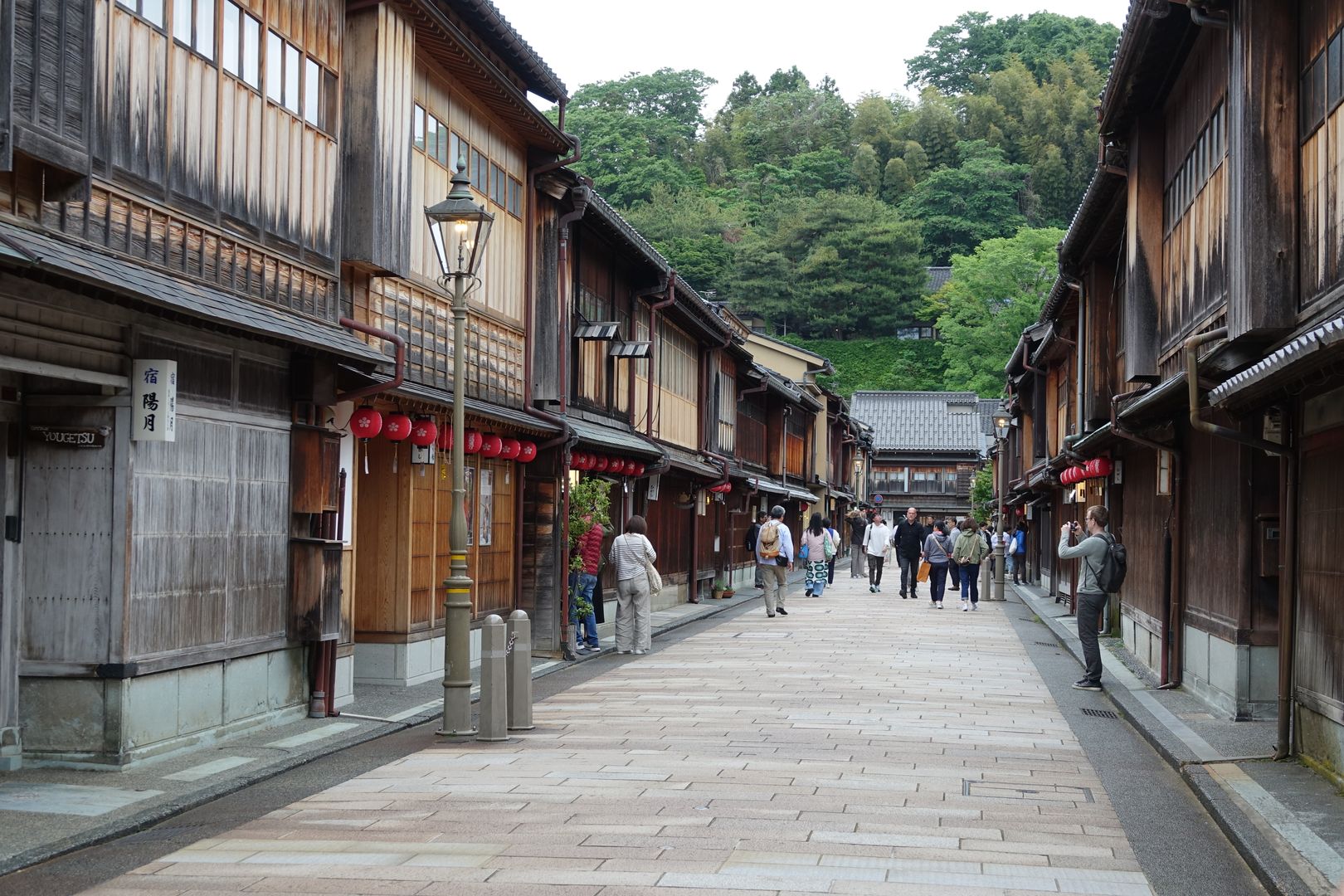
South of Kofukuji lies Naramachi, a preserved merchant district of traditional wooden machiya townhouses. These buildings date from the Edo period onward and have been converted into galleries, craft shops, cafés, and small museums. Naramachi is also the best place to eat. The district is genuinely worth 45 minutes of browsing, particularly if you want to photograph traditional architecture without crowds. It has atmosphere without feeling sanitized.
A realistic half-day itinerary from Kyoto
- 9:00am: Depart Kyoto on Kintetsu Nara Line
- 9:45am: Arrive Kintetsu Nara Station, walk to Nara Park (ten minutes)
- 10:00am–11:30am: Nandaimon gate → Todai-ji interior → walk through deer park
- 11:30am–12:30pm: Kasuga Taisha Shrine and forest approach
- 12:30pm–1:30pm: Lunch in Naramachi (kakinoha sushi or miwa somen)
- 1:30pm–2:30pm: Kofukuji pagoda and museum, or browse Naramachi
- 3:00pm: Return train to Kyoto
This schedule works in reverse if you're basing yourself in Nara and day-tripping to Kyoto. From Osaka, shorten the morning by 20 minutes and you still have a full experience.
Is overnight in Nara worth it?
Not for most visitors. Nara has limited evening atmosphere. Temples close by 5pm (some as early as 4:30pm). Deer retreat into the forest at dusk. The town becomes quiet. Tourist infrastructure is functional but uninspired — hotels cluster around the stations, and evening entertainment options are sparse compared to Kyoto or Osaka.
Overnight makes sense in two scenarios only. First, if you want early-morning access to Kasuga Taisha and its forest before crowds arrive (the site opens at dawn and looks entirely different with mist and no visitors). Second, if you're combining Nara with Yoshino, the mountain village 45 minutes south by Kintetsu Yoshino Line, famous for cherry blossoms in late March and early April. Otherwise, a half-day trip from either Kyoto or Osaka is the efficient choice.
Food
Kakinoha sushi (persimmon-leaf wrapped sushi) is Nara's signature dish. Mackerel or other fish is pressed between vinegared rice and wrapped in a persimmon leaf, imparting subtle flavour. Hiraso, near Naramachi, serves excellent sets for 1,200–1,500 JPY. It's available nowhere else with the same quality.
Miwa somen, thin cold wheat noodles from the nearby Miwa region, appear on most local menus. A cold dipping sauce set costs 600–800 JPY and is perfect for warm days.
Harushika Sake Brewery operates a tasting room near Todai-ji with local sake and a few craft beers on rotation. Sake flights are 1,000–1,500 JPY.
Is overnight worth it — the honest answer
No, unless you specifically want to see Casuga Taisha at sunrise or you're combining Nara with Yoshino. The town empties after sunset. A half-day trip is the optimal investment of time.
Plan for three to four hours minimum in Nara. Prioritize Todai-ji and the deer if time is genuinely short — these are non-negotiable. Add Kasuga Taisha and Naramachi if you have five to six hours. One detail reliably surprises first-time visitors: the deer headbutt as a form of negotiation, not aggression. They have learned that bumping you slightly often results in crackers being produced. Most interactions are gentle, but being headbutted by a deer is not something standard travel guides adequately prepare you for. It is entirely harmless and, once you realize what's happening, oddly charming.
Frequently Asked Questions
Can you do a day trip to Nara from Kyoto?
Yes. Kintetsu Nara Line runs direct from Kintetsu-Kyoto Station in 35–45 minutes (720 JPY). A half-day visit covering Todai-ji, the deer, and Kasuga Taisha is realistic. Most travelers depart Kyoto by 9am and return by 3pm–4pm.
Will the deer definitely bow?
Not every deer bows, and not every encounter results in a bow. Perhaps 30–40 percent of the population has learned the behaviour. You will see several good bows if you spend 30 minutes in the park with crackers, but it's not guaranteed. The headbutting and food-stealing is far more consistent.
Is the hole-through-the-pillar thing at Todai-ji real?
Yes. A small hole exists in a pillar inside the main hall that local tradition claims matches the size of the Buddha's nostril. Hundreds of people attempt to squeeze through daily. Most succeed eventually. This is genuinely part of the experience.
How long should you actually spend in Nara?
Three to four hours covers the essential sights efficiently. A half day (four to six hours) allows for Todai-ji, the deer, Kasuga Taisha, and lunch in Naramachi without rushing. Eight hours would include the National Treasure Museum at Kofukuji and deeper exploration of the merchant district. Beyond that, you're staying overnight, which few visitors need to do.
What's the best time of year to visit for fewest crowds?
November through February has lighter crowds and no rutting-season deer aggression. The trade-off is shorter daylight hours and colder temperatures. March–May and September–October are also reasonable. Avoid July–August (heat, crowds, rutting season) and late March–early April (cherry blossoms pull crowds from across the region).
Does the Todai-ji Great Buddha look underwhelming in person?
No. The scale is difficult to comprehend from photographs. The Buddha is 14.7 metres tall. The hall is proportionally vast. Standing in front of it produces a genuine sense of size that images don't convey. The interior is brighter and more accessible than many visitors expect.