Segovia has three structures that each belong in a different century and between them span 1,700 years of European history: a Roman aqueduct built in the 1st or 2nd century CE that still stands 29 metres high in the city centre without mortar holding its 20,000 granite blocks together; a 12th-century castle on a rock promontory that reportedly inspired the Cinderella castle at Disneyland; and the last Gothic cathedral built in Spain, completed in 1577. All three are within 800 metres of each other. Segovia is 90km from Madrid — 30 minutes by Alvia high-speed train — and is the most complete day trip available from the Spanish capital.
The Roman Aqueduct
The Aqueducto Romano is the most intact Roman aqueduct in the world outside of Segovia's Roman heritage. It was built in the 1st or 2nd century CE (the exact date is debated — construction is attributed to either the reign of Domitian or Trajan) to carry water 17km from the Fuenfría spring in the Sierra de Guadarrama to the city. The surviving section runs 813 metres through the centre of Segovia, with 166 arches reaching a maximum height of 28.5 metres at the Plaza del Azoguejo. No mortar — the 20,400 granite blocks are held by weight, geometry, and the quality of the original cutting.
The aqueduct carried water continuously until the 16th century when parts of the channel were repaired under Isabel I. A section of the original channel has been converted to a pedestrian footpath above the arches in the Plaza del Azoguejo — free to walk if the narrow passage is open. The best eye-level view of the full arcade height is from the pedestrian street below the bridge itself.
The Alcázar
The Alcázar de Segovia occupies a rock promontory at the western end of the old town where two river valleys converge — a defensive position that has been fortified since at least the Roman period. The current structure is primarily 12th–15th century with a 19th-century restoration following a fire in 1862.
The towers — particularly the Torre de Juan II, which can be climbed via 152 steps for panoramic views — and the Sala de los Reyes (Hall of the Kings, with 52 statues of Spanish monarchs from Pelayo to Juana I) are the interior highlights. Entry €7 (tower an additional €2.50). Allow 1.5 hours.
The Alcázar's visual impact from outside — a narrow castle on a cliff with the Sierra de Guadarrama as backdrop — is better than the interior. The approach from the lower town, looking up at the pointed towers above the cliff, is what generated the Disney design comparison (though Disney's designers deny direct inspiration).
Segovia Cathedral
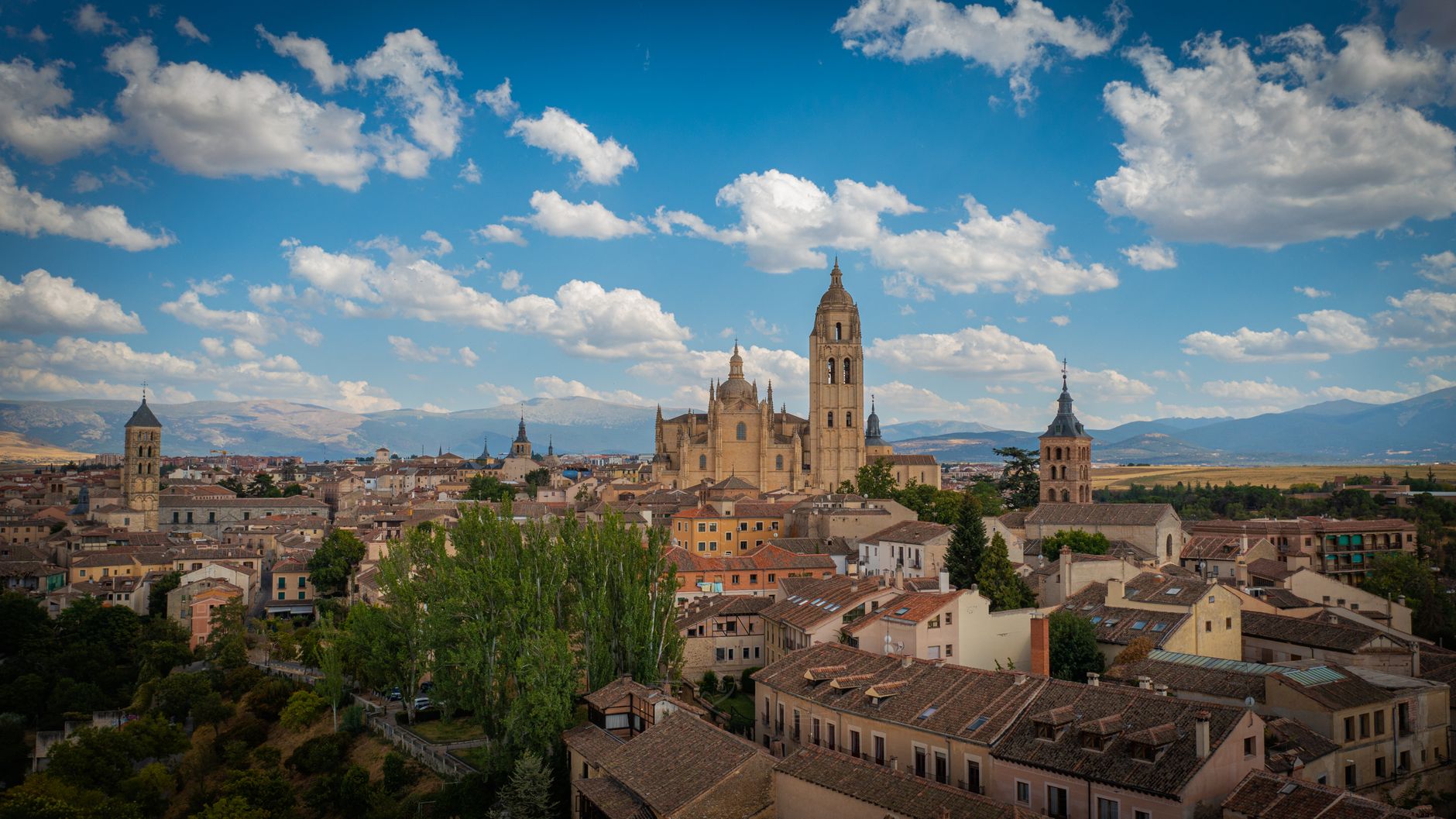
The Cathedral of Segovia was begun in 1525 and is considered the last Gothic cathedral constructed in Spain — a deliberate revival of the Gothic style two centuries after the rest of Europe had moved on. The exterior is remarkable for its completeness (116 decorated buttresses, 18 chapels, a 90-metre tower) and the interior for its relative austerity — white stone, minimal decoration, long nave. Entry €3. Allow 45 minutes.
The Retablo de los Ayala in the chapel of San Juan is the most significant single artwork inside — a 15th-century polychrome altarpiece from a demolished earlier church. The cathedral museum (separate entry €2) holds the Gothic cloister brought stone by stone from the original cathedral destroyed in the Revolt of the Comuneros in 1520.
Cochinillo Asado
Cochinillo asado (roast suckling pig) is Segovia's signature dish — a 3–4 week old pig roasted whole until the skin is crisp and the meat falls off the bone. The animal is presented at the table and, by tradition, carved using only a ceramic plate (to demonstrate tenderness) before the plate is smashed on the floor for luck.
The institution is Mesón de Cándido in the Plaza del Azoguejo below the aqueduct, founded in 1786 and run by the same family for eight generations. A half portion (media ración, 200–300g) costs €20–25. A full portion costs €35–45. Book in advance for weekends. Other restaurants in the old town do the same dish at similar prices; the Cándido historical reputation is the reason for the wait.
Segovia also produces the Lechazo asado (roast baby lamb) of the Castile region, though this is more associated with Sepúlveda (65km northeast) than with the city.
Getting to Segovia
From Madrid Chamartín: Alvia high-speed, 30 minutes, €12–17. About 9 services daily. The high-speed station (Guiomar) is 5km from the old town — an urban bus (line 11) or taxi (€8) connects them.
From Madrid Príncipe Pío or Madrid Atocha (via Cercanías then regional): slower regional train to Segovia's central station (Norte), 2 hours, €7. The Norte station is a 10-minute walk from the aqueduct — more convenient if the direct walk into the old town matters.
By car: 88km from Madrid on the A-6 and AP-61. Allow 1h15 in normal traffic.
When to Visit Segovia
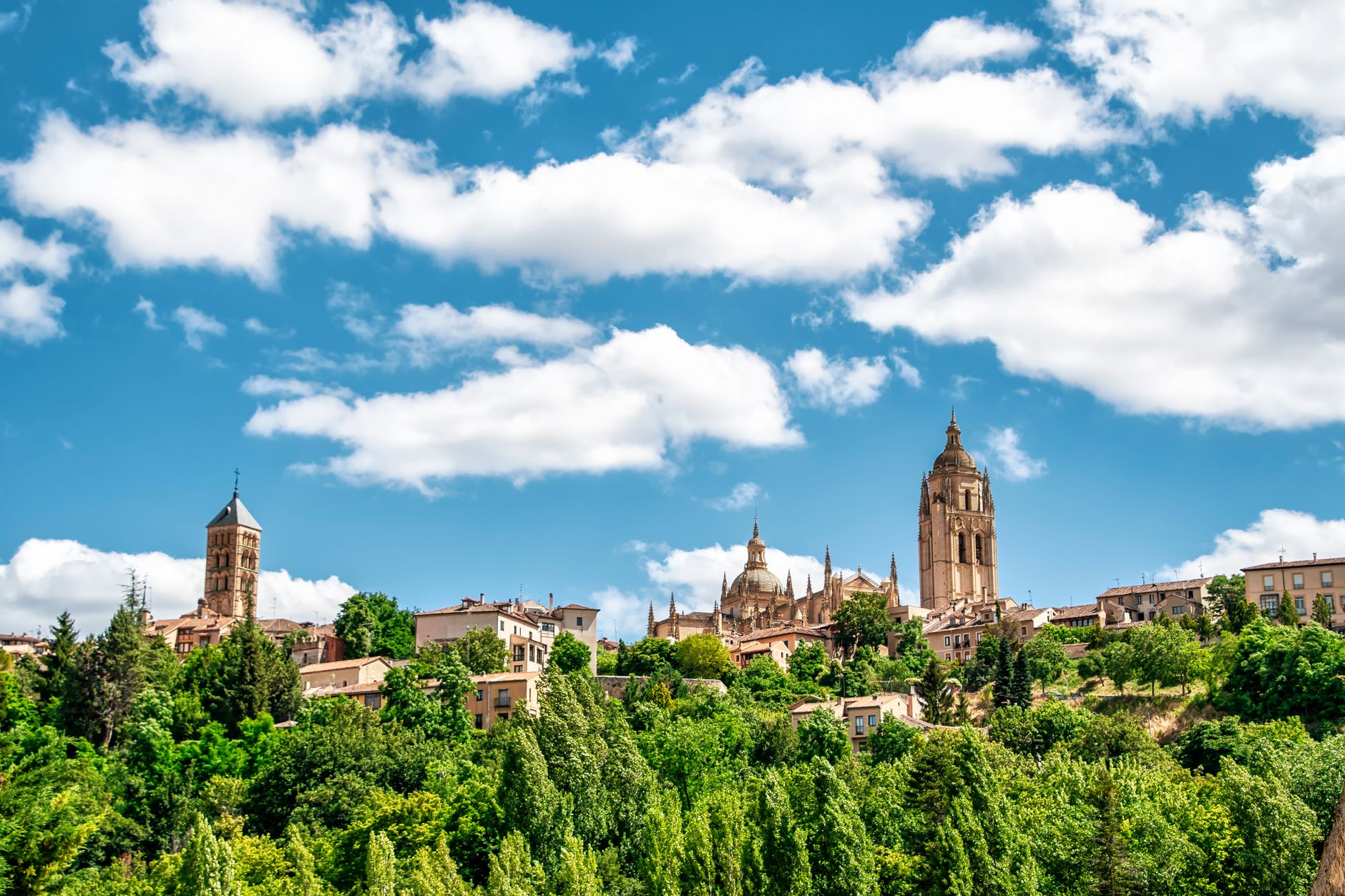
April–June: best window. Temperatures 15–23°C, the Sierra de Guadarrama still snow-capped (visible from the Alcázar views), manageable crowds, spring produce in the markets.
September–October: equally good. Harvest season, temperatures 16–24°C, weekend day-trippers from Madrid thin out.
July–August: hot (28–34°C), maximum day-tripper volume on weekends. Weekday visits are significantly more comfortable.
November–March: cold (4–12°C), the Sierra visible as a white backdrop behind the castle, the city quiet. The cochinillo restaurants are busiest in winter — Sunday lunch crowds are specifically large.
Frequently Asked Questions
Can you visit Segovia as a day trip from Madrid?
Yes — it is the single most practical Madrid day trip. The 30-minute Alvia from Chamartín, 3 hours in the old town, and return before dinner is a comfortable day. Book the Alvia in advance as peak weekend services fill.
How old is the Segovia aqueduct?
The exact construction date is debated — most historians place it between 98–117 CE (Trajan's reign) based on brick stamps and stylistic analysis. It is 1,900–2,000 years old. It has no mortar — the stones are held by precision cutting and the weight distribution of the arches.
Is the Alcázar the model for the Disney castle?
Disney denies a direct connection, but the formal similarity between the Segovia Alcázar profile and the Cinderella Castle at Walt Disney World is visible. Other referenced buildings include Neuschwanstein in Bavaria and Pierrefonds in France. The Segovia comparison is the most commonly cited.
What is the best restaurant in Segovia for cochinillo?
Mesón de Cándido (Plaza del Azoguejo 5) has the historical reputation and the theatrical plate-smashing ceremony. José María (Calle Cronista Lecea 11) is preferred by some Segovians for a less touristy environment at similar quality. Both require advance booking on weekends.