Ronda sits on a plateau split by the El Tajo gorge — a limestone canyon 100 metres deep with near-vertical walls on both sides. The Puente Nuevo, the 18th-century bridge that spans the narrowest point of the gorge and connects the old Moorish town (La Ciudad) with the 15th-century Spanish quarter (El Mercadillo), is the defining image of the city and the reason Ronda fills with day-trippers from Málaga and the Costa del Sol between 11am and 5pm most days. Outside those hours, and outside July and August, Ronda is a working Andalusian city of 34,000 with one of Spain's oldest bullrings and a useful base for the white villages (Pueblos Blancos) of the Serranía de Ronda.
The Gorge and the Puente Nuevo
The El Tajo gorge is 100 metres deep and 70 metres wide at its narrowest point. The Puente Nuevo was built between 1759 and 1793 — construction killed 50 workers and required replacing the original arch twice — and at 98 metres high it remained one of the tallest bridges in Spain for a century after completion. The hollow chamber inside one of the bridge piers was used as a prison during the Spanish Civil War; it is now a small museum accessible from the city hall (€2, often closed without notice — check before going).
The classic photograph of the bridge is taken from the Camino de los Molinos path that descends from the La Ciudad side into the gorge — a 20-minute walk down and a steeper 30-minute climb back. The path is uneven and has no barrier at some sections. Go early morning or late afternoon; midday the terrace bars overlooking the bridge are the main alternative.
The gorge itself can also be seen from within: Los Jardines de Cuenca, the hanging gardens on the La Ciudad side, step down from the town walls into the upper gorge on wooden platforms. Free entry, open daily.
La Ciudad: The Moorish Quarter
La Ciudad is the older part of Ronda, built on the western side of the gorge during the Moorish occupation (711–1485 CE). Most of the streets are narrow and largely residential, with a few monuments concentrated in a walkable area south of the bridge.
The Arab Baths (Baños Árabes, 13th–14th century): one of the best-preserved Moorish bathhouse complexes in Andalusia, with three rooms (cold, warm, hot) and star-shaped skylights. Entry €4, open Tuesday–Sunday. Allow 45 minutes.
Palacio de Mondragón: a 14th-century palace built for Moorish rulers, rebuilt in the 16th century by the Marqués de Vilaseca, with a mixture of Mudéjar, Gothic, and Renaissance elements around a central courtyard. Now the Municipal Museum of Ronda. Entry €4.
Santa María la Mayor: the main church of La Ciudad, built over the 13th-century Great Mosque after the Christian conquest. The minaret was converted into the bell tower. The interior is largely 16th-century Gothic and Renaissance, but the original Moorish mihrab is preserved behind a grill in the nave. Entry €5.
Plaza de Toros: Spain's Oldest Bullring
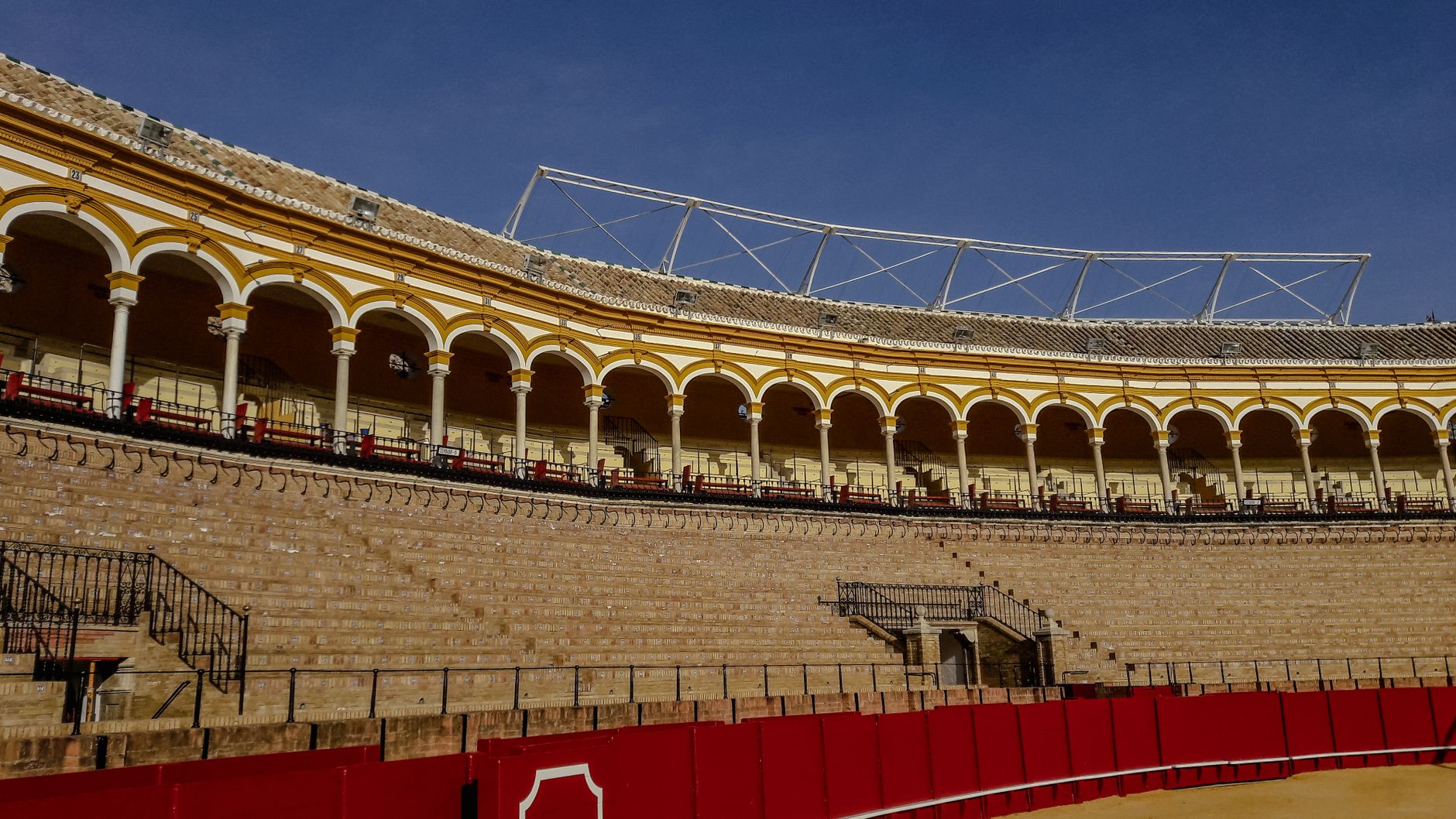
The Real Maestranza de Caballería de Ronda bullring, built between 1779 and 1785, seats 5,000 and is considered architecturally the finest in Spain. It is also one of the oldest still in active use. The attached museum (entry €9, includes the museum, the ring, and the stables) covers the history of the corrida in Ronda specifically — this was the city where Pedro Romero (1754–1839) codified the modern rules of bullfighting on foot. The Goyesca festival in September, fought in 18th-century dress, is the most prestigious single corrida event in the Spanish calendar.
The museum is worth visiting regardless of views on bullfighting. The ring is 66 metres in diameter with a perfect Baroque colonnade.
The Pueblos Blancos
The Serranía de Ronda and the Sierra de Grazalema contain a dozen white villages scattered across the limestone mountains, most within 40km of Ronda. A car is required.
Grazalema (28km northeast): a village of 2,000 people in the Sierra de Grazalema natural park — the wettest spot in Spain (2,200mm of rain per year), surrounded by high limestone palisades. The town makes a traditional wool blanket (manta) that has been produced here since the 18th century. Local cheese (queso de Grazalema, made from local merino sheep milk) is the food to buy.
Zahara de la Sierra (32km northeast): a single-street white village on a ridge above the Zahara reservoir, with a castle tower at the top. Entry to the castle is free; the view from the tower across the Sierra and the reservoir is one of the better ones in Andalusia.
Setenil de las Bodegas (20km north): a village built into and under the overhang of a volcanic rock gorge — houses with the cliff as their back wall and ceiling. Unusual enough to justify the detour.
Casares (55km south, near Estepona): a tiered white village climbing a steep hill, with a ruined Moorish castle at the top and a population of 3,000 that has stayed relatively intact compared to more touristy villages. Birthplace of Blas Infante, the Andalusian nationalist politician.
Getting to Ronda
From Málaga: train (Renfe, 2h, €10–14) or bus (1h40, €10–12, more frequent). Both are practical. The bus station and train station are 5 minutes' walk from each other and 15 minutes from the old town centre.
From Seville: bus (2.5h, €12–15) or train (2h40 via Bobadilla junction, €15–20). The bus is faster and more direct.
From Granada: bus (3–3.5 hours, €18–22). No practical direct train.
From the Costa del Sol (Marbella, Fuengirola): bus, 1.5–2h, €8–12. This is the day-tripper connection. If arriving by this route and wanting to avoid the midday rush, take the early bus (before 9:30am) and stay for dinner.
A car is not necessary for Ronda itself but makes the Pueblos Blancos circuit straightforwardly possible.
When to Visit Ronda

March–May: best window. Temperatures 16–22°C, the gorge path is dry and manageable, the white villages are accessible, and the spring light on limestone is the quality that Hemingway and Welles came for.
September–October: equally strong. The September Goyesca corrida (usually the first or second weekend of September) draws large crowds specifically. October is the quieter of the two months.
June: acceptable — not yet the peak heat, day-tripper volume building but not at maximum.
July–August: 34–38°C, the gorge reflects heat upward, day-trippers peak between 10am and 5pm. Avoid the bridge at midday. Early morning and evening visits to the gorge viewpoints work well.
November–February: quiet, 10–15°C, the Serranía de Ronda can be cold and the Grazalema pass occasionally closed by snow. The old town runs at normal speed without tourists.
Frequently Asked Questions
Is Ronda a day trip or worth staying overnight?
Worth staying overnight. The morning and evening, when the day-trippers from the coast have gone, are when the old town and gorge are actually enjoyable at a walking pace. One night covers the town; two nights allows for the Pueblos Blancos circuit.
Which is better — Ronda or Granada?
Different scales of experience. Granada (the Alhambra) requires a full day and advance booking; Ronda is smaller, more manageable in a single evening plus morning, and the surroundings (Pueblos Blancos) are a specific type of Andalusian landscape. For anyone spending more than 4 days in Andalusia, both are worth including.
How far is Ronda from Seville and Málaga?
Ronda is 100km from Seville (2h by bus), 100km from Málaga (2h by train). It sits roughly between them in the Serranía de Ronda mountains, making it a logical midpoint stop on an Andalusia itinerary.
Is the Puente Nuevo climbable?
No — the bridge is a public road. You walk across it on foot (it is also used by cars). The museum in the bridge pier is accessible via the town hall. The best views of the bridge from below require descending into the gorge on the Camino de los Molinos.
What is the Goyesca bullfight?
An annual corrida held in September at the Ronda bullring, performed in 18th-century Goya-era costume. Considered the most aesthetically significant corrida in Spain's calendar. Tickets sell out months in advance.