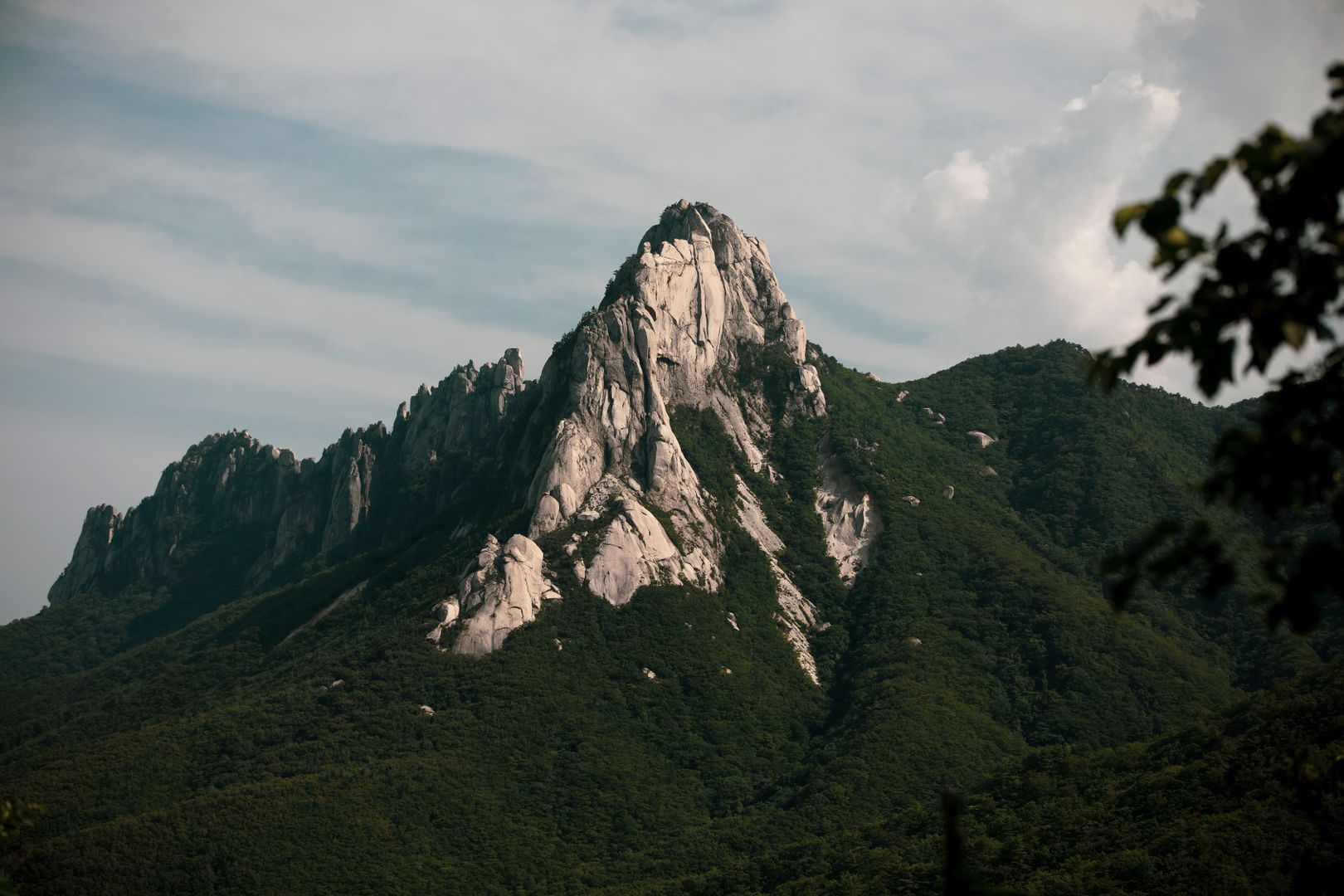

Seoraksan (설악산, "Snow Capped Mountain") takes its name from the fact that snow arrives here earlier and stays later than anywhere else in South Korea at comparable altitude. The highest peak is Daecheongbong at 1,708m; the park's granite formations — Ulsanbawi Rock, the Towangseong Falls, the Biseondae plateau — have specific profiles that are reproduced endlessly in Korean landscape painting, calligraphy, and photography. The park received UNESCO Biosphere Reserve status in 1982. It draws approximately 3.5 million visitors per year, most of them between late September and early November.
Getting There
The gateway city is Sokcho (속초) on the east coast, 3km from the park entrance at Seorakdong. From Seoul, the fastest option is an express bus from Seoul Express Bus Terminal (Gangnam) to Sokcho — 2 hours 30 minutes to 3 hours, 16,200 won. Buses run roughly every 30–60 minutes. There is no direct KTX service to Sokcho; the nearest KTX station (Gangneung) is 1 hour 15 minutes further south by bus. Within Sokcho, local bus 7 runs from Sokcho Bus Terminal to the Seoraksan entrance at Seorakdong (30–45 minutes, 1,200 won).
Seorakdong (Outer Seorak) — the Main Entrance Area
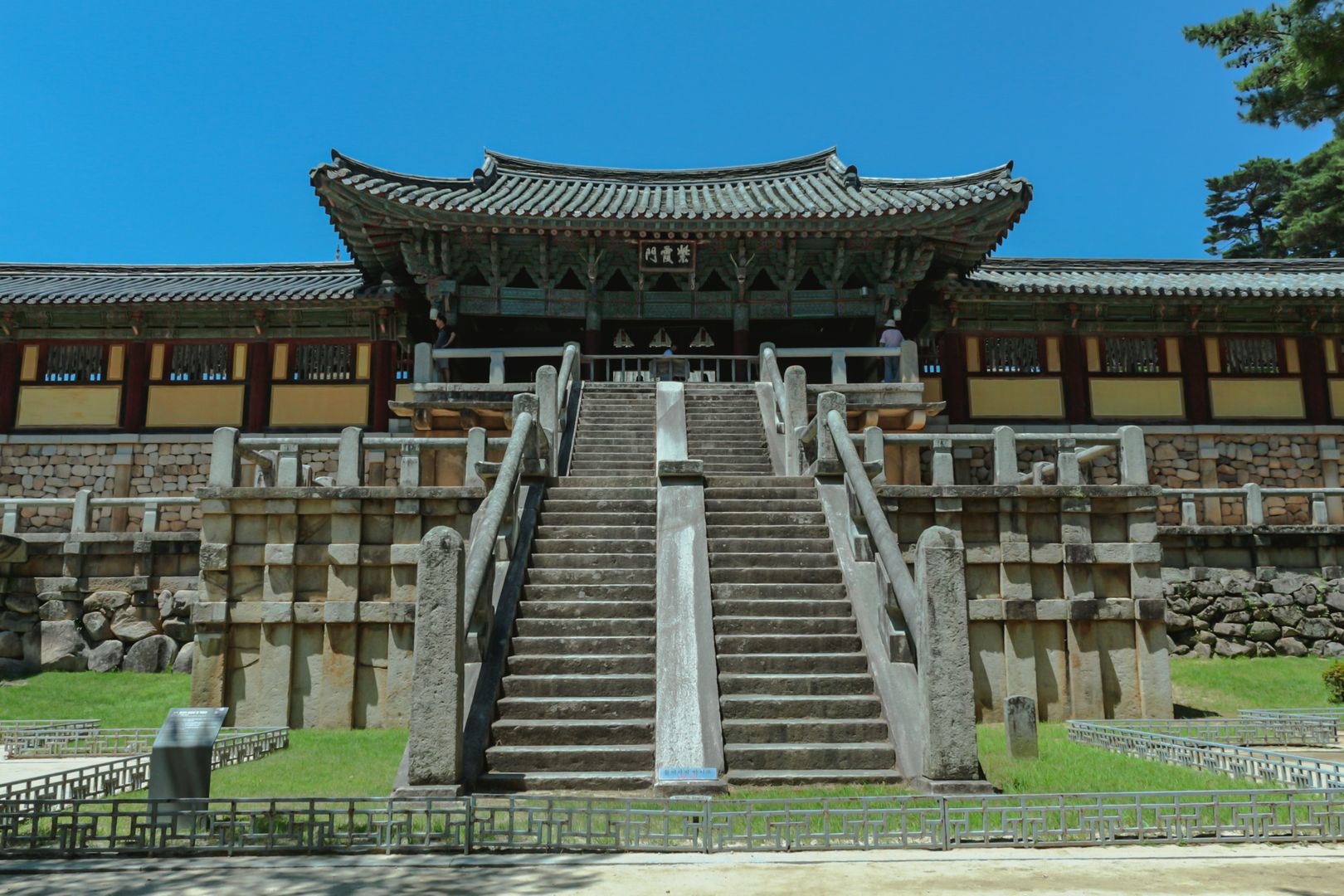
The Seorakdong entrance (entry 3,500 won) is the most accessible and most visited section. The primary attractions here are the Sinheungsa Temple (a Zen Buddhist temple founded in 653 AD, rebuilt several times, with a large bronze Buddha), the Ulsanbawi Rock cable car, and the trailhead for Ulsanbawi itself.
The Cable Car (round trip 15,000 won) ascends from 380m to 1,100m in 5 minutes — the longest aerial cable car in Korea (1.5km). The upper station gives views of the Biseondae plateau and the surrounding peaks; from here a 1.2km trail reaches the Gwongeumseong fortress ruins with panoramic views of the inner peaks.
Ulsanbawi Rock is a cluster of six granite peaks at 873m, accessible via a 1.3km trail from the cable car upper station (3–4 hours round trip from the entrance, or 1.5 hours from the cable car top). The final 808 steps to the summit are steep and involve iron railings on exposed rock faces. Views from the top, on clear days, include the East Sea (Sea of Japan) to the east and the Daecheongbong peak to the west. This is the park's most rewarding hike for time invested.
Inner Seorak (Osaek Area)

The inner Seorak area, accessed from the west via Osaek or from the south via Jangsudae, is where the park's serious hiking takes place. The trail to Daecheongbong summit (1,708m) starts at Osaek (33km from Seorakdong by road) and takes 5–6 hours each way — typically done as a two-day hike with a mountain hut overnight at Jungcheong Shelter (30,000–35,000 won per bunk, advance booking required through the park website). The summit route passes through the most dramatic granite terrain in the park. The trail is maintained and well-signed; some sections require iron cables on steep faces.
The Biseondae plateau — a broad granite slab over the Baekdam Valley at around 900m — is accessible from Baekdamsa Temple (4 hours from the temple, 6 hours round trip). The Twelve Apostles peaks visible from the plateau make this the best viewpoint in the park for alpine photography.
Autumn Foliage
Seoraksan's autumn colour peaks between approximately September 28 and October 15 (date varies by year and altitude — peaks at the summit, then progresses downward). The maple, oak, and birch colour change starts at Daecheongbong and moves downward over 2–3 weeks. During peak foliage weekends, the cable car has waits of 1.5–3 hours and accommodation in Sokcho books out months ahead. Weekday visits during the foliage period are substantially less crowded. The Korean National Park Service publishes annual foliage forecast updates.
Sokcho
Sokcho is a practical base with accommodation at all price points (from 40,000–60,000 won for a motel near the bus terminal to 150,000–300,000 won for beachfront hotels), fresh seafood (the Abai Village area near the port has grilled squid and o징어 순대 street food), and Sokcho Beach (a 1.5km white-sand beach 15 minutes' walk from the bus terminal). The town itself is not a destination but it functions well as a park base, particularly given that accommodation within the park area at Seorakdong is expensive and limited.
Practical Notes

Best months: late September–late October (autumn foliage), mid-June–August (summer, crowds manageable except weekends), late winter (snow on peaks, clear skies, near-empty trails). The park is open year-round; some high-altitude trails close November–April for safety. Reservations for the Daecheongbong summit hut must be made through the national park reservation system (reserve.knps.or.kr) — they fill within hours when the booking window opens, typically 90 days before the visit date.
FAQ
Can you do Seoraksan as a day trip from Seoul?
Yes — a 05:00 departure from Seoul by express bus, arriving at the park by 08:00, allows 7–8 hours of hiking before the return bus. The Ulsanbawi hike fits in a full day. The cable car + Gwongeumseong is 3–4 hours. Not comfortable but doable. One night in Sokcho is considerably better.
Do you need to book the cable car in advance?
During autumn foliage season (late September–late October): yes, or arrive at opening time (09:00) to minimise the wait. Off-season: no advance booking needed.