
The Silla Kingdom at its height controlled the entire Korean peninsula (from 668 AD, after unifying the Three Kingdoms), and Gyeongju functioned as its capital for that entire period. The urban fabric of a Tang Dynasty-influenced royal city is mostly gone — the palace, the government buildings, the grid street plan all replaced over centuries. What remains are the royal tombs (large grass-covered mounds), the surviving temple complexes on the surrounding mountains, and an extraordinary number of artifacts recovered from excavations and displayed in the Gyeongju National Museum. The result is unlike any other Korean city.
Getting There
From Seoul (KTX from Seoul Station): take the KTX toward Busan and alight at Singyeongju Station (1 hour 55 minutes, 45,700 won). Singyeongju Station is 8km west of the city centre; a taxi to the central area costs about 8,000 won (10 minutes), or take the local bus 700. Alternatively, take the KTX to Dongdaegu then transfer to the local Mugunghwa train to Gyeongju Station (central, 35 minutes, 3,200 won). From Busan: regular trains from Busan Station (50 minutes, 4,800 won) or express bus (1 hour 20 minutes). Gyeongju is a practical day trip from Busan; most visitors from Seoul find staying overnight gives substantially more time.
Bulguksa Temple
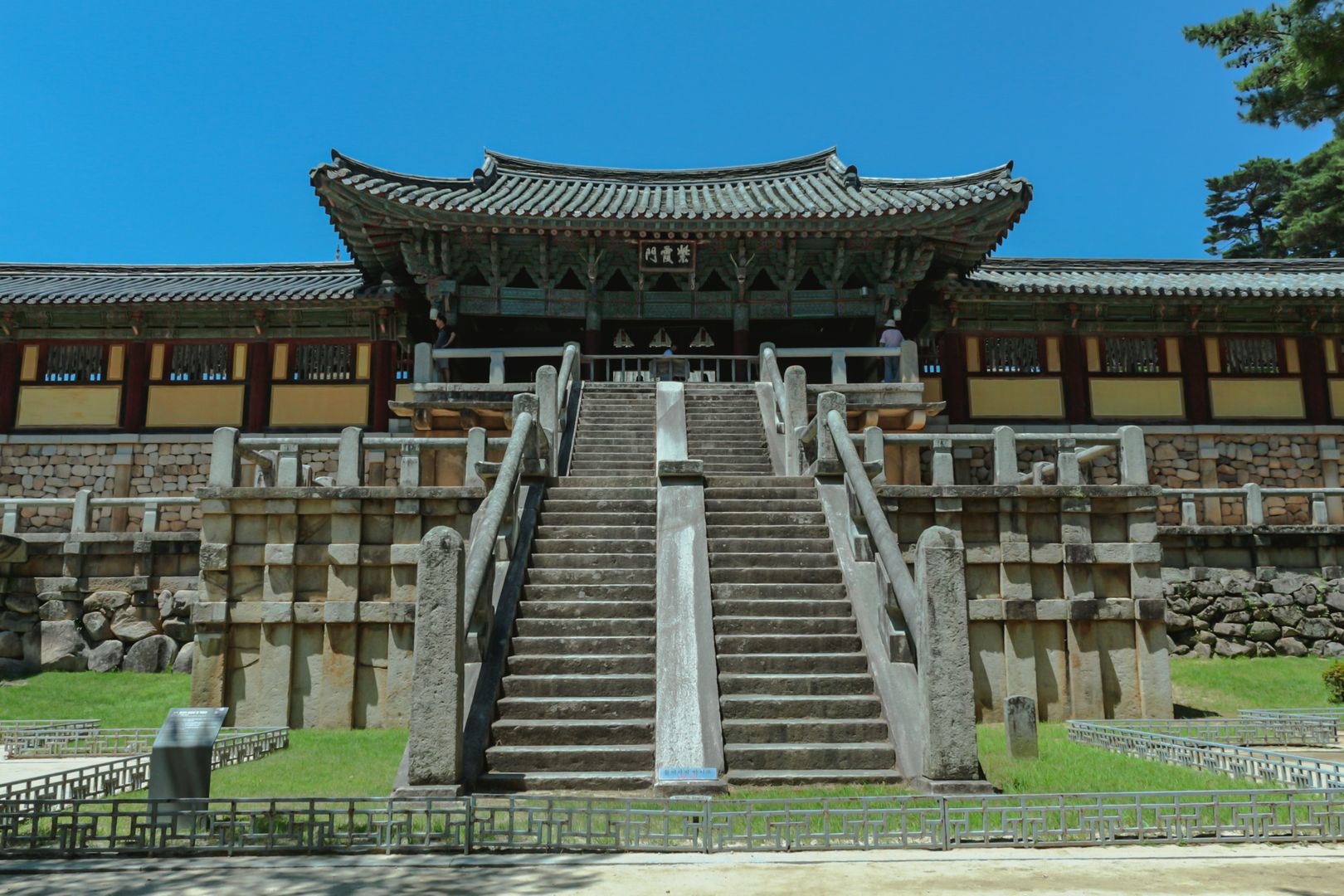
Bulguksa (entry 6,000 won) sits on the slopes of Tohamsan Mountain 16km southeast of the city centre. Founded in 528 AD and substantially rebuilt in the 8th century under King Gyeongdeok, it is the most important surviving Silla temple and one of Korea's most visited cultural sites. The main approach ascends the 33-step stone staircase (Cheongun-gyo and Baekun-gyo bridges — National Treasures, not walkable by visitors but photographable from below) to the main courtyard containing two stone pagodas: the three-storey Seokgatap (Stone Pagoda, 751 AD) and the ornate Dabotap (Many Treasures Pagoda, also 751 AD). Both are National Treasures. The main halls contain gilded Buddha images restored over centuries; the rear garden is quiet and often uncrowded. Allow 1.5–2 hours.
Seokguram Grotto
3km uphill from Bulguksa, Seokguram Grotto (entry 6,000 won, separate from Bulguksa) is an artificial stone cave built in 774 AD to house a 3.5m granite seated Buddha of extraordinary craftsmanship. The rotunda chamber is viewed through a glass partition; the main Buddha image is surrounded by carved relief figures of bodhisattvas and guardians on the circular walls. UNESCO called the artistic and technical achievement of Seokguram "one of the outstanding works of Buddhist art in the Far East." It is 20 minutes' walk from Bulguksa uphill through forest, or accessible by bus. The site is modest in scale but the carving quality is remarkable — come before the tour buses at 09:00.
Tumuli Park (Daereungwon)
Tumuli Park (entry 3,000 won) in central Gyeongju contains 23 large burial mounds — grass-covered hemispheres between 4m and 22m high. These are the royal tombs of the Silla kings and queens, built between the 4th and 6th centuries. One, Cheonmachong (the Heavenly Horse Tomb), has been excavated and opened to visitors — you enter the interior and see the timber burial chamber reconstruction, gold crown replicas, and artifacts. The park is peaceful and large enough to walk among the mounds without crowds. Cherry blossoms in April are dense and spectacular. Free of charge, accessible 24 hours (park perimeter fence, not the Cheonmachong entry).
Anapji Pond (Donggung Palace and Wolji Pond)
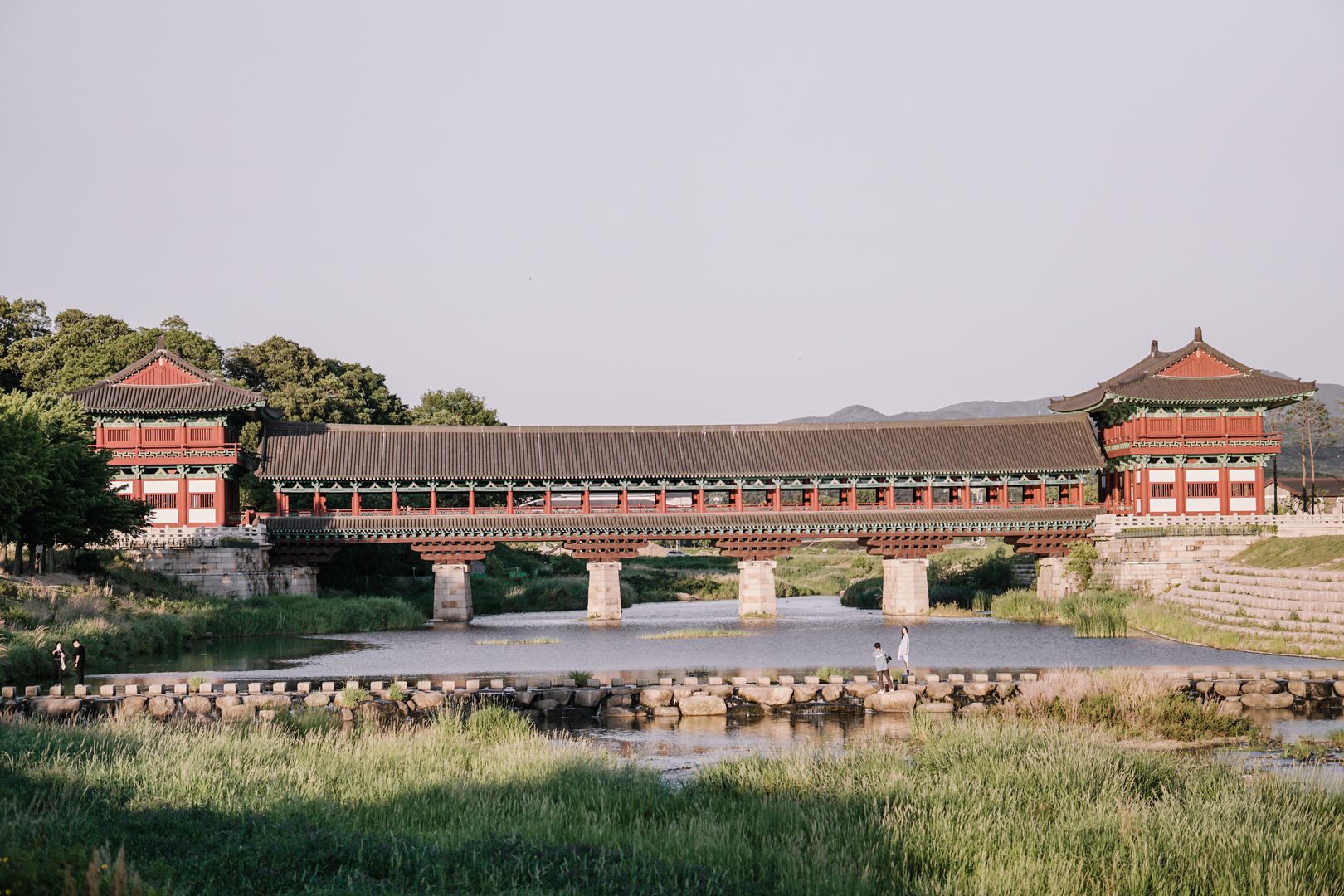
Anapji Pond (entry 3,000 won) was the pleasure garden of the Silla royal palace, constructed in 674 AD. Three of the original twelve palace buildings have been reconstructed on the pond's edge; the artificial pond itself, with its irregular shoreline and small islands, is largely original in form. The site is particularly good at night when the reconstructed buildings are illuminated and reflected in the water — the night admission ticket is the same price and the atmosphere is entirely different from daytime. Allow 45–60 minutes.
Gyeongju National Museum
The Gyeongju National Museum (free entry) holds the largest collection of Silla artifacts in the world — gold crowns, gold belts, glass beads from Western Asia, bronze bells, celadon, and the 725-tonne Emille Bell (the largest bell ever cast in Korea, commissioned in 771 AD, renowned for its deep resonant tone). The main building displays the crowns and ceremonial objects; the outdoor garden has architectural fragments from dismantled temples. Allow 2–3 hours for a comprehensive visit. Free audio guides available.
Practical Notes
Gyeongju is a manageable city for a day trip from Busan but benefits from one or two nights to cover Bulguksa/Seokguram properly. Bicycles can be rented near Gyeongju Station (10,000–15,000 won/day) and cover the central tumuli and museum easily; the mountain temples require a taxi or bus (100, 700 series) from the station. Best months: spring (cherry blossom, April) and autumn (foliage, mid-October–November). Accommodation ranges from budget guesthouses near the station (40,000–70,000 won) to hanok-style guesthouses in the tumuli area (80,000–130,000 won).
FAQ
Is Gyeongju worth visiting from Seoul?
Yes. It offers the historical depth that Seoul itself — heavily bombed in the Korean War, largely modern — does not provide. The combination of Bulguksa, Seokguram, and Tumuli Park makes it one of the most substantive single-day cultural itineraries in Korea.
Can you visit Gyeongju and Busan together?
Easily. Gyeongju is 50 minutes from Busan by train, making a 1-night Gyeongju stop on the way to or from Busan a natural combination. Seoul–Gyeongju–Busan (or reverse) is a standard 5–7 day Korea itinerary.