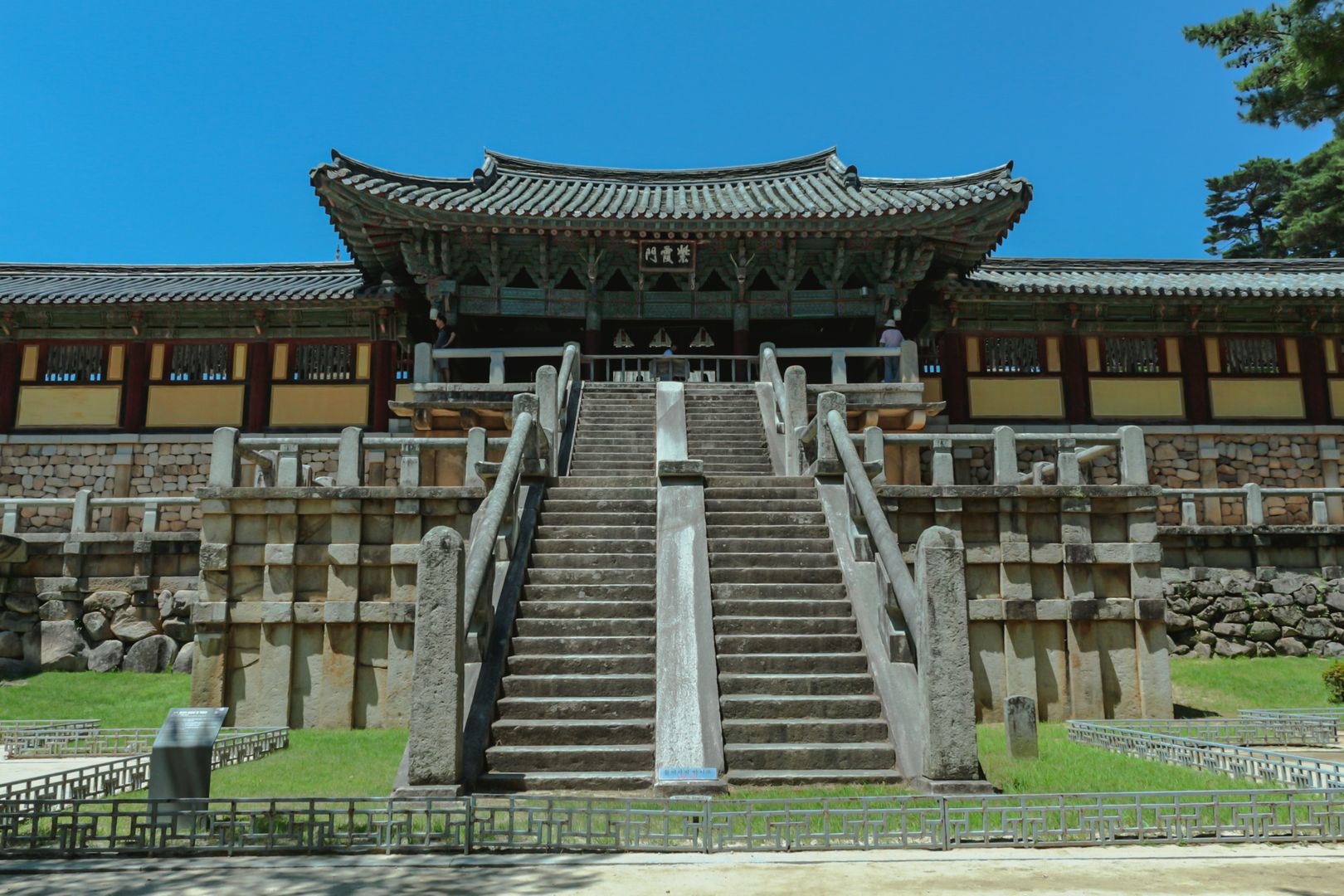
Andong anchors South Korea's Confucian heritage more systematically than any other city. Hahoe Folk Village — a UNESCO World Heritage Site since 2010 — is a riverside settlement of thatched and tile-roofed houses where descendants of the Ryu clan have lived since the 14th century and where families still maintain traditional Confucian practices. The city itself (population 160,000) is 2 hours from Seoul by KTX and contains the country's most complete collection of Joseon-dynasty private academies (seowon), aristocratic residences (hahoe-type byeolseong), and mask dance traditions. It is visited by Korean domestic tourists in large numbers and by almost no international visitors, which affects the level of English signage but not the experience.
Hahoe Folk Village
Hahoe (meaning "village surrounded by water" — the Nakdong river bends almost completely around it) has been continuously settled since the early Joseon dynasty (14th century). Around 70 families still live here in traditional structures rather than reconstructions — the buildings, both the thatched farmhouses (chodang) and the more formal tile-roofed manor houses (giwa), are originals maintained on a rotating repair schedule.
Entry ¥3,000 (around €2). Allow 2–3 hours. The village is best walked counter-clockwise from the main gate, starting with the Ryu Sungnyong House (the ancestral residence of the scholar and politician who served as prime minister under King Seonjo) and working toward the riverbank where traditional rafts (ttukbae) operate in summer. The open fields in the interior of the village are farmed by residents; do not walk through crops.
Buyongdae Cliff: the sandstone cliff on the opposite bank of the Nakdong river, 600 metres from the main village. Cross by rowboat (seasonal, ¥2,000 return) and climb the 15-minute path to the viewpoint at the top — this is the view all photographs of Hahoe use, looking across the river at the village with forested hills behind it. The cliff is also a traditional pavilion (Okyon Seowon) site used for poetry recitation during the Joseon period.
Hahoe Mask Dance (Byeolsingut Talnori): a shamanic mask dance tradition dating to the 11th century, originally performed every 10 years as part of a village ritual. Now performed every Saturday at 2pm (no performance in winter). The masks — 12 characters including nobles, monks, concubines, and commoners — are made from alder wood and are among the oldest surviving carved wooden masks in Korea. The National Museum of Korea has the originals; the village performance uses replicas. Entry ¥3,000. Allow 90 minutes for the full performance.
The Andong Mask Dance Festival
The Andong International Mask Dance Festival runs for 10 days in late September and early October and is the city's main annual event. International mask dance troupes from 20+ countries perform alongside Korean troupes in a programme that covers street stages, river stage, and the Hahoe village amphitheatre. Entry for most performances is free; the main river stage events charge ¥10,000–20,000.
Accommodation in Andong books 2–3 months ahead for festival dates. If the festival is the specific reason to visit, that booking lead time applies.
Dosan Seowon

The Dosan Seowon Confucian Academy, 25km north of Andong on the banks of the Andong reservoir, was founded in 1574 by disciples of Yi Hwang (known as Toegye, 1501–1570), the most influential Neo-Confucian philosopher of the Joseon dynasty. Toegye's face appears on the 1,000-won banknote. The academy comprises lecture halls, dormitories, and Toegye's personal study and library buildings, all in original 16th-century condition. Entry ¥1,500. Allow 1.5–2 hours. The setting on a hillside above the reservoir, with mountain ridges on three sides, is the best available illustration of the Confucian ideal of studied withdrawal from official life into classical scholarship.
Bus service from Andong's main bus terminal reaches the Dosan Seowon stop in 40 minutes (bus 67). Taxis cost ¥25,000–30,000 one-way.
Food in Andong
Andong has specific food traditions that are not widely known outside the region.
Andong jjimdak: braised chicken with glass noodles, potatoes, carrots, and dried chilli in a sweet soy sauce. The dish originated in the Andong old market (jeongtong market) in the 1980s as a response to American-style chicken restaurants. The original restaurant strip in the old market remains the best place to eat it (¥10,000–15,000 for a portion). Order medium-size for two people; large is excessive.
Andong soju: a traditional rice-based soju made by double distillation, resulting in a spirit at 40–45% alcohol rather than the 17–19% commercial soju sold nationwide. Sold in small white porcelain bottles at traditional restaurants and specialty shops. Potent, expensive (¥15,000–25,000 per bottle), and specific to this region.
Heotjesabap: a ritual meal originally prepared for ancestral rites — steamed rice topped with braised beef, vegetables, and a clear broth poured over at the table. Available at several traditional restaurants in the old town (¥12,000–18,000). The flavour is subtle by Korean standards; the significance is cultural rather than gastronomic.
Getting to Andong
From Seoul Cheongnyangni station: KTX, 2 hours, ¥27,200. About 10 services daily. The KTX to Andong is the Andong/Yeongdong line branching from the main Gyeongbu line — book seats rather than standing tickets on this service.
From Busan: KTX or bus, 2h30–3 hours. The bus from Busan Nopo-dong terminal takes 2h30 and costs ¥16,800.
From Gyeongju: bus, 1h15, ¥8,100. A reasonable day-trip direction if combining Andong with the Silla period sites.
From Seoul Express Bus Terminal: intercity bus, 3h15, ¥16,000. Slower than KTX but cheaper and more flexible on departure times.
Andong bus terminal and train station are 1km apart, both accessible from the central bus terminal area.
When to Visit Andong
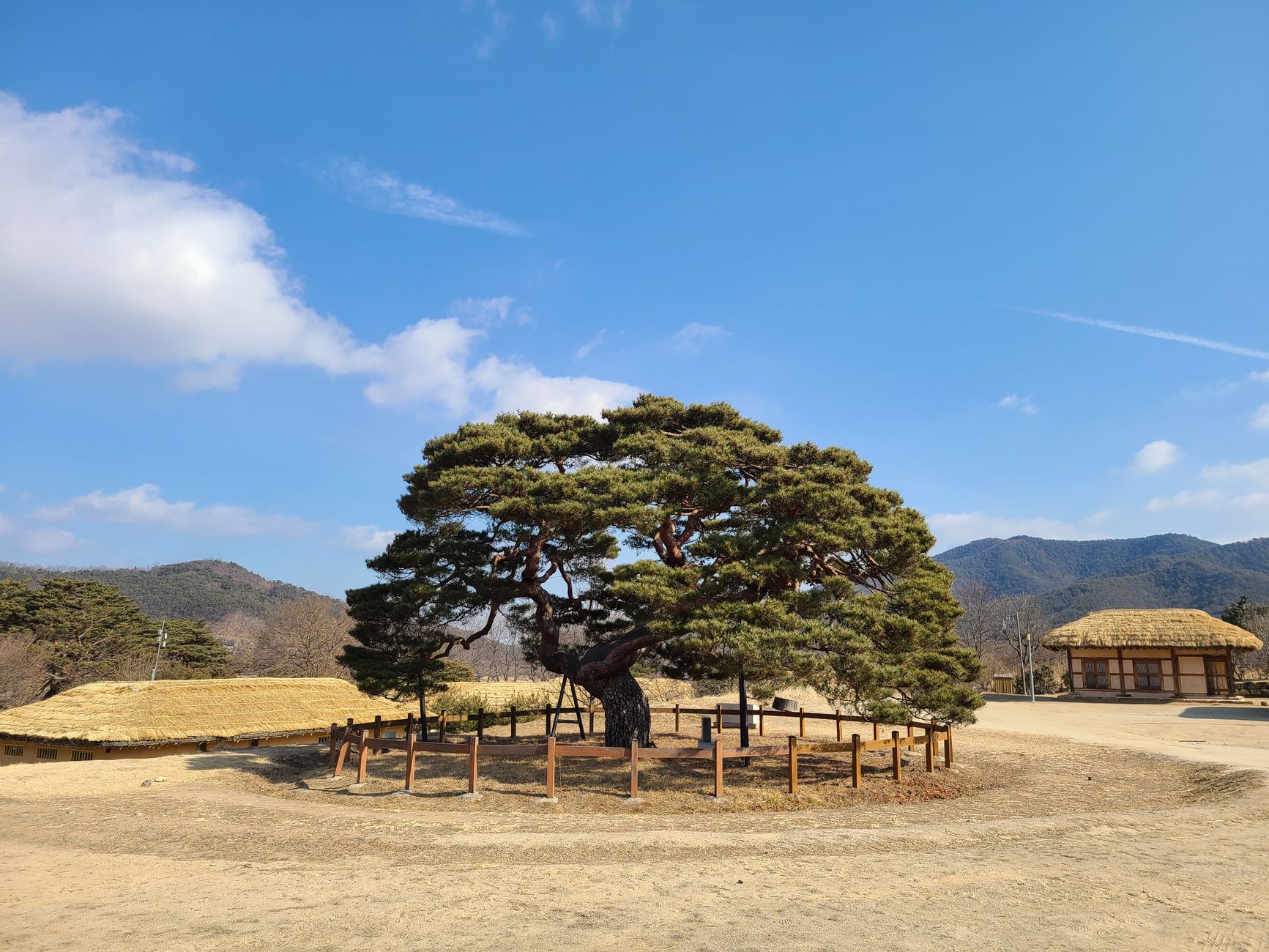
October (Mask Dance Festival period, late September–early October): the specific event window — Hahoe village at maximum activity, autumn foliage beginning in the surrounding mountains, temperatures 14–20°C. Best single time to visit.
April–May: spring, temperatures 12–20°C, cherry blossoms in the city and the Dosan valley, Hahoe village without festival crowds. Equally good if the festival is not the priority.
September: the month before the festival, still warm (20–25°C), full-activity Hahoe village, quieter than October.
July–August: hot (28–33°C) and humid, Korean domestic summer holiday season increases accommodation demand. Hahoe village retains its character regardless.
November–March: cold (−5 to 8°C), the thatched roofs of Hahoe under snow are a specific visual, some village activities reduced in winter. The seowon and manor houses remain accessible year-round.
Frequently Asked Questions
How do you get from Andong to Hahoe village?
Bus 46 from Andong bus terminal, 35 minutes, ¥1,600. About 10 departures daily. Taxis cost ¥18,000–22,000 one-way. Car hire from Andong is practical for combining Hahoe with Dosan Seowon and the reservoir area in a single day.
Is Hahoe Folk Village actually inhabited?
Yes. Around 200–250 permanent residents live in the village year-round. The working farmhouses, maintained rice paddies, and operating shops alongside heritage buildings distinguish it from pure open-air museum formats like those found elsewhere in Korea.
What is the difference between Hahoe and Yangdong?
Both are UNESCO-listed Joseon-dynasty villages with aristocratic lineage-group structures. Yangdong (near Gyeongju, also UNESCO since 2010) is slightly larger and has more intact aristocratic manor houses. Hahoe has the better natural setting (the river bend) and the mask dance tradition. Most Korea itineraries can include both with a day's drive.
Do you need to speak Korean to visit Andong?
The mask dance festival has English-language materials, and Hahoe village has basic English signage. Dosan Seowon has English explanatory panels. Restaurants in the old market area (Andong jjimdak) have picture menus. Beyond those contexts, English is limited — more limited than in Seoul or Busan.
What is Andong soju and how is it different from regular soju?
Andong soju is a traditional distilled rice spirit at 40–45% alcohol (double-distilled), originating from the Andong area's tradition of ritual rice wine. Commercial Korean soju (sold nationwide) is diluted ethanol, typically 17–19%, and unrelated in production method. Andong soju is a recognised traditional Korean food product; production is limited and it is expensive.