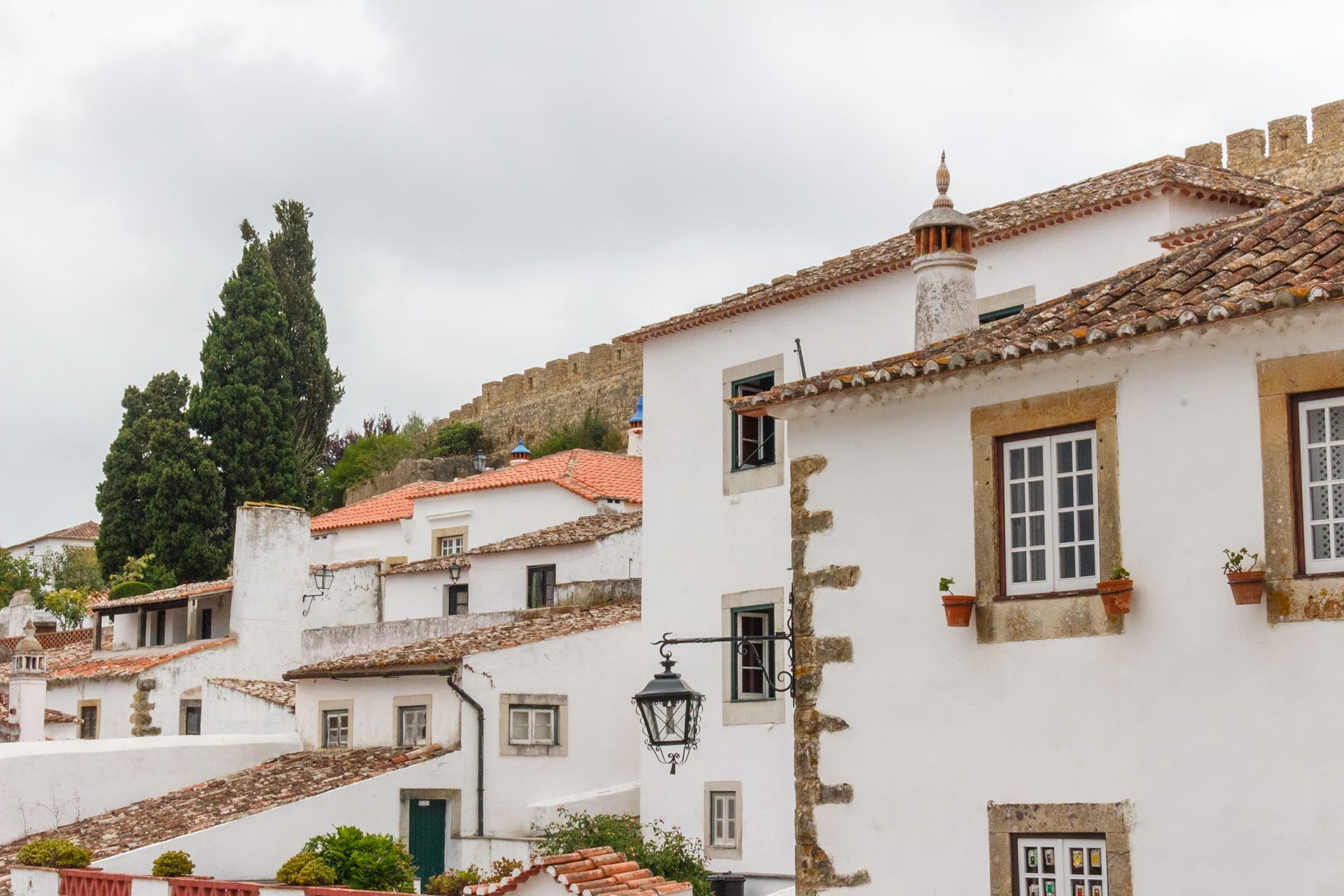

Sintra sits in the Serra de Sintra hills 30km northwest of Lisbon, where an Atlantic microclimate keeps the hillsides forested and the temperature 5–8°C cooler than the capital year-round. The Portuguese royal family used it as a summer residence for centuries, and the concentration of 19th-century Romanticist palaces that resulted — Pena, Monserrate, Seteais, Regaleira — across a single forested hillside is not replicated anywhere else in Portugal. UNESCO listed it as a Cultural Landscape in 1995. The caveat is unambiguous: Sintra is one of the most visited places in Portugal, and between June and September, and on any weekend year-round, the experience of navigating it requires planning that most day-trip guides omit.
Pena Palace
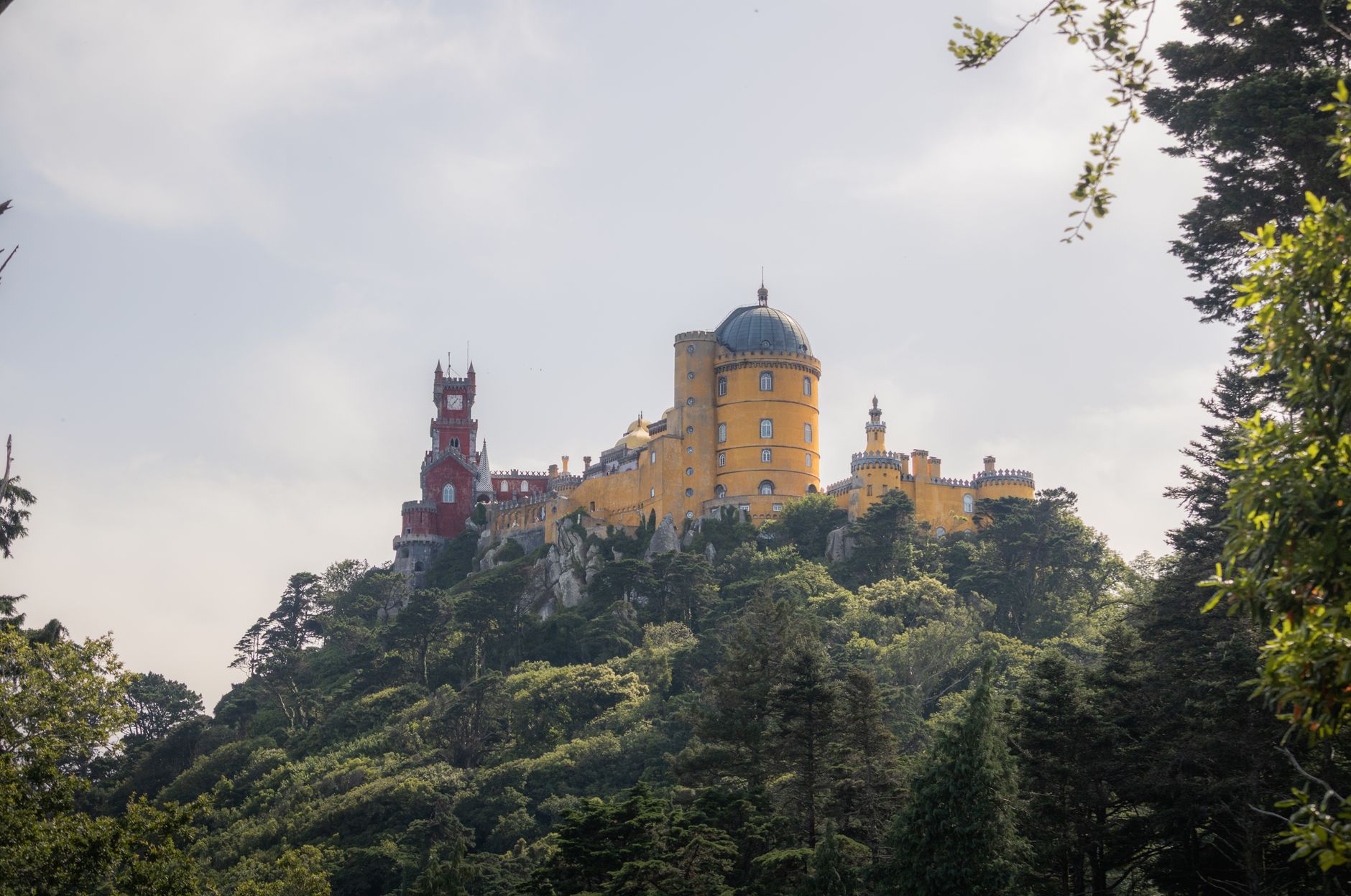
The Palácio Nacional da Pena (entry €19.50, gardens only €8) is the centrepiece — a Romanticist fantasy built between 1838 and 1854 by King Ferdinand II on the ruins of a 16th-century monastery. The building combines Moorish arches, Gothic towers, Manueline doorways, and Renaissance galleries in a polychrome exterior of terracotta, mustard yellow, and crimson. It was designed to be visible from Lisbon on clear days, 30km away. Inside, the royal apartments are preserved in their original 1880s–1910s state — complete with the furniture, photographs, and personal objects of the last royal family to occupy it.
The queues at Pena in peak season (July–August weekends) can reach 2 hours. Pre-book online at parquesdesintra.pt — timed entry tickets sell out 3–4 weeks ahead for peak windows. Arriving at opening (9:30am) on a weekday is the most effective crowd strategy.
Palácio Nacional de Sintra
The Palácio Nacional de Sintra (entry €10) in the village centre is the oldest surviving royal palace in Portugal — begun in the 14th century on Moorish foundations, expanded continuously until the 18th century. The two distinctive conical chimneys (36 metres high) visible from the train station are its signature. The interior is notable for the Sala dos Brasões (the Heraldic Room, with a painted wood ceiling cataloguing 72 noble families of the 16th century) and the Sala dos Cisnes (Swan Room, with 27 swans painted in the ceiling vault). This palace gets significantly fewer visitors than Pena and is fully worthy of 1.5 hours.
Quinta da Regaleira

The Quinta da Regaleira (entry €12) is a private estate built between 1904 and 1910 for the millionaire António Augusto Carvalho Monteiro, designed with Freemasonic and Rosicrucian symbolism throughout. The main draw is the Initiation Well (Poço Iniciático) — a 27-metre inverted tower descending into the earth on a spiral staircase, not an actual working well, used for initiatory rituals according to the property's mythology. Two spiral wells, underground tunnels connecting various parts of the property, and a palace with Gothic, Manueline, and Renaissance elements make this the most eccentric of the Sintra estates. Less crowded than Pena but growing.
The Moorish Castle
The Castelo dos Mouros (included with Pena ticket, or €8 separately) is an 8th–9th century Moorish fortification on the forested hillside above the village. The walls are largely original, running for 450 metres across the rocky ridge with towers at intervals. Climb the walls for the best aerial view of the Pena Palace dome and the Atlantic coast on clear days. Stairs are steep and uneven — allow 1 hour.
Getting to Sintra
From Lisbon Rossio station: direct Linha de Sintra train, 40 minutes, €2.30. Trains run every 10–20 minutes from early morning. The line is Lisbon's commuter rail — cheap, frequent, and reliable.
Sintra's train station is at the edge of the village, a 15-minute walk from the Palácio Nacional or a 5-minute bus ride (bus 435, €3.50, runs to Pena and back via the Moorish Castle — buy the Sintra bus pass at €15 for unlimited rides, strongly recommended as the hill walk to Pena is steep).
By car: 30km from Lisbon on the A5/IC19. Parking in the lower car parks below the village is limited and fills quickly on summer weekends. Arrive before 9am or leave the car in Lisbon.
Crowd Management

The realistic guide to visiting Sintra without misery:
Weekdays always beat weekends. The difference between a Tuesday in October and a Saturday in August is the difference between manageable and unpleasant.
Book Pena Palace in advance. Online booking at parquesdesintra.pt with a timed entry window is the only way to guarantee entry in peak season. Walk-in queues at Pena are not hypothetical — they regularly reach 1.5–2 hours.
Start with Pena at opening (9:30am): the first hour after opening is significantly less crowded than the middle of the day.
The Palácio Nacional de Sintra (in the village) is consistently overlooked by day-trippers rushing to Pena and is better for it — same quality, lower crowd density.
Eat in the village before 11am or after 2pm. The restaurants on the main village square are at maximum capacity from noon to 2pm.
When to Visit Sintra
October–November: the best overall window. Temperatures 16–21°C, the forested hillsides in autumn colour, crowds substantially lower than summer, Pena tickets available with less advance booking. October is the single strongest month.
March–May: spring, mild, green hills, pre-peak crowds. Easter weekend is specifically crowded — avoid.
June–August: maximum crowds and maximum temperatures (though cooler than Lisbon by 5–8°C). Pre-booked weekday visits work; weekend visits without advance planning are difficult.
December–February: quiet, occasionally rainy, some café-restaurants in the village reduce hours. The palaces are open year-round.
Frequently Asked Questions
How long does Sintra take to visit?
One full day to cover Pena Palace, the Moorish Castle, and the Palácio Nacional de Sintra. A second day for Quinta da Regaleira and Monserrate. Most people do it as a day trip from Lisbon — one palace per visit is more realistic than trying to see all five in a day.
How do you get from Pena to the Moorish Castle?
Walk (20–25 minutes on a forested path with steep sections) or take bus 435 between them (5 minutes). The walk is the better option going from the castle down to Pena; the bus is better for the uphill direction.
Is the Sintra bus pass worth buying?
Yes. The €15 day pass covers unlimited rides on the 434 and 435 circuits — from the train station to the Palácio Nacional (434) and from the village to Pena and the Moorish Castle (435). Without it, individual bus tickets add up to €10–15 for a full-day visit.
What is the best palace to visit in Sintra?
Pena for visual impact and the preserved royal apartments; Palácio Nacional de Sintra for historical depth and fewer crowds; Quinta da Regaleira for architectural eccentricity. If choosing one: Pena is the most impressive, but book timed entry in advance.
Can you see Sintra from Lisbon?
On very clear days, the distinctive dome and towers of Pena Palace are visible from high points in Lisbon (Miradouro da Graça, the Castelo de São Jorge). The Serra de Sintra ridge itself is visible from the waterfront.