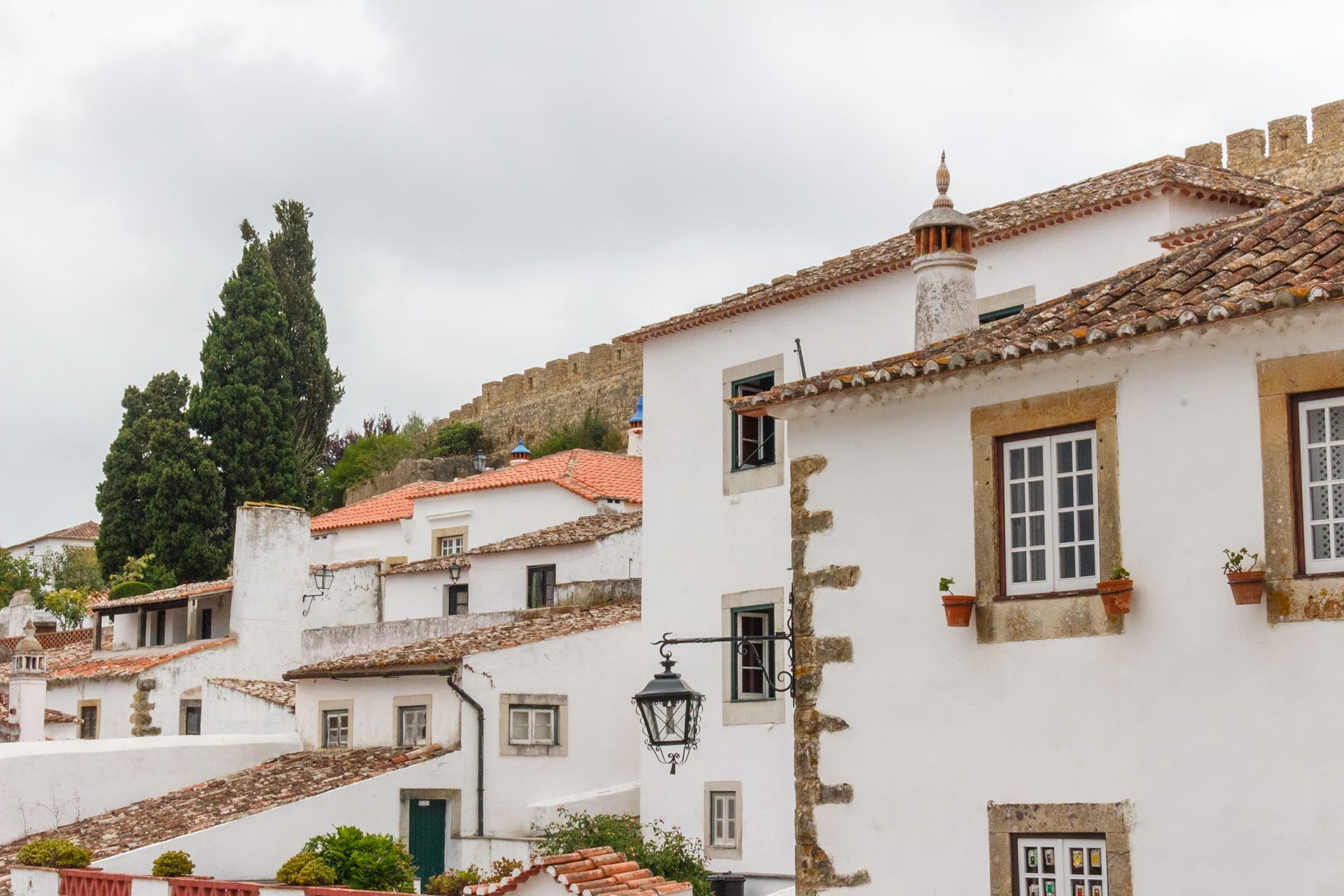

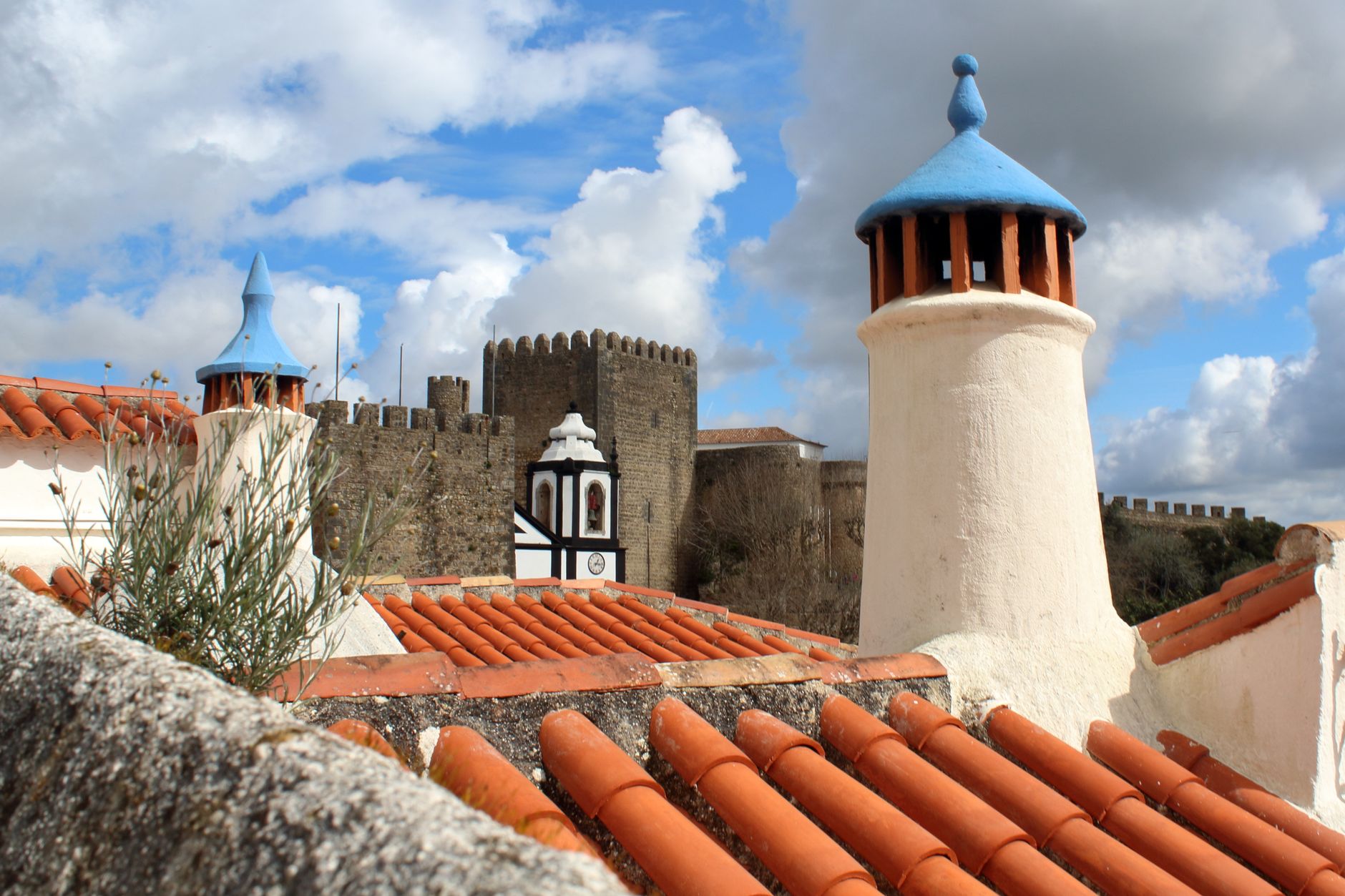
Óbidos is a medieval walled town of around 3,000 permanent residents in central Portugal, 80km north of Lisbon. The walls — 1.5km of complete Roman and medieval fortification — enclose an area small enough to walk end to end in 20 minutes. King Dinis gave the town to his queen, Isabel of Aragon, as a wedding gift in 1282; the tradition of gifting Óbidos to the queens of Portugal continued for two centuries. Today the town is best known for ginjinha (cherry liqueur served in chocolate cups), an August medieval market that draws 300,000 visitors to a town of 3,000, and whitewashed houses with yellow and blue trim that have given it a reputation it struggles to outrun. There is more here than a photograph.
Inside the Walls
The walled town follows a single main street — Rua Direita — for most of its 300-metre length, with narrower lanes leading off to either side and up to the castle at the northern end. The scale means most visitors see the whole thing in an hour, which accounts for why the town is primarily a day trip destination.
The Castle (Castelo de Óbidos) at the north end of the walls dates from the Moorish period (8th–12th centuries) and was substantially rebuilt by King Dinis in the 13th and 14th centuries. It is now a pousada (state-run heritage hotel) — meaning the interior is accessible only to guests. The exterior and the tower (accessible separately for €3) are open. The view from the keep over the walled town, the lagoon to the west, and the agricultural plain extending north is the best in the area.
The town walls themselves are walkable for most of their length from the main Porta da Vila gate. The walk is narrow — barely a metre wide in places, with no barrier on the outer drop — and the circuit takes 20–30 minutes. One section near the castle requires descending to street level.
Igreja de Santa Maria is the main church, a 15th-century Gothic building with interior walls covered entirely in 17th-century blue-and-white azulejo tiles. Free entry. Five minutes to see; the tile work is genuine and dense.
Aqueduct: the Roman-era aqueduct that supplied Óbidos (3km long, built in the 1st century CE) is visible at the eastern edge of the walls. The surviving arches are the most intact Roman infrastructure in the area between Lisbon and Coimbra.
Ginjinha and the Medieval Market
Ginjinha de Óbidos is a cherry liqueur (sour Morello cherries macerated in aguardente with sugar and cinnamon) served in a small edible chocolate cup. Every second shop in Rua Direita sells it; the standard measure is €1.50–2 and is consumed at the counter. The chocolate cup is optional — a ceramic cup is cleaner but misses the point.
Medieval Market (Mercado Medieval): held for two weeks in late July and early August in the outer town around the walls. Actors in period costume, jousting tournaments, archery, fire eaters, and food stalls. Entry €8–12. The number of visitors it draws (300,000 in two weeks) means accommodation in and around Óbidos books out months in advance for that window.
Óbidos Lagoon
The Lagoa de Óbidos is a coastal lagoon 10km west of the town, separated from the Atlantic by a sandy barrier bar. It has significant birdwatching (migratory wildfowl, herons, flamingos in season), kayaking on the lagoon waters (rental operators at Foz do Arelho), and surf beaches on the Atlantic-facing side. Not widely promoted but a reasonable half-day addition to an Óbidos visit by car.
Getting to Óbidos
There is no direct train to Óbidos — the regional rail line that once served it closed in 1997.
By bus from Lisbon: Rápida Verde (green express buses) from Lisbon's Campo Grande bus station, 1h15–1h30, €7–9. Several departures daily. The bus stops at the bottom of the hill below the walls — a 5-minute walk uphill.
By car: 80km from Lisbon on the A8 motorway, approximately 1 hour. Parking is available in the lower town. Cars cannot enter the walled area itself.
From Peniche (30km northwest, ferry connection to the Berlengas islands): bus or car, 30 minutes. Óbidos and Peniche work as a single-day combination.
From Porto: 2h40 by car via the A1/A8. Or train from Porto to Caldas da Rainha (2h20) then local bus to Óbidos (15 minutes). An overnight is more practical from Porto than a day trip.
When to Visit Óbidos
Spring (March–June): best window. Temperatures 16–22°C, the town's flower-covered lanes at their most photogenic, and manageable crowds outside Easter weekend. The town is genuinely busy on Easter — the Semana Santa programme draws large numbers.
Autumn (September–October): good. Cooler than summer, harvest produce in the outer market, the lagoon still warm enough for swimming.
Medieval Market period (late July–early August): if the event itself is the reason to visit, book 3–4 months ahead. If the event is not the reason, avoid this window.
Christmas season (December): Óbidos runs a Christmas market with a Central European theme (mulled wine, carved wooden goods) inside the walls. Small and slightly incongruous given the Portuguese setting, but popular.
July–August outside the medieval market: hot (28–32°C), the town is busy, and the combination of narrow streets and tourist groups from Lisbon makes the main street uncomfortable between 11am and 4pm. Visit in the early morning.
Frequently Asked Questions
Is Óbidos worth visiting as a day trip from Lisbon?
Yes, but plan for 3–4 hours rather than the standard day-trip format. The walk of the walls, the main church, the castle tower, and ginjinha occupy 2 hours comfortably; a half-day at the lagoon extends it further if you have a car.
Where do you stay in Óbidos?
The pousada inside the castle (€200–300/night) is the obvious choice for atmosphere. A handful of guesthouses (€80–130) are within the walls; more options exist in the lower town (€60–100). Book 2–3 months ahead for the medieval market and Easter periods.
What is ginjinha and how is it different from Ginja?
Both refer to cherry liqueur; ginjinha is the standard Portuguese term, ginja is colloquial. The Óbidos version uses local Morello cherries and is typically slightly sweeter and stronger than the Lisbon bar versions. The chocolate cup serving is specific to Óbidos.
Is Óbidos accessible without a car?
Yes — the direct bus from Lisbon's Campo Grande terminal is reliable. A car becomes useful for the lagoon and the surrounding villages (Caldas da Rainha, Peniche).
How many people live inside the walls of Óbidos?
Around 900–1,100 year-round residents inside the walled perimeter, with the broader municipality at 11,000. The town functions as a normal community — there are a primary school, a pharmacy, and permanent residents who navigate the tourist flow on Rua Direita every day.