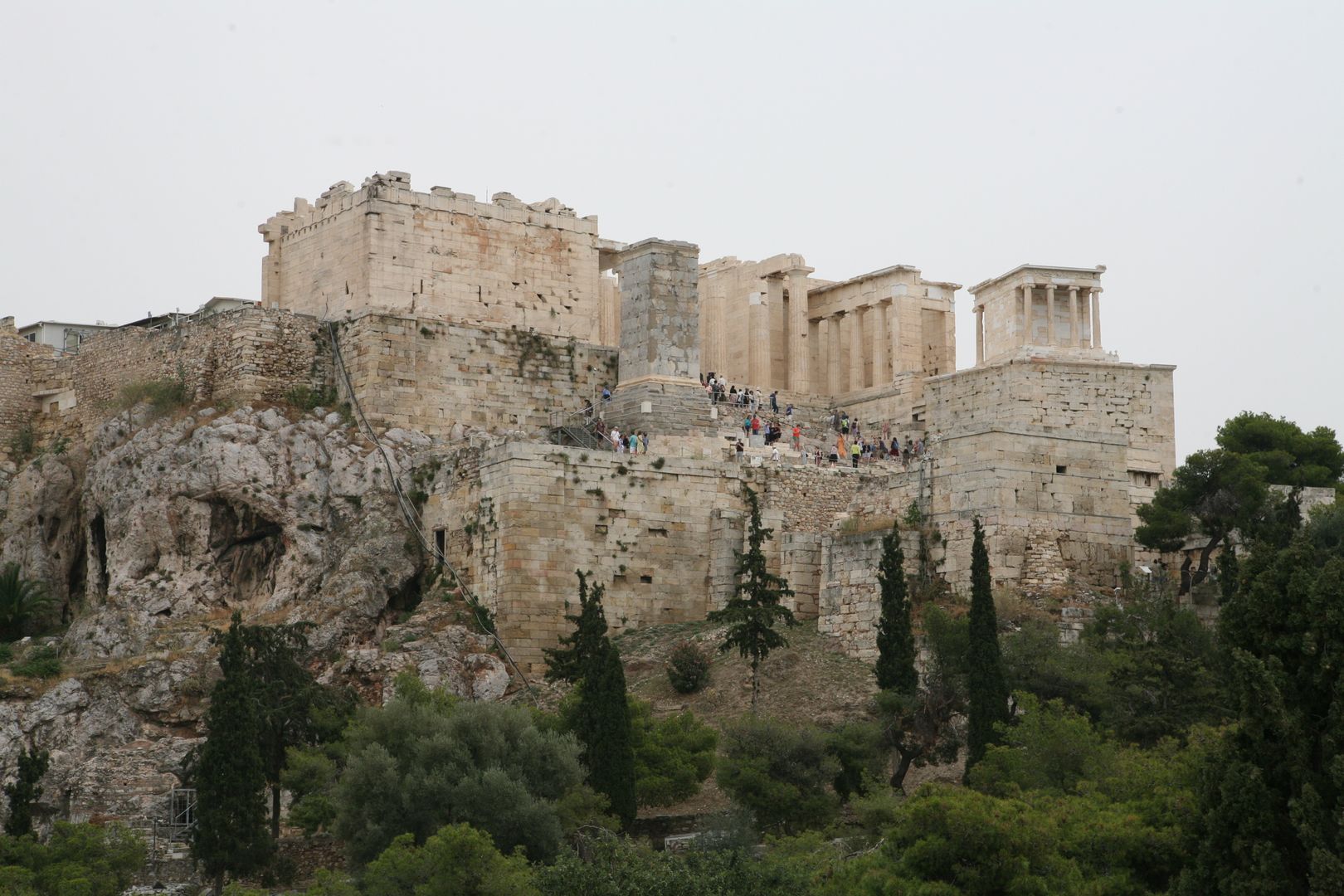
Most travellers treat Athens as a transit point — a day or two on the way to Santorini or Mykonos. This is a strategic error. The city contains the Acropolis, one of the finest ancient sites in the world, a purpose-built archaeology museum that ranks among Europe's best, several distinct neighbourhoods worth actual time, and a food scene that has developed measurably over the past decade. Three focused days in Athens are more rewarding than a rushed visit followed by a week on an island. The infrastructure exists to see the best of it without joining the cruise-ship pile-up. You just need to know how to time it.
What to do in Athens on a first visit
The city's arc is straightforward. The Acropolis and its satellite sites (the museum, the agora below) can consume two full days if you visit without crowds and let the archaeology breathe. One day in the neighbourhoods — eating, walking, sitting in squares — gives you the texture of Athens as a place people actually live. A fourth day is comfortable; three is adequate if you prioritise. Longer stays follow diminishing returns unless you're studying the classical period or the modern political history.
Most visitors skip the neighbourhoods entirely, which is the second major mistake. Monastiraki, Koukaki, Psiri, and Kolonaki are each distinct enough that an afternoon moving through them reveals more about the city than any single monument. This matters because Athens without its daily life reads as an open-air museum. With it, the weight of history feels genuine rather than staged.
The honest truth: Athens is not beautiful in the way Greek islands are. The architecture is a layered chaos of Byzantine churches, Ottoman infrastructure, brutalist apartment blocks, and tourist restaurants. The heat in summer is severe. Graffiti is widespread. The Acropolis is a profound experience; the rest of the city is compelling in a harder-edged way. Go knowing this.
How to visit the Acropolis properly
The combined ticket (€30) is non-negotiable. It covers the Acropolis itself, the Acropolis Museum, the Ancient Agora, the Roman Agora, Kerameikos Cemetery, Hadrian's Library, and the Zappeion. It's valid for five consecutive days. This single document removes the need to queue multiple times and saves money; individual entries would total €55.
Book timed entry at ereservations.culture.gr three to seven days ahead of your visit. During peak season (June to August), morning slots fill quickly. Opening time — 8am — is consistently your best option. The site is manageable for the first ninety minutes before the 9:30am cruise ship wave breaks. You'll see the Parthenon in strong light, with minimal crowds and no midday heat.
If you're visiting July or August, consider the evening window instead. The Acropolis stays open until 8pm in summer. Last entry is one hour before closing. The light is different (warmer, lower angle) and the crowds have thinned. Temperatures at 6pm are still 28–32°C but manageable. The trade is that the site lacks the clarity of morning light.
The Parthenon itself — the temple to Athena Parthenos — was built between 447 and 432 BCE. UNESCO restoration scaffolding has been present for decades and will remain for years. Don't let this deter you. The structure is extraordinary regardless. If you look along the line of the columns, you'll notice the entasis: a subtle convex curvature, designed to correct the optical illusion that straight columns appear concave from a distance. The Greeks understood mathematics and sight-line physics. You're looking at that knowledge made manifest in marble.
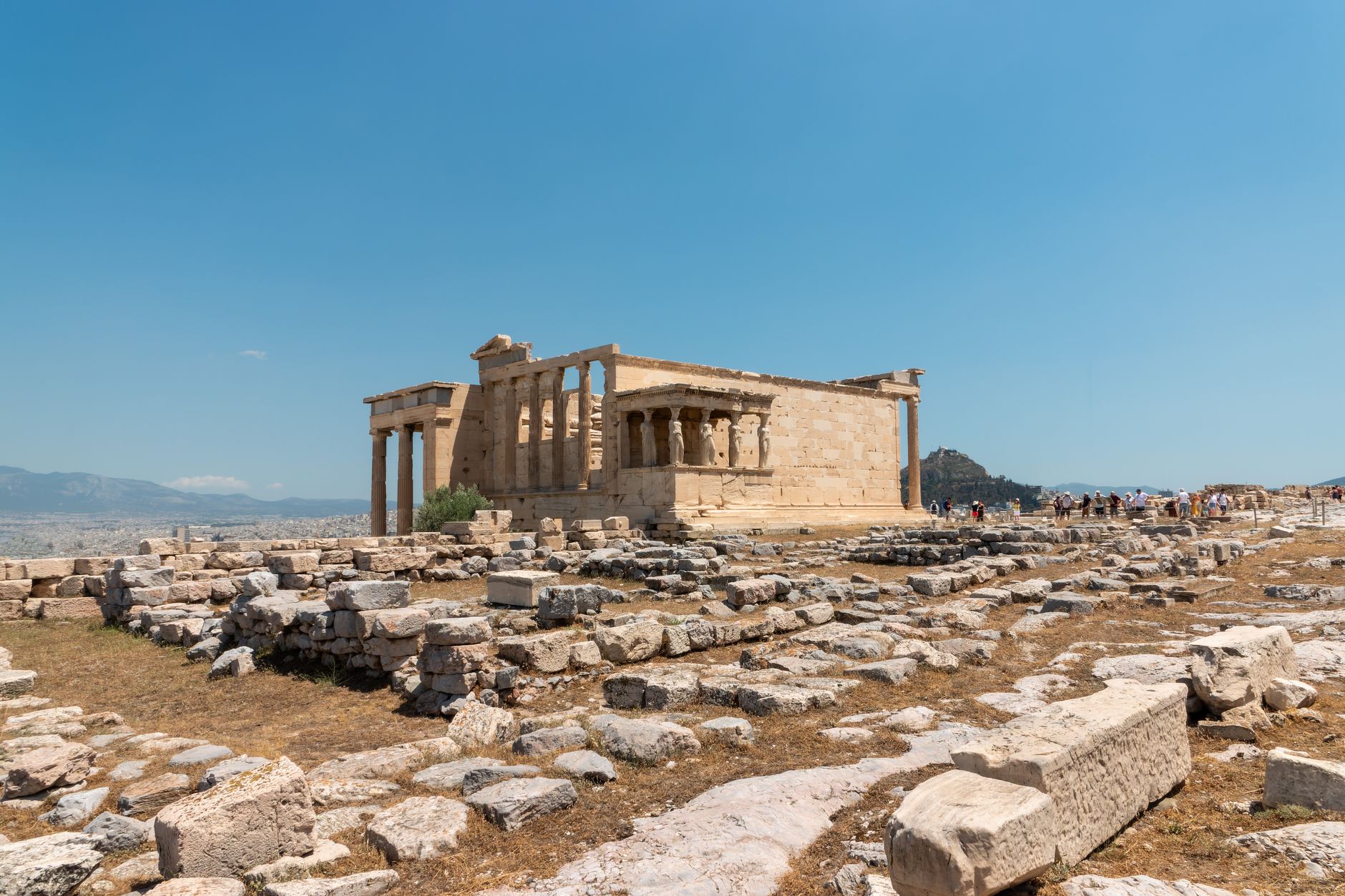
The Erechtheion, to the north, is the smaller temple. Its Caryatid porch — the row of female figures serving as columns — is famous from a hundred articles. The originals are in the Acropolis Museum; these are replicas, but the proportions are accurate.
Heat is non-negotiable in July and August. Midday temperatures reach 35–40°C on the exposed white marble of the plateau. There is virtually no shade. Bring two litres of water, wear sunscreen that blocks UVA/UVB, and wear a hat or cap. If you're visiting in these months, the 8am slot is not a recommendation — it's the only sensible option.
The views from the Acropolis extend across the city. Lycabettus Hill, to the northeast, is the only other elevated point in central Athens with comparable views. On clear days (typically October through November, after the first autumn rains clear summer haze), the Aegean is visible to the southwest. The sprawl itself is worth observing: you're looking at how ancient power (concentrated on this rock) relates to modern urban form.
Plan two to three hours. Longer visits feel diluted because there's only so much marble to absorb. Take it at eye level. The detail is in the carved friezes and the proportions, not in walking every path.
The Acropolis Museum
Below the rock sits Bernard Tschumi's Acropolis Museum, opened in 2009. It's the best purpose-built museum for a single ancient site anywhere. €15 entry (included in your combined ticket). Two to three hours is standard; four if you're reading every label.
The centrepiece is the Parthenon frieze gallery — a 160-metre display of the original carved frieze that once ran around the top of the Parthenon. The British Museum holds approximately half of it; the Elgin Marbles controversy centres on these pieces. The museum left gaps where the missing sections should be, a curatorial choice that's aesthetically awkward and politically pointed.
The rest of the collection is methodical: sculptures from the pediments, votive offerings, fragments from the site's various phases. The scale helps you understand how much of what was on the Acropolis is now missing or fragmentary. Go in the afternoon after the Acropolis, while the site is fresh in your mind.
Ancient Agora and Roman Agora: what you're actually looking at
The Ancient Agora was the civic heart of classical Athens — the marketplace, assembly point, and administrative centre combined. Two structures matter here. The Stoa of Attalos, a 2nd-century BCE market building, has been reconstructed and now houses a small museum of finds from the site. Inside are ostrakons: pottery sherds inscribed with names, the physical evidence of ostracism, the process by which Athenians voted to exile unpopular citizens for ten years. You're looking at direct democracy's capacity for erasure. The Temple of Hephaestus (449 BCE) is one of the best-preserved ancient Greek temples in existence — far better condition than the Parthenon. It's visually less famous, which means you'll stand there with perhaps five other people instead of five hundred.
The site requires €12 (included in the combined ticket) and two hours. Walk the perimeter; read the captions on the temple.
The Roman Agora is smaller and easier to digest in forty-five minutes. The centrepiece is the Tower of the Winds, an octagonal marble tower from the 1st century BCE. It's the world's first meteorological station, with a water clock inside and carved relief figures on each face representing the eight wind directions. Stand inside and look up; you'll see the interior is open to the sky. The engineering is elegant and the state of preservation is remarkable.
Neighbourhoods: where to actually stay and spend time
Monastiraki is the commercial and tourist heart of central Athens. The flea market runs daily along Pandrosou Street; it's genuinely good on Sundays when locals sell household goods and furniture alongside tourist trinkets. Street food is abundant — gyros stands, souvlaki vendors, pastry shops. Hotel rooms and Airbnb apartments are cheap. The trade-off: it's noisy, crowded, and geared entirely toward moving people through it quickly. It's a sensible base if budget is tight or you're staying only one night. It's not quiet.
Psiri is immediately adjacent, slightly less touristy. The bar scene is concentrated here; the gyros stalls are better than Monastiraki's; the feeling is more local. Graffiti is present, as is genuine character. Spend an afternoon here rather than staying overnight.
Koukaki sits directly south of the Acropolis rock — a five-minute walk from the Acropolis Museum gate. It's residential, less touristy, and the restaurant scene is genuinely good. Mid-range places with Greek menus, local ingredients, no photo menus. This is the best neighbourhood to base yourself if you're staying three or more days. The walk to the Acropolis is shorter than from Monastiraki, and the evening walk back through the streets below the rock is the closest Athens gets to the feeling that travel writing usually reserves for fake adjectives.
Exarcheia is the political and intellectual neighbourhood — anarchist bookshops, independent cafes, music venues, radical university culture. It's vibrant during the day and genuinely interesting if you're curious about leftist political aesthetics in contemporary Europe. It's not recommended for solo female travellers after dark; it's fine for groups and aware visitors during daytime. The area was politically significant in the 2008 riots and remains a node of activist culture. Don't go looking for quaintness. Go if you want to see what urban radicalism looks like on the ground.
Kolonaki is upmarket, expensive, and located below Lycabettus Hill. The Benaki Museum (Greek cultural history from prehistory to the modern era, €10) is here. The Museum of Cycladic Art (€8) holds an extraordinary collection of marble figures from 3200–2000 BCE — abstract, geometric, utterly unlike the naturalism you see elsewhere in classical Greek art. If you're interested in pre-Parthenon aesthetics, this museum is alone worth an afternoon. Both are good rainy-day options or scholarly dives.
What to eat and where
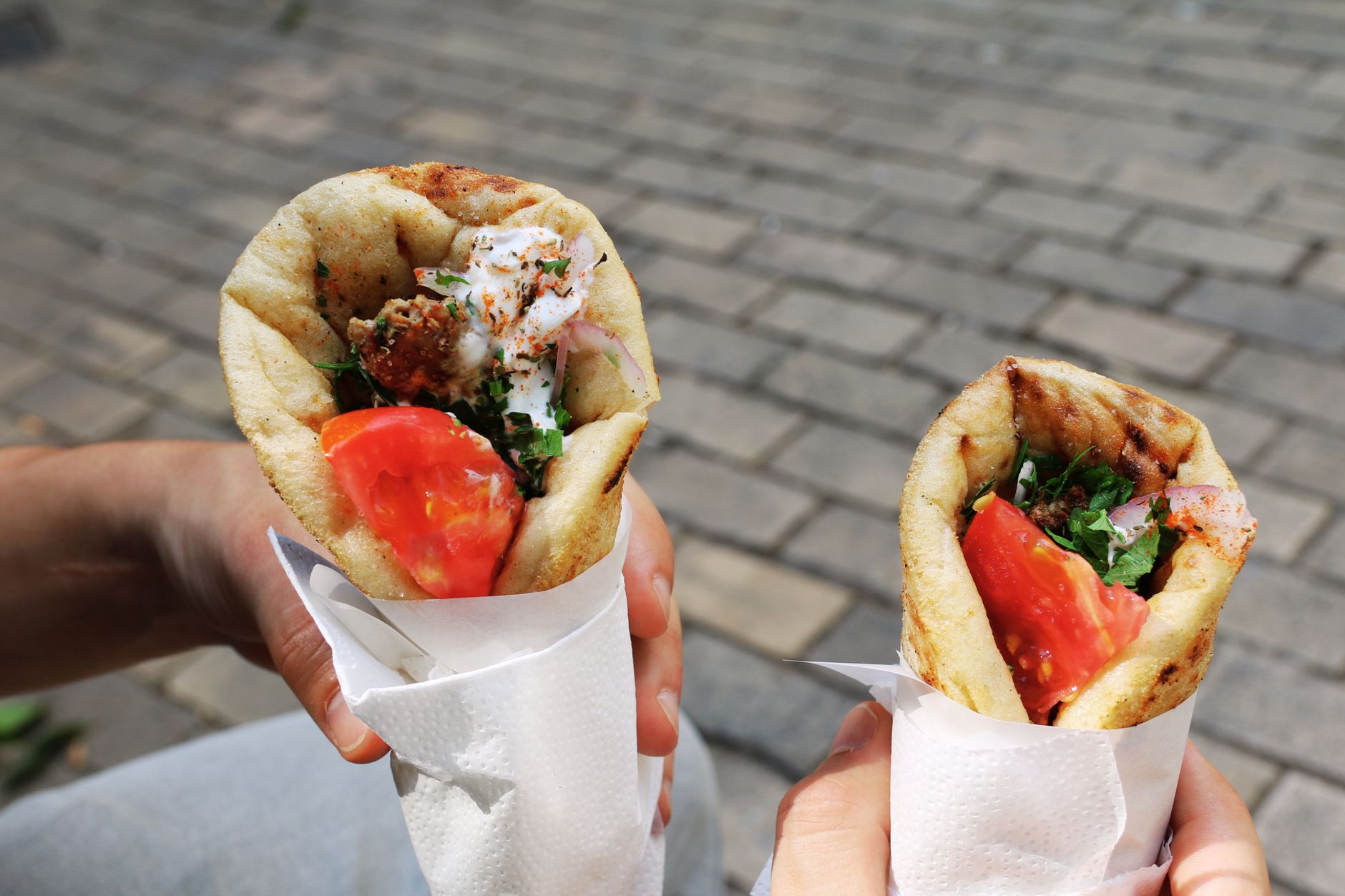
Gyros is the street food base: meat cooked on a vertical spit, carved into strips, wrapped with tzatziki, tomato, and onion in a pita. €2.50–3 at dedicated gyros shops. The rule is simple — find a place with a rotating spit visible from the street, order at the counter, watch them build it. Tourist restaurants with laminated photo menus sell inferior versions at triple the price. Thanasis in Monastiraki is the tourist benchmark because it's been there forty years and handles volume; any neighbourhood gyros stand in Koukaki or Psiri is usually better.
Souvlaki is grilled meat on wooden skewers. Most tourists see it as street food; the proper meal is souvlaki me tzatziki — a plate version with grilled meat, potatoes, onion, and a side of tzatziki. €8–12 at a proper taverna. The meat quality varies wildly; ask locals or choose a place with visible turnover and queuing.
Mezedes is the sharing appetiser tradition that dominates Greek eating culture. Taramasalata (fish roe dip, dense and creamy), spanakopita (spinach-feta pastry), dolmades (rice-stuffed grape leaves), saganaki (fried halloumi), melitzanosalata (eggplant purée). Order at mezedhopolio restaurants — they're the establishments where you walk past the open kitchen, see the prepared dishes, point at what looks good, and sit. You'll eat better and cheaper than anywhere with a wine list and English menus. Plan €12–16 per person for four to five mezedes, bread, and wine.
Athenian breakfast is tiropita (cheese pastry) or spanakopita from a neighbourhood bakery — €1.50–2.50 — with freddo espresso (iced espresso) or frappe (iced instant coffee, which genuinely works and is genuinely Greek). Both pastries are best bought before 10am. After that, quality declines.
Evening restaurants concentrate in Koukaki and on the narrow streets around the base of the Acropolis rock (around Theorias and Areopagitou streets). Avoid the obvious strip directly in front of the Acropolis entrance; it's all tourist pricing and tourist food. Cross the street and go two blocks into the residential area. You'll find proper tavernas with Greek customers, €15–20 mains, and better execution than you'll get in Monastiraki.
The food has improved substantially in the past decade. There are now restaurants in Athens that compete with food in other Mediterranean capitals. This wasn't true in 2010. It's worth eating seriously here rather than grabbing gyros in transit.
Practical logistics and timing
Transport: The Metro is efficient and covers the areas tourists need. €1.80 per trip; a day pass costs €10.50. Line 2 (red) connects Piraeus (the ferry port) to Athens Airport — €10 one-way, forty-five minutes. Line 1 (green, ISAP) runs north to south and is useful for some sites. Walking is faster than the Metro for central Athens; distances between Monastiraki, Psiri, Koukaki, and the Acropolis are all under fifteen minutes on foot.
Day trips: Cape Sounion has the Temple of Poseidon, perched on a clifftop overlooking the Aegean. KTEL buses run from Areos Park stop every thirty minutes; €8 return; ninety minutes each way. Go at sunset — the temple is lit after dark and the angle of light on the marble is the main appeal. Delphi (the oracle sanctuary, archaeological site, and museum) is three hours by bus (€10 return) and worth a full day if classical mythology and the history of Delphi's political power interest you. Most first-timers skip it; that's a reasonable choice.
Best time to visit: October through May is optimal. Summer (June to August) reaches 35–42°C on the Acropolis with virtually no shade. April and October are ideal — warm enough for sitting in squares in the evening, cool enough for walking during the day, and the light is clearer than summer's haze. May is also excellent. November through March is mild but can be rainy and grey.
Athens is the rare city where the famous sites justify the visit entirely on their own — the Acropolis at dawn, the frieze gallery in the museum, the Temple of Hephaestus below the plateau — and where everything else reads as genuine bonus rather than filler. The food has authentically improved; the neighbourhoods contain more layering than tourist writing suggests; and the city's combination of historical weight and chaotic, sometimes rough present-tense reality is a specific feeling no other European capital quite replicates. Go in April or October, stay three days minimum, book the Acropolis for 8am, and plan one evening in Koukaki.