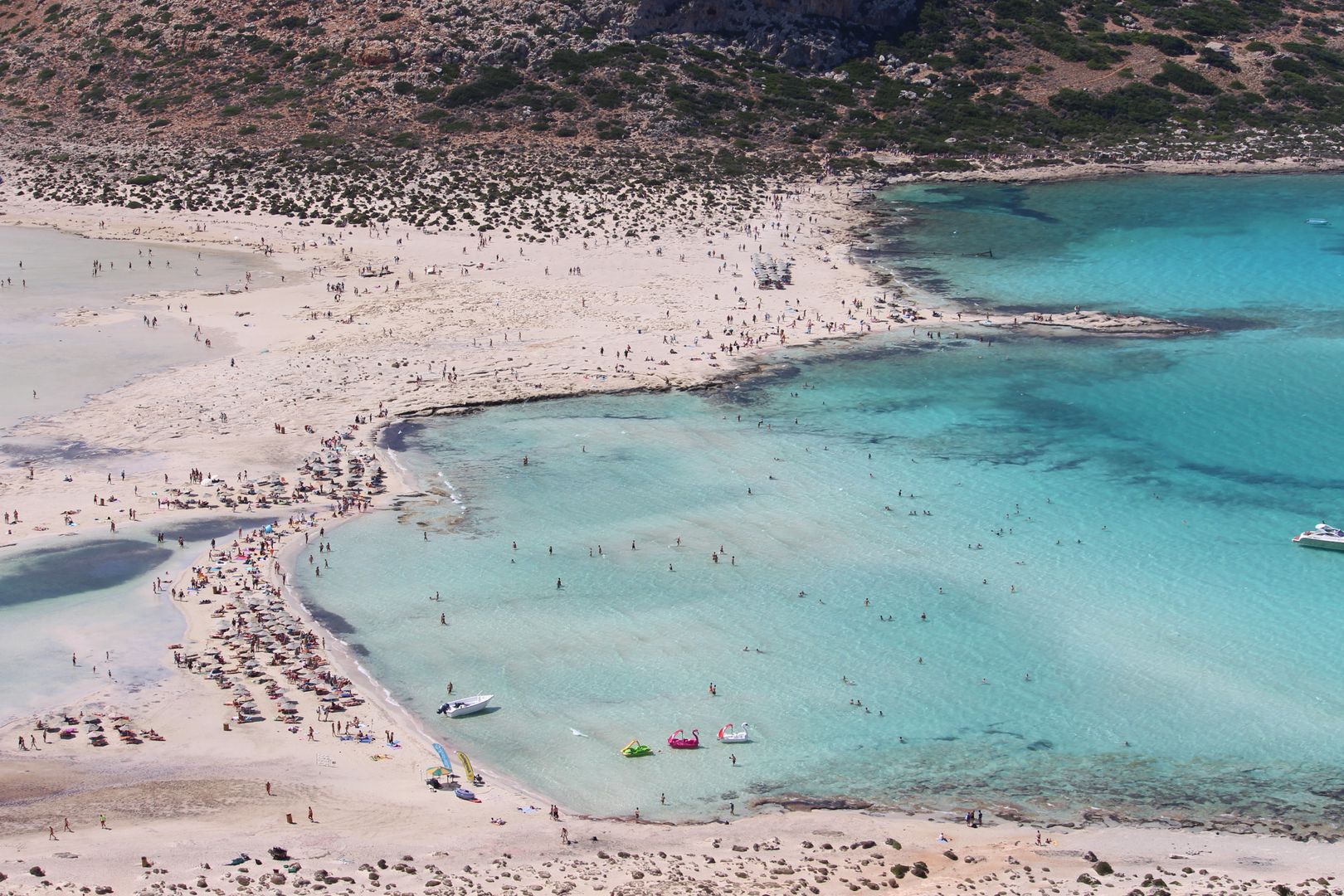
Santorini is one of the most photographed places on Earth, and the photos are accurate. The blue-domed churches against white caldera walls, the volcanic cliffs above a submerged crater — they look like that. What the photographs don't convey: Oia in August has 15,000 visitors cycling through a village of 3 km, most hotels with caldera views cost €400–1,000/night in peak season, and the island's famous beaches are black volcanic sand that burns bare feet. Santorini works best as a three-to-five-day stop, not a week-long beach holiday.
| Aspect | Santorini | Mykonos |
|---|---|---|
| Best for | Couples, dramatic scenery, wine | Nightlife, beach clubs, parties |
| Vibe | Romantic, crowded in summer, quieter villages inland | Cosmopolitan, expensive, international crowd |
| Key draw | Caldera views, archaeological sites | Beaches, nightlife, social scene |
| Beaches | Black volcanic, dark sand (hot), small | White sand, better for swimming |
| Nightlife | Limited, mostly wine bars | Strong club scene, late nights |
| Daily cost (mid-range) | €80–120 | €85–130 |
| Peak crowds | July–August: intense | July–August: equally intense |
| Best months | May, October | May, October, June |
| Recommended stay | 3–5 days | 4–6 days |
The caldera villages: location trade-offs
The island's main settlements ring the caldera (the submerged volcanic crater). Which you choose determines your experience more than anything else.
Oia sits at the northern tip. It has 3,000 residents, roughly 600 small hotels and villas, and approximately 15,000 visitors daily in August. The village is genuinely beautiful — narrow whitewashed streets, blue-domed churches, descending stone staircases carved into the cliff. The sunset viewpoint at the castle ruins (Kastro) draws crowds that peak between 6:45 and 7:15 pm. To secure a position with an unobstructed view, arrive 90 minutes before sunset in July and August. Book a dinner reservation at a clifftop restaurant instead if you want to watch the sunset without standing shoulder-to-shoulder with 2,000 people holding phones. Accommodation here is expensive: €300–900/night in peak season, €100–250 in May or October. Oia is worth one evening or one night. Not three.
Fira, the capital, sits 300 metres directly above the ferry port. It has more restaurants, better transport connections, and lower prices than Oia — typically €200–400/night in July, €70–150 in shoulder months. The caldera view is present but narrower. Most visitors use Fira as a base because it's functional: the bus station, car rental, and ferry boarding all happen here. The town is commercial and busy but less Instagram-dependent than Oia.
Imerovigli, between Oia and Fira, is the better compromise. It offers caldera views as dramatic as Oia's, roughly 60% of Oia's foot traffic, and prices €50–150/night lower. The sunset from the clifftop here is unobstructed and quiet. The village has three proper restaurants, a small supermarket, and authentic local character. Most Santorini veterans stay here, not in Oia.
Firostefani, immediately north of Fira, is smaller and cheaper still (€90–250/night in peak season), with genuine caldera views from many rooms. Fewer tourists. A ten-minute walk connects it to Fira's restaurants and transport.
Inland villages — Pyrgos, Megalochori, Kamari — offer authentic island life, lower prices (€60–120/night), and no caldera view. You trade scenery for affordability and access to locals. These work for budget travellers or those visiting a second or third time.
Beaches: black sand, high heat, limited appeal
The volcanic beach reality trips up visitors who arrive expecting white sand. Santorini's beaches are dark volcanic sand, and they absorb heat intensely. Walking barefoot at midday is uncomfortable; wearing water shoes to the shoreline is standard.
Perissa and Perivolos, on the south coast, are Santorini's main beaches. Both stretch two kilometres, with black sand, calm water, and rows of organized sunbeds (€12–15 per pair, usually with a beach bar drink included). The bus from Fira takes 30 minutes and costs €2.50. These beaches are busy but functional. The water is calm and safe for swimming.
Red Beach (Kokkini Paralia) is a smaller cove with dramatic red and black cliff walls. It's a 15-minute hike from Akrotiri village or accessible by boat. The geology is compelling, but the beach itself is cramped. Go before 9 am or after 4 pm to avoid midday crowds of 200+ people in a small space.
Kamari, on the east coast, is a longer, more relaxed black-sand beach with water sports facilities and beach bars. It's less crowded than Perissa and attracts younger travellers and families.
Honest assessment: Santorini's beaches are not a primary draw. The island is about the caldera, the villages, and the archaeology. If beach quality and swimming are the priority, travel to Crete, Naxos, or Paros instead. Santorini beaches work as a four-hour diversion, not a holiday focus.
Getting around: ATVs, buses, cars, and why taxis fail
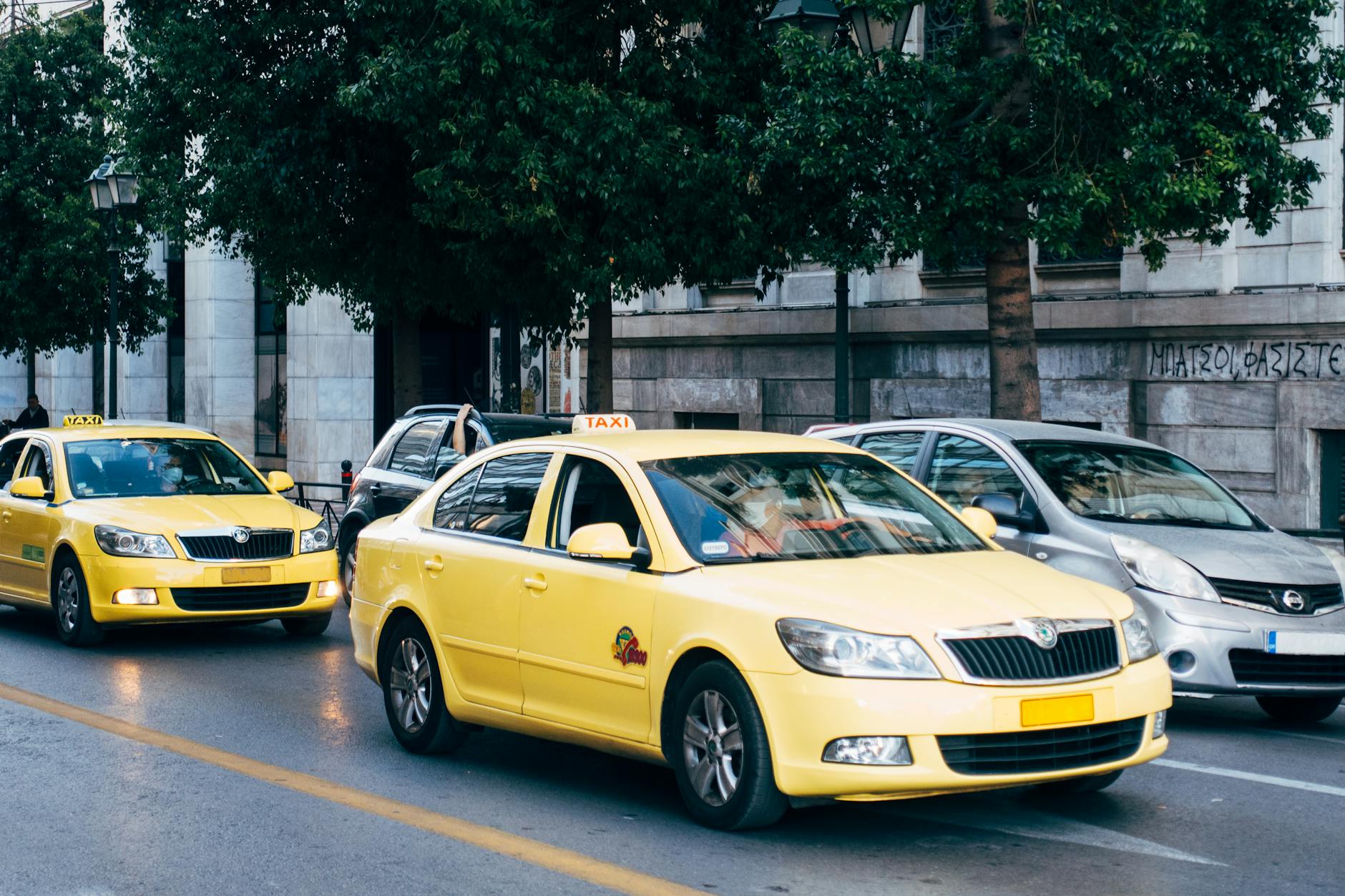
Transport options dictate daily logistics significantly.
ATVs and quad bikes rent for €30–45/day and appeal to tourists wanting independence. They're manageable on the quieter inland roads and beach-village routes. Avoid the main road between Fira and Oia during July and August — it's narrow, crowded with rental vehicles, and accident rates are high among inexperienced riders. Helmets are mandatory legally; most rental shops provide them. Riding without motorbike experience is unwise.
Local bus (KTEL) covers the main routes: Fira–Oia (25 minutes, €2.50), Fira–Perissa (30 minutes, €2.50), and Fira–Akrotiri (25 minutes, €2.50). Buses run every 30–60 minutes in summer, less frequently off-season. No air conditioning. The experience is authentic and cheap. Schedules are posted at the main terminal in Fira.
Taxi is theoretically available but practically unreliable in peak season. Waiting times exceed 30 minutes even at Fira town square in July and August. Ride-hailing apps (Uber, Bolt) don't operate reliably here. If you need a taxi, call the Fira radio taxi rank: +30 2286 022555. Expect to pay €20–35 for short journeys.
Car rental is the best option for flexibility. Nissan Micra or Fiat 500 models cost €40–70/day in peak season, €20–35 off-season. Book three months ahead for July and August. Roads are narrow — many have single-lane sections with passing zones. Parking in Oia and Fira is scarce and costs €5–10/day. Petrol is €1.60–1.80 per litre. An international driving permit and valid license are required.
What to do beyond the caldera view
The caldera view is real, but beyond 48 hours, the island needs other anchors.
Akrotiri Archaeological Site excavates a Minoan city buried by a volcanic eruption in 1600 BCE. It's better preserved than Pompeii because the volcanic ash sealed it completely — buildings, staircases, pottery, and frescoes survive intact. The site opened to excavation in 1967 and continues to reveal new findings. Admission is €15. Allow 90 minutes. It's genuinely interesting, not just scenery.
Wine tasting across three to five local producers is a legitimate half-day activity. Santorini's assyrtiko grape produces crisp, mineral-forward white wines unlike any other Greek region. The vines grow low to the ground in basket formations to protect them from the island's wind. Domaine Sigalas (north of Oia), Estate Argyros (Megalochori), and Santo Winery (Akrotiri) offer tastings and tours for €15–25 per person. Most are family-run, and the owners discuss volcanic soil chemistry and traditional winemaking. A lunch at the vineyard afterward costs €25–35.
Caldera boat tours run half-day morning trips from Fira's old port (a cable car or 287 steps down). Tours circle the caldera, stop at Nea Kameni (the active volcano island), visit the hot springs for a dip, and often stop at Thirassia island for lunch. Cost is €35–50. Tours run daily in summer; book the evening before. The experience is scenic but repetitive — every tour boat follows the same route, so you're viewing it with 100+ other people.
The caldera walk from Fira to Oia (9 km, 2.5 to 3 hours) is the island's best free activity. The path follows the cliff edge for the entire route, descending and ascending through villages (Firostefani, Imerovigli). The view changes continuously. Start at dawn or late afternoon to avoid heat and crowds. Bring two litres of water. There's no shade. The walk is more memorable than any paid activity.
Accommodation: where to sleep and what it costs
Caldera-view hotels — the primary reason people book Santorini — cost €250–350/night in mid-range chains (Astra Suites, Blue Domes), €400–800/night for more design-focused properties in Oia and Imerovigli in July and August. In May and October, prices drop to €90–200/night and availability appears. These rooms offer what you came for: morning coffee with the caldera view, sunset from your balcony. The trade-off is noise — the villages are busy, and sound carries.
Budget accommodation in inland villages (Pyrgos, Megalochori, Perissa) costs €60–120/night year-round. These places feel like actual villages — narrow streets, local tavernas, families living above shops. No caldera view. The bus to Fira takes 15–25 minutes.
Mid-range non-view hotels in Fira or Kamari run €100–180/night. They're clean, functional, and close to restaurants and transport. Perfectly adequate if the caldera view is not essential.
Book accommodation four to six months ahead for July and August. May, June, September, and October allow booking six to eight weeks ahead. November through April can be booked two to three weeks ahead, though some restaurants and smaller hotels close.
Money and pricing: what things actually cost in 2026
Santorini is one of the most expensive Greek islands. It is not a budget destination.
- Mid-range dinner at a non-view taverna (grilled fish, salad, house wine): €25–35 per person.
- Dinner at a caldera-view restaurant: €50–75 per person (same food, 100% view premium).
- Coffee: €5–7 at a touristy café, €3–4 at a village taverna.
- Beer: €6–9 at a bar, €3–4 at a supermarket.
- Ferry to Athens: €35–55 (high-speed), €20–30 (conventional), 8–14 hours depending on connections.
- Sunbed + umbrella (beach): €12–15/day with drink included.
- Archaeological site entry: €15.
- Wine tasting: €15–25 per person.
A moderate daily budget (mid-range accommodation, two modest meals, one activity per day) runs €90–130 per person. Budget for an additional €400–600/night if you want a caldera-view room.
Best time to visit: the honest seasonal breakdown
| Month | Weather | Crowds | Verdict |
|---|---|---|---|
| January | 12–15°C, rainy, windy | Minimal | Avoid |
| February | 12–16°C, rainy | Minimal | Avoid |
| March | 14–18°C, occasional rain | Low | Shoulder |
| April | 18–22°C, occasional rain | Shoulder | Good |
| May | 22–26°C, dry | Moderate | Best |
| June | 26–29°C, dry | High | Good |
| July | 32–36°C, very hot | Peak | Avoid* |
| August | 32–36°C, very hot | Peak | Avoid* |
| September | 28–31°C, dry | High | Good |
| October | 22–26°C, dry | Moderate | Best |
| November | 16–20°C, occasional rain | Low | Shoulder |
| December | 12–15°C, rainy, windy | Minimal | Avoid |
*July and August are avoidable unless you have fixed dates. Expect 15,000+ daily visitors in villages, €500–900/night for decent rooms, 90-minute waits for sunset viewing, and heat above 33°C.
May and October are the correct answer. Weather is consistently 22–26°C, warm enough for swimming without heat stress, and 40–60% fewer visitors than July and August. Accommodation books without a year's advance notice. Restaurants stay open. Prices are 30–40% lower. The trade-off is slightly higher chance of wind or a rainy afternoon.
June and September are good alternatives if your dates are fixed. Still busy but manageable. Weather is warm and stable. Some availability at mainstream hotels without booking a year ahead.
April and November are shoulder months. Fewer tourists, lower prices. Wind is more frequent, and some smaller hotels and restaurants close seasonally. The risk of rain is higher. Worth considering only if you accept the trade-offs.
July and August are popular because of school holidays and vacation calendars, not because they're the best time to experience the island. The heat exceeds 33°C, the villages are overwhelming, and you'll see more phones than people. Book everything 6–12 months ahead if you must travel then.
What Santorini does better than other Greek islands
Dramatic scenery — the caldera and cliff villages — has no equal in Greece. Mykonos and Crete offer beaches; Rhodes has history. Santorini offers a landscape you recognize immediately, which is both an asset and a liability.
Wine and food are genuinely excellent. Assyrtiko wine from Santorini is world-class. Fava (yellow pea dip), saganaki (fried cheese), and grilled fish are done well across the island, even in tourist traps.
The Akrotiri site and the Bronze Age archaeology are intellectually compelling and less crowded than sites on Crete.
Mykonos has better beaches and more nightlife; Crete has better food and lower prices; Naxos has better value and less tourism. Santorini's advantage is pure scenery — it delivers the postcard image exactly.
FAQ
Is it worth visiting Oia if I'm not watching the sunset there?
Oia's appeal is entirely visual — the sunset, the blue domes, the narrow streets for photos. If you're not planning to watch the sunset or photograph the village, skip it and spend the time walking from Fira to Imerovigli or Akrotiri instead. The caldera view from Imerovigli is as dramatic with 80% fewer people.
What's the best strategy to see the sunset without standing in a crowd for 90 minutes?
Book a dinner reservation at a clifftop restaurant with a west-facing view (Ambrosia, La Maison, or Sunset Taverna in Oia; Astra in Imerovigli). Watch the sunset from your table with food and wine, not standing in a scrum at Kastro. Cost is €50–75 per person, which is a premium for comfort and a guaranteed seat.
Can I visit Santorini as a day trip from Athens?
Technically yes. The high-speed ferry takes 4.5 hours each way; a round trip with six hours on the island is possible. It's exhausting, and you'll spend half your time in transport. Stay overnight, minimum two nights if you want to experience anything beyond the Oia sunset.
Are ATVs safe, or should I just take the bus?
ATVs are safe for experienced riders on quiet roads. If you've never ridden a motorbike or scooter, use the bus or rent a car. The main road between Fira and Oia sees accidents regularly in summer, mostly from inexperienced renters. Helmets are mandatory and usually provided.
Which village should I base myself in if I want the caldera view but don't want Oia crowds?
Imerovigli. It has the same cliff-edge views as Oia, genuinely excellent restaurants and small hotels, and roughly 60% of Oia's tourism density. Prices are €50–150/night lower. The sunset here is unobstructed and quiet. It's where experienced Santorini visitors stay.
Is Santorini worth the money?
Yes, for the caldera and the archaeology, if you visit in May or October. The dramatic cliff scenery and Akrotiri site justify the cost. No, if you're coming for beaches — Crete or Naxos offer better value and better swimming. The postcard image is real, but it requires proper timing (shoulder season) and willingness to skip peak-season crowds and heat.
Santorini works best for couples seeking dramatic scenery and fine wine, or for anyone visiting Greece for the first time who wants the most iconic experience. Book for May or October, stay three to five days, base yourself in Imerovigli or Fira, and plan the caldera walk rather than queuing for the sunset. Spend money on accommodation with a view and a good dinner; skip the overpriced sunset viewing at Kastro.