
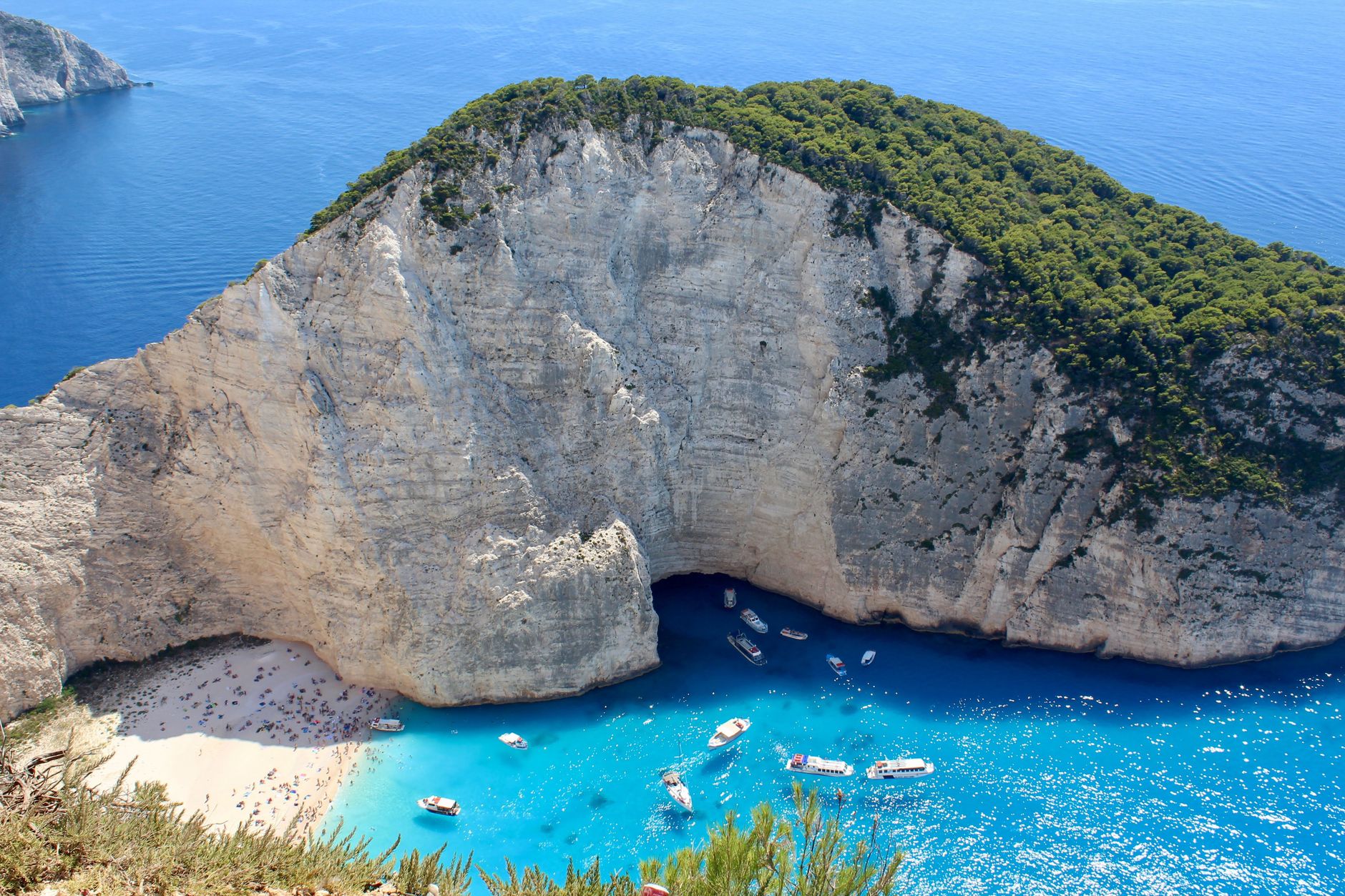
Zakynthos — marketed internationally as Zante — is an Ionian island on Greece's west coast. The island's most circulated image is Navagio Beach (Shipwreck Beach): a rusted 1980s cargo ship run aground in a white-sand cove enclosed by vertical limestone cliffs, with water the colour of deep ocean blue. The photograph is accurate. The cove is accessible only by boat, the cliffs above it are accessible by road, and the viewing experience from 200 metres up is one of the few places where the widely reproduced image matches the actual scene.
Getting to Zakynthos
From Athens: internal flight (Aegean or Olympic Air, 40 minutes, €50–100), or the coach-ferry combination (bus Athens to Kyllini, 2h30; ferry Kyllini to Zakynthos Town, 1h15, €9–12 per person). Ferries carry cars at approximately €40–50 per vehicle.
From Northern Europe: direct charter and scheduled flights from May to October from most major airports. Off-season, connect via Athens.
Zakynthos Town (Zákynthos) is the main arrival point — rebuilt after the 1953 earthquake that destroyed most original Venetian-era architecture. The reconstructed waterfront and main strip are functional; the Byzantine Museum has icons salvaged from the earthquake. Car rental agencies cluster at the port.
Navagio Beach
The northwest coast cove is in a section of cliff accessible only by sea. The vessel (MV Panagiotis, grounded 1980 — officially carrying contraband cigarettes) lies on white shingle. The water is clear to the bottom and sheltered by the cliffs on three sides.
Boat trips from Porto Vromi (20 minutes, €15–18/person) and Agios Nikolaos (45 minutes, €18–22). Tours typically allow 40–60 minutes in the cove for swimming. The cove is not sandy underfoot — it's coarse white shingle — but the swimming from the shoreline or directly from the boat is excellent.
The clifftop viewpoint above Navagio: accessible by car via Anafonitria village, then a short walk. Free. The same angle used in most published photographs, 200 metres above the cove. A clear view on a calm day produces one of the more direct visual payoffs of any Greek island.
The Blue Caves
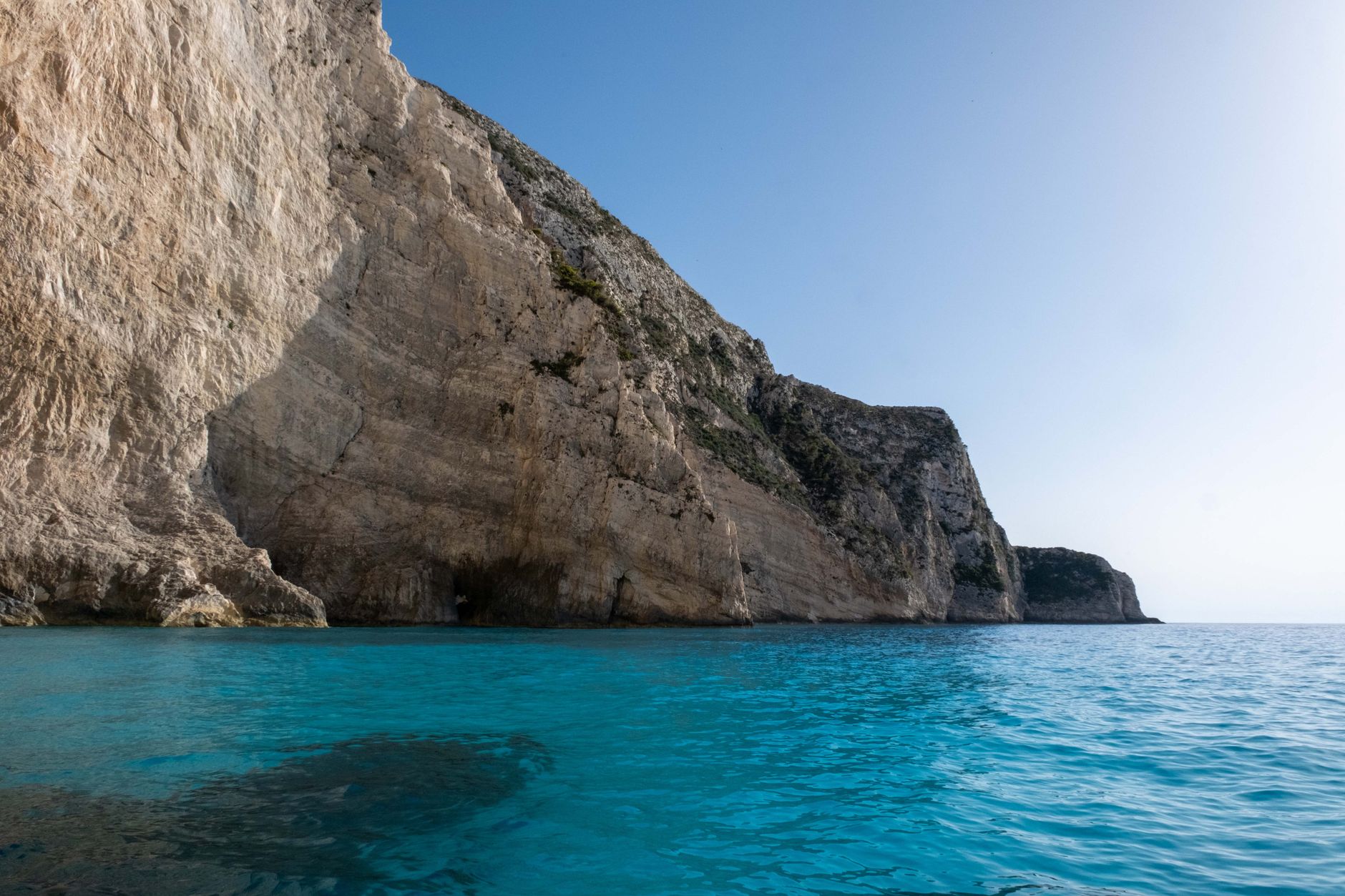
A series of sea arches and caves on the northwest coast near Cape Skinari. The blue effect is optical: light enters through the water from below and reflects off the limestone walls, producing vivid blue and cyan tones. Strongest in the first three hours of daylight.
Boat trips from Agios Nikolaos (the northern tip, 30 minutes by road from Zakynthos Town): approximately €10–15, including time to swim through the caves. Snorkellers and swimmers can access some caves independently from the shore platforms near the cape.
Sea Turtle Protection at Laganas Bay
The Dytikis Zakynthos National Marine Park covers Laganas Bay on the south coast — one of the main Mediterranean nesting sites for loggerhead sea turtles (Caretta caretta). Nesting season runs June–August; hatching August–October.
Regulations in season: no umbrellas or sunbeds within marked nesting zones, no foot traffic on specific beaches (Dafni, Sekania) between dusk and dawn, reduced boat speeds in the bay. ARCHELON (the Greek sea turtle protection society) runs a research and volunteer programme at Gerakas Beach.
Turtle sightings from land: common at Laganas and Gerakas beaches during daylight hours — adults feeding in shallow water close to shore. The probability in June–September is high; mornings are better than afternoons.
Other Beaches
Porto Limnionas: northwest coast, a narrow rocky gorge where the sea meets the land. Deep turquoise water with high visibility to the bottom. Reached via a short path from a small car park. One of the clearest swimming locations on the island.
Xigia: north coast. Natural sulphur springs seep from the seabed, giving the water a faint mineral smell and a slightly warm temperature near the springs. The novelty is real; the smell is mild.
Gerakas: southeastern tip. Sandy, gently sloped, good for turtle sightings. Seasonal restrictions during nesting; no umbrellas in the protected zone. Quieter than Laganas.
Dafni: close to Gerakas, one of the main nesting beaches. Access restricted from dusk to dawn during nesting season.
Getting Around
Car rental is necessary — no useful public bus network serves tourist destinations. Book ahead for summer. A compact car: €30–55/day in peak season. Scooter rental is available for those comfortable on narrow roads.
When to Go
May and September are the practical optima: 25–26°C air temperature, sea around 22–25°C, fewer arrivals, lower prices. June is excellent for the pre-peak window. July–August is British package holiday peak season at Laganas Bay specifically; the north and west of the island are unaffected by that concentration.
Frequently Asked Questions
Can you swim at Navagio Beach?
Yes, but only by arriving by boat. The cove has no land access. The swim from the water's edge or directly from the boat is the experience; the white shingle beach serves as a staging area.
Is Zakynthos a party island?
Laganas Bay has one of the busiest party strips in Greece, concentrated along the waterfront. The rest of the island is not like this. The two characters coexist on the same island.
Are turtle sightings guaranteed?
No, but probability is high in June–September at Laganas and Gerakas during morning hours. The ARCHELON team at Gerakas Beach can advise on current nesting and hatching activity.
What's the best beach for clear water swimming?
Porto Limnionas for cove swimming with exceptional clarity. Gerakas for a sandy approach. Navagio for the experience of swimming inside the cove.
Is it worth combining Zakynthos with Kefalonia?
Yes — Kefalonia is the next island north, with a summer ferry from Agios Nikolaos (1h15). Myrtos Beach and Melissani Lake on Kefalonia are strong additions to a combined Ionian island trip of 10–12 days.


