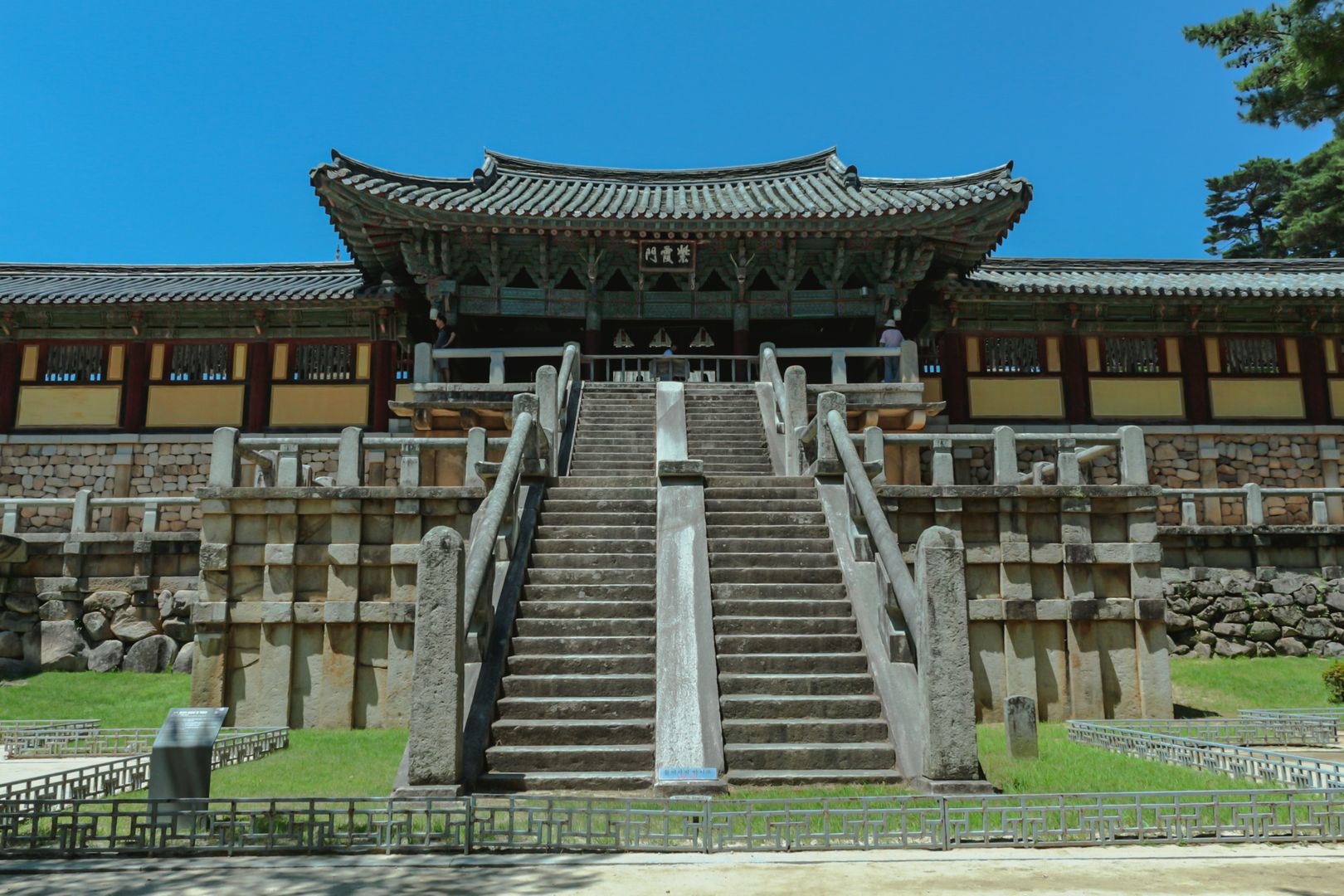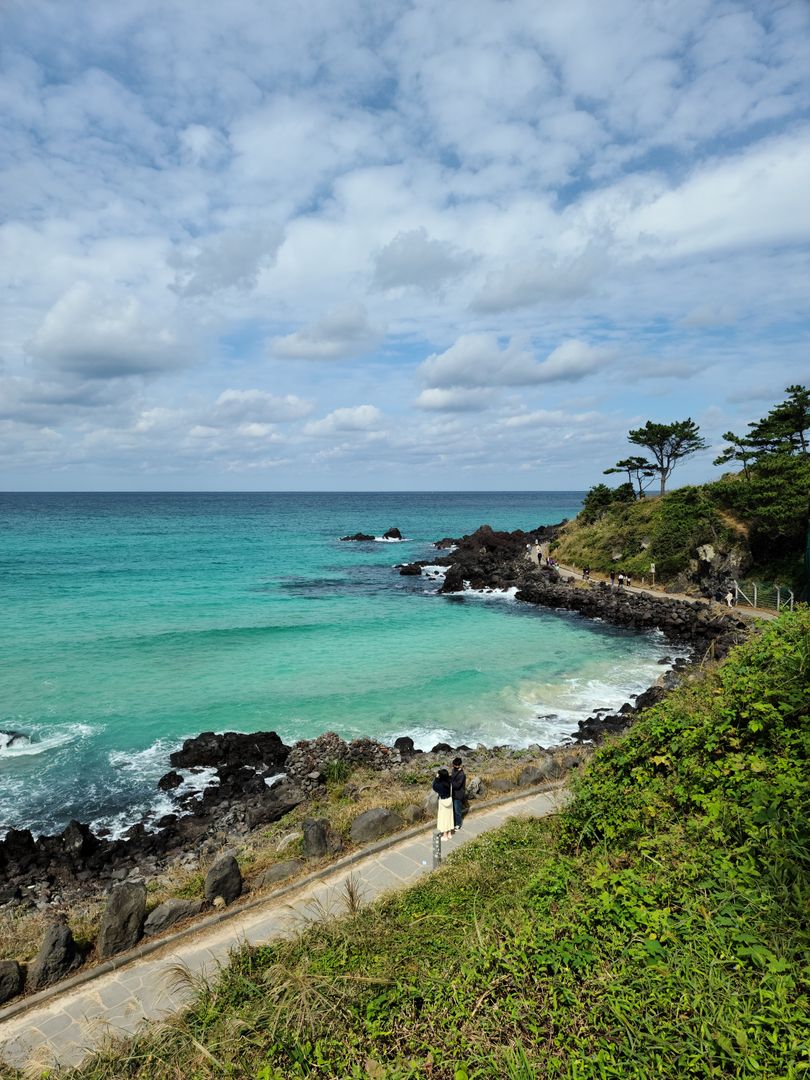

Busan has 3.4 million people, South Korea's busiest container port, and a geography shaped by the meeting of mountains and sea — ridges drop steeply to beaches and harbour, producing neighbourhoods built on improbable gradients. The city lacks Seoul's historical monument concentration and metropolitan density but has a more immediate coastal character: working fish markets before dawn, temple complexes on sea cliffs, beaches that function as actual beaches rather than resort attractions. The food — raw seafood bought at market and eaten upstairs, Korean fried chicken with beer on the beach, haejangguk (hangover soup) for breakfast — is among the best practical eating in Korea.
Gamcheon Culture Village
Gamcheon Culture Village is a hillside neighbourhood originally built as housing for Korean War refugees and Taegukdo religious community members in the 1950s. In 2009, a government arts project worked with local artists and residents to paint buildings, add murals, and create small installations through the neighbourhood's narrow alleyways. The result is a densely layered visual environment of stairways, painted facades, and occasional sculptures — the most photographed of which is the silhouette of the Little Prince character on a rooftop with a view over the bay.
The village is best visited on weekdays in the morning (before the tourist buses arrive from 10:30am). A stamp-collecting map (KRW 2,000) guides visitors through the main installations and gives a discount at participating cafés. The residential character of the neighbourhood — people actually live in most of these houses — is most apparent before noon. The views down toward Busan Port and the Namhang Bridge are the best orientation for understanding the city's geography. Take bus 1-1 from Toseong-dong subway station (1 stop from Busan Station).
Jagalchi Fish Market
Jagalchi is Korea's largest fish market, running along the southwest waterfront. The outdoor section has rows of vendors with tanks and trays of live fish, shellfish, octopus, and sea cucumber; the covered hall has further stalls and a restaurant level above where the catch is prepared. The standard approach: buy raw seafood on the ground floor (price per 100g negotiated or displayed) and take it to a restaurant upstairs (KRW 10,000–15,000 corkage fee per person for preparation). Halmeoni Hoe (raw fish sliced to order) with gochujang and perilla leaf is the typical preparation; abalone, geoduck, and turban snails are the more adventurous options.
Jagalchi operates daily but is most active between 5am and 10am when the morning catch comes in and the restaurants are preparing for the day. The market has been at this location since the 1920s; the current building dates from 2006. The Gukje Market (KRW walking distance north of Jagalchi) is Busan's general market — clothing, tools, dried seafood, housewares, and a street food section with ssiat hotteok (a Busan-specific stuffed pancake with sunflower seeds and cinnamon sugar, KRW 1,500) that has become disproportionately famous.
Haeundae Beach and the East Coast
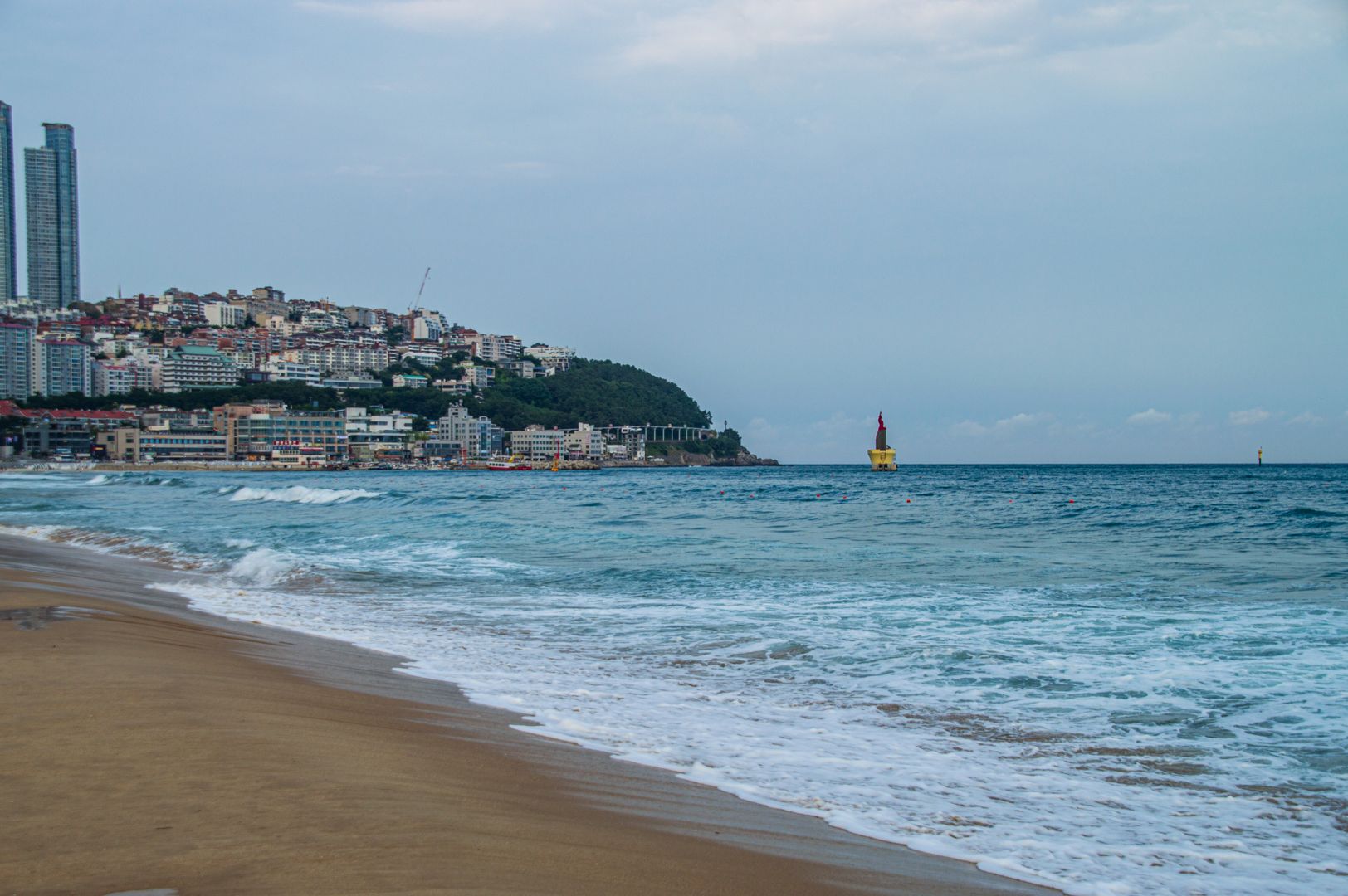
Haeundae is Korea's most famous beach — 1.5km of sand between two headlands in the northeast of Busan. In summer (July–August), visitor numbers can reach 1 million per month; lifeguards, beach police, designated swimming sections, and queues for everything. At those concentrations, the beach is more an urban social spectacle than a swimming destination. In September and October (warm water, lower crowds) or early June (before peak season), it's a genuinely usable beach. Haeundae subway station on Line 2 connects directly.
Gwangalli Beach, 3km west of Haeundae, is a smaller beach (900m) with a local rather than resort character — the bars and restaurants along the beachfront are occupied primarily by Busan residents rather than tourists. The Gwangan Diamond Bridge, a cable-stayed bridge illuminated at night, frames the view from the beach. Summer evenings on Gwangalli are the most comfortable version of Busan's beach culture: convenience store beer, food from the strip, music from the bars, the bridge lit behind the dark water.
Haedong Yonggungsa Temple
Haedong Yonggungsa, 20km northeast of central Busan on the coast, was founded in 1376 and rebuilt after the Korean War. It's one of the few Buddhist temples in Korea built directly on the sea — most temples are on inland mountains. The temple complex rises on a series of terraces from the rocky shoreline, with the main hall overhanging the water. The approach is through a tunnel of lanterns and past a line of stone zodiac animals; the scale is modest but the location is dramatic. Most notable at dawn (sunrise visible over the sea from the main terrace) and during the Lantern Festival. Bus 181 from Haeundae Station takes 40 minutes; avoid weekends when the approach path is very crowded.
BIFF Square and Nampodong
BIFF Square (Busan International Film Festival square) on Chungang-daero in the Nampo neighbourhood was the original outdoor venue for the festival before it moved to the purpose-built Busan Cinema Center in Centum City. The square still has hand prints of film celebrities, open-air screenings during festival season (October), and a street food strip worth visiting regardless of the film calendar: ssiat hotteok, tteokbokki, sundae (Korean blood sausage), and grilled clams from stalls running the full length of the square.
Taejongdae and the Southern Headland

Taejongdae, at the southern tip of the Yeongdo peninsula (30 minutes by bus from Nampo), is a forested coastal park with cliffs dropping 60–70m to the sea. The Danubi tourist train (KRW 2,000) circles the 4.3km park loop; the Yeongdo Lighthouse at the southern tip has a seafood restaurant on the rocks below the cliff. The geological formation — columnar basalt and exposed metamorphic rock — is the same as Jeju's coastline in miniature.
Getting to and Around Busan
KTX from Seoul Suseo or Seoul Station to Busan takes 2h30 (KRW 52,600 one way for standard, KRW 59,800 for first class). Busan Station is on subway Line 1. The metro has two main lines (Line 1 running north–south, Line 2 running east–west) that cover most of the tourist sites. Gamcheon requires a bus change; Haedong Yonggungsa is bus-only. The Busan City Tour Bus (KRW 15,000 per day) covers the main sites on a hop-on hop-off route.
Practical Costs
A guesthouse near Busan Station or in Nampodong runs KRW 30,000–60,000 (USD 22–43). Mid-range hotel KRW 80,000–150,000. Street food: KRW 2,000–6,000. Jagalchi seafood meal (including market seafood + upstairs preparation): KRW 20,000–40,000 per person. Restaurant dinner: KRW 15,000–35,000 per person. Busan is marginally cheaper than Seoul for equivalent quality, and the concentration of seafood at market prices makes food value exceptional.