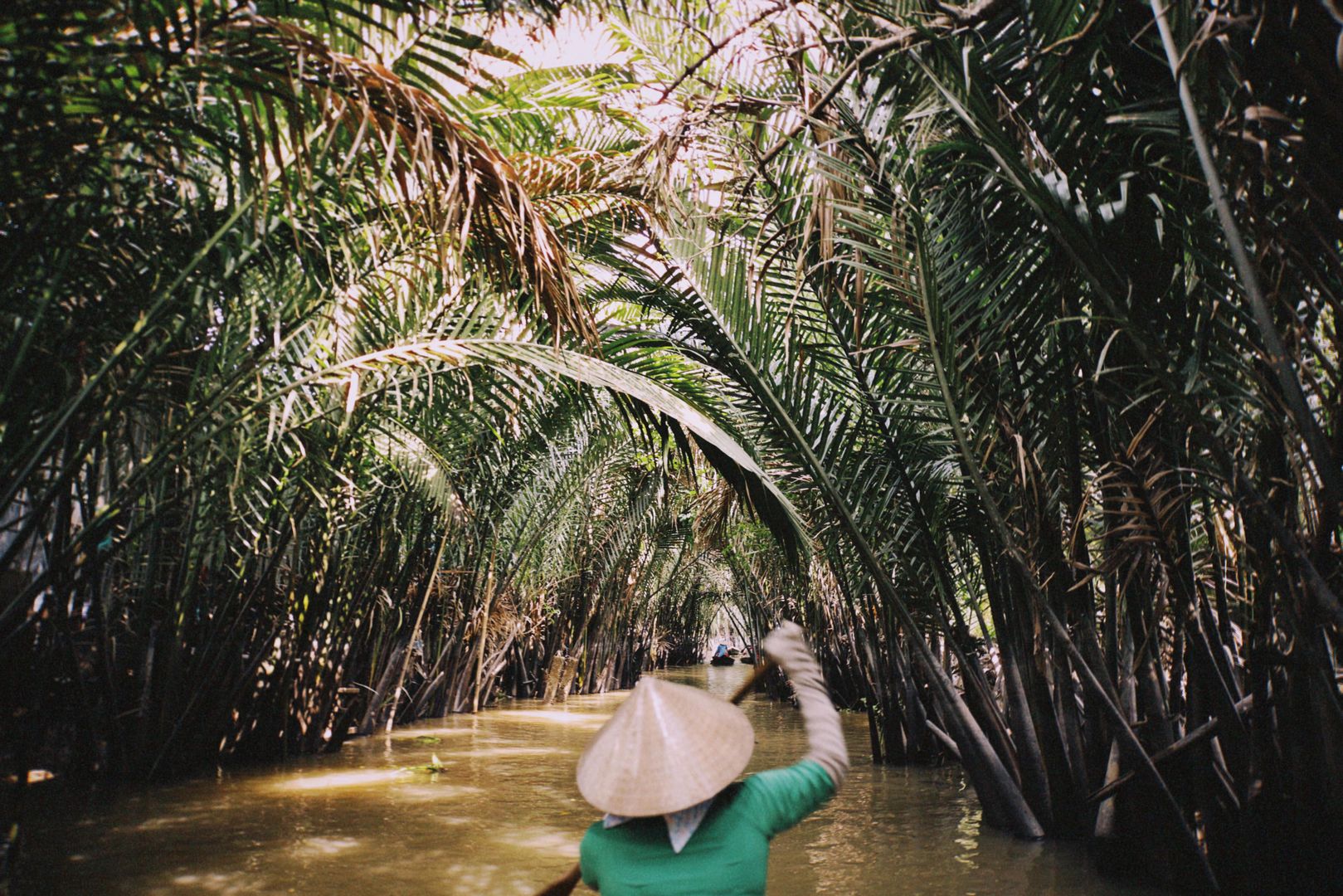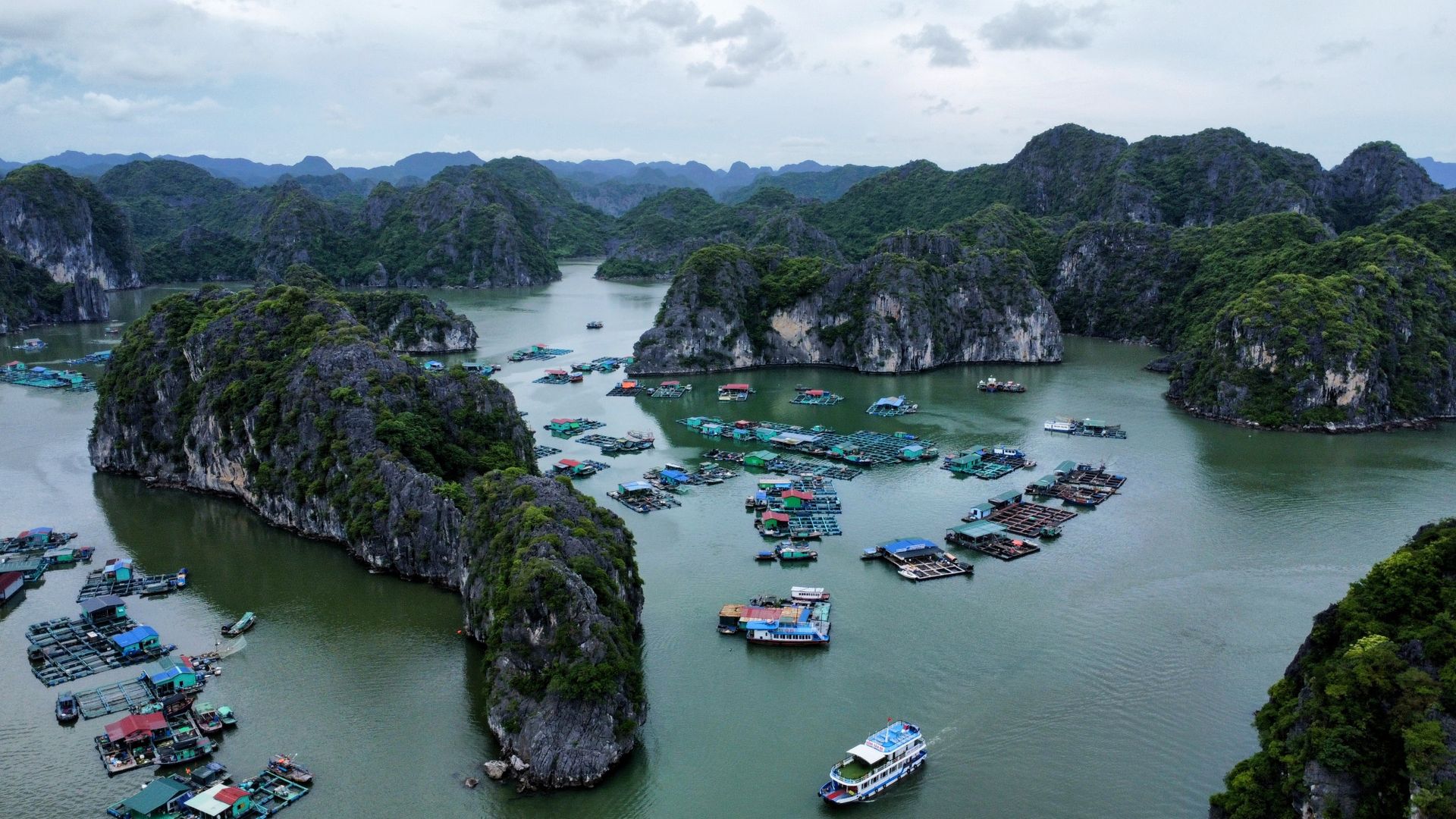

Ha Long Bay covers 1,553 km² of the Gulf of Tonkin in northeastern Vietnam, containing 1,969 islands of limestone karst rising from the sea. The geology is the same as Guilin in southern China — the same limestone plateau eroded over 500 million years, the difference being that Ha Long's karsts emerge from water rather than land. It's been a UNESCO World Heritage Site since 1994 and receives 2–3 million visitors annually. The challenge for visitors isn't whether to go but how to structure the visit so the quality of the experience justifies the logistics.
Ha Long vs Lan Ha Bay vs Bai Tu Long Bay
Ha Long Bay proper is divided from the adjacent Lan Ha Bay by a line on the map rather than any physical distinction — the limestone karsts continue without interruption. Lan Ha Bay, accessible from Cat Ba Island, holds 300+ islands and is included in the Cat Ba Archipelago UNESCO extension. Its primary advantage is fewer boats: Ha Long Bay's central area (particularly the sector containing Sung Sot Cave and Titov Island) runs 400–500 cruise boats at any given time during high season. Lan Ha Bay, approaching the same islands from the opposite side, has a fraction of that traffic.
Bai Tu Long Bay lies immediately northeast of Ha Long and shares the same landscape without any significant development. Cruises to Bai Tu Long are fewer and longer (minimum 3 days recommended); the furthest island clusters are genuinely remote. The island of Van Don in Bai Tu Long has airport access (Yen Bai), making a Bai Tu Long cruise without the Hanoi bus transfer practical, though the flight adds cost.
The Overnight Cruise: What to Expect
The standard Ha Long Bay experience is a 2-day/1-night cruise departing from Tuan Chau International Marina (the new departure point since 2019, replacing the older Ha Long City pier). The package includes return transfer from Hanoi (3.5 hours each way by bus or private car), meals, kayaking or bamboo boat access to limestone caves, and a dawn cruise through the karsts before return. Prices range from USD 80–120 per person at the budget end to USD 250–450 per person for traditional wooden junk boats with small cabin numbers and higher staff ratios.
The quality difference at the lower price points is real. Budget cruises pack 50–100 passengers onto boats designed for the volume; kayaking is in groups on a fixed schedule; the cave visits are herded. Mid-range (USD 140–200) typically means a boat of 20–30 passengers, private or semi-private kayaks, and a more flexible itinerary. Above USD 250, the boats are smaller (under 20 passengers), the food quality improves substantially, and the routes tend to include more remote sections of the bay. Booking through a reputable Hanoi tour operator rather than the cheapest option online is the single most effective variable.
A 3-day/2-night cruise covers significantly more territory and reaches the outer karsts that day trips cannot access. For anyone with the time, the extra night qualitatively changes what's possible. Kayaking at dawn through a karst-enclosed lagoon, with no other boats visible, is the difference between a satisfying trip and a genuinely memorable one.
Kayaking and Cave Access
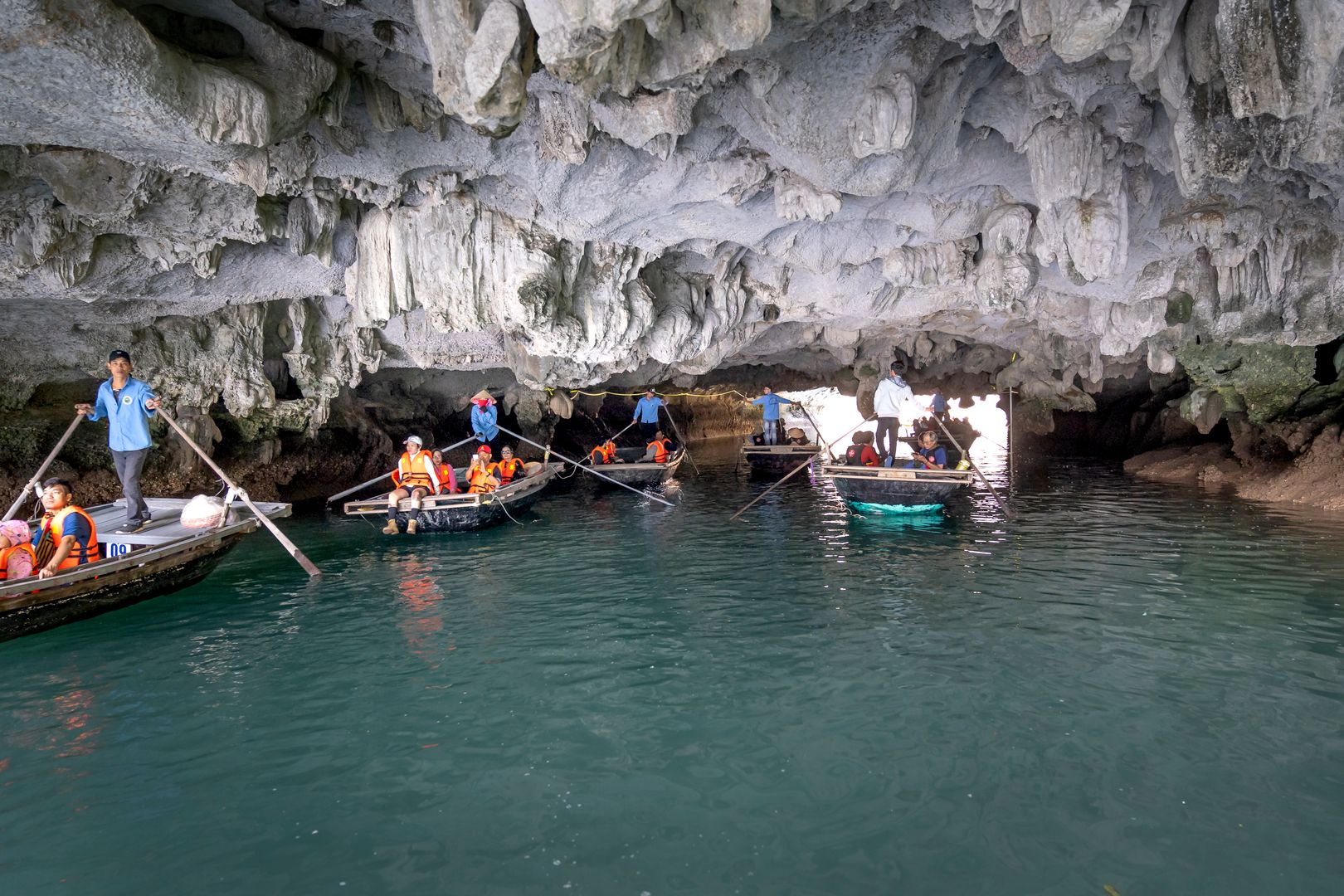
Hung Sot (Sung Sot) Cave, the most-visited cave in the bay, is a two-chamber cave with heavy stalactite formations — large, well-lit, and frequently containing 500+ tourists. It's impressive by any objective measure and somewhat overwhelming as an experience. Thien Cung Cave is smaller and less visited. Luon Cave (accessible by kayak through a low entrance into an enclosed lagoon) is quieter and rewards the physical effort of the low-clearance paddle.
Dark and Light Cave (accessed from Lan Ha Bay) has a section requiring a low-crawl swim in the dark — torch provided, possible for most adults, not possible at high tide. It's on fewer cruise itineraries than the main Ha Long caves, which is the reason to seek it out. Pearl Farm visits and fishing village stops (Cua Van floating village is the most-visited) are standard on most itineraries; they vary from genuinely interesting to perfunctory depending on how much time the cruise allocates.
Cat Ba Island
Cat Ba Island (32,000 ha) is the largest island in the Ha Long/Lan Ha Bay area and functions as a base independent of the cruise system. Staying on Cat Ba and doing day boat trips into Lan Ha Bay (USD 20–35, typically 8 hours including kayaking and snorkelling) eliminates the bus transfer logistics, allows multiple days of exploration without being locked into a single cruise itinerary, and is generally cheaper than equivalent overnight cruise quality.
Cat Ba National Park covers the central and northern portions of the island — the last habitat of the Cat Ba langur, one of the world's rarest primates, with a population of around 90 individuals. Hiking trails cross the park interior (best with a guide); the Hospital Cave (a three-story underground complex built in 1963 as a military hospital and command centre during the American war, USD 4) is accessible by motorbike from Cat Ba town. The town itself has a functioning fishing harbour, a reasonable range of guesthouses (USD 20–50) and restaurants, and a beachfront promenade.
Getting to Ha Long Bay
The standard route from Hanoi is by bus to Tuan Chau Marina (3.5 hours, typically included in cruise packages at USD 7–12 per person, or via the Lien Minh shuttle bus VND 150,000). The Ha Long City Express Bus from Hanoi's My Dinh station runs every 30 minutes (VND 120,000, 2.5 hours to Ha Long City). For Cat Ba, the route goes Hanoi to Hai Phong by train or bus (2.5 hours), then ferry or speedboat to Cat Ba (45 minutes, VND 60,000–200,000 depending on boat type). Halong Bay direct airport (VBB, opened 2022) accepts some international charters and domestic connections; this route is still developing.
Practical Costs
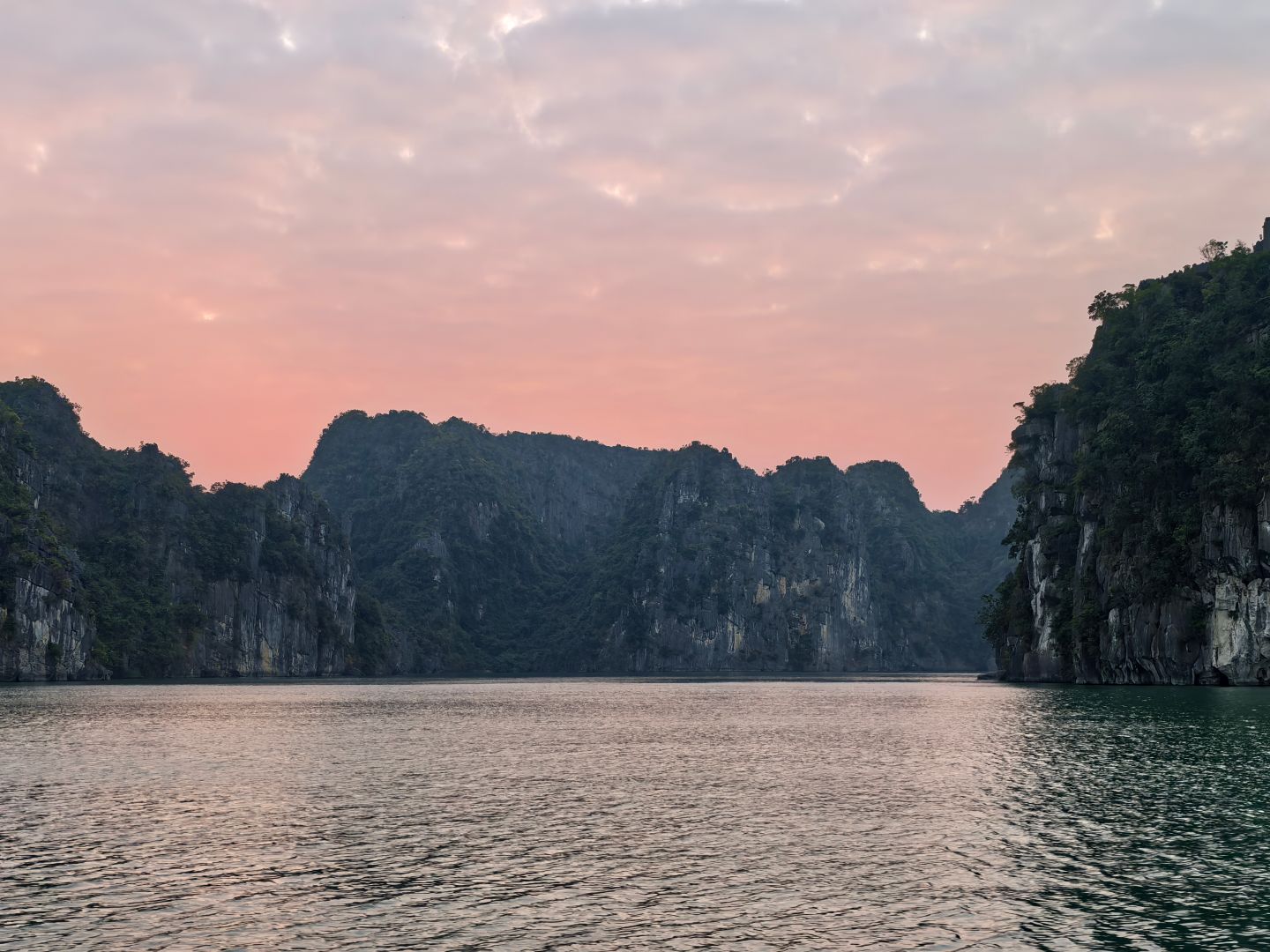
Budget cruise (2D1N): USD 80–120 per person including bus, meals, and activities. Mid-range: USD 140–200. Premium: USD 250–450. Cat Ba guesthouse: USD 20–50 per night; mid-range hotel USD 50–90. Day boat trip from Cat Ba: USD 20–35. The bay is at its most atmospheric October–November (post-monsoon, clear water, lower humidity) and March–April. July–August peak season brings the highest boat density and prices 20–30% above shoulder season.