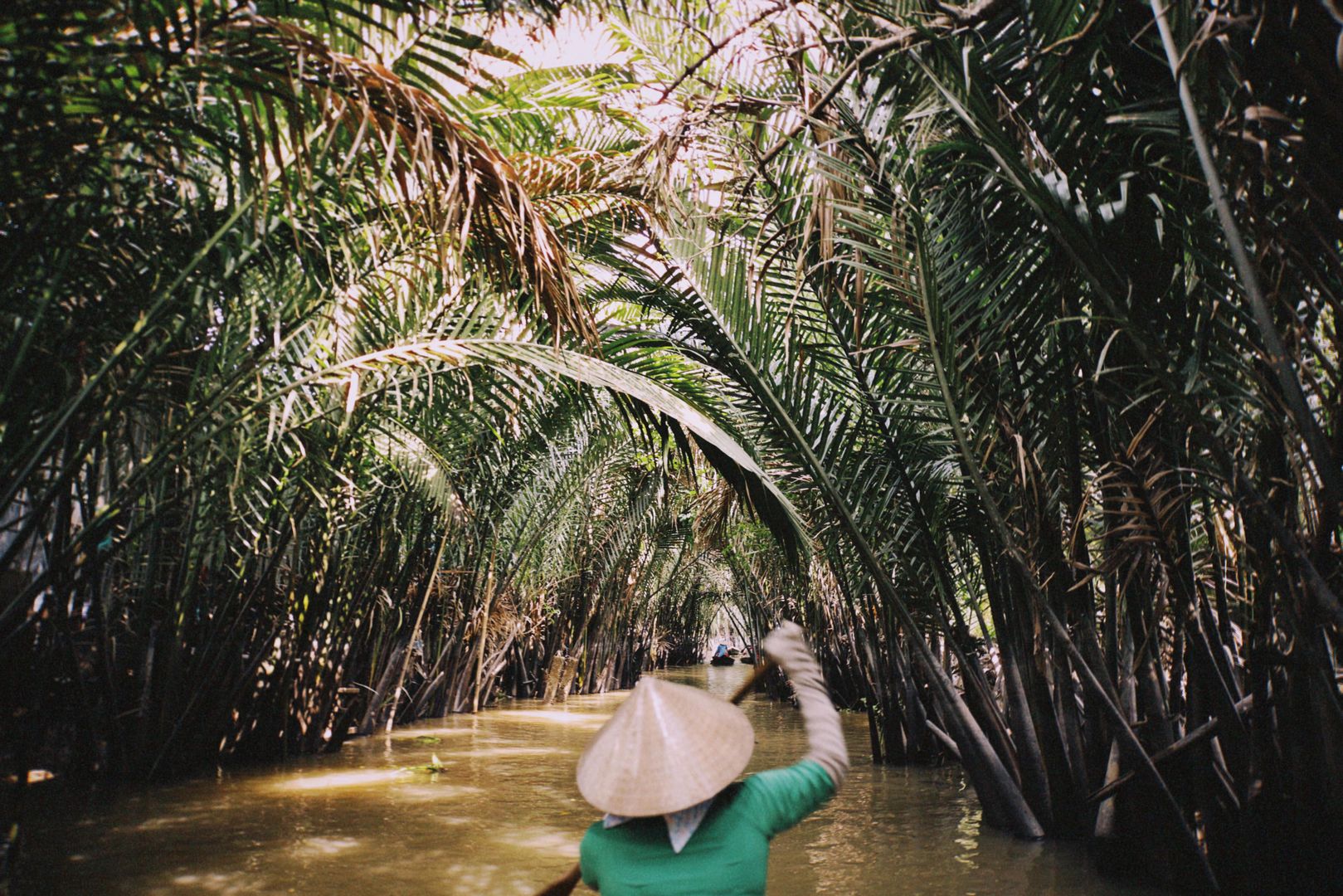
Ninh Binh Province covers a transition zone between the Red River Delta and the northern highlands. The limestone karsts — the same geological formation that creates Ha Long Bay's islands — here rise directly from flat rice fields rather than from water, which produces a distinct visual quality: flooded paddies reflecting white limestone peaks in the wet season, dry-season gold of harvested fields against the grey-white rock. The province's main draw is not any single monument but the combination of landscape, river caves, and the Hoa Lu ancient citadel area within a 20km radius.
Getting There from Hanoi
Ninh Binh Town is 93km from Hanoi — 1.5–2 hours by bus or train. The train (from Hanoi station, 7–8 services daily, 55,000–120,000 VND for a seat) is reliable and drops you close to accommodation. Buses from Hanoi's Giap Bat station or My Dinh station (45,000–60,000 VND, about 2 hours) leave frequently. Several tour operators run day trips from Hanoi (around 350,000–500,000 VND including transport and guide) — workable but rushed, given Trang An alone takes 2–3 hours on the boat.
Staying one or two nights in Ninh Binh is significantly better than a day trip. The landscape in late afternoon light and early morning (before tour groups arrive at Tam Coc) is materially different from the midday experience. Ninh Binh Town itself has decent accommodation from 200,000–500,000 VND per night; the village of Tam Coc has more atmospheric guesthouses in old stone buildings.
Trang An
Trang An Landscape Complex is a UNESCO World Heritage Site (joint listing with Hoa Lu, since 2014) covering 6,172 hectares of karst landscape, caves, and waterways. The boat trip through Trang An takes 2.5–3 hours by rowing boat (rower sits at the stern and rows with feet — a local technique) through nine cave passages and multiple valleys with cliffs rising 100–200m. Entry plus boat: 250,000 VND per person; boats hold 4–5 passengers. The caves are navigated in darkness with your head occasionally inches from the ceiling.
Trang An is less crowded than Tam Coc and the landscape is more varied — the circuit through multiple valleys means the scenery changes rather than being a single straight river. It is worth prioritising if you can only do one.
Tam Coc

Tam Coc (Three Caves) is the older, more-visited river trip — a 2-hour rowing boat journey up the Ngo Dong River through three cave passages. Entry 120,000 VND; boat 150,000 VND for 1–2 passengers. The journey goes through flooded rice fields with karst peaks on each side; the caves are short (50–100m) and the river is narrow enough that boats come within arm's reach in places. This is also where aggressive souvenir selling at the turnaround point has become a problem — women rowing solo boats will pull alongside to sell embroidery and cold drinks at prices significantly above market. The approach is persistent; "no thank you" in Vietnamese (khong, cam on) ends it faster than ignoring.
Go before 08:00 or after 15:00 to avoid the main tour group traffic. The rice fields in May–June and September–October (growing and harvesting seasons) are at their best.
Hang Mua
Hang Mua is a 500-step climb up a limestone peak near the Tam Coc area — 100,000 VND entry. The view from the summit takes in the Ngo Dong River, the surrounding rice fields, and the karst peaks in every direction. It is the best elevated viewpoint in the Ninh Binh area and genuinely worth the climb even if karst viewpoints from boats are the main experience. The steps are uneven but have handrails most of the way. Go early morning (opens 07:00) before the midday heat makes the exposed upper section uncomfortable.
Hoa Lu Ancient Citadel
Hoa Lu was Vietnam's capital from 968 to 1010, during the Dinh and early Le dynasties. The original citadel walls are no longer intact, but the natural terrain — surrounded on all sides by karst peaks that function as fortification walls — makes the strategic logic of the site immediately obvious. Two temples remain: Dinh Tien Hoang Temple and Le Dai Hanh Temple, both from the 17th century, dedicated to the founding kings. Entry 20,000 VND. Combine with a bicycle circuit of the surrounding valley (bicycles rented at guesthouses, 50,000–80,000 VND per day).
Bai Dinh Pagoda
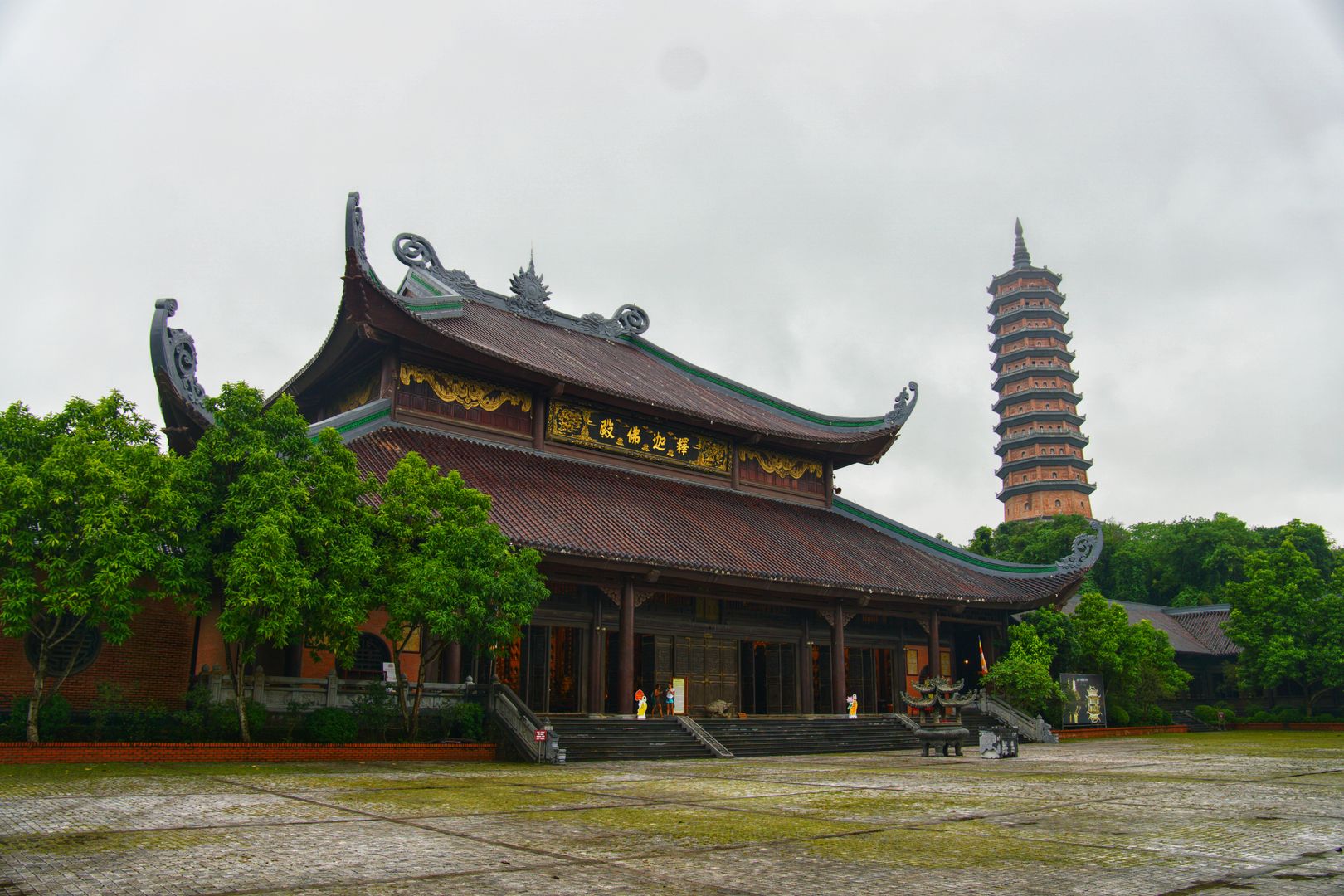
Bai Dinh is one of the largest Buddhist temple complexes in Southeast Asia — a construction project begun in 2003 that uses scale as its primary design principle. The main pagoda holds a 100-tonne bronze Buddha; the covered cloister contains 500 life-size arhat statues; the bell tower has a bronze bell weighing 36 tonnes. Entry is free. This is the most-visited religious site in Ninh Binh and draws large crowds on weekends and festivals. Electric carts run the 3km from the entrance to the main temples (50,000 VND return); walking is also possible. The new complex is adjacent to the older, smaller Bai Dinh cave temple from the 11th century — worth visiting for contrast.
Practical Notes
Ninh Binh Town is the practical base. Bicycles cover Tam Coc and Hoa Lu from town (10–15km total circuit). Motorbikes (100,000–120,000 VND/day) are needed for Trang An, Bai Dinh, and Hang Mua, which are further afield. Rainy season is May–September; the rice fields look best in wet season but the caves can feel claustrophobic with water levels higher. Dry season (October–April) is preferable for navigation and photography.
FAQ
Is Ninh Binh worth visiting?
Yes — it offers a more accessible and varied version of the karst boat experience than Ha Long Bay, is much cheaper, and requires no overnight boat stay. For travellers moving between Hanoi and Hoi An/Da Nang by train, Ninh Binh is a natural stopover.
Tam Coc vs Trang An — which is better?
Trang An: longer, more varied, less crowded, UNESCO site. Tam Coc: shorter, more visited, better rice field scenery, more aggressive vendor approach. If doing one, Trang An. If time allows, both are different enough to be worth it.
Can you visit Ninh Binh as a day trip from Hanoi?
Possible but tiring. The bus journey is 2 hours each way; Trang An alone takes 2.5–3 hours. A day trip can cover Trang An and Hoa Lu but little else. One night is the more sensible approach.