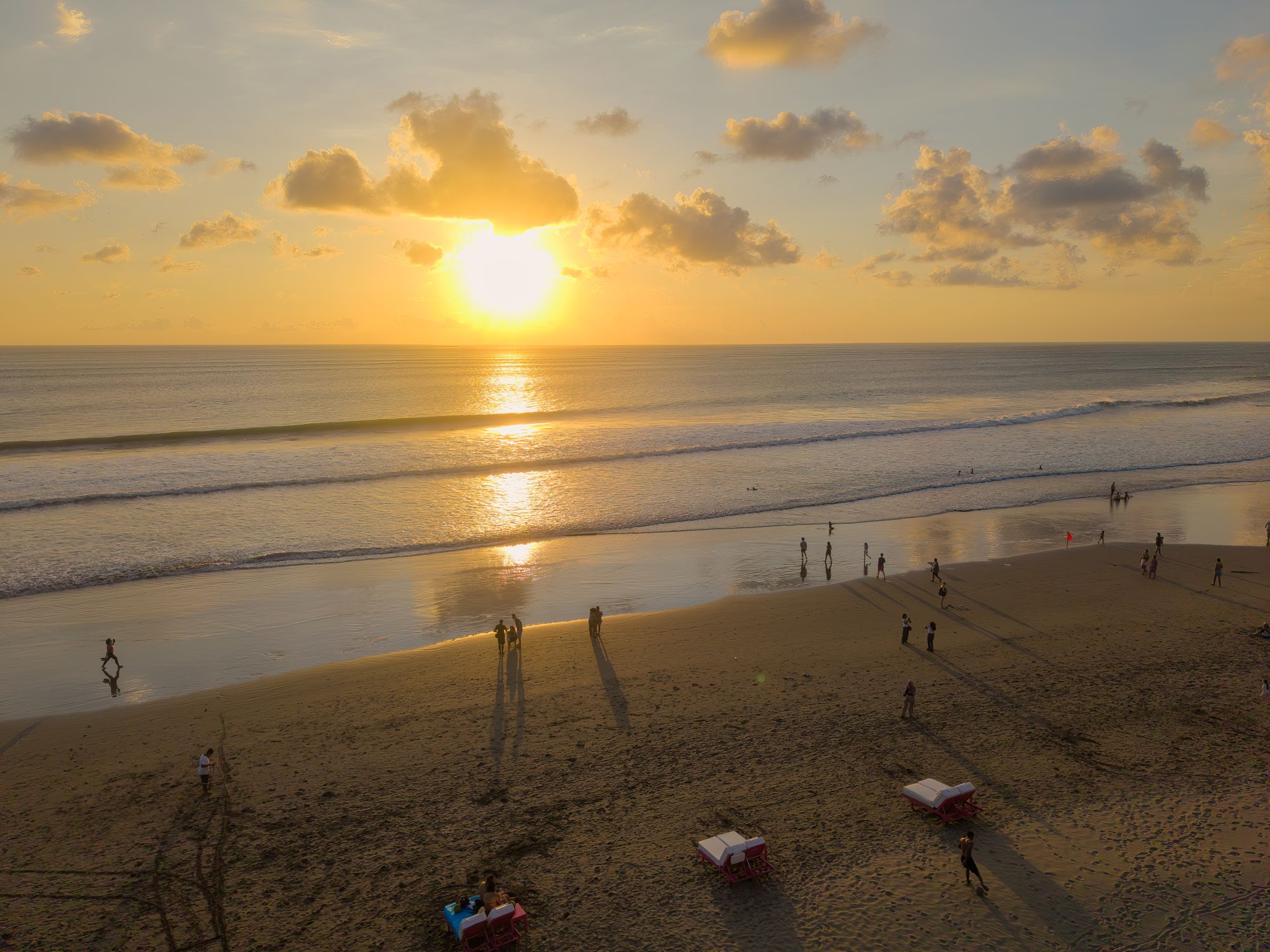
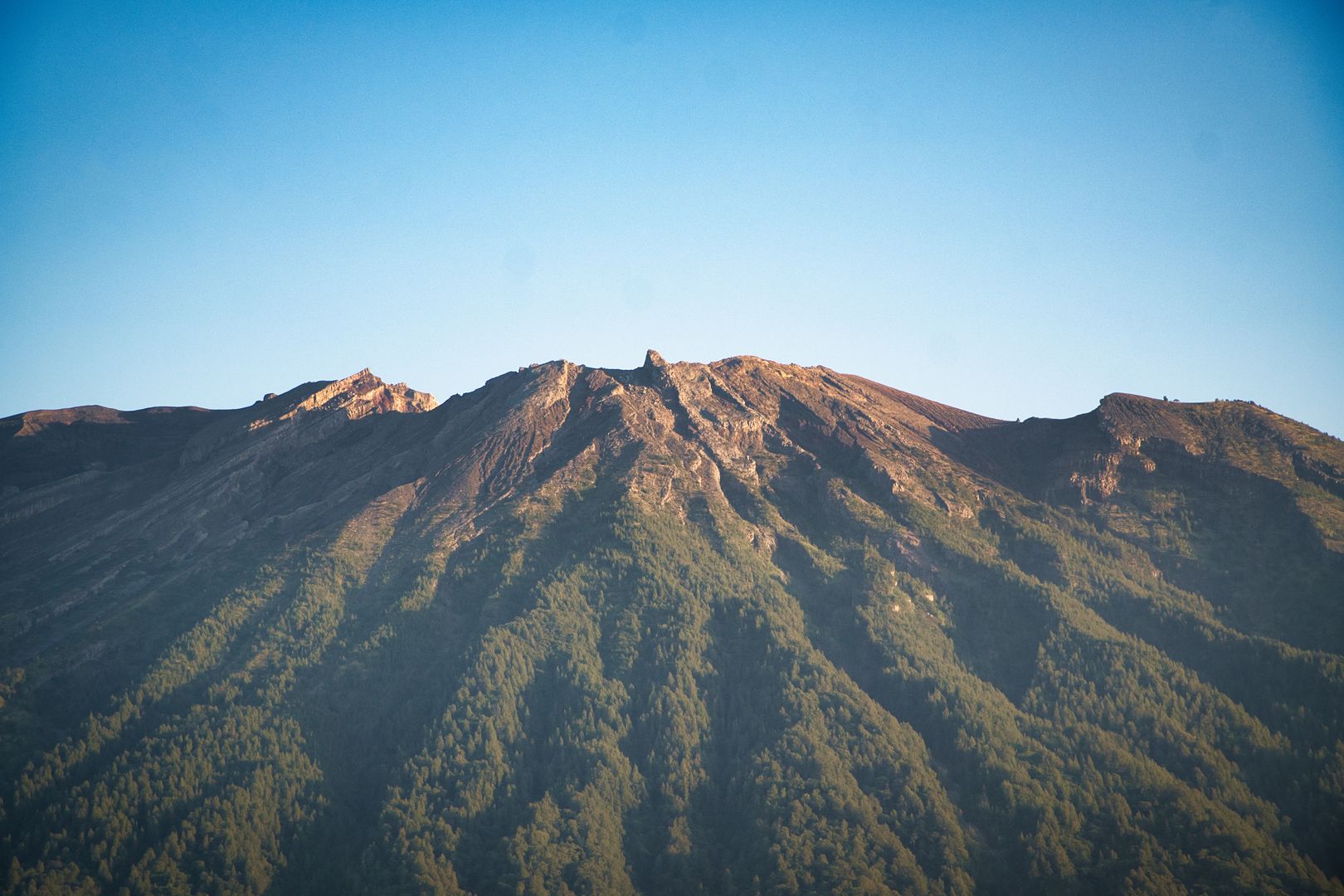
Lombok is 35km east of Bali, separated by a 20-minute flight or a 4–6 hour fast-boat crossing. It receives roughly 3 million visitors per year to Bali's 6 million, and the difference is visible immediately: the main coastal roads are quieter, the beach sellers less persistent, and the hotel pricing is 20–40% lower for equivalent quality. The island is geographically more dramatic — Gunung Rinjani dominates the north at 3,726m, the second highest volcano in Indonesia, and the south coast has sea-cliff beaches and surf breaks that would be internationally famous if they were on Bali. The Gili Islands, 30–40 minutes offshore, provide most of the visible tourist infrastructure.
The Gili Islands
The three Gili Islands — Gili Trawangan (Gili T), Gili Meno, and Gili Air — sit in a cluster off the northwest coast and are the most visited part of Lombok for most international tourists. No motorised vehicles operate on any of the three; transport is by horse cart (cidomo) or bicycle. Gili T is the largest and most developed: bars, dive shops, restaurants, and a nightlife strip that runs until late. The snorkelling off the north and east coasts is good — green sea turtles are reliably present around the coral gardens. PADI certification costs are comparable to anywhere in Southeast Asia. Gili Meno is quieter, better for people who want empty beach mornings. Gili Air sits between the two: functional but not loud, good for a few days of diving and reading.
Rinjani: The Trek
Gunung Rinjani is one of the finest mountain treks in Southeast Asia and genuinely demanding. The standard two-day route from the Senaru crater rim trail gains 1,800m over 9km on the first day, reaching the crater rim at 2,641m for views of the caldera lake (Segara Anak) and, weather permitting, the summit cone. All trekkers must go with a licensed guide; solo trekking is prohibited and the crater is large enough to get disoriented in cloud. Agencies in Senaru or Sembalun organise porter-guided packages from IDR 1,200,000–2,000,000 (around €70–115) per person for a two-day trek, including tent, food, and equipment.
The trail is steep but not technical; reasonable fitness is required. Bring a warm layer for the night on the rim — temperatures drop to 5–10°C. The trek closes from January through March due to rain and trail damage risk. The three-day version descends into the crater, crosses to geothermal hot springs, and summits at 3,726m on the final morning.
The South Coast: Kuta and the Beaches

Lombok's Kuta — distinct from Bali's Kuta in every way — is the base for the south coast beaches. The beaches here (Tanjung Aan, Mawun, Selong Belanak, Seger) are strung along 30km of coastline with white sand, turquoise water, and surf breaks ranging from gentle to expert-level. Tanjung Aan has two bays visible from a connecting hill path — the most photogenic viewpoint on the island. Selong Belanak is the largest bay, calmer in most conditions, and has the most developed beach infrastructure.
Kuta itself is growing but retains a village scale compared to Bali's south. Accommodation ranges from surfer guesthouses (IDR 150,000–300,000 per night) to newer boutique hotels on the cliffs. A motorbike rental (IDR 80,000–120,000 per day) is the most practical way to move between beaches — public transport between coves is limited.
Getting to Lombok
Lombok International Airport (LOP), near Kuta on the south coast, has direct flights from Singapore (2 hours), Kuala Lumpur, and Jakarta, as well as multiple daily connections from Bali (30 minutes). The fast boat from Padang Bai in east Bali to the Gili Islands and Lombok takes 2–4 hours depending on route; established operators charge €20–35 one way. The crossing can be rough in low season (November–March); the Lombok Strait is exposed.
When to Visit Lombok
May through September is the dry season — the best time for Rinjani (July and August are peak trekking months), the south coast beaches, and the Gilis. October is transitional. November through April is the wet season; rain falls in long afternoon showers rather than all day, and the Gilis and beaches remain accessible most mornings. Rinjani closes for extended periods in January–March. South coast surf is at its most powerful from June through August — good for experienced surfers, less ideal for casual swimming at the more exposed beaches.
Practical Costs
Lombok is noticeably cheaper than Bali. A guesthouse room in Kuta runs IDR 150,000–300,000 (around €8–17) per night; boutique clifftop hotels run IDR 600,000–1,200,000 (€33–66). A meal at a warung costs IDR 25,000–60,000 (€1.40–3.30); tourist-facing restaurants charge IDR 80,000–200,000 (€4.40–11). The Rinjani trek package is the single biggest expense for most visitors; otherwise, daily costs of €25–45 are realistic for a comfortable stay outside the Gili Islands, which price closer to Bali.