
Bali has no single centre. Six distinct towns spread across a 5,600 km² island — each with different energy, price, and practical constraints. Where you base yourself determines how much time you spend in taxis and what you actually see. The wrong location means costly transport friction and wasted days.
Seminyak: The lifestyle belt
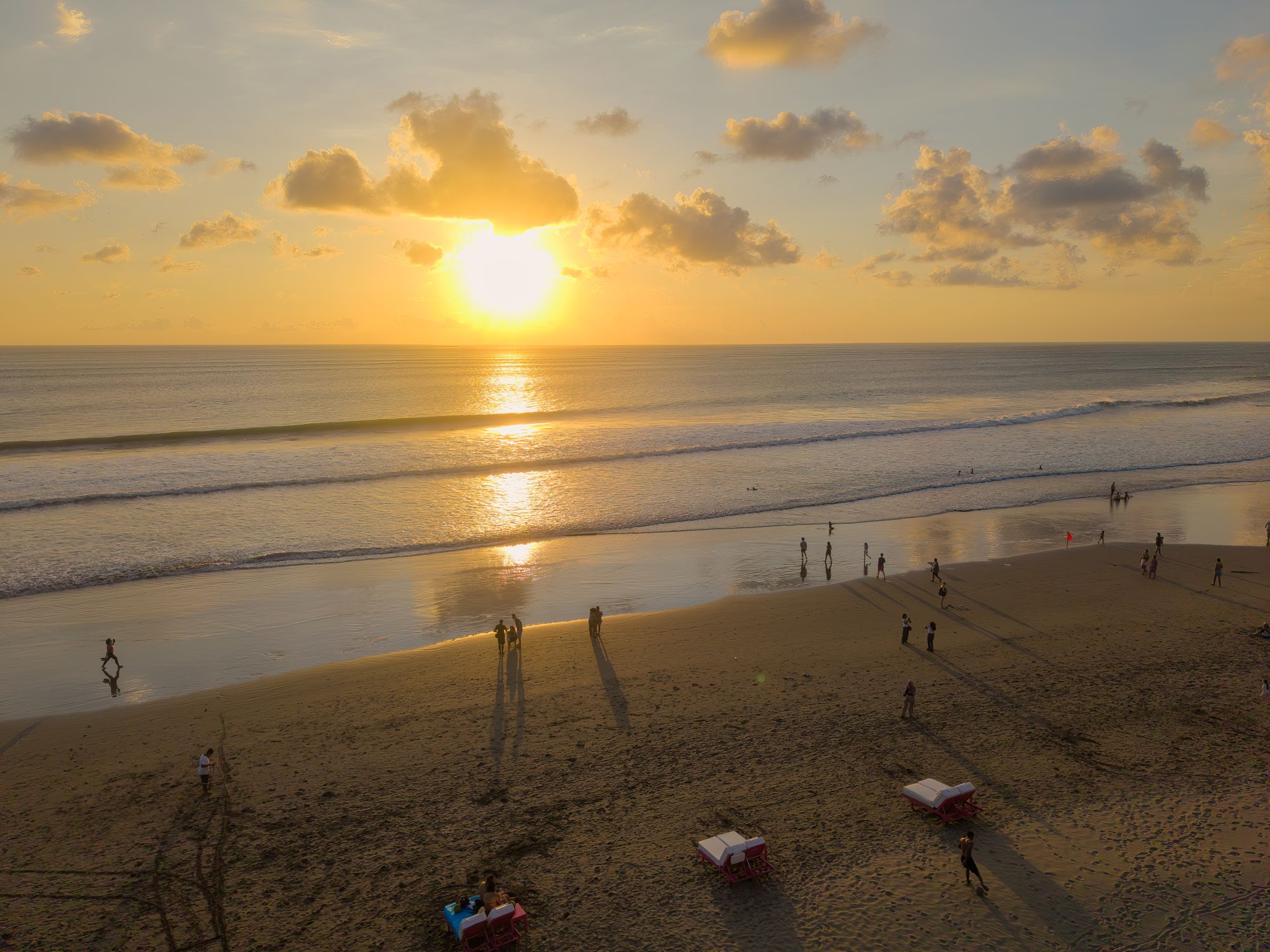
Seminyak is Bali's main "hub" for restaurants, bars, and beach clubs. The beachfront — technically extending into Petitenget further north — hosts Potato Head, La Favela, and dozens of mid-to-high-end venues. The beach itself is 200m+ of sand, but the surf is strong and swimming is secondary to sunbathing.
Location advantage: 20–25 minutes from the airport by car (low traffic). Getting anywhere on the island from here costs roughly the same as elsewhere — you're central but not closer to Ubud or the highlands. Restaurants run €12–25 per main course. Accommodation spans €60–80/night (budget guesthouses) to €400+/night (modern design hotels).
Seminyak works best as a 3–5 day base focused on food, bars, and social energy. Longer than five days and you'll feel the repetition of the same restaurants and venues. The main drag (Jalan Oberoi) gets congested on weekends.
What you sacrifice: beach swimming quality, quiet, local texture. Everyone here is either a tourist or working in tourism. You're paying city prices in what is technically a beach town.
Canggu: The nomad zone that got crowded
Canggu sits 10–15 minutes north of Seminyak by route (40 minutes in peak traffic). It's where the digital nomad boom concentrated — co-working spaces, brunch culture, and a younger international crowd. The main strip along Batu Bolong Road is now dense with cafés, shops, and gyms.
The beaches here are genuinely better for swimming than Seminyak. Batu Bolong Beach is protected and shallow for 50m. Echo Beach breaks for surfers. The general atmosphere is less "nightlife" and more "community" — you'll see the same faces at the same cafés if you stay two weeks.
Budget options exist (€40–60/night for smaller properties) alongside €200+ villas. Mid-range sits at €80–120/night. Daily meal costs are identical to Seminyak but with more casual options (street food to trendy salads).
Where Seminyak vs Canggu actually splits for visitors: Seminyak is a better base for a short trip (3–5 days) where you want established venues and good restaurants without hunting. Canggu rewards longer stays (10–21 days) where you develop a rhythm and stop treating it as a tourist zone. The trade-off is traffic — Canggu's main roads jam during school runs (7–9am, 4–6pm). Getting anywhere other than Seminyak takes significantly longer.
The honest counter-intuitive fact: Canggu has less character now than five years ago. It's been over-developed and feels like any international beach town with a tropical climate.
Ubud or Seminyak: Inland versus coast

This is the major strategic choice for Bali trips over seven days. They're 90 minutes apart (low traffic) to 2+ hours in peak congestion.
Ubud is the island's cultural centre — inland, cooler (22–25°C at night, not 28–30°C on the coast), surrounded by rice terraces and temples. The town draws yoga students, cooking students, and travellers interested in architecture or craft. The main street is heavily touristed; walk 10 minutes north and you're in functioning villages. Temples (Tirta Empul, Goa Gajah) are accessible by short drives. Mount Batur sunrise hikes depart 4am from town. The Tegallalang Rice Terrace circuit is a two-hour walk from the centre.
Ubud is not a beach destination. You come here to be inland. Daily costs are lower than Seminyak — similar mid-range accommodation (€80–120/night) but restaurant meals average €8–12 instead of €15–25. Nightlife is nearly nonexistent (one or two cultural music venues).
A first-time visitor splitting their stay: 4–5 nights in Seminyak or Canggu, then 3–4 nights in Ubud makes better use of time than a single base. The switch takes one taxi ride. If you go to Ubud only, you see zero beaches and miss the actual diversity of the island. If you stay coastal the whole time, Ubud's temple complexity and food culture are accessible only on rushed day trips.
For first-time visitors prioritizing culture: Ubud base with a one-day coast trip (Sanur sunrise, Jimbaran seafood dinner) is more efficient than the reverse.
Kuta: The cheapest, most chaotic option
Kuta is adjacent to the airport — five-minute drive. It's the cheapest area (€30–50/night for basic guesthouses, €80–100 for anything mid-range). The beach has genuine surf breaks where a significant number of tourists actually learn to surf.
Everything else about Kuta is friction. The town is deliberately chaotic — hawkers, loud clubs, touts, traffic. Jalan Legian (the main road) is a gauntlet. Accommodation is packed and thin-walled.
Kuta is useful for exactly one purpose: a single night on arrival or departure to minimize taxi time from the airport. Staying longer than that means spending money saved on guesthouses on increasingly desperate meals and wasted time avoiding the street harassment.
Uluwatu, Bingin, and Padang Padang: The cliff zone
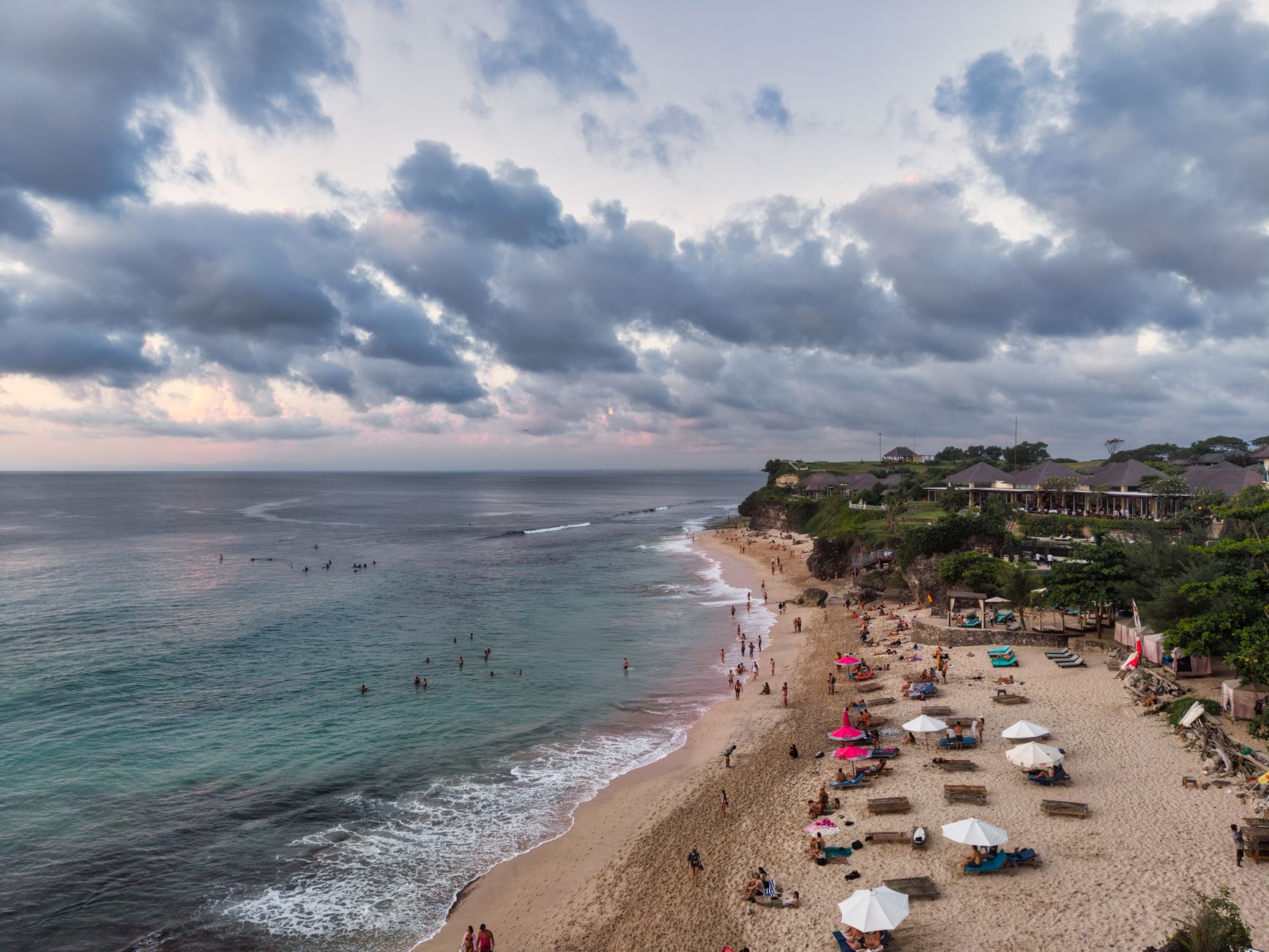
The southern tip of the Bukit Peninsula is where the coastline becomes dramatic — limestone cliffs, small beaches accessed by stone steps, and world-class surf breaks. Accommodation ranges from basic surf camps (€40–60/night) to cliffside villas with infinity pools (€200+/night).
Uluwatu Temple sits on a cliff and is genuinely worth seeing at sunset (arrive by 4:30pm to avoid crowding). The beaches (Padang Padang, Bingin) are small and require fitness to access — you're descending 100+ steps carved into the cliff. Swimming requires reading the conditions.
This area is isolated. Getting to Seminyak takes 45 minutes; Ubud is impractical (90+ minutes). If you base here, you're committing to the zone — not island-hopping. Best suited to: serious surfers staying 4–7 days, or couples willing to spend more for privacy (villas are genuinely beautiful here).
Nusa Dua: The resort isolation
Nusa Dua is a gated resort zone on the Bukit Peninsula — think Ritz, Hyatt, Mulia, and similar international chains. It has a private beach, manicured lawns, and zero local texture. You'll sleep, eat, and swim entirely on property unless you deliberately leave for the evening.
This is not a criticism if you want exactly that: a beach resort where logistics are handled and you never negotiate a taxi or menu. Families and honeymoon couples often choose this for the controlled environment. Nightly rates start at €150 and run to €500+.
The trade-off is complete isolation. You are not in Bali; you're in a hotel corporation's version of tropical hospitality. Local culture and food are accessible only if you take Grab to Jimbaran or Seminyak for dinner.
Jimbaran: Quiet and family-oriented
Jimbaran sits on the airport side of the Bukit Peninsula — quiet, low-key, and famous for seafood restaurants on the beach. It's between the airport and Nusa Dua, about 15 minutes' drive from either.
There is no nightlife, no co-working, no tourist infrastructure. It's families, couples wanting calm, and people doing the Nusa Dua resort thing but wanting one evening of actual seaside atmosphere. Accommodation is mid-range (€80–120/night). Seafood dinners on the sand run €15–25 per person.
Good for: couples who want the coast without the scene, families with young children. Not useful for anyone wanting nightlife, restaurants, or beach clubs.
The transport reality you must understand
Bali has no public transport system. All movement is Grab (Southeast Asia's ride-hailing app), Gojek (local competitor), or hiring a private driver for the day.
Grab doesn't operate in central Kuta and parts of Seminyak — local taxi agreements block it. Use Gojek there or negotiate with a street taxi (agree on price before entering). A 15-minute journey costs €3–5. A 60-minute journey costs €8–15.
Key journey times (low traffic; add 30–60 minutes in peak hours):
- Airport to Seminyak: 20–25 minutes
- Airport to Canggu: 35–40 minutes
- Airport to Kuta: 5–10 minutes
- Seminyak to Ubud: 90 minutes
- Seminyak to Uluwatu: 45 minutes
- Canggu to Ubud: 2+ hours
If you're island-hopping, the gaps create real costs. Basing in Seminyak and attempting daily trips to Ubud eats your day. Basing in Uluwatu and wanting Ubud access is impractical.
Which area for your trip: The decision framework
First time, 5–7 days, beach priority: Seminyak. Convenient airport access, established food scene, functional beaches, easy onward travel. Accept that it's not particularly "local" — you're here for structure and restaurants.
First time, 7–10 days, mix of beach and culture: Split it. 4–5 nights in Seminyak or Canggu (coast, food, rhythm). 3–4 nights in Ubud (culture, temples, rice, cooking class). One car journey between them. You see the actual range of Bali.
10+ days, cultural immersion: Ubud base (5–6 nights), then Seminyak or Canggu (3–4 nights), then a day trip to the cliffs (Uluwatu Temple) or a different beach (Sanur).
Longer stays (14–21 days), nomad or retreat focus: Canggu. The time horizon rewards finding a rhythm. The beaches are better than Seminyak. The cafés stabilize and become community spaces rather than transient venues.
Couples/honeymoon/resort experience: Nusa Dua or a villa in Uluwatu. Both are private and managed. Nusa Dua is more "resort as destination." Uluwatu villas are more "private location" — require leaving property for meals.
Serious surfer, any length: Uluwatu/Bingin zone or Canggu (Echo Beach). Single night on arrival: Kuta.
Budget absolute priority: Canggu (mid-range balance) or Kuta (last resort — one night only). Ubud is often cheaper than coastal areas but that only matters if you want inland.
The single mistake most first-timers make
Most first-time visitors pick one base and stay for the entire trip, usually Seminyak for convenience. Five days in Seminyak feels fine. Ten days feels repetitive. Fifteen days feels like punishment. The island's actual diversity — rice terraces, temples, beaches, quiet villages, altitude, surf breaks — requires at least two bases. You lose less to transport than you gain from seeing more. Spend your first night in Seminyak (airport proximity), then decide after 48 hours whether to move or settle. If you've booked a single property for the whole stay, rethink that. Split Seminyak/Canggu and Ubud for trips over seven days. It's worth the taxi fare.
Recommendation: For your first Bali trip of 7–10 days, base yourself in Canggu (4–5 nights) to escape the Seminyak scene while staying coastal, then move to Ubud (3–4 nights) for the cultural range. Canggu handles beach days, brunch culture, and local neighbourhood texture better than Seminyak. The switch to Ubud shows you that Bali is not one thing — it's highlands, lowlands, temples, and rhythm. For shorter trips (under six days), stay in Seminyak for convenience. For longer stays (14+ days), consider three bases instead of two.
Frequently Asked Questions
Is Seminyak or Canggu better for a week-long trip?
Canggu if you want to settle and develop a rhythm; Seminyak if you want good restaurants and less time figuring out where things are. Seminyak is more curated and convenient. Canggu is younger and less polished, with better beaches for actual swimming.
What's the best area to stay in Bali for the first time?
Seminyak (3–5 nights) for food and beach clubs, then Ubud (3–4 nights) for culture. This split shows you the actual range. If you must choose one: Seminyak, because the infrastructure and restaurants are clearest for a first visitor. If you have 10+ days: use both areas rather than extending one.
How far is Ubud from the beach?
Ubud is 90 minutes by car from the nearest south coast beaches (Sanur or Seminyak) in low traffic — 2+ hours in traffic. It's inland in the highlands. Day trips are possible but eating travel time. You're coming to Ubud for temples and rice, not swimming.
Can you visit Uluwatu Temple without staying in the area?
Yes — it's a day trip from Seminyak (45 minutes) or Canggu (60 minutes). Arrive by 4:30pm, watch the sunset, leave by 6pm. You don't need to base there unless you're staying 4+ days for the beaches and surf.
Is Kuta worth more than one night?
No. It's cheap and airport-adjacent, making it useful for arrival or departure. The town itself is deliberately touristed and chaotic. Spend one night there if you must, then move to Canggu or Seminyak.
What's the actual cost difference between staying in Ubud and Seminyak?
Accommodation costs are similar (€80–120 mid-range in both). Meals in Ubud run €8–12 per main course; Seminyak is €15–25. Daily costs might be 20–30% lower in Ubud if you're eating out for every meal, but convenience and restaurant quality favour Seminyak.


