The French Riviera gets described as glamorous, which is accurate for about four square kilometres of Monaco and the beachfront of Cannes during film festival week. The rest of it — including Nice, the region's actual capital — is a Mediterranean city of 340,000 people with good food, a functioning public transport network, and beaches that are made of pebbles rather than sand. That last point surprises most first-time visitors. The pebble beaches are comfortable once you've rented or brought a mat, but it's worth knowing before you arrive expecting powdery sand.
How to Use Nice as a Base
Nice's main advantage is its train connections. The coastal rail line runs east to Monaco (22 minutes, €4) and Menton (40 minutes, €6), and west to Antibes (25 minutes, €5) and Cannes (35 minutes, €7.60). Trains run every 30 minutes during the day and are reliable — this is not a region where you need a car unless you want to visit the villages in the hills behind the coast. The train is also significantly cheaper than driving once you factor in parking.
Accommodation in Nice is 30–40% cheaper than in Cannes and roughly half the price of Monaco, where hotels exist primarily to relieve wealthy visitors of money. A mid-range hotel in Nice runs €100–160 per night; the same standard in Cannes runs €140–220. For a week on the Riviera, basing in Nice and day-tripping makes more financial sense than moving hotels along the coast.
What to Do in Nice Itself
The Vieux-Nice (Old Town) is genuinely old rather than reconstructed — a dense grid of orange and yellow Baroque buildings with a daily market on Cours Saleya that sells flowers, produce, and socca (chickpea flatbread, the local street food). The market runs every morning except Monday and is best visited before 10am. The Old Town sits between the beach and Castle Hill, which is not a castle — the fortification was demolished in the early 18th century — but a public park on a 92-metre promontory with good views over the bay. Free entry, 20-minute walk from the bottom.
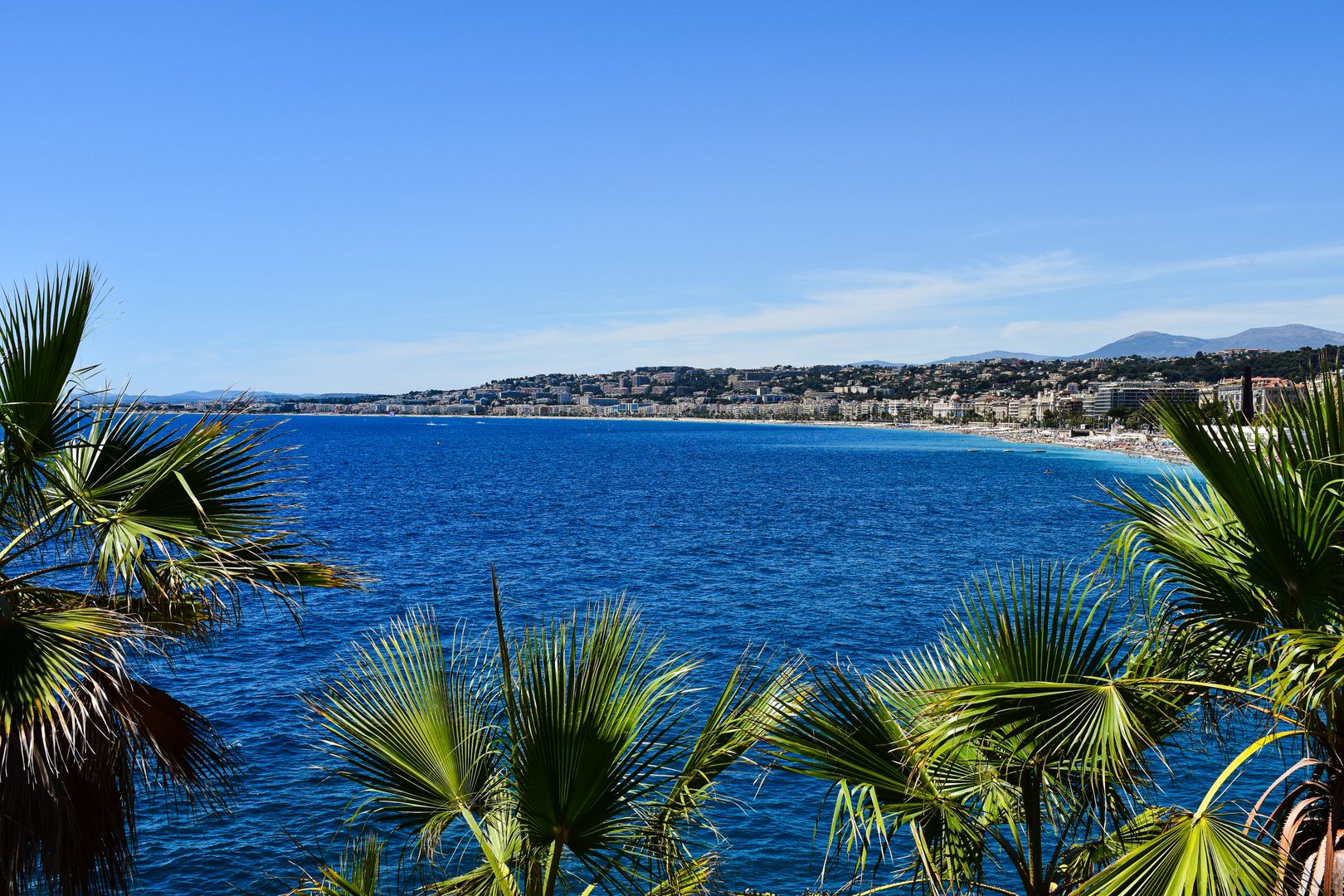
The Promenade des Anglais, the wide seafront boulevard, is pleasant for walking or cycling early in the morning before the heat and the crowds. The beach here is free but the pebbles require footwear to cross. Private beaches (€20–30 for a sunbed) line much of the waterfront and are worth it for a half-day if you're planning to swim — the facilities are better and the beach chairs are the only comfortable way to sit on pebbles for several hours.
Nice has two significant art museums: the Musée Matisse, which holds the world's largest collection of Henri Matisse's work (he lived in Nice for much of his later life), and the Musée d'Art Moderne et d'Art Contemporain (MAMAC), strong on French and American art from the 1960s onward. Both charge around €10 and are typically quiet on weekday mornings.
Day Trips From Nice
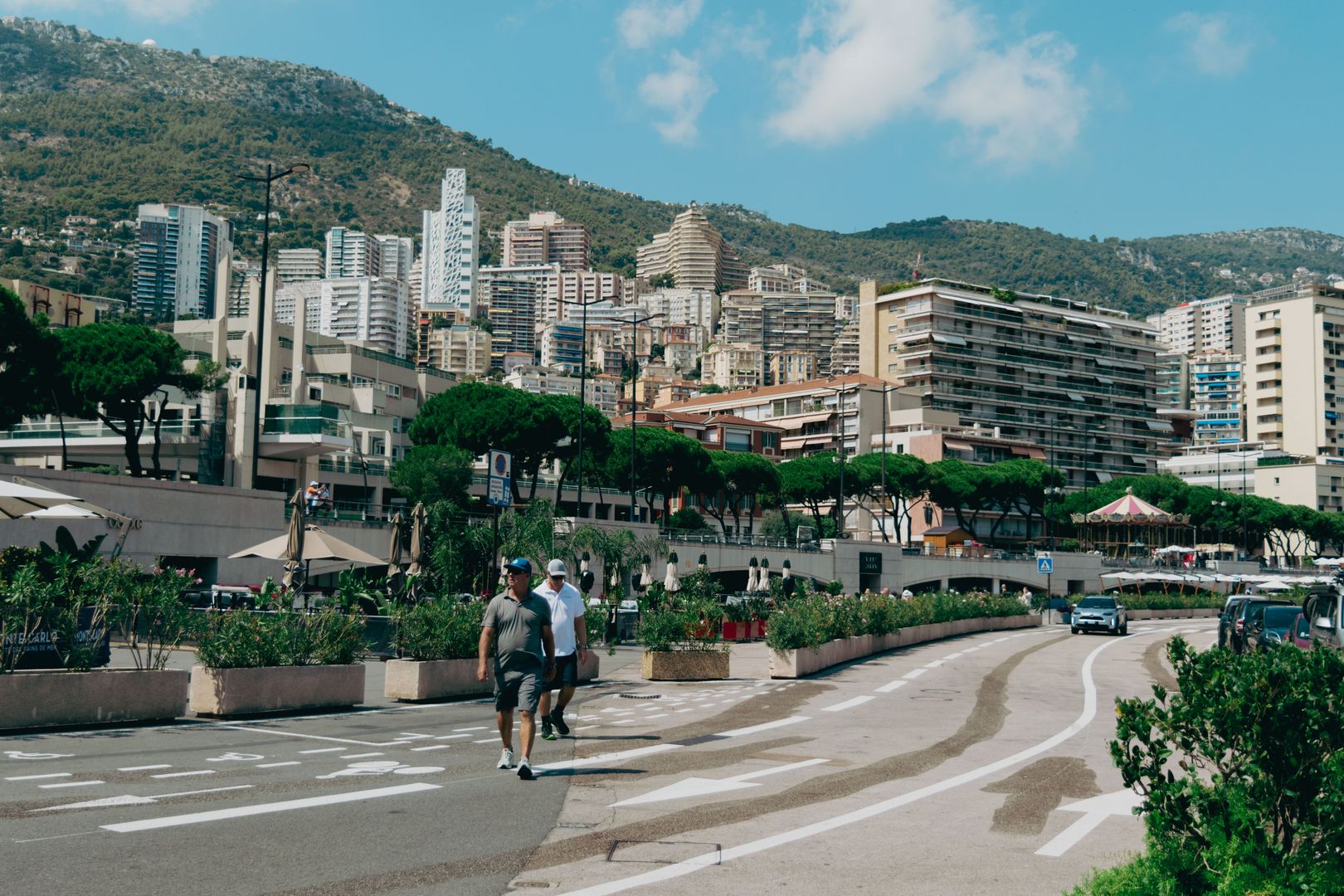
Monaco (22 min by train): The principality is 2km² and walkable in an afternoon. The Formula One circuit runs through city streets; outside race week in late May the route is just regular roads. The Oceanographic Museum, opened by Prince Albert I in 1910, is one of the better natural history museums in southern Europe. The Casino de Monte-Carlo costs €17 to enter the gaming rooms (over 18 only, dress code enforced) and is worth seeing for the interior even if you don't gamble. Everything in Monaco is expensive — eat in Nice.
Antibes and Juan-les-Pins (25 min by train): Antibes has a working port and a well-preserved old town. The Picasso Museum occupies the Château Grimaldi where Picasso worked in 1946 and donated the resulting paintings. Juan-les-Pins, a short walk south, has the better sand beaches of the two towns — fine rather than pebbly, which is unusual for this stretch of coast.
Èze Village (40 min by bus 82 from Nice): A medieval village perched on a rock 430 metres above the sea. Frequently cited as one of the best viewpoints on the Riviera, which is accurate — the botanical garden at the top looks straight down to the water. Gets crowded in summer; go on a weekday morning. The walk back down the "Nietzsche Path" to the lower corniche road takes about 45 minutes.
Cannes (35 min by train): Worth visiting for its seafront and the Marché Forville food market, less interesting if you're expecting the film festival atmosphere outside of May. The Îles de Lérins, 15 minutes by ferry, have good swimming off rocky coves and a 17th-century fort.
When to Visit the French Riviera
May and September are the best months: warm enough to swim (sea temperature reaches 22–24°C), fewer crowds than July–August, and accommodation prices 20–30% lower than peak. June is good but hotel rates climb from mid-month. July and August are hot (32–36°C), crowded, and expensive — if this is your only option, book accommodation 8–10 weeks ahead and plan beach time for early morning.
October and November are underrated: the sea is still warm enough for swimming through October (20°C), the crowds are gone, and prices drop sharply. Nice's own climate is mild year-round — average January temperatures are 8–13°C and it sees about 300 days of sunshine annually — so winter visits work if beach swimming isn't the priority.
Getting to Nice
Nice Côte d'Azur Airport is 6km from the city centre. Tram line 2 connects the airport to the centre in about 30 minutes and costs €1.70 — one of the cheapest airport connections in Europe. Taxis to the centre run €25–35. Direct flights operate from most major European cities; budget carriers including easyJet and Ryanair use Nice as a hub, making it one of the more accessible airports in the south of France.
By train, Nice is 5h30 from Paris on TGV (€49–110 depending on booking time and flexibility), 2h30 from Marseille, and 1h30 from Toulon. The train station is central and connects directly to the coastal line.
Practical Costs
Nice is more expensive than most French cities but significantly cheaper than the resort towns around it. A reasonable daily budget — coffee, a market lunch, an afternoon in a museum, dinner at a neighbourhood bistro — runs €55–80 per person excluding accommodation. Socca at the market costs €3–5. A three-course dinner at a restaurant in Vieux-Nice runs €28–45 per person with wine. The tram system (€1.70 per journey, day pass €5) covers most of the city centre and both train stations.
The Riviera card isn't worth buying unless you're doing a very specific set of museums across multiple cities in a short window. Individual museum entry is straightforward and the discounts rarely justify the upfront cost for a typical trip.