The D-Day beaches stretch 80km across the Normandy coast. On 6 June 1944, Allied forces landed approximately 156,000 men in the largest seaborne invasion in history, involving nearly 7,000 vessels. The landscape bears direct evidence: the crater field at Pointe du Hoc has not been filled in, the concrete bunkers remain, and the American Cemetery above Omaha holds 9,387 graves. No other WW2 battlefield in Western Europe has been preserved at this scale.
Getting There and Getting Around
From Paris, the A13 motorway reaches Caen in 2.5–3 hours (250km). The Intercités train from Paris Saint-Lazare to Caen takes 1h50 (€30–55). A car is necessary once in the region — no public transport connects the main D-Day sites. Rent from Caen; all major agencies have desks at the station. The standard two-day circuit: day one at the Caen Memorial Museum and Bayeux; day two at the beaches.
The Caen Memorial Museum
The best starting point before visiting the beaches. The Mémorial de Caen covers the lead-up to WW2, the European theatre, and the Normandy campaign in detail — unit assignments, tactical objectives, casualty figures, the political context. Without this, walking Omaha Beach is an abstract experience. Entry €23; open daily. Allow 3 hours. Located in Caen city, near the castle.
The D-Day Beaches: Site by Site
Pointe du Hoc: 15km west of Bayeux. The US Army Rangers scaled these 30m cliffs under fire on 6 June to destroy German artillery positions. The landscape retains original shell craters, intact bunkers, and observation posts essentially as they were on 7 June 1944. Free entry, open daily. Allow 45–60 minutes. The most viscerally preserved of all the D-Day sites.
Omaha Beach: the American sector with the highest D-Day casualties — approximately 2,000 US dead and wounded on the beach. A 7km sweep of sand with low bluffs above it. The physical landscape gives no indication of the difficulty; the cemetery above provides the weight.
American Cemetery at Colleville-sur-Mer: 9,387 white marble crosses and Stars of David on 70 hectares above Omaha Beach. Free entry; open daily 9am–6pm (5pm in winter), closed Christmas and New Year's Day. The visitor centre before the cemetery grounds provides individual names, units, and photographs. Allow 1.5–2 hours. Arrive before 10am for manageable crowd levels in summer.
Utah Beach: westernmost American sector. Lower casualties than Omaha — a navigational error during the landing deposited troops in a less-defended zone. The Utah Beach Museum (€9.50) is housed in a German fortification and covers the airborne operations (82nd and 101st Airborne Divisions, dropped the night before) alongside the beach landing.
Canadian and British sectors: Juno Beach (Canadian, Courseulles-sur-Mer, Juno Beach Centre €9), Gold Beach (British, between Juno and Sword), Sword Beach (British, easternmost). Less visited by American tourists but equally significant in the campaign.
The Bayeux Tapestry
Bayeux is 30km west of Caen and the only major Normandy town not destroyed in 1944 — it was liberated on 7 June without significant fighting. The Bayeux Tapestry is a 70-metre embroidered cloth depicting the Norman Conquest of England in 1066: Duke William's crossing, the Battle of Hastings, Harold's death. Entry €13, includes audio guide, open daily. Allow 1.5 hours.
The tapestry is the only surviving secular narrative artwork of this type from the 11th century. The detail — horse breeds, ship construction, armour, clothing, facial expressions — is specific enough to have genuine historical value independent of its artistic importance. The medieval centre of Bayeux (cathedral, old town streets) is worth a short walk.
Mont Saint-Michel
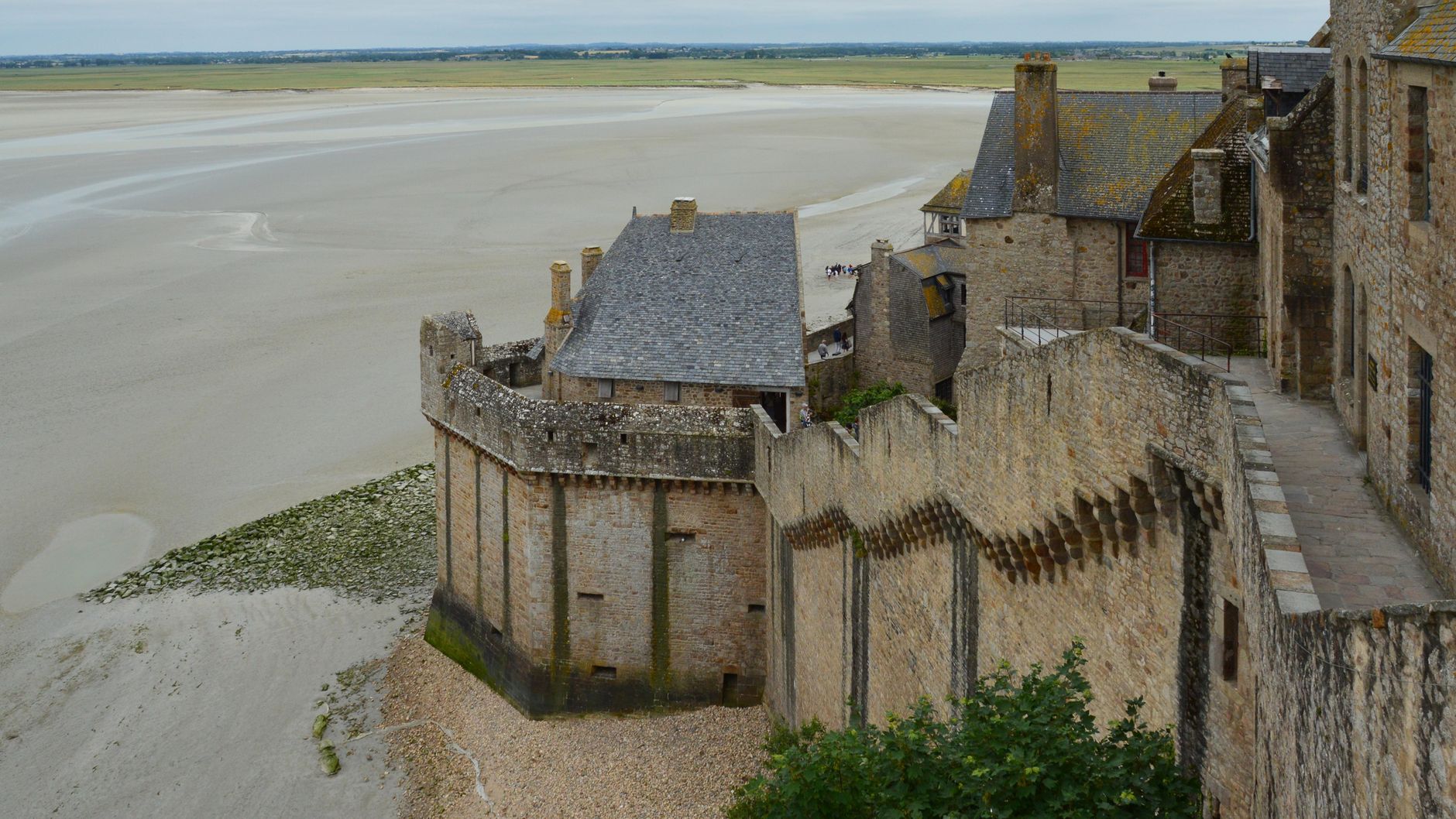
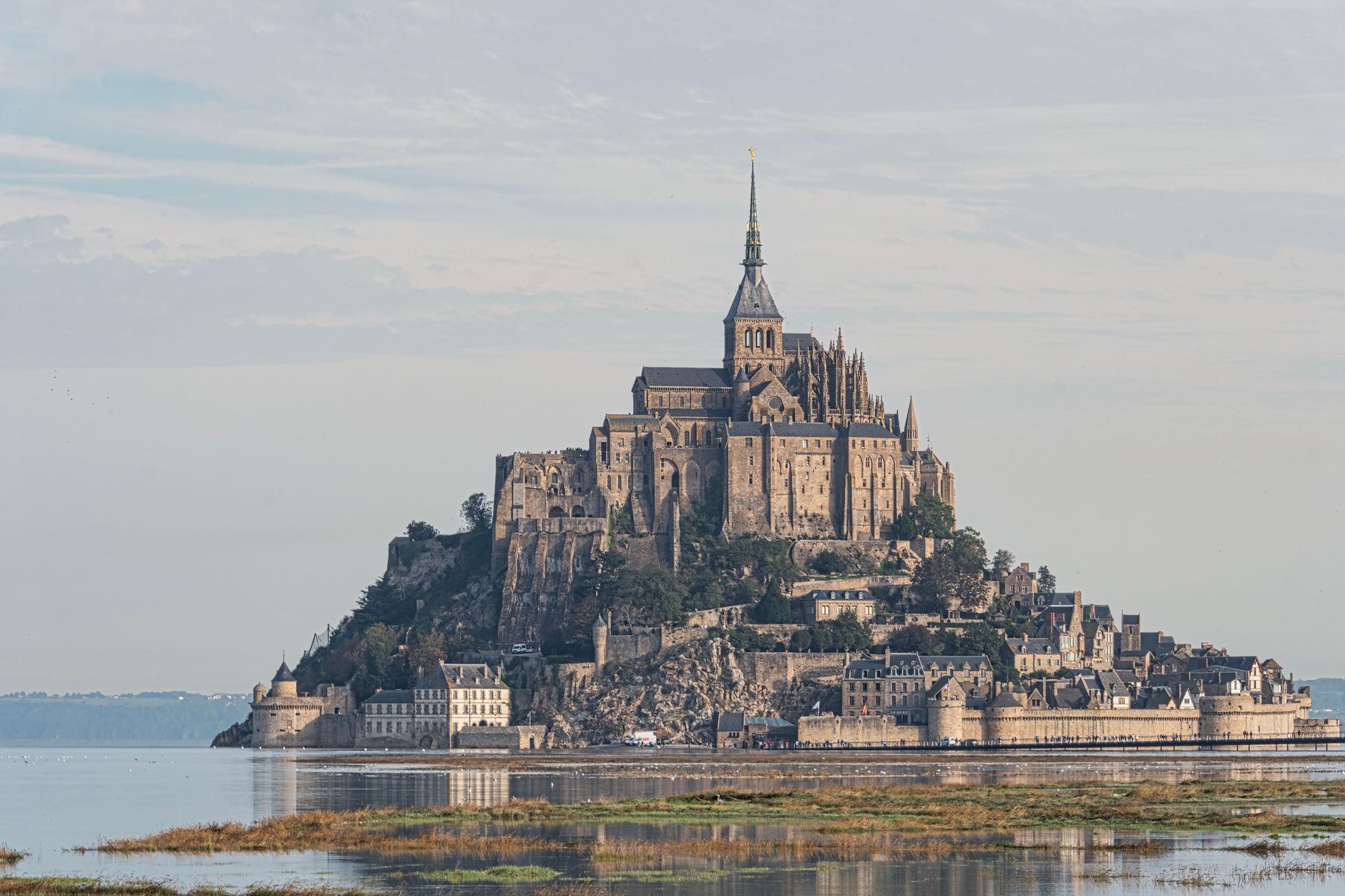
80km southwest of Caen by car (1h30). The tidal island and Benedictine abbey (founded 966 CE) receive 3.5 million visitors per year — the second most visited site in France after Paris. The causeway and approach are free; abbey entry is €13.
The tidal bay has some of the fastest tides in Europe, reaching 6km/h. Guided bay walks (sand crossing at low tide) are offered by certified operators based in the area — do not cross the sand unguided as the tidal channels shift position. The most dramatic experience is watching the tide come in, which moves faster than a walking pace across the flat bay.
Arrive before 9am or after 5:30pm to avoid coach tour concentration. Accommodation on the island is limited to two hotels (€150–300/night). Pontorson (8km inland) and Avranches (25km) are cheaper overnight bases.
When to Visit
May–June and September–October: 15–22°C, low rainfall, manageable crowds at the beaches. July–August is peak season with coach tours; the American Cemetery and Pointe du Hoc are still worth visiting but arrive early. November–March is quieter, some museum hours are reduced.
How Long to Spend
Two days for the D-Day beaches (US sector) and Bayeux. Three days adds Mont Saint-Michel. Four or five days adds the British and Canadian sectors, Honfleur (historic port, 70km east of Caen, worth a half-day), and the Étretat chalk cliffs on the Channel coast.
Frequently Asked Questions
Can you visit the D-Day beaches without a car?
Barely. Organised tours from Bayeux and Caen cover the main sites (half-day and full-day options, €50–90/person). Without a car or a tour, Pointe du Hoc is inaccessible by public transport.
Should I visit the Caen Memorial before or after the beaches?
Before. The museum provides the tactical and political context that makes the physical sites comprehensible.
Is the Bayeux Tapestry worth visiting?
Yes — it is genuinely unique. No comparable secular narrative artwork from 11th-century Europe survives. Allow the audio guide to run; the detail repays attention.
How far is Mont Saint-Michel from the beaches?
From Omaha Beach: approximately 120km, 1h30–1h45 by car. Combining both in a single day from Paris is possible but rushed — each deserves 3–4 hours minimum.
Where should I stay?
Bayeux for the D-Day focus: central between the sites, good accommodation at multiple price points, tapestry in town. Caen for better transport connections and a wider restaurant selection.