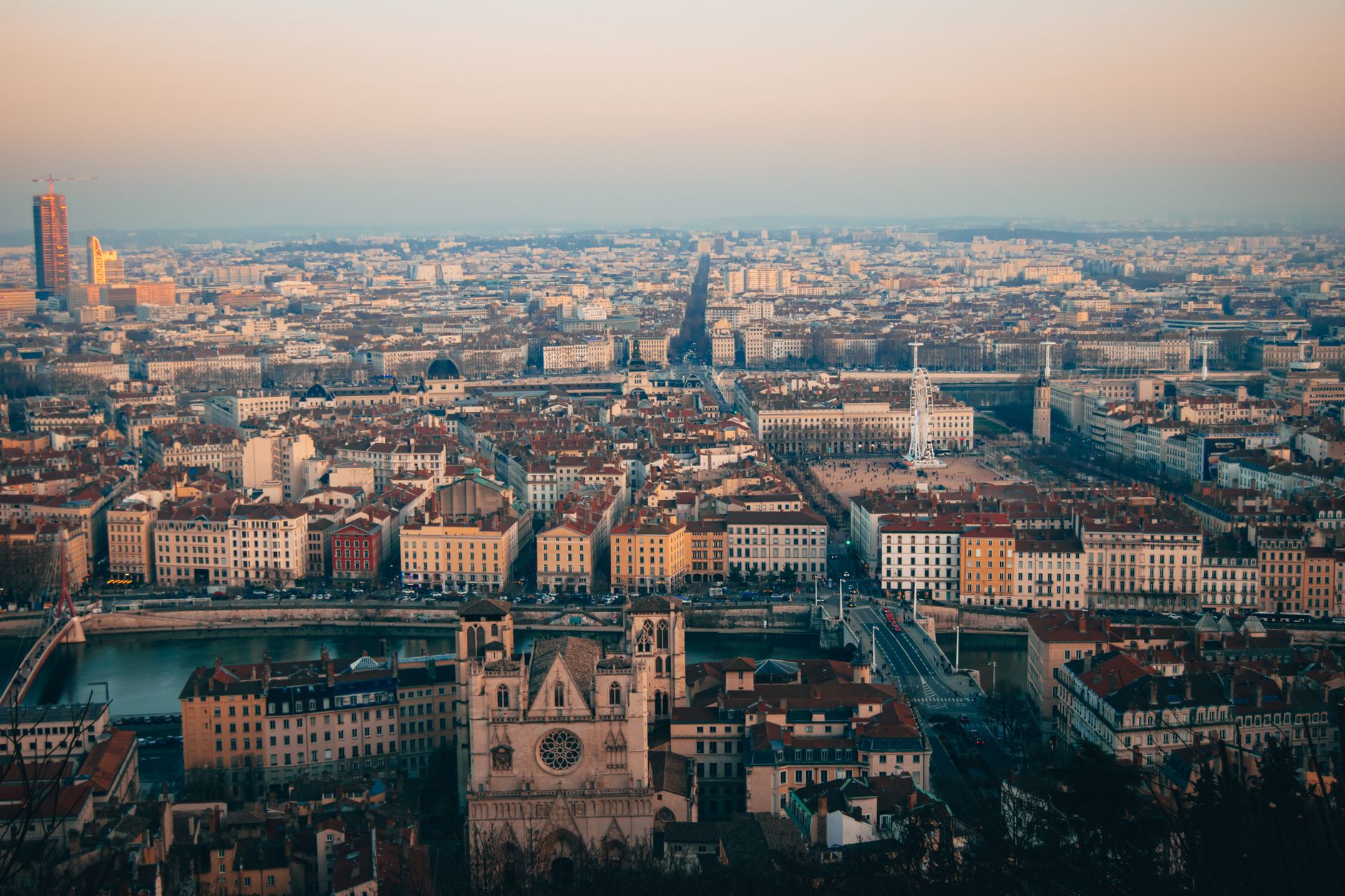

Lyon is France's third city by population, first by any meaningful measure of culinary density. The Michelin Guide lists more stars per square kilometre here than anywhere in France outside Paris. Paul Bocuse — the most decorated French chef of the 20th century — was born 10km north in Collonges-au-Mont-d'Or and spent his career making the city's reputation international. His successors, rivals, and the surviving bouchon culture are still operating. Two hours from Paris by TGV, it is consistently underestimated by visitors who route themselves to the coast instead.
Vieux Lyon and the Traboules
Vieux Lyon (Old Lyon) sits between the Saône river and the Fourvière hill — the largest Renaissance urban district north of the Alps, with around 300 buildings from the 15th and 16th centuries. UNESCO World Heritage since 1998. Worth a half-day minimum.
The traboules are covered passageways running through interior courtyards, connecting parallel streets. Originally used by the silk-weavers (canuts) of Croix-Rousse to transport finished cloth without exposing it to weather. Around 40 are open to the public. The entrances are not marked from the street: the Lyon tourist office provides a free map, and the Traboule app lists GPS coordinates for the main ones.
Two zones: Vieux Lyon (shorter traboules, more decorative, Renaissance courtyards) and Croix-Rousse hill (longer, architecturally more substantial, built for heavy loom transport). Croix-Rousse traboules see fewer visitors and are better for spending time in without a flow of tour groups.
The Bouchon
A bouchon is a Lyonnais restaurant serving the working-class silk-weaver culinary tradition: organ-heavy, slow-cooked, high-calorie. The Authentique Bouchons Lyonnais certification covers around 20 establishments that meet criteria for genuine sourcing and recipes — a useful filter against tourist imitations.
Standard dishes: quenelle de brochet (pike fish dumpling in Nantua cream sauce), tablier de sapeur (breaded and pan-fried tripe), andouillette (coarse tripe sausage — an intentional acquired taste), salade lyonnaise (frisée with lardons and a poached egg), and pot-au-feu variants. Portions are substantial.
Reliable options: Café des Fédérations (Rue Major Martin, book ahead), Bouchon Chez Georges (Rue du Garet, one of the city's oldest), Le Garet (same street). Budget €25–38 for two courses with a glass of Beaujolais at lunch; €35–55 at dinner.
Les Halles de Lyon Paul Bocuse
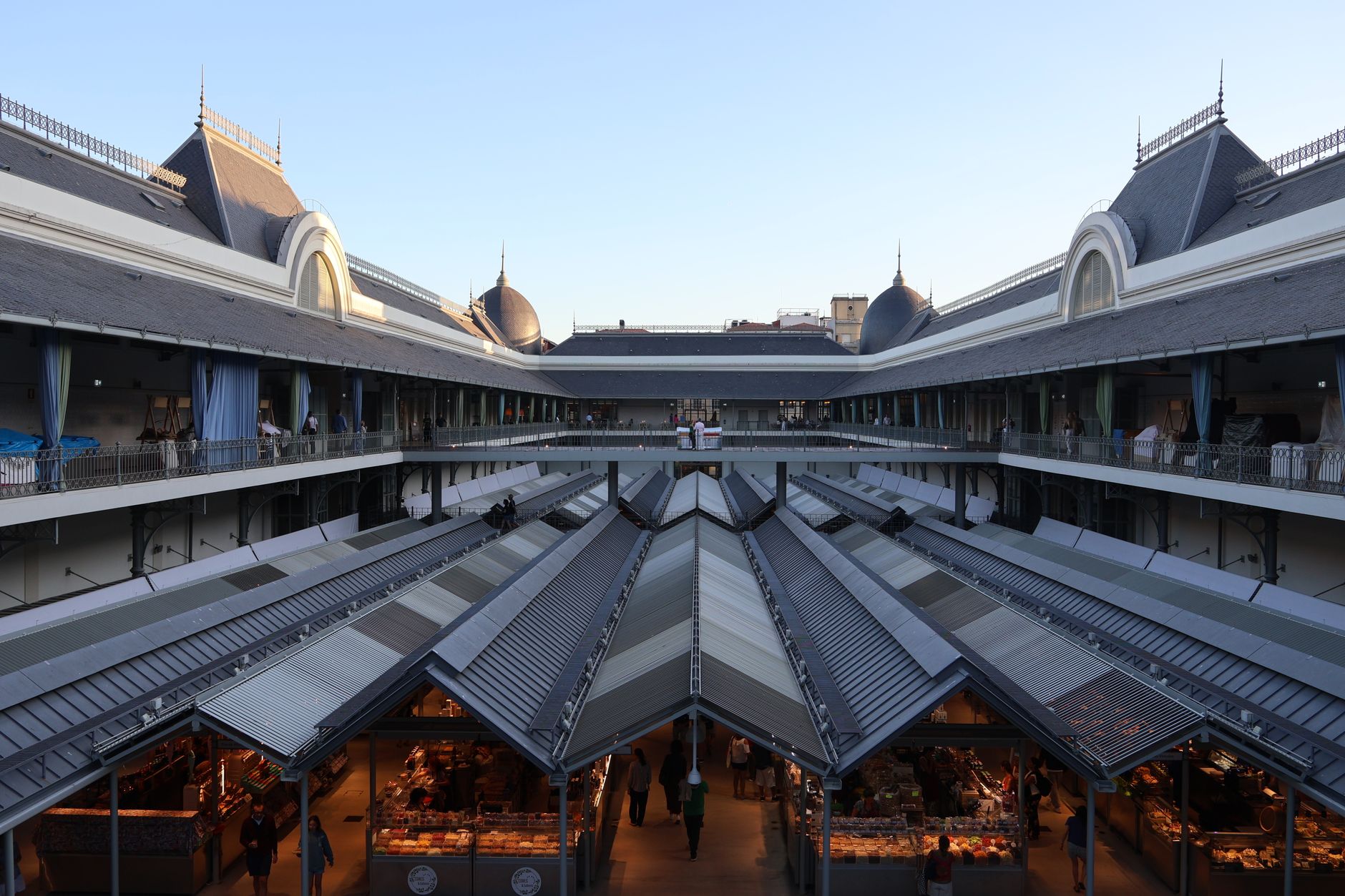
The covered market on Cours Lafayette in the 2nd arrondissement. 48 traders — not a tourist market but where working chefs and serious cooks shop. Mère Richard's Saint-Marcellin cheese stall is the landmark (the local semi-soft disc at the correct stage of ripeness is significantly different from what's exported). Bernachon chocolate (family-run, refuses industrial couverture). Maison Sibilia for charcuterie. Colette Sibilia's rosette de Lyon is the standard.
Open Tuesday–Saturday 7am–7pm, Sunday 7am–1pm. Monday closed. Go in the morning when the stallholders are communicative.
Fourvière and the Roman Theatre
The Fourvière hill above Vieux Lyon is worth the climb for two things. The Basilique Notre-Dame de Fourvière (1896, emphatically neo-Byzantine interior) has panoramic views of the city with both rivers visible simultaneously; on clear winter days, the Alps are visible to the east. Take the funicular from Vieux Lyon station (included in the TCL transport day pass, or €2.20 single).
Below the basilica: the Lugdunum Roman theatre complex — a 10,000-seat theatre from 15 BCE, expanded by Hadrian, and a smaller adjacent Odéon. Free entry. The Musée Gallo-Romain alongside it (€4) is one of the better Roman museums in France and usually uncrowded.
Croix-Rousse and the Saturday Market
The Croix-Rousse hill north of the Presqu'île was the silk-weaving district through the 19th century. The Saturday morning market on Boulevard de la Croix-Rousse (one of the best street markets in France, open 6am–1pm) is a working neighbourhood market — vegetables, cheese, fish, rotisserie, local charcuterie — not a curated food hall. The neighbourhood itself is the most local-feeling part of central Lyon, noticeably different from the touristified streets of Vieux Lyon.
Getting to Lyon from Paris

TGV from Paris Gare de Lyon: 2 hours. Trains run every 30 minutes at peak times. From Paris CDG airport, direct TGV to Lyon Part-Dieu (no city transfer needed): 1h55. Lyon has two TGV stations — Part-Dieu (main hub, in the commercial east) and Perrache (older, more central). Many trains stop only at Part-Dieu; check which station your service uses. Tickets: €30–80 depending on booking lead time; €40–55 booked 4–6 weeks out.
When to Visit
June–September for consistently good weather (25–30°C in summer, low humidity compared to Paris). The Fête des Lumières in early December (typically 8–11 December) — large-scale light installations throughout the city, all free, typically 6pm–midnight — is the city's most exceptional event. Hotels within 50km book up to a year in advance. Book accommodation immediately once dates are confirmed if this is the goal.
Frequently Asked Questions
Is Lyon better than Paris for food?
For the specific experience of French regional gastronomy — bouchon culture, market culture, Beaujolais and Côtes du Rhône wine country nearby — Lyon is more concentrated and more affordable than Paris. Paris has greater breadth at the high end. Lyon is better for the specific thing it does.
How many days does Lyon need?
Two full days: Vieux Lyon and traboules, Les Halles, Fourvière, one bouchon meal. Three days adds Croix-Rousse, the Roman museum, and a day excursion to Beaujolais wine country (30 minutes by train to Villefranche-sur-Saône).
What wine should I order at a bouchon?
Beaujolais Villages or one of the 10 Beaujolais crus (Morgon, Fleurie, Moulin-à-Vent being the most structured). For a fuller red, Côtes du Rhône Syrah from Crozes-Hermitage. Both available by the pot (46cl carafe, €6–12 at bouchons).
Is the Fête des Lumières free?
Yes. The outdoor installations across the city and on building facades are free. The four-night programme runs after dark each evening. The city publishes the route map in October.
Where should I stay?
The Presqu'île (1st or 2nd arrondissement, between the two rivers) for the most central position. Vieux Lyon for atmosphere (noisier at weekends). Croix-Rousse for a local neighbourhood feel.