
Nikko is 150km north of Tokyo in Tochigi Prefecture, a 2-hour journey by Tobu Limited Express from Asakusa. The town itself is unremarkable, but the forested hillside above it contains the Toshogu Shrine — the mausoleum of Tokugawa Ieyasu, the first shogun of the Edo period, built by his grandson in 1634 and decorated to a level of ornamental density that has no equivalent in Japanese religious architecture. Across the road from Toshogu, a UNESCO-listed avenue of 13,000 cedar trees (planted in 1625, the largest surviving avenue in Japan) leads to the Rinno-ji temple complex. A 1-hour bus ride further into the mountains reaches Lake Chuzenji and the 97-metre Kegon Falls. Most Tokyo visitors treat Nikko as a day trip; it rewards an overnight.
Toshogu Shrine
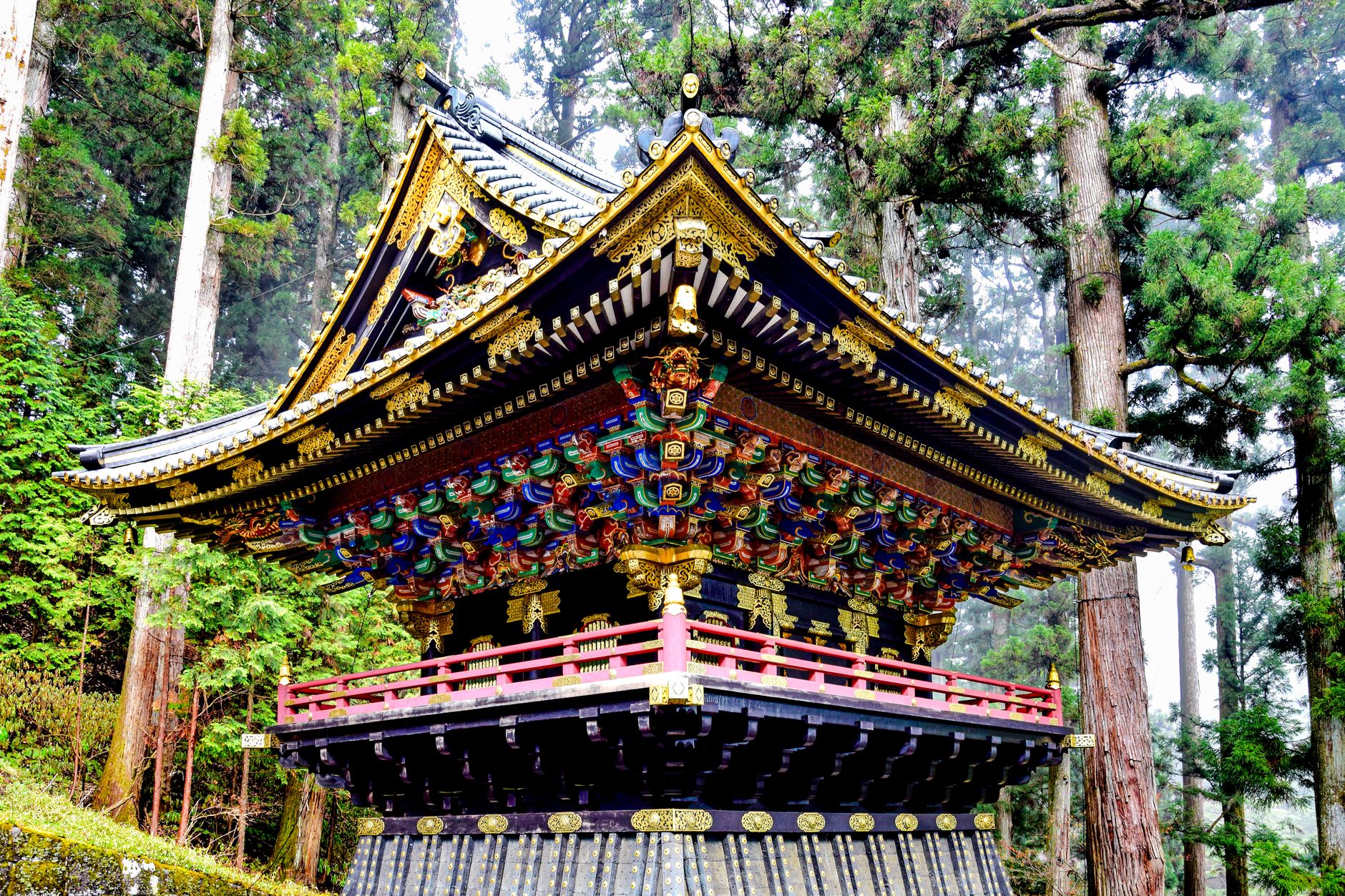
Nikko Toshogu (entry ¥1,300; the Sleeping Cat and tomb an additional ¥520) was built by Shogun Tokugawa Iemitsu between 1634 and 1636 to enshrine his grandfather Ieyasu. The complex has 55 buildings across a forested hillside, connected by stone staircases and covered corridors. The structural quality is functional; the decoration is the point.
Every building surface is carved, painted, or gilded. The most technically accomplished single element is the Yomeimon Gate (Gate of the Setting Sun) — a 2-storey gate with 508 individual carvings of dragons, flowers, animals, and human figures, originally polychromatic, restored to something close to the original colour scheme in a 2017 renovation. The carvings include deliberate imperfections introduced to avoid angering the gods with a work of perfection: one of the column designs is intentionally inverted.
The Nemuri-neko (Sleeping Cat) is a small carved cat above the entrance to the path leading to Ieyasu's tomb. Despite its small size (about 20cm), it became one of the most reproduced images in Japanese popular culture. The carving is attributed to Hidari Jingoro, a legendary craftsman of the period.
Ieyasu's tomb, 200 steps up from the Sleeping Cat gate, is in a sober bronze-roofed stone structure surrounded by old cedars. The contrast with the ornamented shrine buildings below is intentional — the mausoleum is Shinto-austere.
Allow 2–2.5 hours for the full Toshogu complex.
Rinno-ji and the Cedar Avenue
Rinno-ji is a Buddhist temple complex that predates Toshogu by nearly 900 years (founded 766 CE by the monk Shodo). The main hall (Sanbutsudo, "Three Buddhas Hall") contains three 8-metre lacquered wooden statues of Buddhist deities — the largest in the region. Entry ¥400. The Shoyoen garden (¥300 extra) is a pond-circuit garden in the style of the Edo period, worth 30 minutes.
The Sugi Namiki (Cedar Avenue) along the 38km approach to the Nikko mountain shrines was planted in 1625 by Matsudaira Masatsuna, a feudal lord who could not afford to donate gold or treasure to the Toshogu construction. He planted 13,000 cryptomeria cedars instead. Today 11,000 survive, the largest contiguous ancient cedar avenue in Japan. The oldest trees are 400 years old and 50 metres tall. The 2km section immediately below the shrines is the most impressive, accessible on foot from Nikko station.
Lake Chuzenji and Kegon Falls
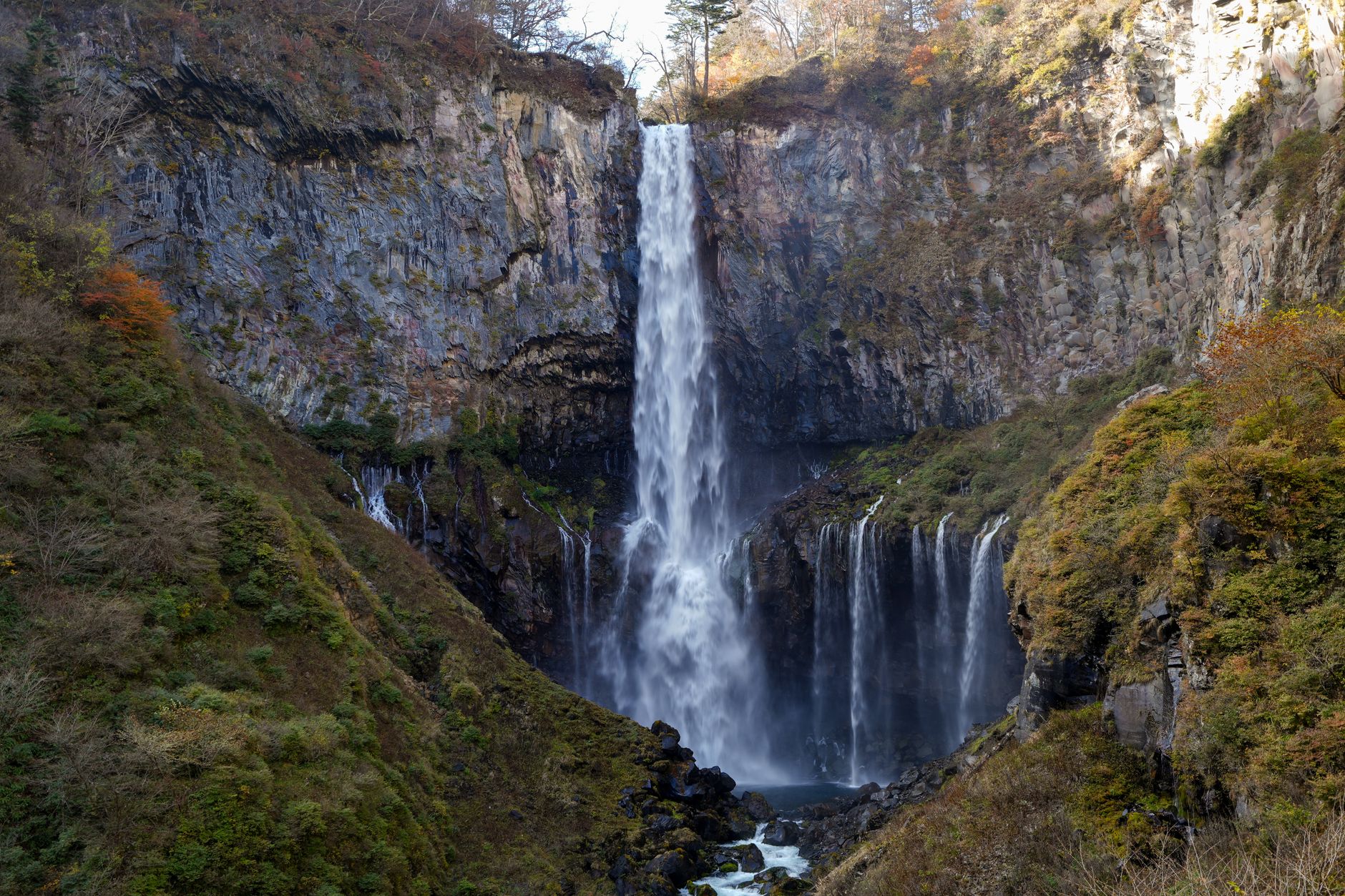
Kegon Falls (entry ¥570 for the observation lift) is a 97-metre waterfall fed by Lake Chuzenji at 1,269 metres elevation, 15km from Nikko town by bus (40 minutes, ¥1,150; covered by Tobu's Nikko day-pass). The lift descends 100 metres to an observation platform at the base of the falls — the view upward at the full drop is the one worth the entry fee.
Lake Chuzenji is the highest lake in Japan reachable by bus (1,269m). The lakeside walk (5–6km around the lake) takes 2 hours and passes through forest with views of Mt Nantai (2,486m) across the water. In autumn (late October), the surrounding forest turns red and orange in one of the better foliage displays accessible from Tokyo.
The road from Nikko to Chuzenji climbs the Irohazaka zigzag (48 hairpin bends, named for the 48 characters of the Japanese phonetic syllabary) — dramatic in both directions.
Getting to Nikko
Tobu Nikko Line from Asakusa (Tokyo): the Tobu Spacia Limited Express (red train) runs direct to Nikko station, 2 hours, ¥2,740. The Spacia X (newer rolling stock) runs the same route at similar times. Book seats at Asakusa station or online — the Limited Express fills on weekends.
The Tobu All Nikko Pass (¥4,780, 2 days) covers the round trip from Asakusa, local buses within Nikko (including to Chuzenji), and free or discounted entry to selected shrines.
JR Nikko Line from Ueno (Tokyo): Shinkansen to Utsunomiya then JR local to Nikko, total 1h50, ¥5,510. Covered by JR Pass. Slower and more expensive than the Tobu option unless using a JR Pass.
When to Visit Nikko
Autumn (October–November): the strongest reason to visit outside shrine-specific interest. The cedar avenue, Chuzenji lakeshore, and mountain slopes above the town turn red and gold from mid-October. Leaf colour peaks vary by elevation — valley floor in early November, higher elevations in mid-October. This is peak season — book accommodation 2 months ahead.
Spring (late April–May): cherry blossom in the valley (late April) and rhododendron (end of May) at altitude. Manageable crowds, good temperatures.
Summer (June–August): 5–8°C cooler than Tokyo, accessible from the capital as a day trip. Chuzenji lake becomes a swimming and camping destination for Tokyo residents.
Winter (December–February): cold (−5 to 5°C), potential snow on the shrine complex (one of the better snow photography destinations accessible from Tokyo without a ski resort). Chuzenji partially frozen.
Frequently Asked Questions
Can you visit Nikko as a day trip from Tokyo?
Yes. Leave Asakusa by 8am, arrive before shrine rush, see Toshogu and Rinno-ji, take the afternoon bus to Chuzenji, return by early evening. The Tobu All Nikko Pass makes it economical. An overnight allows for the shrines at dusk and Chuzenji the following morning.
What is the entry fee structure at Nikko Toshogu?
The basic Toshogu entry (¥1,300) covers the main shrine buildings, the Yomeimon gate, and the Rinno-ji Treasure Hall. The Sleeping Cat and Ieyasu's tomb corridor require an additional ¥520. The combined Rinno-ji temple entry is separate (¥400). Budget ¥2,500–3,000 total for the main cluster.
What does "Hear no evil, see no evil, speak no evil" have to do with Nikko?
The Three Wise Monkeys carving on the Shinkyusha (Sacred Stable) at Toshogu is the world's most referenced representation of the maxim — three monkeys covering eyes, ears, and mouth. The stable is among the oldest buildings in the complex (1636) and the carving is one of eight panels depicting the life cycle of a monkey as an allegory for human existence.
Is Nikko worth visiting just for the shrine or is the national park equally important?
The shrine is the primary reason to visit. The national park (Chuzenji, Kegon Falls) is the reason to make it an overnight or two-day trip. Both on the same visit is the standard itinerary for good reason.