Matsumoto Castle was built between 1593 and 1614 and is one of only twelve original castles remaining in Japan — meaning the wooden keep and tower are the genuine 16th–17th-century structure, not a 20th-century reinforced concrete reconstruction. The exterior walls and gables are painted black, earning it the name "Crow Castle" (Karasu-jō), which makes it visually distinct from white-plastered castles like Himeji. It sits on a flooded moat in the centre of a city of 240,000 people in the Nagano mountains at 610 metres elevation, with the Northern Alps (Kita Alps) visible to the northwest on clear days. The secondary reason to visit Matsumoto is Kamikochi — an alpine valley in the Northern Alps, 55km from the city and the most accessible serious mountain landscape in central Japan.
Matsumoto Castle
The castle complex consists of the main keep (tenshukaku), connected to a smaller northwest tower (tsukimi yagura — "moon-viewing tower") and a storage annex. The three connected buildings form a single walkable structure accessible on a one-way circuit.
Inside the keep are six floors of steep ladders — not modern staircases — with gun ports for muskets and arrows on each floor and an excellent permanent exhibition of Matsumoto's castle history, the evolution of the defensive structure, and the weapons and tools of the Sengoku period. The top floor has louvred windows overlooking the moat and, in clear conditions, the Northern Alps with snow-capped peaks from November through May.
The moat is the original water moat, intact and lined with stone. The castle reflected in the moat with the Alps behind it is the photograph of Matsumoto — the best position is the northwest corner of the moat at 8:30am before the crowds arrive.
Entry ¥700. Allow 1.5 hours including the moat circuit. The castle interior queue in peak season (July–August, weekends) can reach 45 minutes; arrive at opening (8:30am) or in the late afternoon (last entry 4:30pm).
The Historic Streets
Nakamachi Street (中町通り): a short preserved merchant street of Meiji-era kura (storehouses) converted to craft shops, galleries, and cafes — the white-plaster-and-black-tile aesthetic is the standard Matsumoto visual. Worth a 30-minute walk; the shops are better for buying than the tourist shops inside the castle environs.
Nawate Street (縄手通り): a covered shopping street along the Metoba river with a frog motif — the area around the river was historically frog habitat. Craft goods, secondhand items, small cafes. More local in atmosphere than Nakamachi.
Agata no Mori Park: a quiet city park 10 minutes' walk from the castle with a 1907 Western-style building (Kyusei Matsumoto Kaisei Gakko) used as a cafe. Free entry to the park.
Matsumoto City Museum of Art
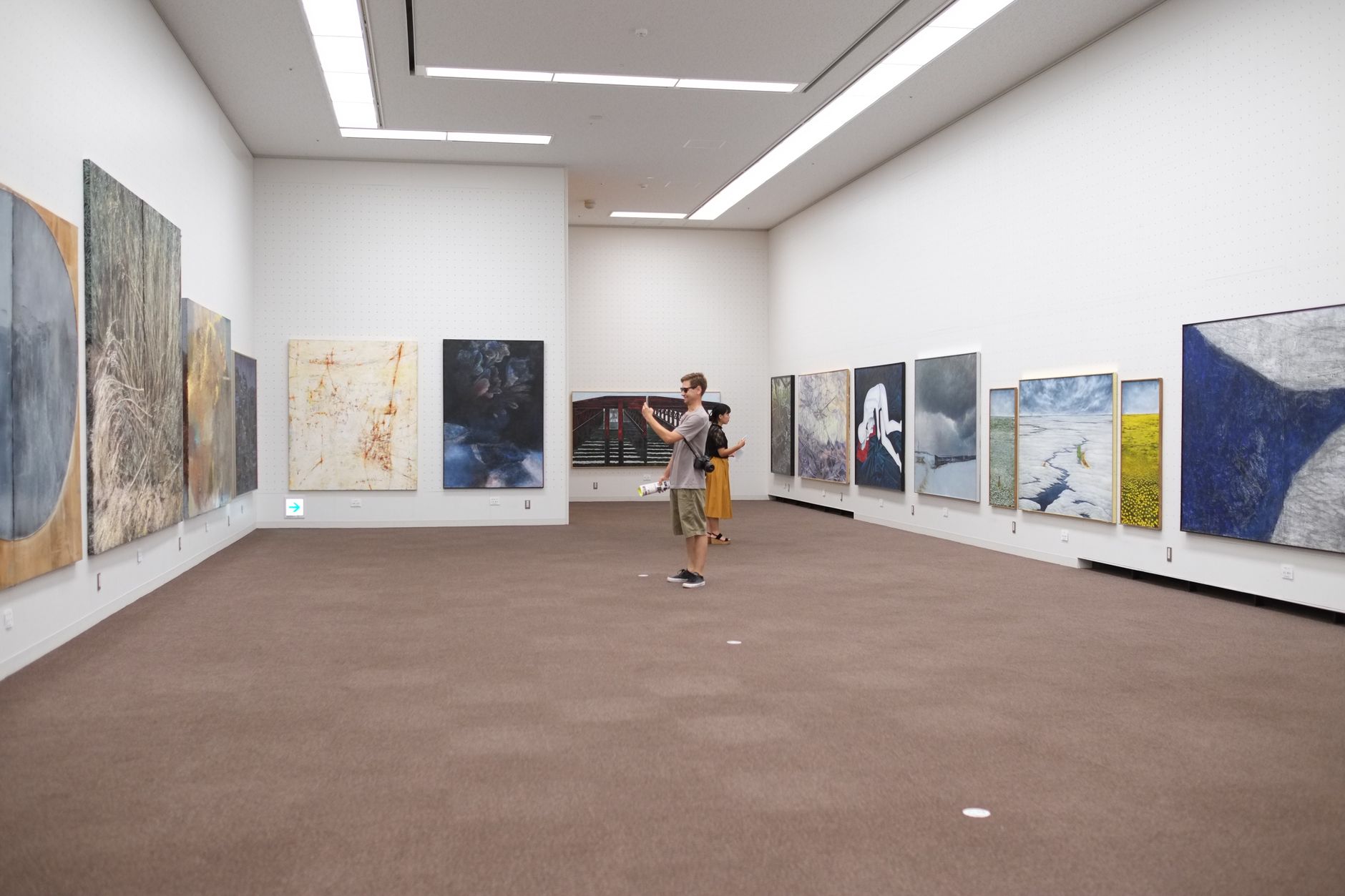
The Matsumoto City Museum of Art is the reason to visit Matsumoto that has nothing to do with the castle or the Alps. The permanent Yayoi Kusama collection — a permanent gallery of polka-dot paintings, infinity rooms, and large-scale pumpkin sculptures by the Matsumoto-born artist (born 1929) — is the most visited contemporary art installation in Nagano Prefecture.
Kusama is the highest-paid living female artist in the world as of recent valuations. She was born in Matsumoto and the museum holds the largest collection of her early work alongside several of the infinity mirror rooms that have become internationally famous. Entry ¥410. Allow 1.5 hours.
The oversized red pumpkin sculpture in the museum's outdoor space is visible from the street.
Kamikochi Day Trip
Kamikochi is a glacially carved alpine valley in the Northern Alps at 1,269 metres elevation, 55km from Matsumoto. Private cars are banned from late April to mid-November; access is by bus from Matsumoto Bus Terminal (1h45, ¥2,600 one-way) or by narrow-gauge Matsumoto Electric Railway to Shin-Shimashima (30 minutes, ¥740) then connecting bus (1h).
The valley: a 5km flat trail runs between Taisho Pond (the iconic reflection of Yakedake volcano in still water) and Myojin Pond. Mt Hotaka (3,190m) and the surrounding Hodaka range form the backdrop. The flat valley floor makes the walk accessible to anyone in ordinary shoes; the mountains around it provide serious trekking.
Season: open late April to mid-November (closes in winter). Autumn colour peaks around October 20–November 5. Cherry blossom at Kamikochi is delayed by altitude to mid-May — later than the valley cities. Peak crowding: July–August weekends see 10,000+ visitors/day. Weekdays are manageable throughout the season.
Matsumoto vs Takayama
Both are mountain city bases in the Japanese Alps with preserved historic districts.
Matsumoto: easier from Tokyo (2h30 Azusa Limited Express from Shinjuku vs 4+ hours to Takayama), the better castle (original, 6-storey, city-centre moat), access to Kamikochi, Yayoi Kusama museum.
Takayama: more extensive and better-preserved merchant town district (Sanmachi Suji is larger than Nakamachi), better morning markets, the Hida Folk Village open-air museum, access to Shirakawa-go.
Combined: the Matsumoto → Nagano → Nagoya → Takayama rail circuit (or reverse) is a 4–5 day Japanese Alps itinerary that does not require choosing between them. The seasonal Alpine bus (Matsumoto–Takayama, ¥4,200, late April–November) connects them directly in 2h30.
Getting to Matsumoto

From Tokyo Shinjuku: Azusa Limited Express (JR), 2h30, ¥6,600. About 7 services/day. Covered by JR Pass.
From Nagoya: Shinano Limited Express, 2 hours, ¥5,980. Also JR Pass-covered.
From Nagano: local JR train, 50 minutes, ¥840. Nagano is on the Hokuriku Shinkansen from Tokyo (80 minutes from Tokyo Station).
From Takayama: Alpine bus (seasonal), 2h30, ¥4,200.
When to Visit Matsumoto
Spring (late April–May): Kamikochi opens late April, cherry blossom in the castle moat in early April, mild temperatures. Strongest window overall.
Autumn (October–early November): autumn colour in the castle grounds and at Kamikochi (late October peak), snow visible on the Alps. Second-best window.
Winter (December–March): Kamikochi closed, but the castle in snow against the Alps is one of the better winter scenes accessible from Tokyo without skiing. Nearby Hakuba (60km north) is the major ski resort.
Frequently Asked Questions
How many days do you need in Matsumoto?
Two nights: one day for the castle, the historic streets, and the art museum; one day for Kamikochi (full day, leave early). A single day from Tokyo is possible but leaves no time for Kamikochi.
Is the JR Pass worth buying for Matsumoto?
The Azusa Limited Express from Shinjuku (¥6,600 one-way) is covered by the JR Pass, as is the Shinano from Nagoya. If Matsumoto is part of a broader circuit including Nagoya, Kyoto, and Osaka, the 7-day JR Pass (around ¥50,000) covers the relevant trains. For Matsumoto alone from Tokyo, the pass math does not work.
What are the Japan Alps and where do they start?
The "Japanese Alps" refer to three parallel mountain ranges in central Honshu — the Kita (Northern), Chuo (Central), and Minami (Southern) Alps. Matsumoto sits at the eastern foot of the Kita Alps; Kamikochi is in the heart of the range. The term was coined by the English missionary Walter Weston in 1896 in his book about climbing there.
Is Matsumoto Castle better than Himeji Castle?
Himeji is larger, more famous, and the standard reference point for Japanese castle architecture — but it is a 20th-century restored shell, albeit an elaborate one. Matsumoto's keep is smaller but is the original 16th-century wooden structure. For castle architecture specifically, Himeji is the more impressive. For historical authenticity, Matsumoto has the edge.