
San Francisco's most famous weather feature—the summer fog rolling through the Golden Gate every afternoon—makes July and August among the worst months to visit. The city reaches its warmest and clearest state in September and October, when the rest of California thinks about autumn. Most visitors discover this frustration only after booking. The reality of San Francisco is messier than the postcard: it's expensive, visibly struggling with open-air drug use in specific neighbourhoods, and the cable cars move slower than walking. What remains genuine is the topology, the water on three sides, the neighbourhoods that feel like separate towns, and a working port that hasn't been turned into pure tourism.
| Category | Best for | Vibe | Costs | Reality check |
|---|---|---|---|---|
| September–October | First-time visitors, photography | Clear, warm, local | Peak hotel rates | Warmest and clearest; book early |
| April–May | Shoulder season | Mild, some fog | Lower than summer | Fewer crowds; occasional overcast days |
| June–August | Budget travellers (paradoxically) | Cool, foggy, crowded | High hotels, low visibility | Karl the fog; Golden Gate often obscured |
| November–March | Rain tolerance, budget | Mild, wet | Lowest rates, rainy | Off-peak; good for neighbourhood exploring |
How many days should you spend in San Francisco?
Three days covers the essentials: Golden Gate Bridge, Alcatraz, a neighbourhood or two, and the Ferry Building. Five days lets you explore neighbourhoods properly, take a day trip, and stop rushing between photo stops. Most first-timers should plan 4 days to avoid either the frantic pace or the boredom of oversaturation.
A sample three-day itinerary: Day one, walk the Golden Gate Bridge in the morning (fog clears earlier on the SF side), then Chinatown and dim sum lunch on Clement Street. Day two, Alcatraz (book ahead), return via the ferry to the Embarcadero, walk to the Ferry Building for dinner. Day three, explore your chosen neighbourhood—Mission for taquerias and murals, Hayes Valley for independent shops and restaurants, or the Richmond/Sunset for a slower pace. Don't waste time on Fisherman's Wharf beyond the ferry terminal.
Which neighbourhoods should you stay in?
Mission District is where San Francisco actually lives. Valencia Street runs north-south with independent restaurants, bars, and vintage shops. The taquerias here—El Farolito, Taqueria Cancún—serve proper San Francisco Mission burritos for €12–15. The 16th Street BART station connects you downtown in 10 minutes. Hotels and Airbnbs range €140–220/night. The neighbourhood has a lived-in feel that downtown lacks. Walk the streets at night; the area is well-lit and busy.
Hayes Valley sits between downtown and the Golden Gate Bridge. Alamo Square (the Painted Ladies—the Victorian houses) is here, though the actual square is more Instagram setup than gathering space. Hayes Street itself has independent restaurants, wine bars, and bookshops. Hotels €160–280/night. Central without feeling commercial. BART access is slightly less direct than Mission, but buses serve it well.
Union Square / Downtown is the obvious commercial centre. Most hotel inventory lives here. You're walking distance to major sights and transit hubs. Hotels €200–380/night. The immediate blocks around Union Square itself—especially the southern edges toward Market Street—feel bleak at night with visible street-level issues. Be specific when booking: a hotel on Geary Street two blocks west is markedly different from one facing Union Square directly. The area works fine during the day.
Fisherman's Wharf puts you on the bay with easy Alcatraz ferry access. The neighbourhood is the most touristed in the city; restaurants serve adequate seafood at tourist prices. Hotels €180–320/night. If your primary goal is Alcatraz and the Golden Gate experience, staying here saves 20 minutes each way. Otherwise, the trade-off isn't worth it.
Avoid the Tenderloin entirely. This neighbourhood (directly north and east of Union Square) has concentrated street-level drug use and should not be where you stay or spend time at night, especially with luggage. It's small—about six blocks—and easy to avoid. Online maps sometimes show hotels here at lower prices; those prices exist because the location is difficult.
What's actually worth your time in San Francisco?

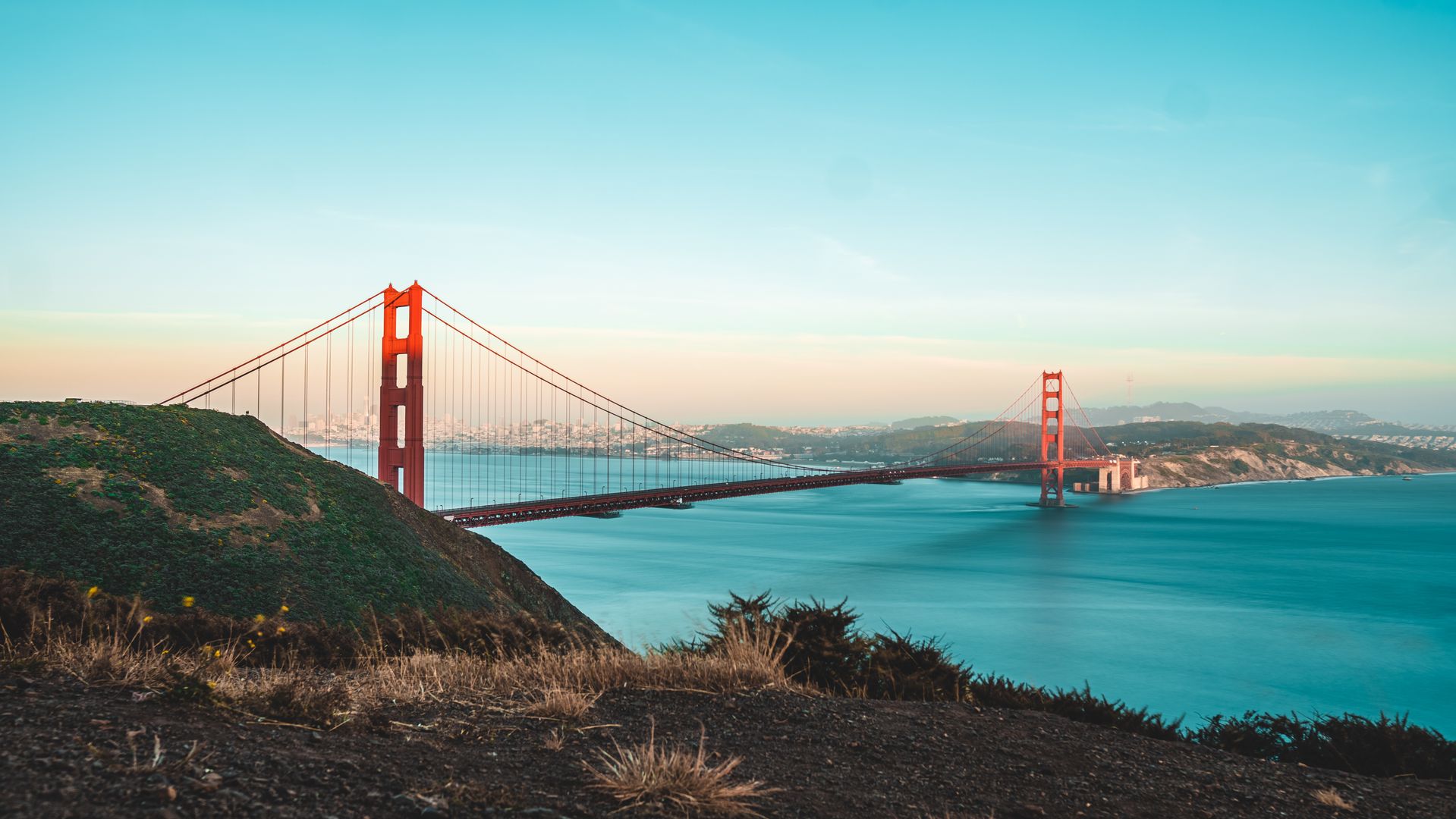
Golden Gate Bridge. Walk it. The bridge spans 2.7km; the walk takes 45–60 minutes each way. Do it from the San Francisco side in the morning—fog clears earlier there. The pedestrian path runs both directions and is separated from traffic. Stop at Battery Spencer on the Marin side for the classic angle. Most people drive over it and miss the experience.
Alcatraz. The island tour is one of the genuinely good audio tours in North America—narrated by former guards and prisoners, not a corporate script. Book at alcatrazcruises.com days or weeks ahead in peak season (May–September). The ferry departs from Pier 33. Cost is €45–48/person. A round trip takes 2.5–3 hours including the island tour. Plan this early; it sells out.
Ferry Building Marketplace. A working ferry terminal with a Saturday farmers market (8am–2pm). Acme Bread, Far West Fungi, Blue Bottle Coffee—the real point is breakfast before walking the Embarcadero to the Golden Gate. Arrive early to avoid crowds. Weekday mornings are quieter and the produce is fresher.
Chinatown. Enter through the Dragon Gate on Grant Avenue. It's the oldest Chinatown in North America—dense, functional, not a museum. The tourist restaurants facing Grant Avenue are mediocre. Instead, eat dim sum on Clement Street in the Richmond District (parallel streets have less foot traffic and better food). Places like New Korea House or Koi Palace pull local crowds. Lunch is €10–15/person.
Dolores Park. A three-block park in the Mission with food trucks, views of downtown, and a genuine mix of the city. Go on a sunny afternoon (weekends are busier). No particular goal—just the gathering spot locals actually use.
Lombard Street. The "crookedest street" has 8 hairpin turns in 1 block. Walk down the pedestrian stairs rather than driving—you avoid the car queue and get a better view of the curves and the bay beyond.
Muir Woods. Thirty minutes north of the Golden Gate Bridge via US-101 and Highway 1. A coast redwood grove with trees 70–80m tall, some over 1,000 years old. A 2km loop walk lets you stand among them. Timed-entry permits are required (€3/person for the permit, separate from parking). Book at gomuirwoods.com well ahead in summer. The car park fills by 9am on weekends.
What most guides get wrong: The "essential" San Francisco list overloads with cable cars, Coit Tower, and Haight-Ashbury. Cable cars are slow tourist transport—ride one for the experience but plan actual journeys via BART or Muni. Coit Tower is a 1930s monument that sits on Telegraph Hill at the end of a steep climb, with views you've already seen from better angles. Haight-Ashbury is a commercial street trading on 1960s nostalgia; avoid unless you specifically want vintage clothes or overpriced coffee shops.
Day trips from San Francisco
Muir Woods (covered above) is the closest substantial destination. Combine it with a coastal drive back via Sausalito on the Marin side.
Wine Country: Napa and Sonoma. 1.5–2 hours north via US-101. A full day or overnight trip. Rent a car from the airport or from Enterprise/Hertz city locations (€40–70/day). Wineries typically require advance booking. The region is expensive—tastings €25–50, lunch €30–50. Sonoma tends to be less crowded and slightly cheaper than Napa. A car rental, gas, lunch, and 2–3 tastings runs €150–250/person for a day trip.
Monterey and the 17-Mile Drive. Two hours south via CA-1. Monterey Bay Aquarium is the main draw (€35/adult). The 17-Mile Drive is a scenic loop road (€10/car). Combine with Big Sur if you have two days—some of the most dramatic coastal scenery in California, though Highway 1 is often partially closed for landslides (check road status before driving). A day trip runs €80–150/person including petrol and food.
Point Reyes National Seashore. 45 minutes north via US-101 and CA-1. Coastal bluffs, beaches, and tule elk. Free entry. Lighthouse hike is 2.8km return and often windy. Less famous than Muir Woods but fewer crowds.
Book a rental car through traditional agencies (Enterprise, Hertz) rather than peer-to-peer services—liability and insurance are clearer if you have an accident on unfamiliar mountain roads.
Getting around San Francisco
BART (Bay Area Rapid Transit). Connects SFO airport to downtown (Civic Center, Powell, Embarcadero stations) in 30 minutes. Cost €10.65. Also connects to the East Bay and specific neighborhoods—Mission has its own stations at 16th and 24th Streets. Trains run until midnight; frequency is 3–5 minutes during the day, 5–15 minutes evenings.
Muni (buses and underground metro). Covers areas BART doesn't. Single ride €2.50. The Clipper card works on both Muni and BART; buy it at the airport or a Walgreens. A visitor Visitor Passport (unlimited 1/3/7 days) costs €33/54/94 and covers cable cars too. For a three-day visit, the 3-day pass makes sense only if you plan heavy transit use—walking and BART are more efficient for typical tourist routes.
Cable cars. €8 per ride. Historic, slow, scenic, and often crowded. Worth experiencing once as a cultural artifact, not as a commuting strategy. The Powell-Hyde line to Fisherman's Wharf gives the best views. Don't plan an itinerary around them.
Uber/Lyft. €12–20 for most city trips. Reliable and often faster than transit for point-to-point journeys late at night. Surge pricing is aggressive on weekends and evenings.
Walking. San Francisco's grid means you can walk between most tourist areas, but the hills are genuinely steep. Some routes gain 100m elevation in 5 blocks. Wear proper shoes.
What to expect: safety and street reality

San Francisco has a visible open-air drug use problem concentrated in specific areas—the Tenderloin, parts of SoMa, and stretches of Market Street. This is real and visitors should know about it. You will see people openly using drugs, people experiencing mental health crises, encampments on certain blocks. It's difficult and unsettling if you're unprepared.
The tourist areas—Fisherman's Wharf, Union Square, Chinatown, the Golden Gate area, the Mission—are generally safe with standard urban vigilance. Violent crime against tourists is uncommon. The actual problem is property crime: smash-and-grab car break-ins. Leave absolutely nothing visible in a parked car. Nothing. Not a jacket, not sunglasses, not loose change. Car break-ins happen across the city, not just rough areas. This is not an exaggeration—rental car companies include explicit warnings.
For transit at night: BART is fine until midnight. Late-night buses are safer than walking alone. Uber/Lyft are reliable alternatives.
The situation is better than media coverage suggests and worse than visitor forums sometimes admit. Use normal city sense: don't walk through the Tenderloin with luggage, don't leave things visible in cars, avoid empty train cars late at night, be aware of your surroundings on Market Street. These aren't paranoia—they're standard urban behavior.
Budget and costs
San Francisco is one of the most expensive US cities. Budget accordingly:
Accommodation: Mid-range means €180–280/night. Budget options (hostels, cheaper Airbnbs in the Mission) start €80–120/night. Upscale hotels €300+/night.
Food: A sit-down lunch is €20–30. Dinner at a good restaurant €35–60. Budget options exist: Mission burritos €12–15, dim sum €10–15/person, farmers market breakfast €8–12. Coffee €4–5.
Activities: Alcatraz €45–48, Golden Gate Bridge walk free, Ferry Building free (food paid separately), cable car €8, BART rides €2.50–3. A 3-day Visitor Passport (unlimited transit + cable cars) is €54; only worth it if you're heavy on cable cars and buses.
Daily budget for one person: Budget traveller €80–120/day (Mission hostel, street food, free walks). Mid-range €180–250/day (€200 hotel, €30 lunch, €40 dinner, €20 transit/activities). Upscale €350+/day.
When to visit San Francisco
September–October: the best months. Average temperatures 18–24°C, minimal fog, clear bridge views, local festivals (Folsom Street Fair in September, Fleet Week in October). Hotel rates peak—book 8 weeks ahead. Crowds are high but manageable. This is when to visit if you want reliable weather and clear photography.
April–May: the shoulder season. Temperatures 14–18°C, some afternoon fog but generally clearing by evening, fewer crowds than summer. Hotel rates €30–50 lower than summer. Wildflowers are blooming. Wind picks up late afternoon. Book 4–6 weeks ahead.
June–August: the tourist season with a catch. Temperatures 14–18°C (not warm—bring layers), regular thick afternoon fog rolling through the Golden Gate. The fog burns off earlier in the Mission and further inland; it persists along the waterfront. Karl the Fog even has a social media account (@KarlTheFog) because locals name and track it. Hotel rates peak. Crowds are heaviest. If you visit these months, accept that bridge photography will be difficult and adjust expectations. Many first-time visitors are frustrated by the cool, foggy weather they expected to be summer.
November–March: the wet season. Temperatures 10–15°C, occasional rain (rarely heavy), clear days possible. Hotel rates drop 30–40%. The city feels less touristy. Weather is unpredictable—bring a light rain jacket. Some outdoor activities (Muir Woods, day trips) are still viable between storms.
The counter-intuitive truth: September and October offer better weather than the popular summer months, yet fewer visitors plan around this. If you can travel in early autumn, that's the optimal window.
Frequently Asked Questions
Is San Francisco safe for tourists?
San Francisco is safe in the sense that street violence toward tourists is uncommon. The real problem is property crime—smash-and-grab car break-ins are common citywide, and you will see concentrated street-level drug use in the Tenderloin and parts of SoMa. Avoid those neighbourhoods at night and don't leave anything visible in parked cars. Tourist areas are generally fine with standard urban awareness.
What's the best first-time itinerary?
Day one: morning walk across Golden Gate Bridge, afternoon Chinatown dim sum on Clement Street. Day two: Alcatraz (book ahead), evening at Ferry Building or Embarcadero. Day three: explore either the Mission for taquerias and street murals, or Hayes Valley for restaurants and Alamo Square. Avoid planning around cable cars or Coit Tower—they're time-inefficient.
Can you visit without renting a car?
Absolutely. BART and Muni cover the city and East Bay. For day trips to Muir Woods, Wine Country, or Monterey, rental cars cost €40–70/day from the airport. If you only want in-city activities, public transit and walking are sufficient and actually faster than driving on crowded days.
Why is San Francisco so foggy in summer?
Cold water from the Pacific collides with warm inland air, creating fog that rolls through the Golden Gate every afternoon from May through August. It typically burns off by mid-morning in the Mission and downtown, but persists along the waterfront. September and October have warmer ocean temperatures and clearer skies. If summer fog frustrates you, visit in early autumn instead.
How many days is enough?
Three days covers the essentials (Golden Gate Bridge, Alcatraz, a neighbourhood). Four days is more comfortable. Five days lets you explore neighbourhoods properly and take a day trip. Beyond five days, the city can feel repetitive unless you're living there or working.
What do most guides get wrong about San Francisco?
They overload cable cars, Coit Tower, and Haight-Ashbury as "must-dos." Cable cars are slow tourist transport (ignore them for actual movement). Coit Tower requires a steep climb for views you've already seen better from elsewhere. Haight-Ashbury is a commercial street. Skip them. Also, most guides don't warn that summer is foggy and cool—they let visitors arrive expecting California warmth and get disappointed.
San Francisco works best in September or October when the weather is warmest and clearest, and the crowds are manageable without being empty. First-timers should budget 4 days: two for Golden Gate, Alcatraz, and the waterfront; one for a neighbourhood (Mission, Hayes Valley); one for flexibility or a day trip. Stay in the Mission if you want to understand how the city actually works; stay near Union Square if walking to major sights is your priority. Know in advance that summer fog is real, car break-ins are common, and the visible street-level crisis in certain neighbourhoods is difficult but concentrated in avoidable areas. The topology—water on three sides, steep hills, distinct neighbourhoods—remains genuine and worth experiencing.