

Singapore's cost is 40% higher than Bangkok but 30% lower than central London — and the three-day experience justifies both the price and the precision. The city rewards travellers who don't fight its nature: it's orderly, air-conditioned, efficient, and built for short visits with real payoff.
Is Singapore Worth Visiting for 3 Days?
Yes, but only if you accept what it is: an expensive, immaculately organised city with exceptional food, not a beach destination or budget travel hub. A comfortable three-day trip costs €100–150 per person daily (accommodation, food, transport, one or two paid attractions). Most travellers either love this efficiency or resent paying premium prices for it. There is no middle ground.
The payoff is legitimate. Singapore has genuine hawker food culture, culturally distinct neighbourhoods (Chinatown, Little India, Arab Quarter, Peranakan enclaves), and infrastructure that works without friction. You will not spend time fighting transport, hunting for cash machines, or negotiating prices. You will spend time eating, walking, and sitting in one of the world's best botanical gardens. For three days, this is worth the cost.
Day 1: Marina Bay, Gardens by the Bay, Chinatown
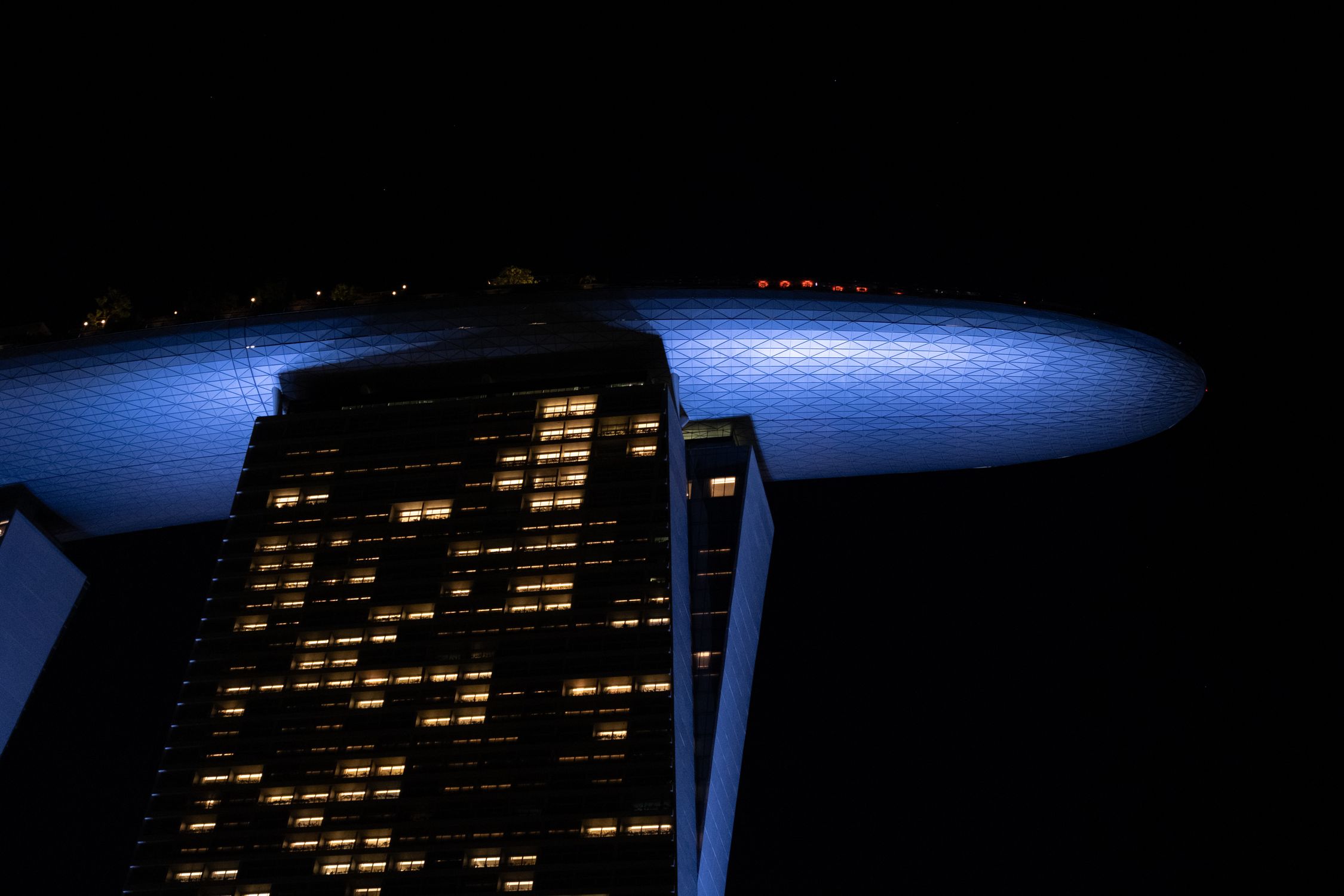
Start at Marina Bay Sands, the 57-storey hotel that has become the visual shorthand for Singapore. The SkyPark observation deck (€18, Level 57) is the obvious choice, but the better option: go to CÉ LA VI bar on Tower 3 and buy one drink (€18, cocktails €16–20). You get the same 360-degree view, with alcohol, for identical price. The bar opens at 2pm; queue times thin after 4:30pm.
Walk to Gardens by the Bay next. The Supertrees grove — 18 vertical gardens ranging from 25m to 50m tall — is free to visit at any time. The OCBC Garden Rhapsody light show runs nightly at 7:45pm and 8:45pm (15 minutes, free). This is not a gimmick; the show is sophisticated and genuinely worth standing through once.
The Flower Dome and Cloud Forest domes cost €20 combined (€14 each if bought separately; buy together). The Flower Dome is a pleasant climate-controlled conservatory. The Cloud Forest is exceptional: a 30m artificial mountain with a waterfall, tropical plants tiered up the slope, an indoor canopy walk at 20m height. The engineering is impressive; the experience is restful. Worth the entry.
From Gardens, walk to Chinatown (15 minutes). Sri Mariamman Temple on South Bridge Road is the oldest Hindu temple in Singapore (free entry, remove shoes). The prayer hall is active and tactile — not a museum. The Chinatown Heritage Centre (€12, 48 Smith Street) is a three-storey walk-through covering Chinese immigration waves, secret societies, and domestic life in the 1950s. Dense, well-made, takes 90 minutes.
Eat dinner at Smith Street Hawker Centre, a converted shop-house complex now functioning as a wet market and food stalls. The food is cheap (mains €3–6) and genuinely local — no English menus, no tourist pricing. Sit at a communal table, order from two or three stalls, and pay per dish. Start with char siu pau (roasted pork bun, €0.80) and a bowl of chicken noodle soup (€3).
Day 2: Little India, Arab Quarter, Singapore Botanic Gardens
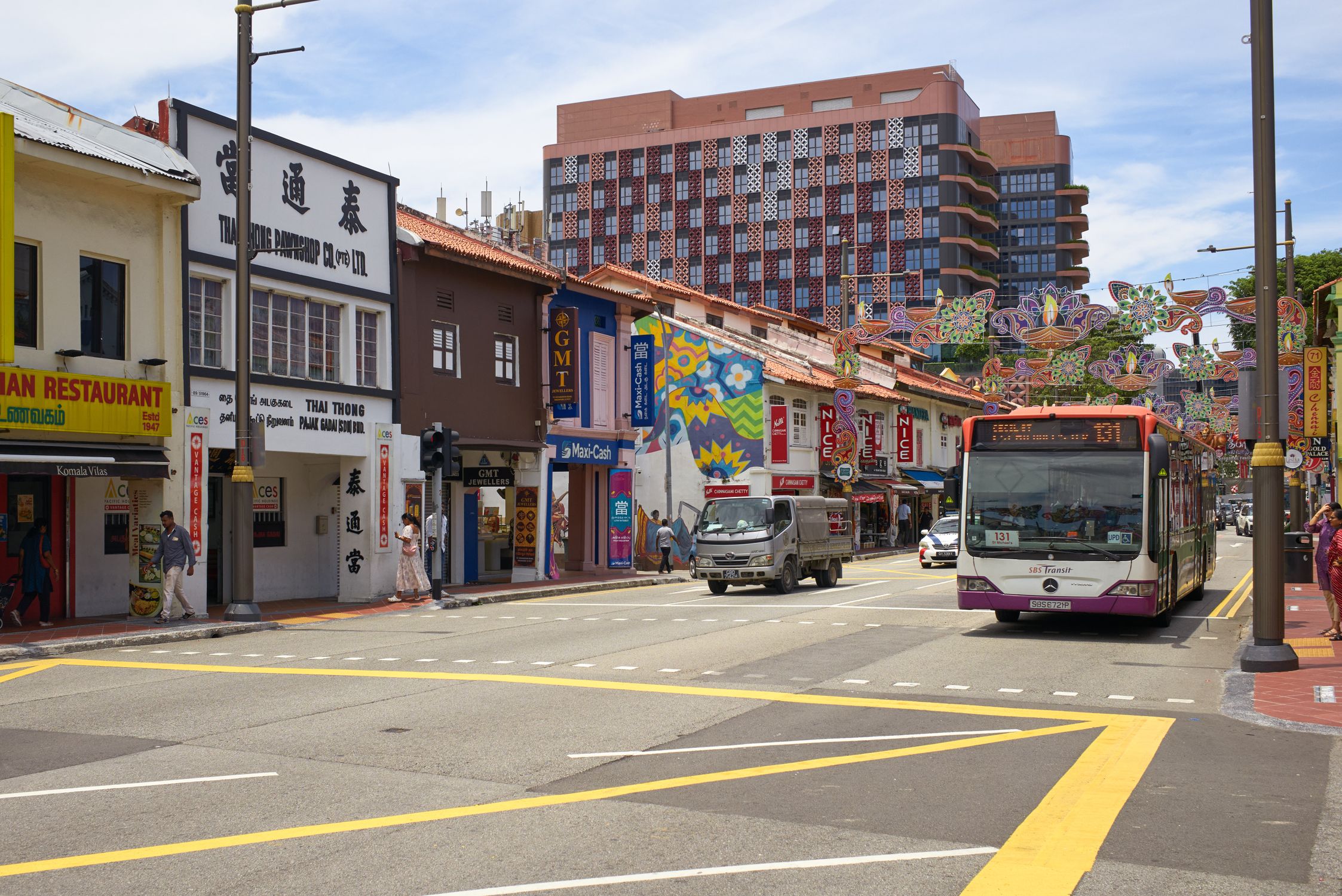
Little India is the most visually cohesive neighbourhood in Singapore — the one place where the sensory atmosphere (spice shops, temple bells, bright textiles, street food carts) exceeds the orderliness. Start at Tekka Centre on Serangoon Road: a four-storey building with hawker stalls on the ground floor and a wet market above. Order roti prata from any of the three or four stalls (crispy flatbread with potato and egg, served with curry dipping sauce, €1.50) and a glass of fresh lime juice (€1) for breakfast.
Sri Veeramakaliamman Temple on the same road is a working temple with vivid gopuram (painted tower). Walk through Mustafa Centre opposite — a sprawling 24-hour department store stacked with Indian spices, textiles, and inexplicable goods. Most visitors find it more interesting than the neighbourhood's designated "attractions."
Walk 10 minutes east to Kampong Glam (Arab Quarter). Masjid Sultan (Sultan Mosque) occupies a block with its cream-coloured dome visible from streets away. Visitors are welcome between prayer times (avoid prayer hours: dawn, midday, late afternoon, dusk, and night). Cover shoulders and knees. The main prayer hall is austere and beautiful; remove shoes at the entrance.
The surrounding streets have good Middle Eastern and Turkish restaurants. Haji Lane, the narrow shopping street, has independent boutiques selling vintage clothing, local design, and artisanal goods — not tourist trinkets. Stop for lunch at any of the Lebanese or Turkish spots (mains €8–12). Arab Street has coffee shops and bookshops worth browsing.
Walk to Singapore Botanic Gardens in the late afternoon (take MRT from Bugis to Botanic Gardens station, 3 stops, €1.50). The Gardens are a UNESCO Heritage Site and free to enter. Walk the main loop (45 minutes) to see the lake, bridges, and sculpture trail. The National Orchid Garden, a separate section, costs €4 and holds 1,000 species of orchids in a three-storey greenhouse. Genuinely exceptional. The Jacob Ballas Children's Garden (free) is only worth visiting if you have children. Sit on the grass near the lake at dusk — this is the moment the Gardens earn their reputation. Stay until the last light fades (around 7pm year-round).
Day 3: Sentosa Island, or Joo Chiat/Tiong Bahru Alternative
Sentosa Island is a 390-hectare resort island connected to mainland Singapore by cable car (€15 return, 15 minutes), monorail (€4, included with most attractions), or causeway bus (€2). Most visitors come for Universal Studios Singapore (€70, full day), which is standard theme-park fare — worth it only if that's your priority.
Better option: Palawan Beach (free entry via monorail, €4 return). It's a narrow managed beach with calm water, open roughly 8:30am to 8pm daily. Bring water and a book. Spend three hours. It's not tropical postcard material — it's a municipal pool-adjacent beach — but it's a real break and genuinely free.
Walk the Imbiah Trail (free, 30 minutes, well-marked) through secondary forest, spotting monitor lizards and cicadas. Fort Siloso (€10, open 10am–8pm) is a well-preserved WWII-era coastal artillery battery with tunnel networks. History is clear and contextualised. Takes 90 minutes. Eat lunch at the hawker stalls at Sentosa Central (MRT connection point); food prices are slightly inflated but not egregiously.
Better alternative for Day 3: Skip Sentosa entirely. Spend time in Joo Chiat and Katong neighbourhoods on the east coast. These are Peranakan (Straits Chinese) heritage areas with art deco shop-houses painted in pastels, small museums, and the best laksa in Singapore. 328 Katong Laksa on East Coast Road is famous and justifiably so (€3.50 per bowl). Take MRT to Eunos, then taxi or Grab (€4–6). Walk the surrounding streets — Tong Bahru Road, East Coast Road — for atmosphere without touring. Stop at Peranakan Museum (€6, 39 Armenian Street) if the culture interests you.
Alternatively: Tiong Bahru is Singapore's first Housing Development Board neighbourhood (built 1927), now a hipster reclamation site with independent cafes, vintage shops, and surviving art deco architecture. Less historically cohesive than Joo Chiat but more walkable as a destination. Spend a quiet morning here with coffee and a pastry.
Evening: Clarke Quay (Singapore's "party" area on the Singapore River) for a final night drink. The waterfront bars are tourist-oriented and expensive (€8–12 for beer, €14–18 for cocktails), but the setting — colonial shophouses and river traffic — is atmospheric. Arrive by 7pm if you want a seated table with a view; after 9pm it becomes a nightclub corridor.
Hawker Food: The Real Reason Singapore Works
Singapore's hawker food culture is preserved and subsidised by the government. Hawker centres are open-air or covered markets with 10–40 individual stalls (each run by one chef or family) selling specialities at fixed low prices. This is not tourist food or street food — it's where Singaporeans eat lunch daily. Queues form at the best stalls between 11:30am and 1:30pm.
What to eat (in priority order):
Hainanese chicken rice: poached chicken (or roasted, depending on stall) served with fragrant rice cooked in chicken broth, with chilli paste and ginger sauce. Tian Tian at Maxwell Food Centre is the well-known version (€3.50). Old Airport Road Food Centre has multiple reliable versions. This is the baseline good meal.
Laksa: coconut milk-based spicy noodle soup with shrimp, fishcake, and beansprouts. 328 Katong Laksa is worth the trip (€3.50). But any decent hawker centre has a version for €3–4. The soup should be creamy, spiced with turmeric and chilli, not broth-based.
Char kway teow: flat rice noodles wok-fried with dark soy sauce, egg, Chinese sausage, beansprouts, and shrimp. €3–4. Better in Penang (its origin point) but still excellent in Singapore.
Chilli crab and black pepper crab: the splurge. Newton Circus Hawker Centre offers a mid-price version (€25–35 per person with rice); you're paying for the crab and the experience, not refinement. Roland Restaurant at East Coast (€40–60 per person, more upmarket) is the traditional choice. This is expensive for hawker food but cheap for crab.
Kaya toast: toasted bread with kaya (coconut jam) and cold butter, eaten at breakfast with soft-boiled eggs drizzled with soy sauce and white pepper. Ya Kun Kaya Toast has locations everywhere (€4–5). This is a complete breakfast for under €6.
Best hawker centres by category:
- Maxwell Food Centre (Maxwell Road, Chinatown): central, tourist-friendly, excellent Hainanese chicken, roti prata, drinks. Open 10:30am–10pm daily.
- Lau Pa Sat (Raffles Place): the most atmospheric — a converted Victorian market with high ceilings and ceiling fans. Satay stalls set up outside from 7pm (€0.50 per stick). Open 7am–midnight.
- Old Airport Road Food Centre (Geylang): local favourite with less tourist traffic, more variety, genuinely cheaper. Open most of the day; stalls vary by meal times.
Do not eat at hotel restaurants or "Singapore street food" tourist venues on Orchard Road. The food will be 3× the price and half the quality. Hawker centres are 10 minutes from any MRT station by bus.
Practical Logistics
Transport: Buy an EZ-Link card at Changi Airport for €10–15 credit (card itself costs €0.80). The card works on all MRT lines and public buses. The MRT is air-conditioned, runs every 2–4 minutes during the day, and stops after midnight. For journeys under three stops, the cost is €1.20; for four-plus stops, €1.90–2.40. A three-day visitor pass (€17 for unlimited MRT/bus) exists but makes sense only if you're taking more than 10 journeys. Grab (Southeast Asian Uber) operates and costs €3–8 for most city trips — use it for late night or bad weather, not routine getting-around.
Accommodation: Bugis or Little India neighbourhoods cost €30–60/night for hostels, €100–130/night for decent mid-range hotels. Orchard Road and Marina Bay cost 20–40% more for the same standard. The Novotel Bugis or similar mid-range chains offer acceptable rooms for €120–150. Book six weeks ahead for your specific dates; Singapore fills quickly, particularly weekends.
Visa: Most nationalities (EU, US, Canada, Australia, New Zealand) receive 30 days' visa-free entry at Changi Airport. Check your passport expiry (must be six months beyond your travel date).
When to visit: Avoid December to January (peak holiday period, crowded) and August (school holidays, also crowded). February to March and September to November are ideal — warm, less crowded, occasional rain. Singapore is humid year-round; dress in breathable fabrics and expect to need air conditioning.
Money: Singapore Dollar (SGD). €1 ≈ 1.08 SGD. Most places accept cards; carry small cash (SGD 50–100) for hawker centres and temple donations. Changi Airport has ATMs in every terminal.
Singapore vs Bangkok: Which Southeast Asian City?
Choose Singapore if you want clean, orderly infrastructure; comprehensive public transport; world-class hawker food; efficient connections to other Southeast Asia destinations; and are willing to spend €100–150 per day. The city rewards planned itineraries and short stays. Three days is the right length.
Choose Bangkok if you want a rawer city experience, lower daily costs (€40–60), more nightlife, chaotic street life as part of the appeal, and don't mind traffic and heat. Bangkok is less efficient and more unpredictable, which many travellers prefer. Five days in Bangkok typically feels richer than three in Singapore because there's more atmospheric drift.
If doing Southeast Asia in two weeks, reasonable itinerary: three days Singapore (food, orderliness, the Botanic Gardens), then four days Bangkok (rawer energy, cheaper, longer stay justified), then five days Chiang Mai or Krabi. The contrast between the cities compounds the value of each.
Who should visit Singapore, and when: Plan three days in Singapore if you value efficient infrastructure, culturally distinct neighbourhoods with genuine food culture, and world-class gardens and transit. Visit February to March or September to November to avoid heat and peak crowds. Skip Sentosa and the malls; spend time in Chinatown, Little India, and the Botanic Gardens. Eat at hawker centres for lunch and dinner. You will not feel rushed or lost. You will eat exceptionally well for the cost.