

Krabi province is not a single destination — it's a collection of beaches, islands, and limestone formations spread across a 4,500 km² region, and where you choose to base yourself determines almost everything about your trip. Most first-timers settle in Ao Nang, a roadside beach town on the mainland, but many should actually skip it entirely and go straight to Railay Beach, which has no road access and feels like a different universe 15 minutes away by boat. Understanding the geography first — and being honest about what's actually worth your time — separates a good Krabi trip from a wasted week in a mediocre beach town.
Where to base yourself: Ao Nang vs Railay vs alternatives
Ao Nang is the transportation hub and accommodation default. It's a 45-minute drive from Krabi Airport, has the most restaurants and tour operators, and offers the widest range of hotels from ~800 THB fan bungalows to 4-star resorts at ~5,000 THB per night. The beachfront is heavily touristed — jet skis, parasails, rows of deckchairs — and the sand is mediocre. The real value is logistical: you can book activities, arrange onward transport, and eat well without hunting. Centara Ao Nang Beach Resort (~3,500 THB) is the mid-range sweet spot with a pool and decent restaurant. Ibis Styles Krabi Ao Nang (~1,800 THB) suits budget travellers who don't mind a basic room near the main strip.
The trade-off is authenticity. Ao Nang is a tourist service station, not a destination. Spend one night to orient yourself, then move.
Railay Beach is worth the effort. There is no road — access is by longtail boat only, a 15-minute crossing from Ao Nang that costs ~100 THB when the boat fills (typically every 20–30 minutes between 8am and 5pm). This isolation is the entire appeal. The beach itself splits into two: Railay West is where the longtails dock, lined with restaurants and guesthouses, crowded during the day but quieter by 6pm. Railay East is mangrove-lined and muddy at low tide — skip it. The real gem is Phra Nang Cave Beach, a 15-minute walk east along the headland past limestone cliffs and emerald water. It's narrow at high tide but genuinely exceptional — the karsts tower directly above you, and the cave at the south end contains a Buddhist shrine and stalactites.
Accommodation on Railay costs 30–50% more than Ao Nang for comparable quality because everything arrives by boat. Rayavadee is a genuine luxury resort (~15,000 THB) with direct beach access and a spa. Railay Village Resort (~3,000 THB) is practical mid-range with bungalows set back from the beach. On a budget, Song Sai Bungalows (~800 THB) is basic but functional. Plan 2–3 nights here minimum; a day trip from Ao Nang burns 4 hours in transport.
Koh Lanta lies two hours south by ferry from Ao Nang. It's genuinely less developed — longer beach strips, fewer tour operators, fewer aggressive touts. Best for travellers with 5+ days who want to slow down. Ferry costs ~300 THB one-way; accommodation is cheaper than Railay but still 20–30% above Ao Nang. The beaches are average; the appeal is the lack of crowds.
Krabi Town (the actual provincial capital, 30 minutes inland from Ao Nang) is useful only for onward buses, the Friday–Sunday night market, or budget lodging. Not a beach destination.
Rock climbing: what first-timers actually need to know
The limestone towers above Railay are world-class climbing destinations — steep, featured rock with reliable bolts, suitable for beginners to advanced climbers. This is not hyperbole; climbers travel to Krabi specifically for these formations.
A half-day beginner course with a reputable operator runs 1,600–1,800 THB, includes all gear (harness, rope, belay devices) and transport to the crag. You'll climb two to three pitches on bolted routes graded 4–5 on the Thai system (roughly US 5.5–5.7). No prior experience is required. The most reliable operators are King Climbers (based in Railay, books 1–2 days ahead, half-day sessions start at 9am) and Hot Rock Climbing (also Railay-based, similar pricing). Both operate year-round, though heavy rain during May–October can close the crags temporarily.
One thing guidebooks routinely understate: climbing is not the same experience in 35°C heat and 70% humidity as it is elsewhere. You'll move slower, tire faster, and spend twice as long at the crag dealing with sweat and sun. Climb early morning (9am start) or late afternoon (2pm start) to avoid the midday heat. Bring two litres of water minimum and don't assume your climbing fitness from home applies here.
The karsts themselves are visible from almost every beach and restaurant in the area — this is not a secret. But actually climbing them is worth the cost and scheduling effort.
One-day tours and activities
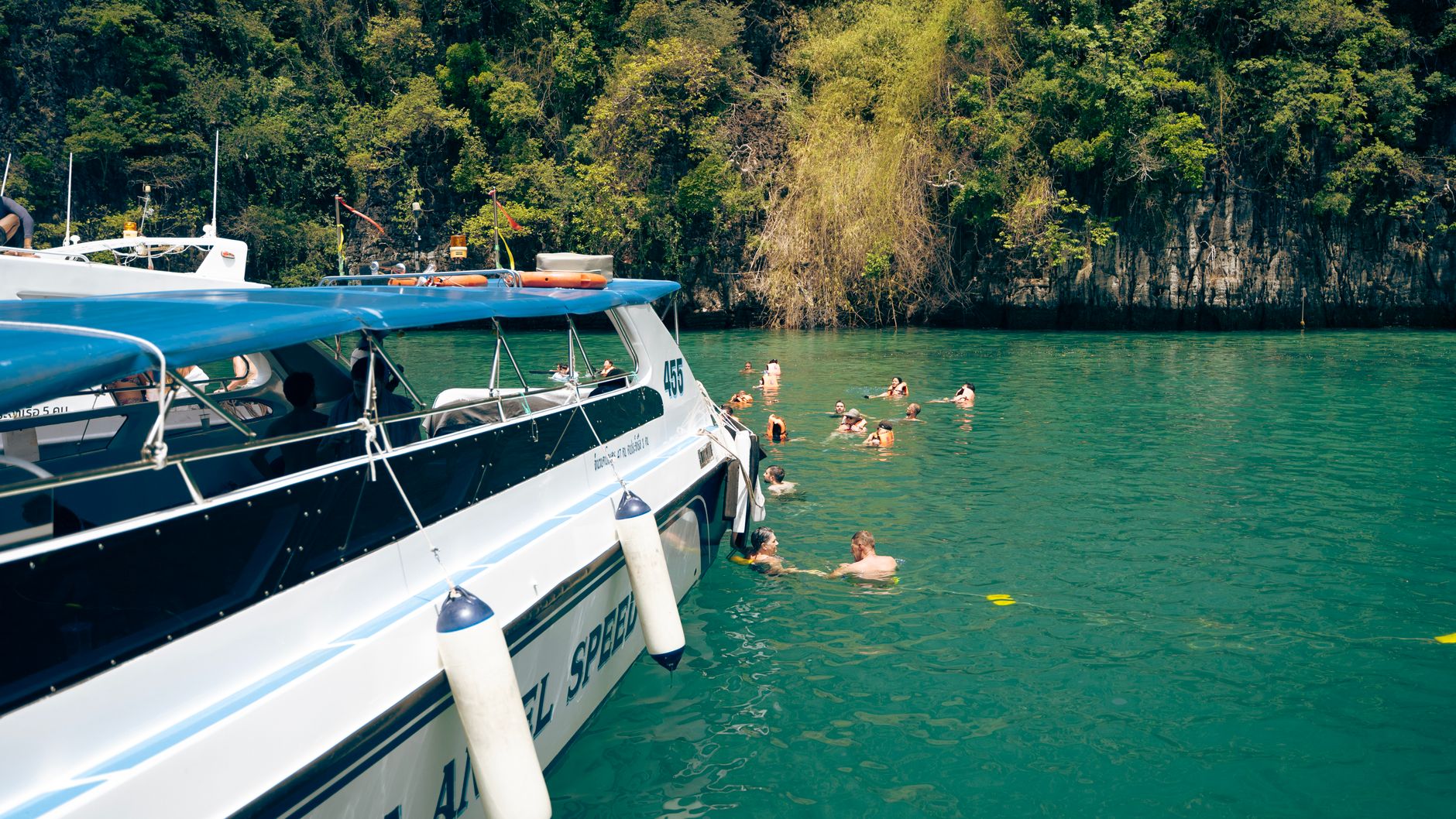
Four Islands tour (Koh Poda, Koh Gai/Chicken Island, Koh Tup, Koh Mor): The standard longtail day trip departs Ao Nang at 8–9am, includes lunch at a basic restaurant or floating platform, and returns by 4–5pm. Cost is ~1,200 THB on a shared longtail, ~1,800 THB on a faster speedboat. The islands themselves are unremarkable — white sand, clear water, the real draw is the boat time past limestone formations. Snorkelling is mediocre; the reef is shallow and crowded. Book 1–2 days ahead with any tour operator in Ao Nang.
Kayaking in Ao Thalane Bay (15 minutes north of Ao Nang by minivan): Half-day mangrove tours in stand-up kayaks or traditional outriggers. No motorboats, so the environment is quiet. Birdwatching is legitimate; you'll see kingfishers, eagles, and egrets. Cost ~1,200 THB, 4–5 hours total. More contemplative than other tours, and genuinely good value. Book through your hotel or any Ao Nang operator.
Tiger Cave Temple (Wat Tham Suea): A working Buddhist temple with a reputation for a summit climb — 1,237 steep steps through jungle to a viewpoint. The climb takes 45–60 minutes uphill (go early, before 8am, before the heat peaks), 30 minutes down. Free entry. The panorama at the top shows the entire Krabi province — useful for understanding the geography. Go during dry season only; in monsoon the steps are slippery.
Cooking class: Half-day classes (9am–1pm or 2–6pm) include a market visit in Krabi Town and instruction in four dishes (typically pad thai, green curry, fresh spring rolls, and a dessert). Cost ~1,500 THB. Better value than equivalent classes in Chiang Mai because ingredients are cheaper and class sizes are smaller. Book 1–2 days ahead; almost every tour operator arranges them.
Phi Phi Islands day trip: A longer option if you have the time. A speedboat from Ao Nang takes 90 minutes each way, includes Koh Phi Phi Leh (Maya Bay) and Monkey Beach. Cost ~1,800–2,200 THB. The scenery is exceptional but crowds can be extreme; Phi Phi itself is heavily touristed. Only worthwhile if you have 2+ days to base there; a day trip is exhausting.
Krabi or Phuket: an honest comparison
The decision between Krabi and Phuket often comes down to trip length and priorities. Both have airports, both have island-hopping tours, both have beaches.
Krabi's advantage is scenery. The limestone karsts and turquoise bays around Railay are genuinely exceptional. For 7+ days, Krabi offers more variety — you can split time between Railay, Ao Nang, and Koh Lanta without backtracking. The rock climbing is world-class and unique to this area.
Phuket's advantage is infrastructure and time efficiency. Phuket Town has better hospitals (useful if anything goes wrong), more dining options from street food to fine dining, and established nightlife (Bangla Road, clubs, bars). For a first-time Thailand visitor worried about logistics, Phuket feels less rough. Kata and Kamala beaches are serviceable — not exceptional, but clean, safe, and well-organized.
For a first Krabi trip of 3–4 days, Phuket is arguably more reliable — you can fill days without planning, and the beach experience is straightforward. For a 7–10 day trip including island-hopping, Krabi wins because the scenery per day is higher, and you're not stuck in the same town. For families, Phuket's established infrastructure (restaurants, ATMs, pharmacies) reduces stress.
Neither is "better" — it depends on what you want from a beach trip. Krabi rewards planning and hiking. Phuket rewards showing up and swimming.
Logistics: getting there and around
Krabi International Airport (KBV) is 45 minutes from Ao Nang. A shared minivan costs ~500 THB per person (book through your hotel's reception or any tour operator; they fill up regularly). A private taxi is ~800 THB flat rate. AirAsia and Thai Lion fly direct from Bangkok (1 hour 20 minutes) for roughly 1,500–2,500 THB one-way on budget airlines. Thai Airways and Bangkok Airways also operate this route at 2–3x the cost.
From Bangkok without flying: a direct overnight bus runs 12 hours for ~700 THB (Southern Bus Terminal, multiple operators). This makes sense only if you have extra time and want to save the flight cost; the time cost usually makes flying more efficient.
From Phuket: shared minivans depart regularly from Phuket Town (not the airport) for ~300 THB, 3–3.5 hours. Alternatively, a ferry from Phuket to Krabi via Phi Phi takes 3+ hours and costs ~1,000 THB — scenic but slow. Minivan is faster.
Within Krabi: longtail boats are the main transit method between Ao Nang and Railay (~100 THB, 15 minutes, runs until 5–6pm). Shared minivans connect Ao Nang to Krabi Town, Koh Lanta, and Tiger Temple. Grab (the Southeast Asian Uber equivalent) operates in Ao Nang and Krabi Town — roughly 2–3x cheaper than taxis but less available than in Bangkok or Phuket.
Do not rely on road taxis for longer trips; use minivans or arrange rides through your hotel.
Seasonal reality: when to actually go
| Month | Weather | Crowds | Verdict |
|---|---|---|---|
| January | Dry, 24–28°C | Peak | Avoid (booked solid, prices 2x) |
| February | Dry, 24–28°C | High | Good (still dry, less crowded than Jan) |
| March | Dry, 26–31°C | Shoulder | Best (warm, cheaper, still dry) |
| April | Dry, 28–33°C | Shoulder | Good (hot, fewer tourists) |
| May | Monsoon starts | Low | Avoid (heavy rain, some tours cancel) |
| June | Monsoon | Low | Avoid (very wet) |
| July | Monsoon | Low | Shoulder (some dry spells, fewer crowds) |
| August | Monsoon | Low | Shoulder (mid-range rain, cheaper) |
| September | Monsoon | Very low | Avoid (worst rain, roughest seas) |
| October | Monsoon ends | Low | Shoulder (clearing up, budget prices) |
| November | Dry, 25–29°C | Low | Best (dry, warm, pre-peak prices) |
| December | Dry, 23–27°C | Peak | Good (perfect weather, expensive) |
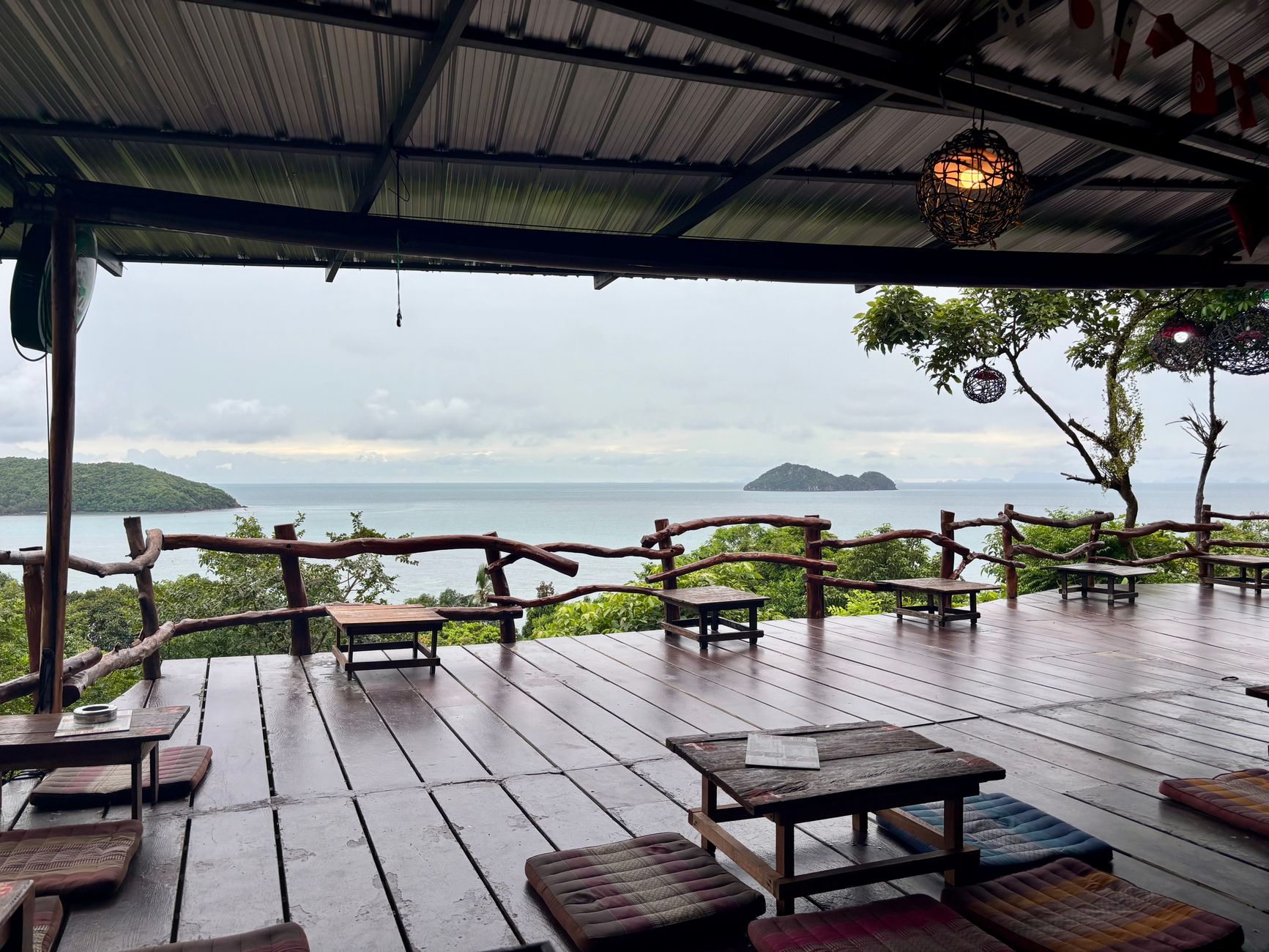
Dry season (November–April) is reliably rainless. December–January are peak months — accommodation books out 3+ months ahead, prices are 2x baseline, and beaches are crowded. February is better value; still dry, fewer crowds. March and November are optimal — warm, dry, and cheap relative to peak.
Monsoon season (May–October) is not a casual afternoon rain. Expect persistent, heavy showers — sometimes 8–10 hours per day. This is the literal rainy season (west-facing coast means the Indian Ocean monsoon hits hard). Rock climbing crags close due to wet conditions. Some boat tours don't operate. Certain roads flood. If you insist on visiting, May and October have less severe rain; September is worst.
One underreported fact: even during dry season, humidity is 70–80%. Plan for heat, not just sun. Climb, snorkel, and hike early morning. Swim during midday heat.
Budget breakdown for 2026
Accommodation (per night)
- Budget (fan bungalow, basic room): 800–1,200 THB (Ao Nang) / 1,000–1,500 THB (Railay)
- Mid-range (hotel with pool/AC): 2,500–4,000 THB (Ao Nang) / 3,500–6,000 THB (Railay)
- Upper mid-range: 5,000–8,000 THB
- Luxury: 10,000+ THB
Food
- Street stall (pad thai, noodles, grilled meat): 60–100 THB
- Local restaurant (curry, fried rice): 100–150 THB
- Beachfront casual restaurant: 250–450 THB per main
- Sit-down dinner with drinks: 600–1,500 THB per person
Activities
- Longtail boat rides: 100–200 THB per person (shared)
- Half-day rock climbing course: 1,600–1,800 THB
- Half-day kayaking tour: 1,200 THB
- Four Islands tour: 1,200–1,800 THB
- Cooking class: 1,500 THB
Daily cost estimates
- Budget traveller (hostel, street food, one tour per 2 days): 1,500–2,500 THB/day
- Mid-range (hotel, restaurant meals, one tour per day): 3,500–6,000 THB/day
- Luxury: 8,000+ THB/day
A note on budget in December 2026: Peak season (Christmas holidays) will push all prices up 30–50%. Accommodation may be fully booked. If you travel then, book 2–3 months ahead and budget an extra 1,000 THB per day.
Packing and practical details
Bring reef-safe sunscreen (SPF 30+) — the sun is equatorial, and pharmacies overcharge. A lightweight rain jacket (monsoon season) or a quick-dry zip-up (spray-on sun protection). Water shoes for rocky beaches. Climbing shoes are provided by tour operators; don't buy your own unless you plan multiple days of climbing. Microfiber towel (faster to dry in humidity). Snorkel gear is rentable cheaply through hotels or tour operators.
Most hotels have filtered water you can refill; tap water is not safe to drink but ice and cooked food are fine. ATMs are available in Ao Nang and Krabi Town; bring a backup card. Pharmacies (Boots chain) are in Ao Nang and sell basic medications. Travel insurance is recommended; evacuation from Railay requires a boat crossing, which can be complicated if weather deteriorates.
Frequently asked questions
How do I get to Railay Beach?
Longtail boats depart from Ao Nang pier every 20–30 minutes between 8am and 5pm, taking 15 minutes and costing ~100 THB per person. There is no road access — boats are the only option. Boats fill on demand; you may wait 10–20 minutes during low periods. Return boats are equally frequent until evening.
Is Krabi safe for solo travellers?
Yes. Petty theft (bags, cameras) is the main risk, not violent crime. Avoid leaving valuables unattended on beaches. Use registered taxis or Grab app for transport after dark. Women solo travellers report normal harassment levels (touts, stares) consistent with other Thai beach towns; no worse, no better.
Can you visit without hiring a guide?
Yes for most activities. Railay Beach and Phra Nang Cave are accessible on foot with a basic map. Tiger Temple requires no guide (just follow the steps). For rock climbing and boat tours, guides are essential and already built into the tour cost. For kayaking and cooking classes, guides add value but aren't mandatory if you speak Thai or read maps well.
What's the one thing first-timers get wrong about Krabi?
Assuming a day trip from Ao Nang to Railay is feasible. The boat transit is only 30 minutes round-trip, but you lose 3–4 hours to boarding delays, return timing, and the time cost of staying in Ao Nang instead. Budget at least two nights on Railay for the trip to make sense.
Which month is cheapest?
May, June, July, and September (monsoon season) have the lowest prices — often 30–40% below peak season rates — but heavy rain limits activity options. October and November are the sweet spot: cheaper than December–February but dry and warm. If you're flexible on weather, October offers reasonable cost and improving conditions.
Do I need to book accommodation in advance in 2026?
Yes — book 3+ months ahead for December and January, 4–6 weeks ahead for February–April, and 1–2 weeks ahead for May–November. Railay fills faster than Ao Nang. Using direct hotel booking (not OTA platforms) sometimes yields 10–15% discounts if you call the hotel directly and mention your exact dates.
Who should go to Krabi? Travellers seeking natural scenery (limestone karsts, island-hopping, world-class rock climbing) without the infrastructure stress of rural Thailand. A second-time Southeast Asia visitor, or a first-timer comfortable with basic logistics. Skip Krabi if you want nightlife, fine dining, or full-service Western amenities — Phuket is more reliable.
When? November or March — dry, warm, pre-peak prices, and beaches open for water activities. December if money is no object and you tolerate crowds.
Which base? Ao Nang for 2–3 nights if you want restaurant variety and tour access. Railay for 2–3 nights minimum (plus day trips to Phra Nang Cave and rock climbing) for the scenery that justifies the trip. Skip Krabi Town unless you're catching an onward bus. The limestone will not look like the photos until you're standing on Phra Nang Beach at sunrise, looking at the cliffs above — then it makes sense.

