
Florence became the centre of the Italian Renaissance in the 15th century because the Medici family spent a century and a half financing it. The concentration of art that resulted — Botticelli, Michelangelo, Leonardo, Raphael, Caravaggio, Donatello — is so dense that the Uffizi Gallery alone holds more major works than most countries. The city that contains all of this is a medium-sized Italian city with a functioning economy, excellent food, and a summer tourist density that requires planning to navigate without frustration. The art rewards the planning.
The Uffizi Gallery
The Uffizi holds around 3,000 works across 101 rooms and is the world's most important collection of Italian Renaissance painting. Botticelli's The Birth of Venus and La Primavera, Raphael's Madonna of the Goldfinch, Caravaggio's Bacchus and Medusa, Leonardo's Annunciation and Adoration of the Magi, Titian's Venus of Urbino — the list extends for two hours of concentrated looking before diminishing returns set in.
Tickets (€20 permanent collection, €25 combined with special exhibitions) sell out days in advance in high season; booking at uffizi.it is not optional from April through October. Free entry on the first Sunday of the month generates queues that start before 7am. The museum opens at 9am; the first hour is consistently less crowded than midday. Audio guides are available but the room-by-room English signage is adequate for most visitors. Allocate two to three hours; trying to cover everything systematically produces a state of cognitive overload that works against the experience.
The Accademia and Michelangelo's David
The Galleria dell'Accademia holds Michelangelo's David (1504) in a purpose-built tribuna — a domed hall at the end of a long corridor. The statue is larger than photographs suggest (5.17m including the plinth) and the detail of the musculature and expression is fully visible at gallery distance. The Uffizi gets more visitors overall; the Accademia's singular attraction makes the experience more focused.
Tickets (€12–16) require advance booking at the same level as the Uffizi; the queue for walk-in entry is measured in hours in summer. The rest of the Accademia's collection — plaster casts, 14th–16th century Florentine paintings — is less compelling but worth a circuit. Allocate 60–90 minutes total.
The Duomo and Climbing Brunelleschi's Dome
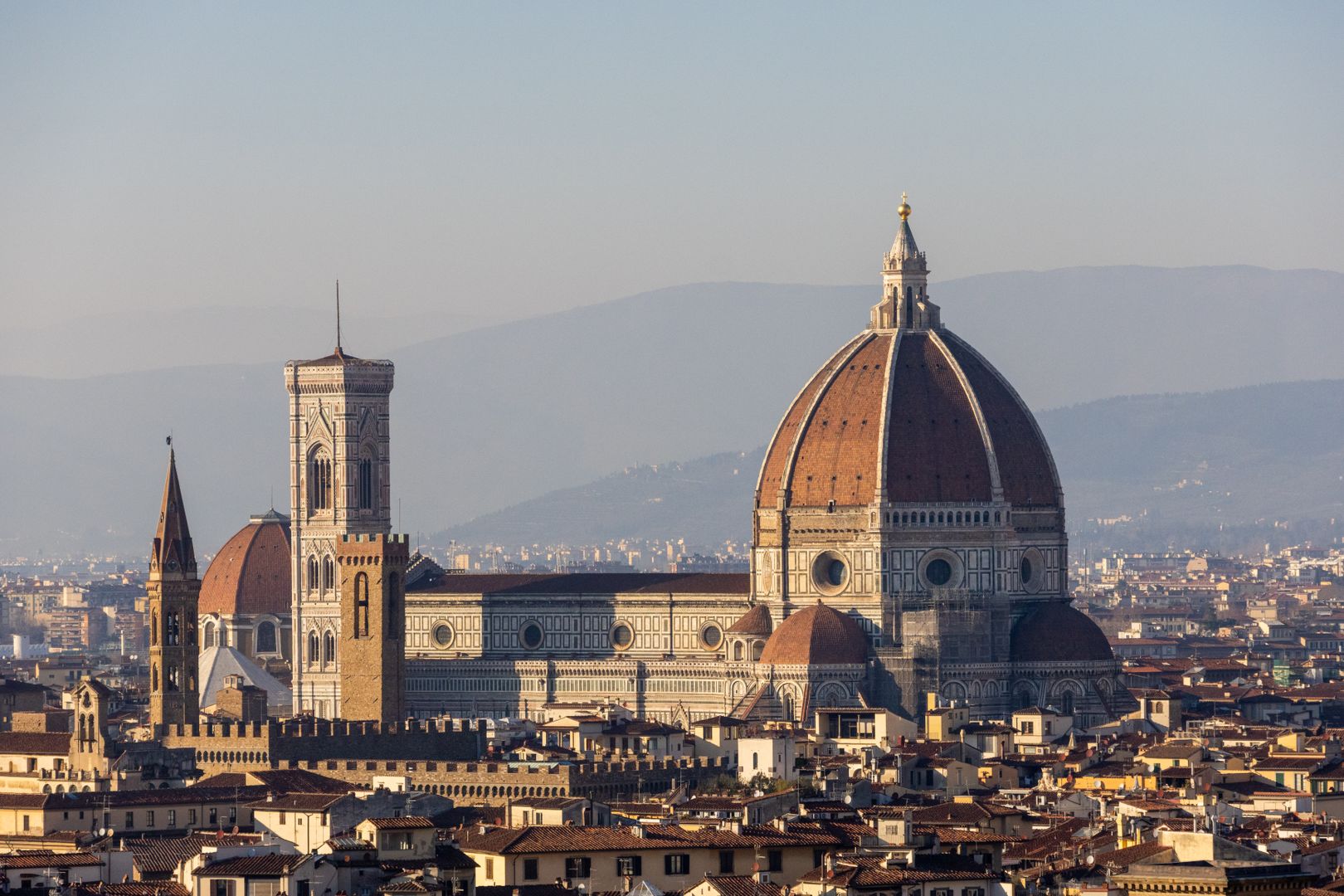
The Cattedrale di Santa Maria del Fiore is free to enter (book a time slot online, particularly in summer). The interior is surprisingly severe for the cathedral that anchors one of Italy's most-photographed skylines — the facade's marble patterning, the Brunelleschi dome painted interior, and the Vasari frescoes are the main elements. The external view from Piazza del Duomo is the one that matters architecturally.
Climbing the dome (Cupola del Brunelleschi, 414 steps, €30 combined ticket with the baptistery, bell tower, and museum) is a better use of time than looking at it from below. The ascent passes through the space between the inner and outer shells of the dome — Brunelleschi's double-shell design, developed without the use of external scaffolding, is an engineering achievement that remains partially unexplained. The view from the lantern at the top covers the city and hills; on clear days, the Apennines are visible. Book in advance; the combined Duomo pass also covers Giotto's Campanile (another option for views, 414 steps, similar elevation).
Oltrarno: The Left Bank
The Oltrarno — the neighbourhood south of the Arno — is less tourist-dense than the historic centre north of the river and holds several undervisited sites. The Palazzo Pitti (€16), the Medici's second palace and now a complex of museums (Palatine Gallery, Modern Art Gallery, Costume Museum), is enormous and rarely as crowded as the Uffizi. The Palatine Gallery alone holds Raphaels, Titians, and Rubens that would anchor any Northern European collection.
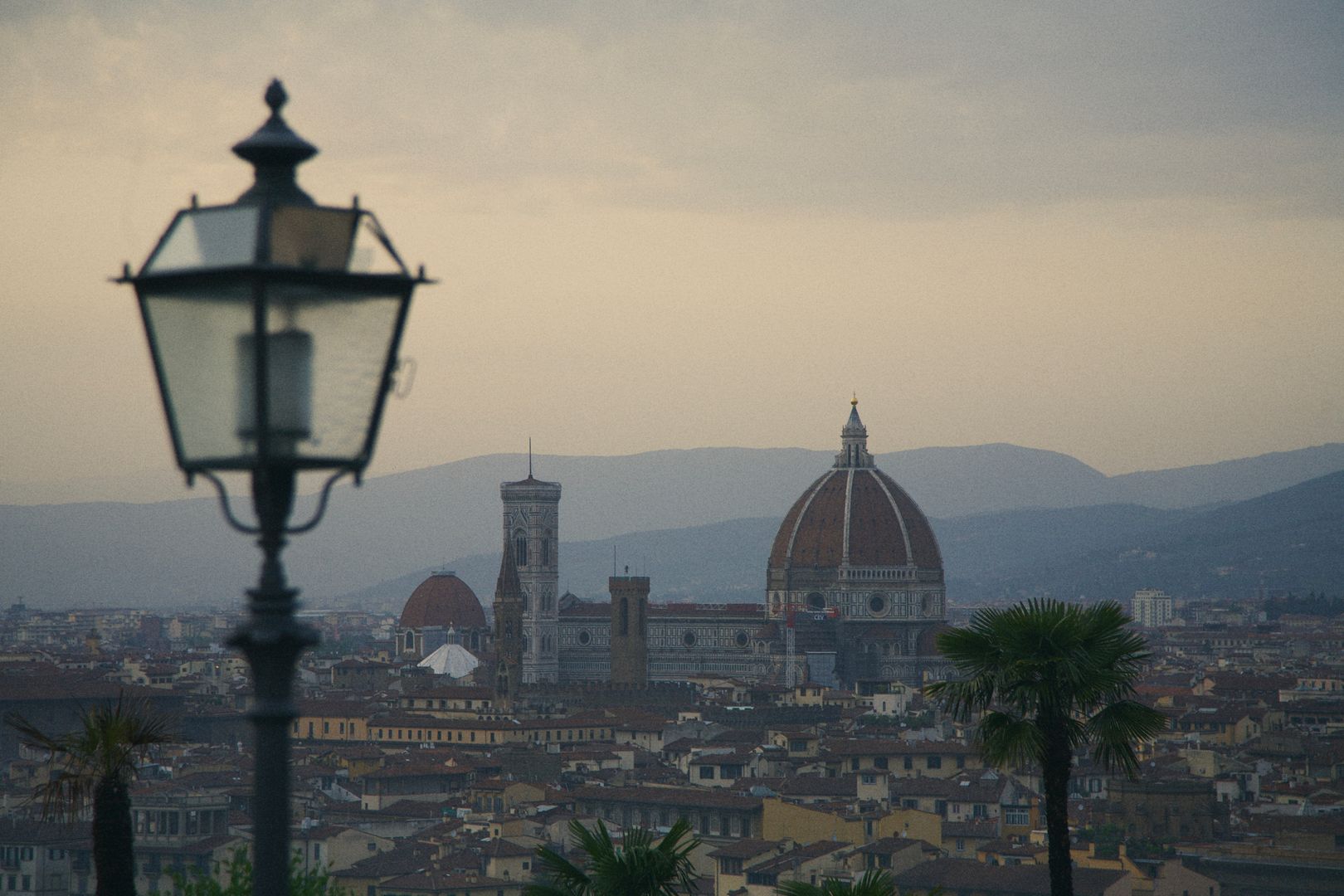
The Boboli Gardens behind the Pitti (€10, included in the Pitti combined ticket) are formal Italian gardens climbing the hillside behind the palace — cypress allees, grottos, fountains, and a view of the city from the top. The Piazzale Michelangelo, 30 minutes on foot from the Ponte Vecchio (bus 13 from the station), is a free public terrace with the most photographed panoramic view of Florence — the Duomo, the Arno, the hills. Sunset is predictably crowded; early morning is quiet. San Miniato al Monte, a 12th-century Romanesque church above Piazzale Michelangelo, is one of the finest Romanesque interiors in Tuscany and receives a fraction of the attention it deserves.
Food in Florence: Lampredotto, Bistecca, and the Market
Lampredotto is the Florentine street food — cow's fourth stomach, slow-cooked in broth, sliced and served in a roll with salsa verde and, optionally, the bread dipped in the cooking broth (bagnato). It's sold from tripe carts (trippaio) at the Mercato Centrale, Piazza del Mercato Nuovo, and outside the Uffizi. The price runs €4–6 for a roll. It tastes nothing like it sounds.
Bistecca alla Fiorentina is the other key reference — a T-bone from Chianina cattle, aged minimum 15 days, grilled over wood embers to rare (rare is not a preference, it's the correct preparation), priced by weight at €5–8 per 100g. A full bistecca for two weighs 800g–1.2kg. Restaurants serving it properly include Buca Mario (oldest restaurant in Florence, tourist-facing but reliable), Osteria di Giovanni, and the more informal trattorie in the San Frediano area of Oltrarno.
The Mercato Centrale (Piazza del Mercato Centrale, ground floor produce market open mornings, upper floor food hall open until midnight) is the practical lunch solution near the Accademia. The San Lorenzo market outside the building sells leather goods and souvenirs of variable quality; the produce market inside is the relevant part. For gelato, the rule is: no mounds of brightly-coloured gelato in the display case (that indicates artificial colouring and stabilisers); proper gelato sits flat in metal pans with lids. Gelateria dei Neri (Oltrarno), Gelateria dei Medici (near the Accademia), and Vivoli (oldest gelateria in Florence, near Santa Croce) are reliable.
Day Trips: Siena, Lucca, and the Chianti

Siena is 1h15 by direct bus from Florence (SITA Sud, €8–10, more reliable and faster than the train). The Piazza del Campo — the medieval shell-shaped main square — is the most intact medieval urban space in Italy, and the Palazzo Pubblico museum on its edge holds Ambrogio Lorenzetti's Allegory of Good and Bad Government (1338–1339), one of the most important secular paintings in European art history. The Duomo di Siena is more architecturally elaborate than Florence's. Budget a full day; go on a weekday.
Lucca is 1h30 by train (€8–12). The city is enclosed by intact 16th-century walls — broad enough for a cycling and walking path along the top. The medieval city interior is car-free; the Torre Guinigi (a medieval tower with oak trees growing from the top) is worth the climb. Lucca is both less famous and more liveable than Florence; a day trip feels insufficient. The Puccini Festival in July–August performs in an outdoor arena using the city walls as backdrop.
Getting Around and Practical Costs
Florence's historic centre is a ZTL (Zona Traffico Limitato) — driving or parking within it generates automatic fines via cameras (rental companies pass these on). Walking covers most sites in the centre; electric scooter hire is available and useful for the Oltrarno. Taxis and Uber are available; the city's scale makes them rarely necessary if your accommodation is central.
A central hotel runs €120–250; guesthouses and B&Bs in Oltrarno and Santa Croce neighbourhoods run €90–150. Restaurant dinners average €25–40 for a main course; a bistecca for two adds €50–90. Aperitivo (drinks plus free snacks, typically 6–9pm) at a neighbourhood bar runs €7–10 and effectively covers dinner if you position yourself strategically. Museum visits (Uffizi + Accademia + Duomo pass) total €50–60 per person. A four-day stay with accommodation, food, and museums budgets realistically at €600–900 per person.