

Koh Samui vs Phuket: A Practical Decision Guide
Thailand's two most visited islands get compared constantly, and most of that comparison misses the point. People debate beach quality or nightlife or price, when the single most important factor is a calendar question: the two islands sit in different bodies of water and operate on opposite monsoon cycles. Get that wrong and you'll spend a week watching rain. Get it right, and either island delivers genuinely good travel. Here's how to choose between them.
| Category | Koh Samui | Phuket |
|---|---|---|
| Best for | Couples, divers, May–August travel | First-timers, day-trippers, November–April |
| Signature draw | Intimate scale, Koh Tao diving access | Easy access, Phi Phi and Phang Nga trips |
| Beaches or nature | Chaweng, Lamai, Bophut all solid | Kata Noi, Kamala, Surin best options |
| Nightlife | Chaweng strip, limited scale | Patong dominant, multiple zones |
| Mid-range daily cost | Higher flight premium, otherwise similar | Lower flight cost from Bangkok |
| Peak season | December–August (northeast monsoon Oct–Nov) | November–April (southwest monsoon May–Sep) |
| Crowd level | Moderate, manageable outside Chaweng | High in peak, intense in Patong |
| Recommended stay | 5–7 days, extend to Koh Tao | 4–5 days, add day-trip islands |
| Getting there | Bangkok Airways monopoly, premium cost | Multiple carriers, direct flights, cheap |
The Most Important Thing Most People Overlook: Monsoon Timing
Phuket sits on the Andaman Sea, on Thailand's west coast. Koh Samui sits in the Gulf of Thailand, on the east coast. These are different weather systems with inverse peak seasons.
Phuket's dry season runs November through April. From May onwards, the southwest monsoon hits hard. June through September sees frequent heavy rain, strong surf, and some beaches closed to swimming entirely. October can still be rough. Travelling Phuket in August is manageable but noticeably wetter than December.
Koh Samui's dry season runs roughly December through August. The northeast monsoon hits the Gulf coast from October through November — this is the worst period on Samui, with flooding a real possibility in November. September and early October can also be unstable. December brings the island back to reliable sunshine.
The practical implication: if you're travelling in September or October, neither island is ideal, but Phuket is the lesser-bad choice. If you're travelling in July or August, Samui is far more reliable than Phuket. During December through April, both islands are in good condition and the choice becomes a genuine lifestyle preference.
Koh Samui: What You Actually Need to Know

Character and Scale
Samui is the smaller island and it shows — in a good way if that's what you want. The ring road around the island is roughly 50km, and most of the tourist activity concentrates along the east coast. The vibe is more intimate than Phuket without being underdeveloped. You'll find upscale resorts, solid restaurants, and functional infrastructure alongside quieter pockets. It doesn't feel like a city that happens to be an island, which Phuket sometimes does.
Best Beaches
Chaweng is the main beach — long, wide, white sand, with the most facilities and the most people. The water is generally clear during the dry season. It's also where the bulk of the nightlife is, so if you want separation from noise after 11pm, stay elsewhere.
Lamai is Chaweng's quieter sibling — slightly less polished, a bit cheaper, still a genuinely good beach. Families and couples tend to prefer it.
Bophut on the north coast has a narrow beach that isn't exceptional for swimming, but Fisherman's Village — the old wooden shophouse strip along the waterfront — is one of the more atmospheric places on the island for an evening. Friday night market here is worth timing your stay around.
Getting There
This is where Samui has a genuine friction point. Koh Samui Airport is owned by Bangkok Airways, which maintains a near-monopoly on flights. Bangkok-Samui fares regularly run two to three times the cost of Bangkok-Phuket on equivalent dates. International connections exist but are limited.
The alternative that many experienced Thailand travellers use: fly into Surat Thani on the mainland (served by budget carriers including AirAsia), then take a bus-ferry combination to Samui. Door-to-door it adds two to four hours but can cut transport costs significantly. If you're planning to visit Koh Phangan anyway, this routing makes even more sense.
Who Koh Samui Suits Best
Couples wanting a quieter beach holiday with good dining options, travellers who want to use Samui as a base for Koh Tao diving trips, and anyone travelling between May and August who needs reliable weather.
Phuket: What You Actually Need to Know
Character and Scale
Phuket is Thailand's largest island and functions more like a small province than a beach destination. It has a functioning city (Phuket Town), a hospital infrastructure, a full international airport, shopping centres, and enough accommodation stock to absorb enormous tourist volumes. That scale cuts both ways — logistics are easy, but you're rarely far from a crowd during peak season.
Best Beaches
Skip Patong. The beach itself is mediocre — wide but overbuilt, with jet ski operators and persistent vendors making it a poor use of your time. It exists for nightlife, not beach quality.
Kata Noi is the most consistently recommended beach on the island for good reason: it's smaller, has cleaner water than most, and the headland configuration gives it some natural protection. Gets busy in peak season but remains manageable.
Kamala is mid-island and attracts a calmer crowd. It's long, relatively uncrowded by Phuket standards, and the village behind it functions as an actual community rather than a pure tourist strip.
Surin has a reputation as one of Phuket's better beaches — white sand, clearer water, and it draws a slightly older, less party-oriented crowd. Note that surf can be strong from May onwards.
Getting There
Phuket wins this category outright. Phuket International Airport receives direct flights from across Asia and from several European cities. Budget carriers serve Bangkok-Phuket multiple times daily for fares that are usually very reasonable. Arriving in Phuket requires no boat, no ferry, no two-hour bus connection — you land and you're there.
Who Phuket Suits Best
First-time visitors to Thailand who want straightforward logistics, travellers prioritising day-trip access to Phi Phi or Krabi, groups with mixed preferences (some wanting nightlife, some wanting quieter beaches), and anyone visiting between November and February who wants peak-season reliability.
Head-to-Head: Category Breakdown
Nightlife: Phuket, and it's not close. Patong's Bangla Road is full-scale; even if it's not your scene, the broader range of bars and late venues across the island dwarfs Samui. Samui has Chaweng's strip, which is lively but small by comparison.
Families with children: Slight edge to Samui for beach calm and scale. Lamai and Bophut are genuinely relaxed. Phuket works for families too, but requires more deliberate beach selection to avoid the chaos zones.
Solo travellers: Phuket for logistics and social infrastructure. Meeting other travellers is easier; the island has more hostel options and more varied activities.
Couples: Samui edges ahead for atmosphere. More intimate scale, better high-end resort options per square kilometre, less ambient noise.
Budget range: Both islands cover budget to luxury. Phuket has more pure-budget accommodation (especially near Patong), but also more mid-range options across the island. Samui's flight premium affects overall trip cost regardless of what you spend on the ground.
Accommodation variety: Phuket wins on volume; Samui wins on boutique character at the higher end.
Day trips: Phuket has a clear advantage — Phi Phi Islands, Phang Nga Bay (James Bond Island), Krabi, and Koh Lanta are all accessible. These are genuinely excellent trips. Samui's satellite islands — Koh Phangan and Koh Tao — are excellent for different reasons: Phangan for its own beaches and the Full Moon Party, Tao for some of the best accessible diving in Southeast Asia.
Water clarity: Both islands offer clear water during their respective dry seasons. Koh Tao (accessible from Samui) has better diving and snorkelling visibility than anything near Phuket itself.
The Islands Nearby
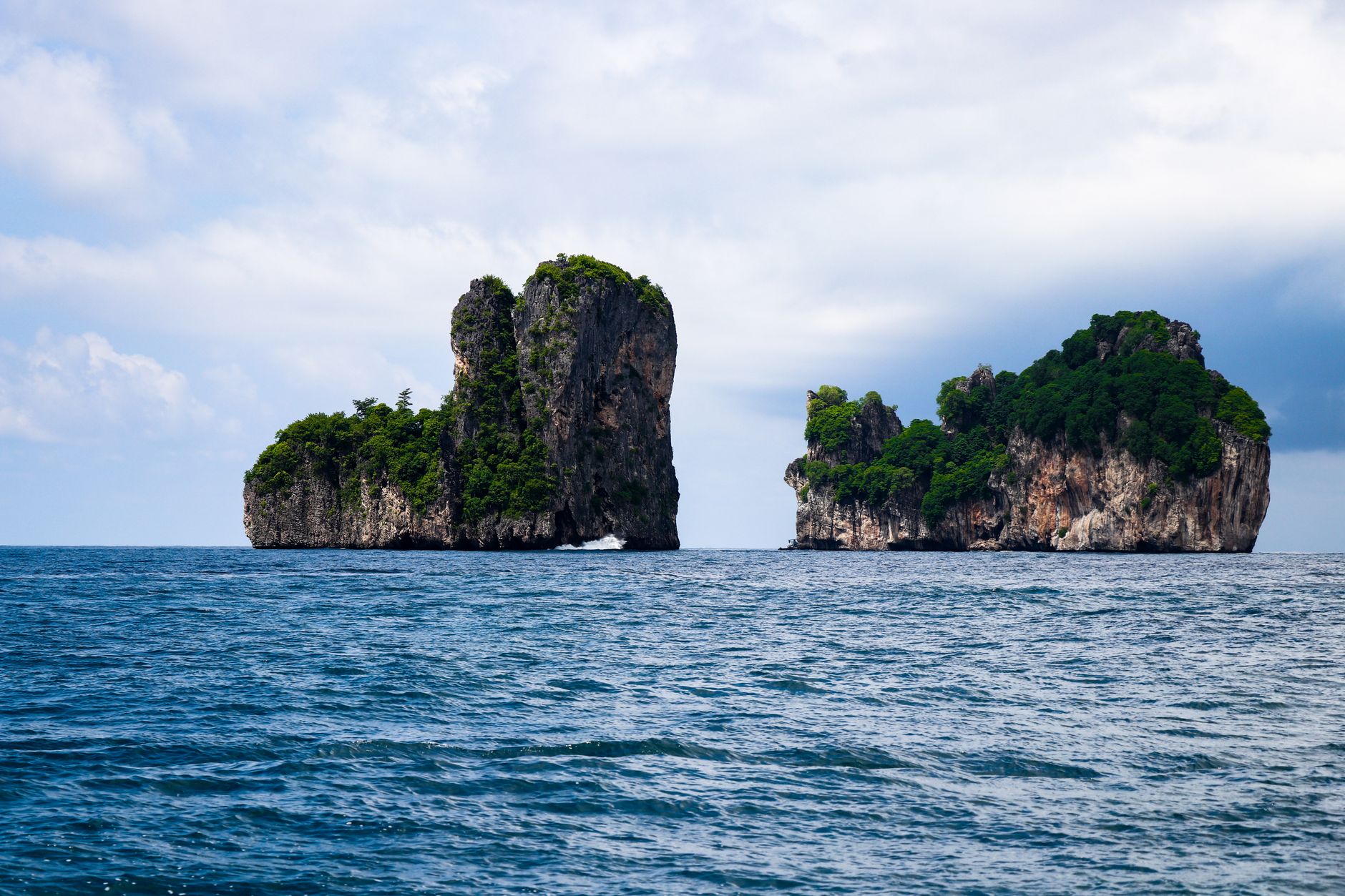
From Samui: The obvious moves are Koh Phangan (30–45 minutes by ferry — worth the trip for Hat Rin Beach or just a change of pace) and Koh Tao (2–3 hours — genuinely excellent for diving certification courses, significantly cheaper than Phuket's dive schools). Many travellers combine all three in a single trip.
From Phuket: Phi Phi Islands are the marquee day trip — dramatic limestone cliffs, good snorkelling, very crowded. Phang Nga Bay is less photogenic on paper but more interesting to actually visit. Krabi makes a logical next stop if you're moving down the coast; Koh Lanta suits anyone who wants to decompress after Phuket's pace.
Honest Verdict
Choose Phuket if you want easy international access, are travelling between November and April, plan to do significant day-tripping around the Andaman Sea, or are visiting Thailand for the first time and want the path of least logistical resistance.
Choose Koh Samui if you're travelling between May and August (the weather calculus alone decides this), want a smaller-scale environment, plan to combine with Koh Tao diving, or are a couple prioritising atmosphere over activity volume.
Neither island is superior. They serve different trips at different times of year. The travellers who are disappointed by either island are almost always the ones who made the choice based on beach photos rather than checking which monsoon was active when they arrived.
Frequently Asked Questions
What's the best month to visit each island?
Phuket: November to April with December–February as absolute peak. Koh Samui: December to August with June–August offering reliable sunshine but fewer crowds. If choosing between them, match your travel dates to the destination's dry season — this choice matters more than any other factor.
Is Koh Samui worth the flight cost from Bangkok?
Only if you're diving at Koh Tao, staying longer than 10 days, or specifically need May–August dry-season travel. For shorter trips or standard beach holidays, Phuket's lower flight cost and easier logistics usually make it the better value. The Surat Thani bus-ferry alternative can offset costs if you're visiting Koh Phangan too.
Which island is better for families with young children?
Koh Samui edges ahead — Lamai and Bophut beaches are genuinely calm, the island scale is less overwhelming, and there's less ambient chaos. Phuket works too, but requires deliberate avoidance of Patong and the busiest zones. Either way, your monsoon season matters more than beach choice.
Can I do day trips from both islands?
Yes, but differently. From Phuket, you'll reach Phi Phi Islands, Phang Nga Bay, and Krabi — all major tourist destinations. From Samui, Koh Tao (diving) and Koh Phangan (beaches, Full Moon Party) are the natural moves. Phuket offers more variety; Samui offers better depth for specific interests like diving.
Which island has better water quality for snorkeling?
During their respective dry seasons, both offer clear water. Koh Tao (accessed from Samui) has superior visibility and better snorkelling than anything from Phuket. Phuket's day-trip islands have decent snorkelling but are generally crowded. For serious snorkelling, the Samui–Koh Tao combination outperforms Phuket options.


