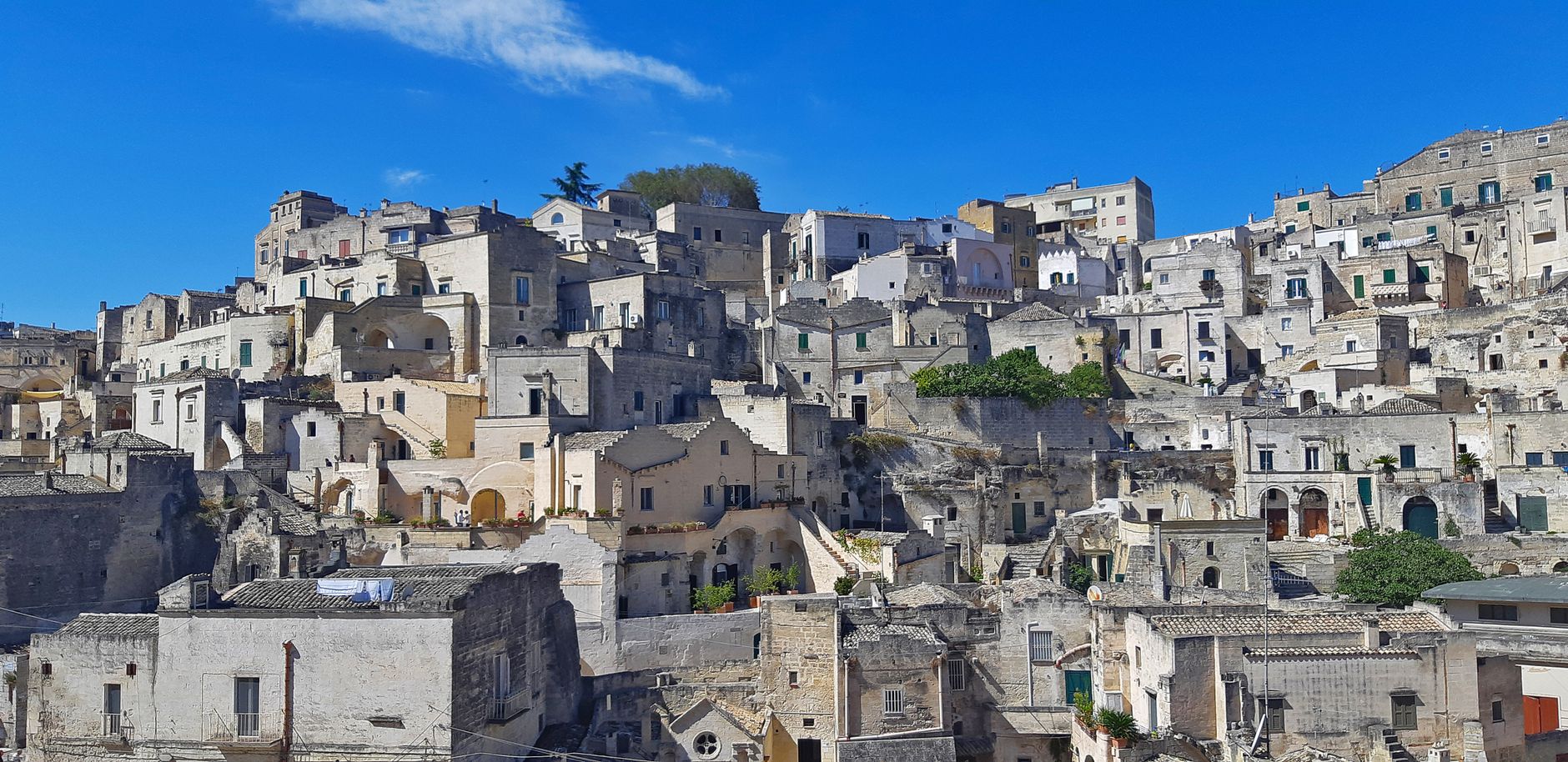

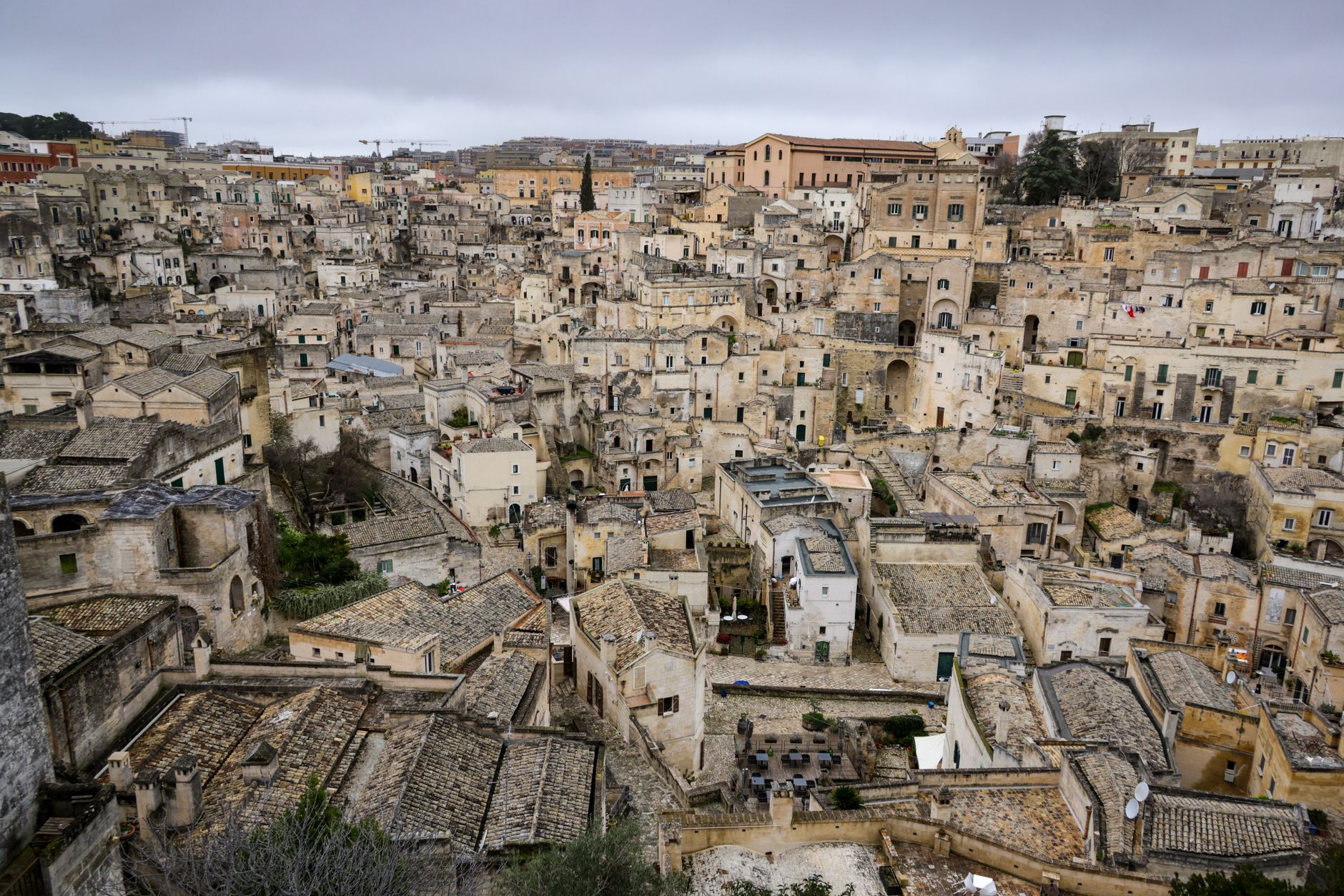
Matera is one of the oldest continuously inhabited settlements on earth — people have lived in these carved limestone caves for at least 9,000 years. The city was declared a UNESCO World Heritage Site in 1993 and served as European Capital of Culture in 2019. It is also genuinely awkward to reach by public transport, which keeps it less crowded than its reputation suggests. The two cave districts, Sasso Caveoso and Sasso Barisano, spill down the sides of a ravine (the Gravina di Matera) on the city's southern edge — a dense maze of rock-cut homes, cisterns, and medieval churches that was forcibly evacuated in the 1950s and has only slowly repopulated since.
What the Sassi of Matera Actually Are
The word Sassi means "stones" in Italian, and the two districts that share the name are carved entirely out of tufa limestone: homes, churches, water cisterns, and alleyways cut directly into the rock or built from it. Settlement began in the Palaeolithic and continued uninterrupted into the 20th century, which is precisely what bothered the postwar Italian government. In 1952, Prime Minister Alcide De Gasperi publicly called the Sassi "a national disgrace" — families living in caves alongside animals, no sanitation, infant mortality rates among the highest in Italy. Between 1952 and 1968, around 15,000 people were relocated to new housing blocks on the plateau above.
Today roughly 3,000 people have moved back into restored cave dwellings. The Sassi now house hotels, restaurants, galleries, and wineries alongside private residences. The labyrinthine character of the districts remains — alleys dead-end at rock walls, staircases become rooftops, and the view across the ravine to the ancient rupestrian churches carved into the opposite cliff is unlike anywhere in Italy.
The open-air Crypt of Original Sin (Cripta del Peccato Originale), 8km from the city centre, contains 8th-century Byzantine frescoes that rank among the finest in southern Italy. It requires advance booking (€10, guided tours only) but is worth the logistics.
Sasso Caveoso vs Sasso Barisano
Sasso Caveoso is the older, deeper district, cut further into the ravine on the south side. The walking is harder — steep uneven paths, few street signs — but the churches are more concentrated here. Santa Maria de Idris, carved into the cone of rock that rises from the Sassi floor, and Santa Lucia alle Malve, a rupestrian church with fragmentary Byzantine frescoes, are the two key sites (combined ticket available at the entrance, around €3 each). The views from the higher paths over the ravine and the ancient cave settlements on the opposite cliff are the best in Matera.
Sasso Barisano faces north and catches more light. It is more gentrified: better restaurants, more cave hotels, and the roads are marginally easier to navigate. Most visitors end up here for dinner or accommodation. The two districts connect at the Piazza Vittorio Veneto, on the flat upper town (Piano), which serves as the standard orientation point when you surface from the cave network.
Allow at least 4 hours to walk both districts without rushing. Most day visitors underestimate the terrain and the distances.
How to Get to Matera
There is no high-speed rail to Matera. The city is connected to the national network by a single narrow-gauge line (Ferrovie Appulo Lucane, FAL) that runs from Bari.
From Bari: FAL train or connecting bus, €5–7, 1.5–2 hours. Bari itself is well connected — high-speed from Naples (2h30, €30–50), Rome (4 hours, €45–80), or Milan (5h30, €60–100). Note that the FAL station in Bari is separate from the main Trenitalia station: a 10-minute walk north toward Via Oberdan.
From Naples: Flixbus runs a direct service (3.5 hours, €15–25) and is the simplest option if you are not routing via Bari. Alternatively, take the Frecciarossa to Bari and connect from there.
By car: the most practical option. Matera is 70km from Bari on the SS99. Parking is available in the upper town (Piano); you cannot drive into the Sassi themselves. Car hire from Bari airport (BRI, 60km) or Brindisi (BDS, 115km).
A day trip from Bari is possible but not recommended — three hours in Matera is too little for the Sassi. One night minimum; two nights is better.
Where to Stay in Matera
Cave hotels are Matera's signature accommodation — rooms cut into the tufa, with vaulted ceilings, original cisterns converted into wet rooms, and the stone walls left exposed. The experience is genuinely distinctive. Budget €100–250/night for a well-reviewed cave room; top-end properties run €300–500. If you are going to stay in Matera at all, staying in the Sassi is worth the premium.
For those not spending the night, a mid-range guesthouse on the Piano (upper town) runs €60–100. The location is less atmospheric but easier for early morning departures.
Book 6–8 weeks ahead for June and July; the best cave rooms sell out months in advance for that window.
When to Visit Matera
April and May are the strongest months: temperatures 15–22°C, no humidity, the Sassi are navigable without the midday heat that makes the exposed rock paths brutal from June. Smaller crowds than summer.
September and October are equally good. The light at dusk on the tufa stone in early autumn is the best Matera has.
July and August are hot (32–38°C) and busy with Italian domestic tourists. The caves themselves stay cool, but the paths between them are fully exposed. Early morning visits (before 9am) work; midday does not.
November–March: quiet, cool (8–14°C), some caves and restaurants close. The Sassi are empty and atmospheric. Worth considering if you want the place largely to yourself.
What to See Beyond the Sassi
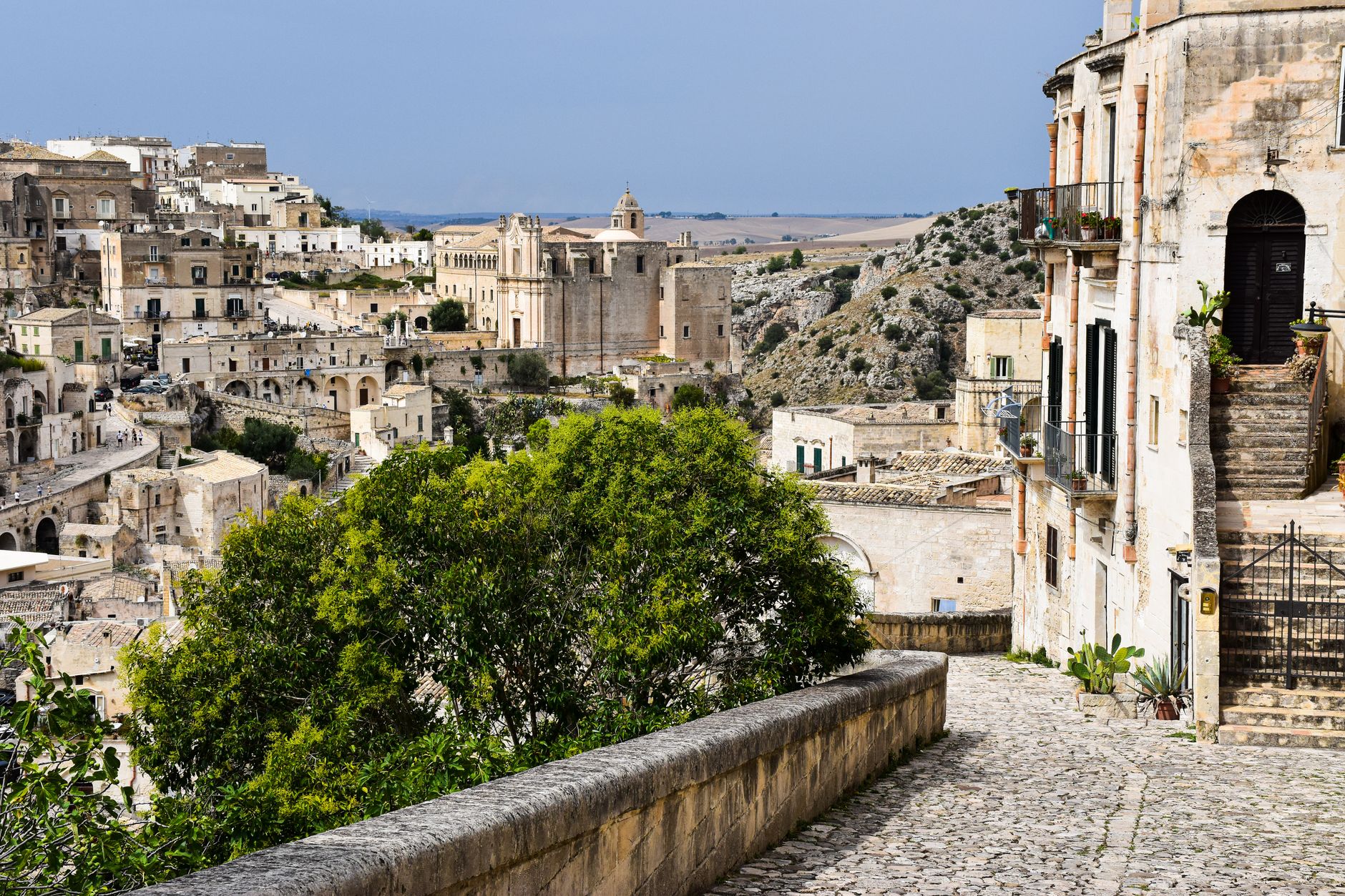
The Parco della Murgia Materana, the plateau on the opposite side of the Gravina ravine, has 150+ rupestrian churches cut into the cliff faces — accessible on foot or by organised 4WD tour from the city. The views back across the ravine to the Sassi are better from here than from anywhere within the city.
The Museo Nazionale Ridola (€4) covers the prehistory of the region and the excavated artefacts from the Sassi's earliest occupation layers. Small but useful context before walking the districts.
The route south through Basilicata toward Calabria passes through landscapes that most Italian tourists never see — the town of Aliano (where Carlo Levi was exiled and wrote Christ Stopped at Eboli) is 50km southwest.
Frequently Asked Questions
How many days do you need in Matera?
Two full days is the honest minimum: one day for the Sassi on foot, one for the rupestrian churches and a slower visit to the better museums. A single day is possible but leaves Matera feeling half-seen. Three days lets you add the Crypt of Original Sin and the Murgia plateau.
Is a cave hotel worth the extra cost?
Yes, if you are spending at least one night. The experience of sleeping in a space carved from 9,000-year-old rock is qualitatively different from any other hotel room in Italy. The discomfort is zero — modern plumbing, good beds, climate control — while the atmosphere is considerable.
Can you visit the Sassi for free?
The districts themselves are open and free to walk. Individual churches and museums charge €2–5 each. The Crypt of Original Sin (€10, guided) is the only site that requires advance booking. A reasonable full-day visit costs €15–25 in entry fees.
Is Matera safe for solo travellers?
Yes. Matera has very low crime rates and the old town, while labyrinthine, is well-trafficked during the day. Night walking in the Sassi is less advised not because of safety but because the uneven paths and lack of lighting make falls a realistic risk.
What is the best view in Matera?
The belvedere at the end of Via Generale Ridola in Sasso Caveoso, looking across the ravine to the ancient cave settlements on the far cliff, is the most dramatic. The Murgia plateau on the opposite bank gives the classic overview of both Sassi districts together.
How far is Matera from the Amalfi Coast?
Around 3.5–4 hours by car via the A3 motorway. The combination — Amalfi Coast plus Matera — is a strong southern Italy itinerary and can be covered in 6–7 days without feeling rushed.