
The Canary Islands sit 100km off the coast of Africa yet belong to Spain—making them the winter escape route for northern Europeans seeking guaranteed warmth without leaving the EU. Average temperatures range from 21–26°C even in January, and direct budget flights from the UK and Scandinavia mean the islands are 4–5 hours away. They are why functional winter tans exist north of the Alps. But the four main islands are fundamentally different: Tenerife is the package resort anchor, Gran Canaria offers variety compressed into one island, Lanzarote is geologically distinctive, and Fuerteventura is the wind-and-sand extreme. Choosing between them requires knowing what each actually does well—not just which is most famous.
| Category | Tenerife | Gran Canaria | Lanzarote | Fuerteventura |
|---|---|---|---|---|
| Best for | Mountain hiking + beach resort | City culture + beaches | Volcanic geology | Pure beach walks |
| Vibe | Split: package resort south, Spanish north | Urban core + resort coast | Low-key, design-conscious | Minimal, windy, remote-feeling |
| Key draw | Teide National Park (3,715m peak) | Maspalomas Dunes + Las Palmas city | Timanfaya lava fields | 200km white-sand beaches |
| Beaches | Good southern strip, quiet north coves | Excellent variety by zone | Excellent but fewer | Best in the archipelago |
| Nightlife | Substantial (south coast) | Moderate (Las Palmas + resorts) | Minimal | Almost none |
| Daily cost (mid-range) | €80–120 | €75–110 | €70–100 | €65–95 |
| Peak crowds | December–February | December–February | December–February | December–February |
| Best months | October–November, March–April | October–November, March–April | Year-round (least crowded) | Year-round |
| Recommended stay | 5–7 days minimum | 4–6 days | 4–5 days | 3–4 days |
Tenerife: The largest island doesn't have to mean package-resort predictability
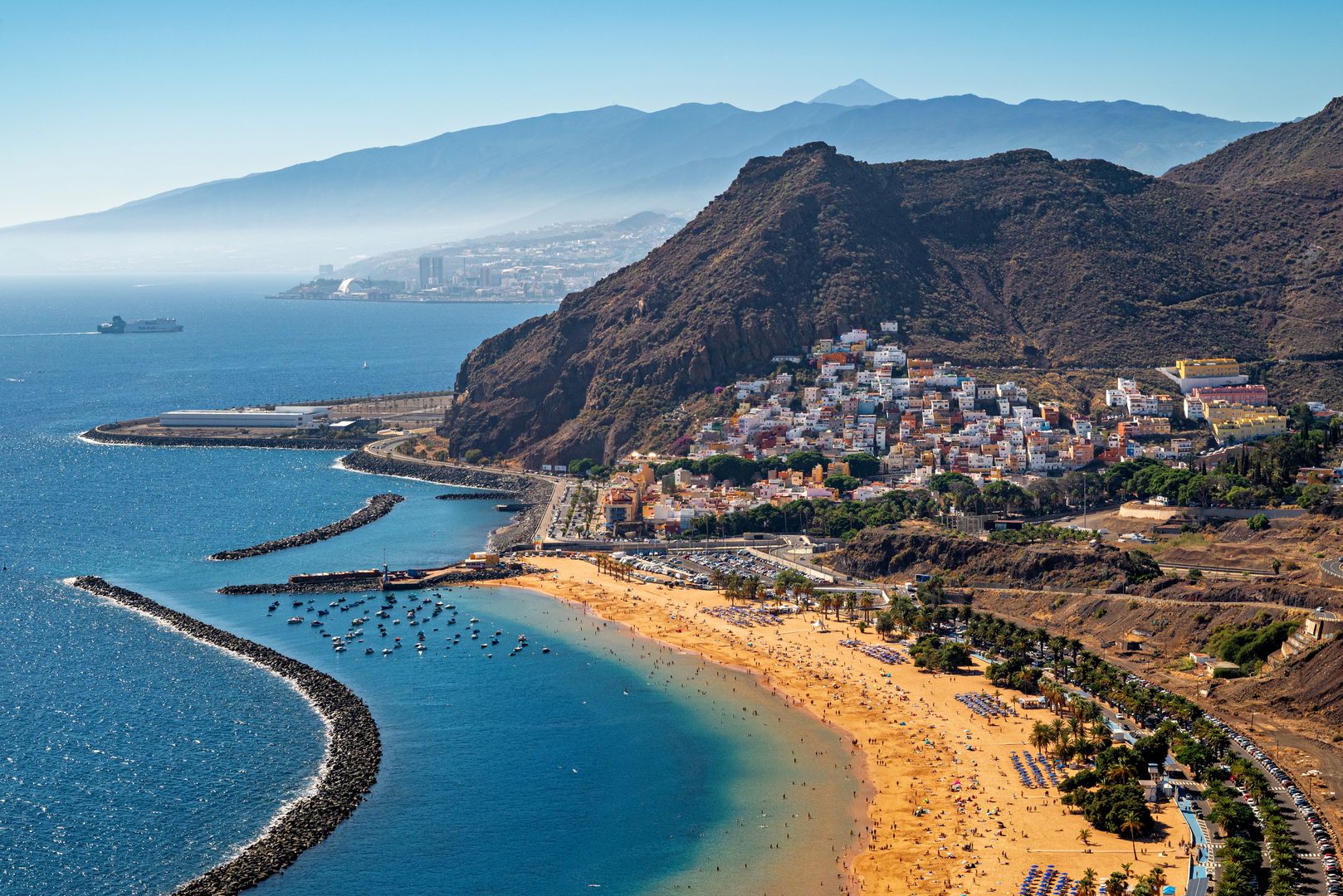
Tenerife holds 900,000 people and more variety than reputation suggests. The critical decision is geography: the south coast (Playa de las Américas, Los Cristianos) is unambiguous package tourism—high-rise hotels, all-inclusive buffets, British supermarkets, nightlife for people who want to know no Spanish. Book a hotel there if that's your intent and you'll be well-served. Skip the south if you're not.
The north coast around Puerto de la Cruz is the older, genuinely Spanish side. No high-rises, proper restaurants, older resort infrastructure. Less reliable winter sun (the trade-off for being on the wetter, northern coast), but worth it for anyone seeking actual accommodation.
Mount Teide dominates. At 3,715m, it's Spain's highest peak and visible from almost anywhere on the island. Teide National Park is UNESCO-listed, and the landscape—black lava fields, red-yellow pumice, endemic plants clinging to volcanic soil—genuinely resembles Mars. Entry to the park is free; the cable car (Teleférico del Teide) reaches 3,555m for €28 return. Book online at least two weeks ahead in January–February; same-day tickets sell out. The base is accessible from both north and south coasts (1.5–2 hours' drive either way). The cable car is crowded but functional; expect 20-minute queues even off-peak. Go early or book a timed ticket.
The Anaga Rural Park sits in the northeast, featuring pre-ice age laurel forest (laurisilva) that survived the ice ages nowhere else in Europe. Hiking trails range from 30 minutes to half-day. The landscape is green, lush, and entirely different from the volcanic interior—this is why Tenerife works as a multi-day trip. You can base yourself on the north coast, do one day at Teide, one day hiking Anaga, one day on the beach.
Who it suits: People who want an island large enough to offer genuine variety without overthinking. If you're torn between "beach resort" and "mountain hiking," Tenerife does both.
Gran Canaria: The continent in miniature, genuinely
Gran Canaria (population 855,000) is 1,560 km² and contains distinct ecosystems that make it feel larger than Tenerife in terms of experience density. The south holds Maspalomas Dunes—a 400-hectare sand dune system that resembles the Sahara and adjoins a beach resort strip. The dunes are real; they shift, they're undeveloped (no hotels within them), and they're worth a morning visit even if you dislike the resorts nearby.
The centre is mountainous pine forest, cooler and less visited. Roque Nublo, a volcanic rock formation rising 80m from the plateau, sits at 1,813m elevation. The hike is 30 minutes to the base; on clear days (February–April are clearest), you see both north and south coasts. The air thins noticeably; bring water.
Las Palmas de Gran Canaria is the island's capital—population 400,000, a genuine city with restaurants that serve locals, not tourists. Vegueta, the old town, dates from 1500 and has the feel of a Spanish colonial city, not a beach resort. The Cathedral (Catedral de Santa Ana) is substantial. If you want a city base with the option to escape to beaches or mountains, Las Palmas works. It's also windier and cloudier than the south coast in winter, a persistent trade-off.
The north coast banana plantations and fishing villages are understated; this is working landscape, not scenic backdrop. Worth a drive-through if you have time.
Who it suits: Couples and families wanting to combine urban exploration with beach time and natural landscapes. If the choice is between "all-beach Fuerteventura" and "all-mountain Tenerife," Gran Canaria splits the difference better than either alternative.
Lanzarote: The most geologically distinctive island

Lanzarote is not the largest (814 km²), but it's the only one shaped entirely by recent volcanic activity. Between 1730 and 1736, eruptions covered roughly a quarter of the island in lava flows. The result is a landscape with no equivalent in Europe—black volcanic plains, salt ponds, minimal vegetation, a sense of walking on another planet.
Timanfaya National Park contains the most dramatic section. You cannot hike independently (park rules); instead, book a guided bus tour through the lava fields (€15 per person, 1 hour). The landscape passes immediately outside the windows—craters, twisted lava formations, cinder cones. At the Restaurante El Diablo, food is cooked on grills placed over the geothermal heat rising from the volcanic layer beneath (€20–30 per main). It's a gimmick but works. Book the restaurant in advance in winter; the bus tour typically has same-day availability.
César Manrique's imprint is everywhere. The local artist and architect (1920–1992) shaped Lanzarote's development in the decades after tourism arrived, designing buildings that blend into the volcanic landscape, banning high-rise development, and creating cultural spaces that sit within the geology rather than against it. Jameos del Agua, his underground concert space carved into a volcanic cave system, is worth seeing for the architecture alone (€15 entry). The Fundación César Manrique (his former house) is in Haría, a small town in the north (€8 entry). If you're indifferent to architecture, skip both. If you care about how human design can work with rather than against landscape, they're essential.
Playa Papagayo, in the south, consists of several small natural coves with no development—no hotels, no restaurants, just sand and water. The drive there is rough (4km unpaved road), and parking is limited (arrive before 11am in winter). It's the cleanest attempt at undeveloped beach access in the islands.
Winter is actually the best time to visit—the volcanic landscape lacks shade, and summer temperatures exceed 30°C. January–February are comfortable (21–23°C) for walking.
Who it suits: Geologists, architecture enthusiasts, and anyone for whom the natural landscape is the point rather than accommodation comfort. Lanzarote is the least developed and least crowded of the four main islands—a meaningful difference in January and February.
Fuerteventura: The windy extreme
Fuerteventura is closest to Africa (100km) and the most sparsely populated main island. It's also the windiest and driest—annual rainfall is 100mm (less than the Atacama desert in some zones). The result is long, white, essentially empty beaches and a landscape that feels genuinely remote.
The northern town of Corralejo is the windsurfing capital; Sotavento beach (southwest coast) is the kitesurfing centre. If you're a water sports athlete, Fuerteventura is the correct island. If you're not, there's less to do. Beaches walk to 20km without human company; if that appeals, book it. If you need restaurants, cultural options, or activity variety, don't.
Winter is identical to summer in terms of weather (22–24°C year-round) but less crowded. The trade-off is constant wind—not storm wind, but sustained Atlantic gusts that tire you quickly if you're not wind-sport focused.
Who it suits: Beach maximalists, water sports enthusiasts, and anyone who wants to avoid crowds and infrastructure. Not recommended for families with young children or people seeking activities beyond swimming and walking.
Getting there and moving between islands
All four main islands have international airports. Ryanair, EasyJet, and Jet2 operate direct flights from the UK and Scandinavia (typically 4–5 hours). Flights from London are around €50–120 return depending on timing; book 6–8 weeks ahead for January–February travel.
Interisland movement: Binter Canarias operates 30-minute flights between islands (€40–80 one-way, book online). Ferries connect all main islands via Fred Olsen and Naviera Armas (1.5–2.5 hours, €20–40 per person). Both options have capacity; book one week ahead in peak season. The ferry journey itself is a journey—on rough Atlantic days, expect motion sickness even on modern vessels.
From mainland Spain, overnight ferries run from Cádiz to Las Palmas (Gran Canaria) in 40 hours. This is slower but cheaper than flying and forces a genuine transition to island time.
Winter viability and the real appeal
All four islands deliver winter warmth. January–February averages:
- Air: 21–23°C (no heating needed; jumpers unnecessary)
- Sea: 19–21°C (cold for most British swimmers; swimmable for determined northerners and southern Europeans)
The south coasts of Tenerife, Gran Canaria, and Fuerteventura have the most reliable sun. The north coasts (Tenerife, Gran Canaria) can be cloudy and breezy. Lanzarote, being further east and on the lee side of the larger islands, is consistently drier and sunnier than Tenerife's north coast.
If you're escaping December–March grey, the Canaries work reliably. If you're escaping January grey and want near-certainty of sun, book the south coast of Tenerife or Gran Canaria, or any part of Lanzarote or Fuerteventura. Budget 7 days for Tenerife or Gran Canaria; 4–5 days for Lanzarote; 3 days for Fuerteventura.
Frequently Asked Questions
Which Canary Island is best for families with young children?
Gran Canaria or Tenerife south coast. Both have extensive resort infrastructure (pools, kids' clubs, reliable restaurants), calm waters (especially on south-facing beaches), and activities suitable for ages 4–12 (beach, easy hiking, small attractions). Avoid Fuerteventura's wind and Lanzarote's minimal infrastructure if children are under eight.
Can you visit the Canary Islands in December?
Yes, but book accommodation and cable car tickets 10–12 weeks ahead. December is peak season (school holidays, northern hemisphere winter). Hotels in the south coast of Tenerife and Gran Canaria are 30–50% more expensive than January–February. Flights are 50–100% pricier. Late October or early November are better for prices and equal warmth.
Is Tenerife or Lanzarote better for a geology-focused trip?
Lanzarote. The 1730–1736 eruptions created a continuous volcanic landscape; Timanfaya National Park is more coherent geologically than Teide. Lanzarote is also less crowded and more architecturally coherent (Manrique's design legacy). Teide is higher and more famous, but Lanzarote is the better geology narrative.
What is the difference between Canary Islands and Madeira?
Madeira is Portuguese (off Morocco, not Spain), greener, more lush, and cloudier—winter highs around 19–21°C versus the Canaries' 21–26°C. Madeira has serious hiking and verdant landscapes; the Canaries offer guaranteed sun and beach access. Canaries = winter sun and beach; Madeira = winter walking and nature with cooler, wetter climate.
Which island can you visit for just 2–3 days?
Fuerteventura. Two days gives you Corralejo town, a beach walk, and a sense of the landscape. Three days adds Sotavento or a drive south. The island is small (1,660 km²), flat, and low-effort. Lanzarote works in 3–4 days (Timanfaya, César Manrique sites, Playa Papagayo). Tenerife and Gran Canaria require 5+ days to avoid feeling rushed.
Do you need a car to visit the Canary Islands?
For Tenerife and Gran Canaria: no. Buses connect all tourist zones. For Lanzarote: optional (buses exist; a car adds flexibility). For Fuerteventura: yes, or accept very limited mobility. Budget rental cars are €20–30 per day (book online in advance). Fuel is €1.20–1.40 per litre.
Pick Tenerife if you want a large island with one world-class mountain and dual resort/Spanish character. Pick Gran Canaria if you want compact variety—dunes, city, mountains—without overthinking logistics. Pick Lanzarote if volcanic geology and cohesive design matter more than resort comfort. Pick Fuerteventura if beaches and wind sports are the entire intent. The underrated choice: Lanzarote. It's less crowded than Tenerife, more geologically distinctive than Gran Canaria, and architecturally singular among European islands. Most British package tourists never hear of it.