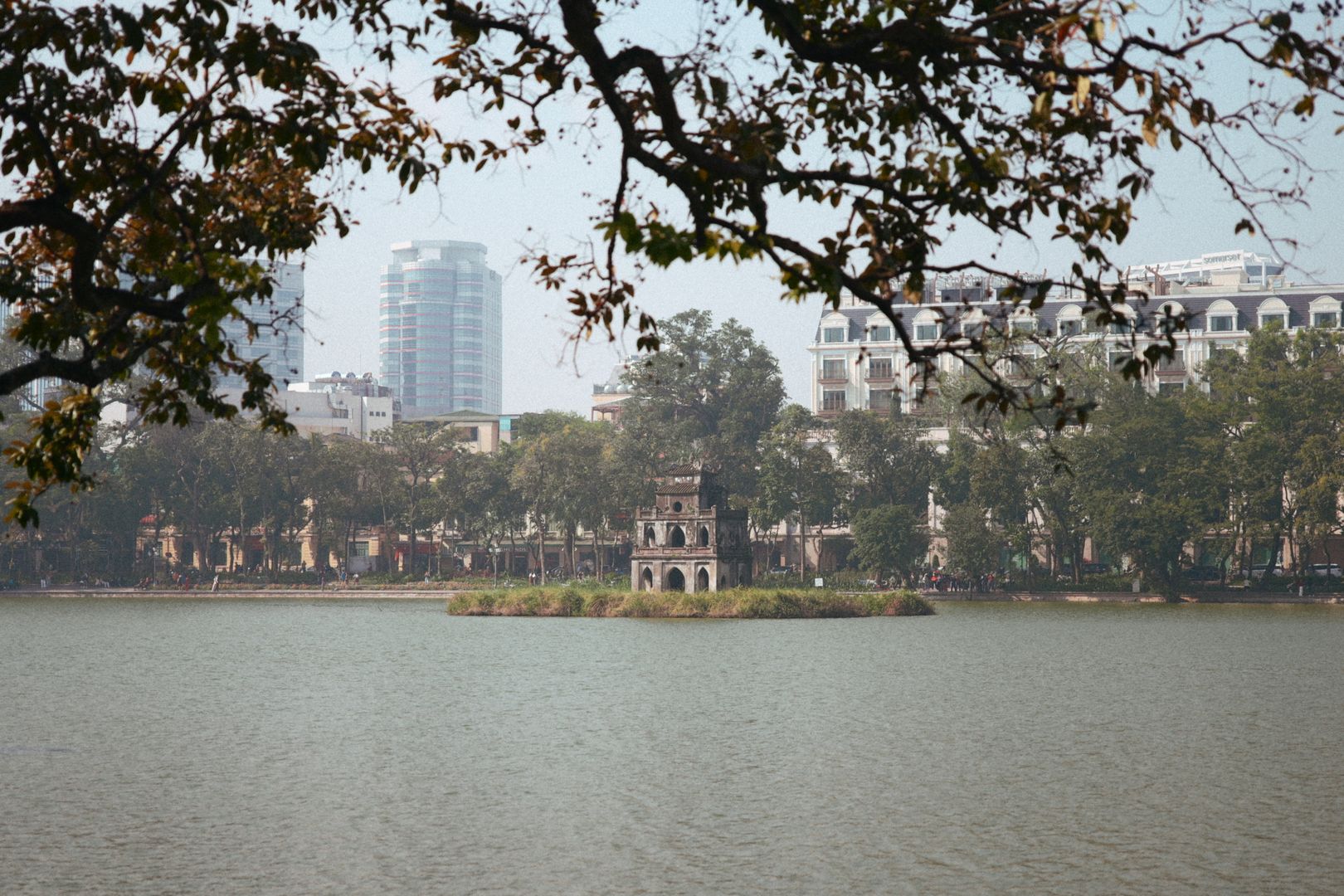
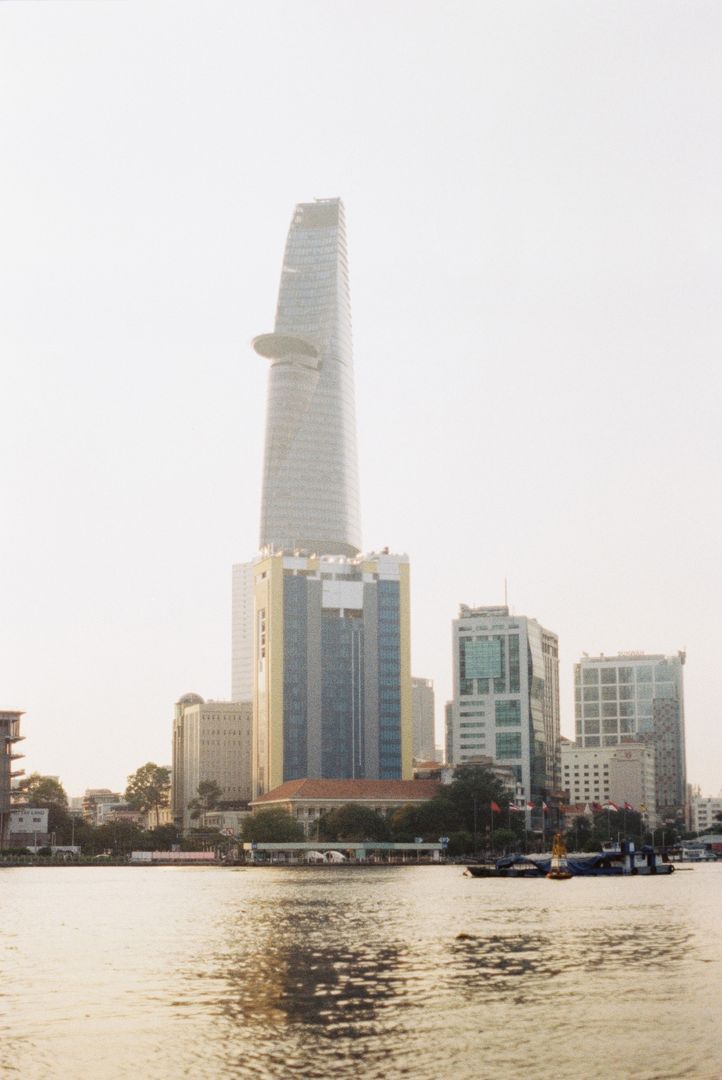
Ho Chi Minh City has a population of 9 million in the city proper and 13 million in the metropolitan area, making it Vietnam's largest city by a significant margin. The name was changed from Saigon in 1976, after reunification, but the old name persists in local usage with a persistence that reflects the city's particular relationship with its history. Economically, HCMC functions as Vietnam's commercial engine; architecturally, it's a dense mix of French colonial buildings, Soviet-era concrete, and high-rise development that accelerated sharply after 2000. The street-level energy — motorbike density, food vendor concentration, café culture, late-night life — is what most visitors remember.
Districts: The City's Geography
District 1 is the tourist and commercial centre, containing the Reunification Palace, Notre Dame Cathedral, the Central Post Office, and Ben Thanh Market on its main streets, and a dense concentration of hotels, restaurants, and bars in the surrounding blocks. The Bui Vien walking street area (District 1's backpacker zone) runs from late afternoon to the early hours and is loud, functional, and not representative of how most Vietnamese people spend their evenings. Đồng Khởi Street, the former Rue Catinat of the colonial era, connects the Central Post Office to the Majestic Hotel on the Saigon River waterfront.
District 3, directly north of District 1, retains French colonial villas along tree-lined streets, a better restaurant-to-tourist ratio than D1, and the Jade Emperor Pagoda (free) — one of the most active and visually complex Taoist temples in Vietnam, with an interior of wood-carved deities reaching floor to ceiling. District 4, across the Ben Nghe canal from D1, is a working-class neighbourhood with excellent local food markets and a density of street food stalls that rewards slow walking. Binh Thanh District (farther north) has the residential character of a Vietnamese neighbourhood with a backpacker quarter: Van Hanh Mall, local markets, and good phở joints that close by 10am.
The War Remnants Museum
The War Remnants Museum (USD 2, open daily 7:30am–noon and 1:30–5pm) documents the Vietnam War from the North Vietnamese and Viet Cong perspective, with American military equipment in the courtyard — tanks, aircraft, artillery — and photographic exhibitions on the ground floor covering war crimes, chemical warfare (including the Agent Orange legacy, with ongoing casualty documentation), and the international anti-war movement. The photography collection includes work by war photographers who died covering the conflict; the context provided is deliberately challenging.
The museum is not a neutral account — it is explicitly a Vietnamese state institution presenting the war from a specific viewpoint, which a visitor should keep in mind alongside the genuine historical documentation it provides. It is the most visited museum in Vietnam and, for most Western visitors, presents a perspective on the conflict that is substantively different from the accounts they're likely to have encountered before. Allow 2–3 hours. Arrive before 10am to avoid the group tours from Mui Ne and Vung Tau.
The Cu Chi Tunnels
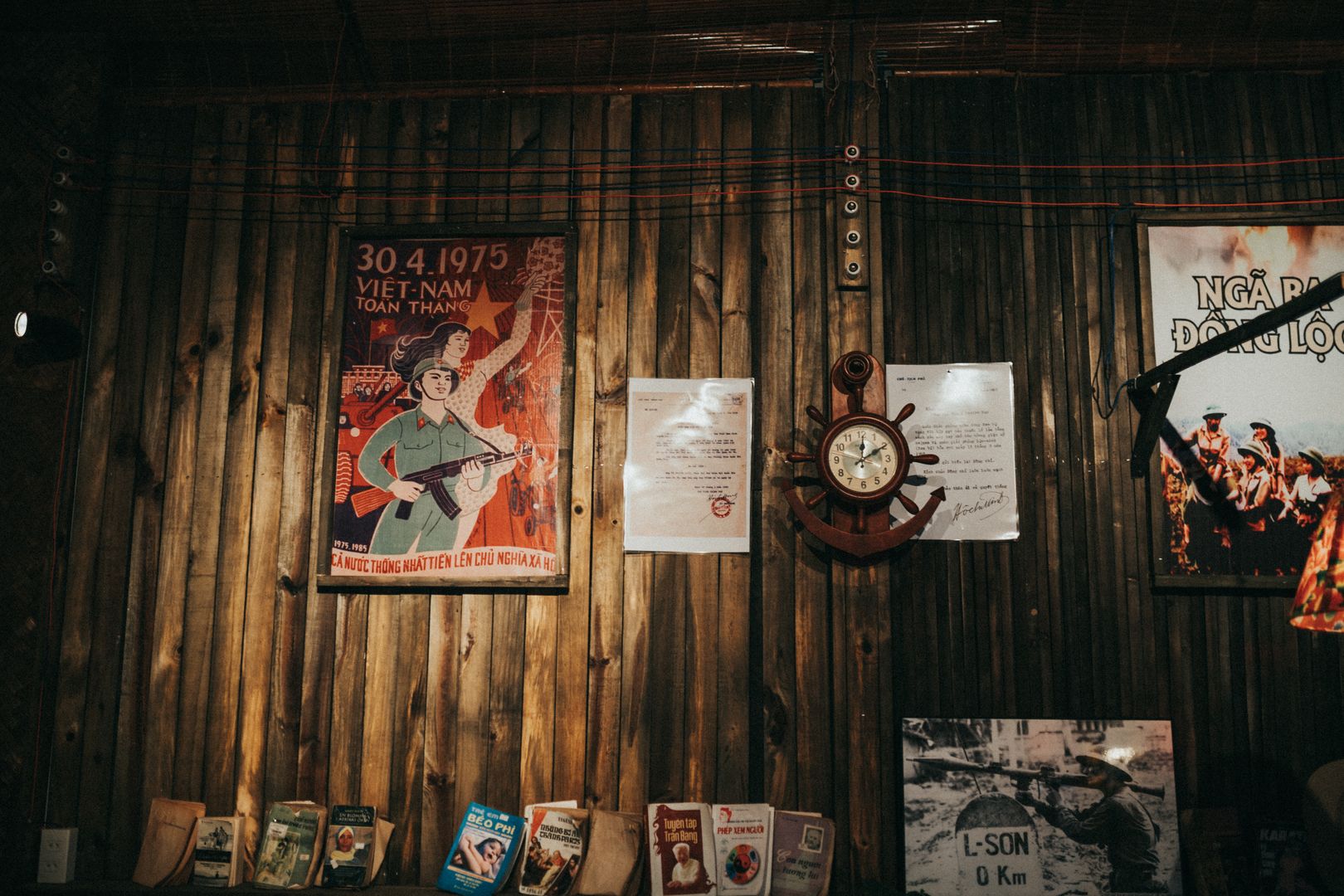
The Cu Chi tunnel network (75km northwest of the city centre, 1.5 hours by bus or taxi) was constructed over 25 years of conflict — first against the French, then against the Americans — eventually reaching 250km of tunnels connecting villages, supply routes, hospitals, and command centres across a 75 km² area. During the American War (1965–1975), the tunnels housed entire communities living underground for years at a time.
Two sites are open to visitors: Ben Dinh (10km from the national highway, more developed, better facilities, slightly artificial presentation) and Ben Duoc (further in, larger, closer to the original tunnel network, more involving). Both offer the experience of climbing into the narrow original tunnels — approximately 80cm wide, 50cm tall, progressively claustrophobic — and both have expanded sections for larger body shapes. Entry runs USD 5–15; guided tours from HCMC typically cost USD 10–20 including transport. The shooting range (live fire on various American and captured weapons, USD 1 per bullet) is popular and jarring in context; participation is optional.
Reunification Palace and the French Quarter
The Reunification Palace (USD 2) is the former Presidential Palace of South Vietnam — the building whose gates North Vietnamese tanks crashed through on 30 April 1975, ending the war. The interior has been preserved as it was on that day: the conference rooms, the war room with its operations maps, the rooftop helicopter pad used in the final evacuation. The basement communication bunker is the most intact section. The palace's combination of 1960s modernist architecture and its specific historical moment makes it more affecting than a typical government building museum.
Notre Dame Cathedral (1880, closed for restoration until 2025–2026) and the Central Post Office (designed by Gustave Eiffel's firm, completed 1891) are directly opposite each other on Công Xã Paris square. The post office interior — arched iron ceiling, old Saigon city maps on the walls, working post booths — is free to enter and worth 20 minutes. Both are visible from the street if the cathedral remains closed.
Food in Ho Chi Minh City
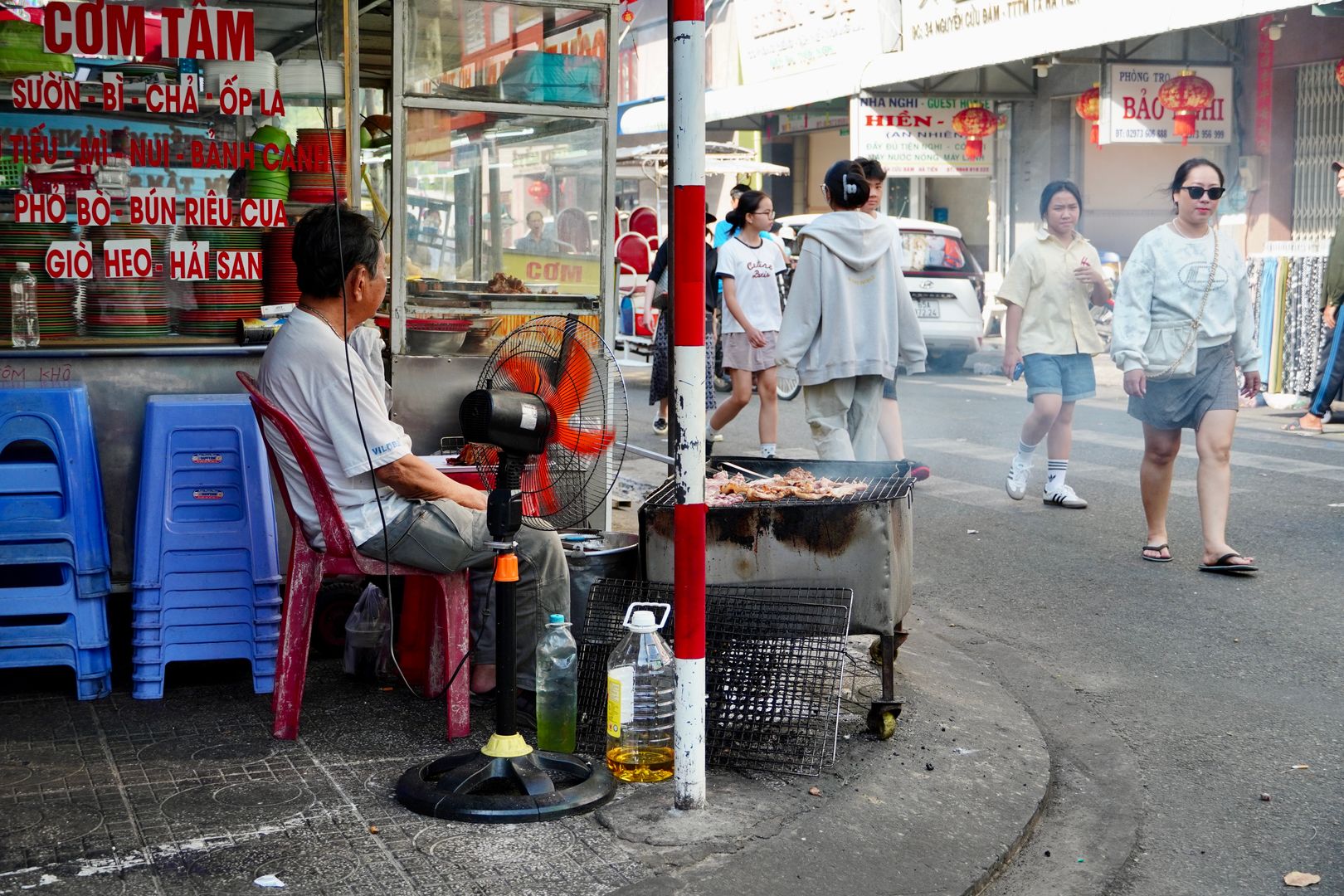
Bánh mì — the Vietnamese baguette sandwich — emerged from the French colonial bakery culture and evolved into something entirely distinct: crunchy baguette, cold cuts, headcheese, pâté, cucumber, coriander, pickled daikon and carrot, fresh chilli, mayonnaise. The price at a street stall is VND 20,000–40,000 (USD 1–1.70). Bánh Mì Hùynh Hoa (District 1), open afternoons and evenings only, typically has a queue and is worth it. Phở in HCMC has a sweeter broth, more garnish (bean sprouts, basil, lime, hoisin), and a higher proportion of beef cuts than the Hanoi version; the versions are genuinely different and the debate about which is better has no correct answer.
Hủ tiếu — rice noodle soup with pork, dried shrimp, and light broth — is the morning dish specific to the south. Bún thịt nướng (grilled pork vermicelli, served cold with fish sauce and herbs) is lunch and dinner. Cà phê sữa đá (iced coffee with sweetened condensed milk) is the drink that defines the heat of a HCMC afternoon. The District 4 Ben Nghe canal bank, the backstreets of Binh Thanh, and the section of Vo Van Tan street in District 3 near the Jade Emperor Pagoda each have clusters of local food shops worth time.
Day Trips from HCMC
The Mekong Delta (100km south) is one of the most productive agricultural regions in the world — the rice bowl of Vietnam, alongside its fruit orchards and floating markets. Day trips from HCMC (8–10 hours, USD 15–30) visit My Tho (the largest delta city), Cai Be floating market, and fruit farm stops with boat rides through narrow canals. A two-day extension staying in Ben Tre or Can Tho gives a more substantive experience; the floating markets at Cai Rang near Can Tho are best at dawn.
Vung Tau (120km southeast, 2 hours by ferry or 2 hours by bus) is the nearest beach town — a functional Vietnamese seaside resort rather than a backpacker destination, primarily used by HCMC residents on weekends. The beaches are unremarkable; the French colonial villa ruins on the headland and the outdoor Christ statue (slightly smaller than Rio's) are worth an hour each. The fast ferry (Greenlines DP, 90 minutes, USD 12) is a more pleasant option than the road.
Getting Around HCMC
Grab motorcycle and car hire are the standard modes; Grab motorcycle costs VND 15,000–40,000 for most District 1 trips. Taxi meters exist (Vinasun and Mai Linh are the trustworthy metered operators) but Grab is simpler. Walking covers District 1 comfortably; the heat above 32°C limits the useful walking window to mornings. The HCMC Metro Line 1 (Ben Thanh to Suoi Tien, opened 2024) connects the city centre to the eastern districts — currently useful mainly for reaching the bus station and eastern suburbs rather than tourist sites.
Practical Costs
A guesthouse room in District 1 runs USD 20–50; mid-range hotels USD 60–120. Street food: USD 1–4 per meal. Restaurant lunch: USD 5–12. Dinner at a good restaurant in D3 or D1: USD 15–30 per person. Museum entries: USD 2–5. Cu Chi full-day tour with transport: USD 15–25. Daily costs (excluding accommodation) of USD 25–50 are realistic for a combination of food, transport, and activities.