Vietnam's monsoon system splits at the 16th parallel: the north has winter (November–April, cool and dry) while the south bakes year-round and gets drenched June–October. This means the better starting city often isn't about which you prefer—it's about when you're travelling. A traveller arriving in July from Europe is making a mistake by starting in the north; someone landing in December with two weeks should prioritize Hanoi first. Most guides treat Hanoi and Ho Chi Minh City as interchangeable entry points. They are not.
| Category | Hanoi | Ho Chi Minh City |
|---|---|---|
| Best for | 10+ days, history, treks, European arrivals Nov–Apr | 6–9 days, speed, beaches, Southeast Asia arrivals |
| Signature draw | Old Quarter trade streets, Ha Long Bay, Sapa highlands | War Remnants Museum, Mekong Delta, Mui Ne dunes |
| Beaches or nature | Ha Long Bay (2.5–3 hours), Ninh Binh (2 hours) | Mui Ne (4.5 hours), Phu Quoc island, Mekong (1.5 hours) |
| Nightlife | Quieter, Old Quarter bars, less English-language scene | More bars, higher prices, stronger tourist infrastructure |
| Mid-range daily cost | $80–130 (slightly cheaper meals and transport) | $80–130 (meals 20% more expensive than Hanoi) |
| Peak season | November–April (12–22°C, clear skies, dry) | November–April (dry); year-round 28–36°C |
| Crowd level | Chaotic motorbikes, walkable only before 8am | Higher motorbike density, faster pace, more English |
| Recommended stay | 5–6 days minimum for proper base | 4–5 days; viable for shorter trips (5 days or fewer) |
| Getting there | Direct flights from Paris, Amsterdam, Frankfurt | Cheaper connections from Bangkok, Singapore, Australia |
Hanoi: slower pace, deeper history, limited by season
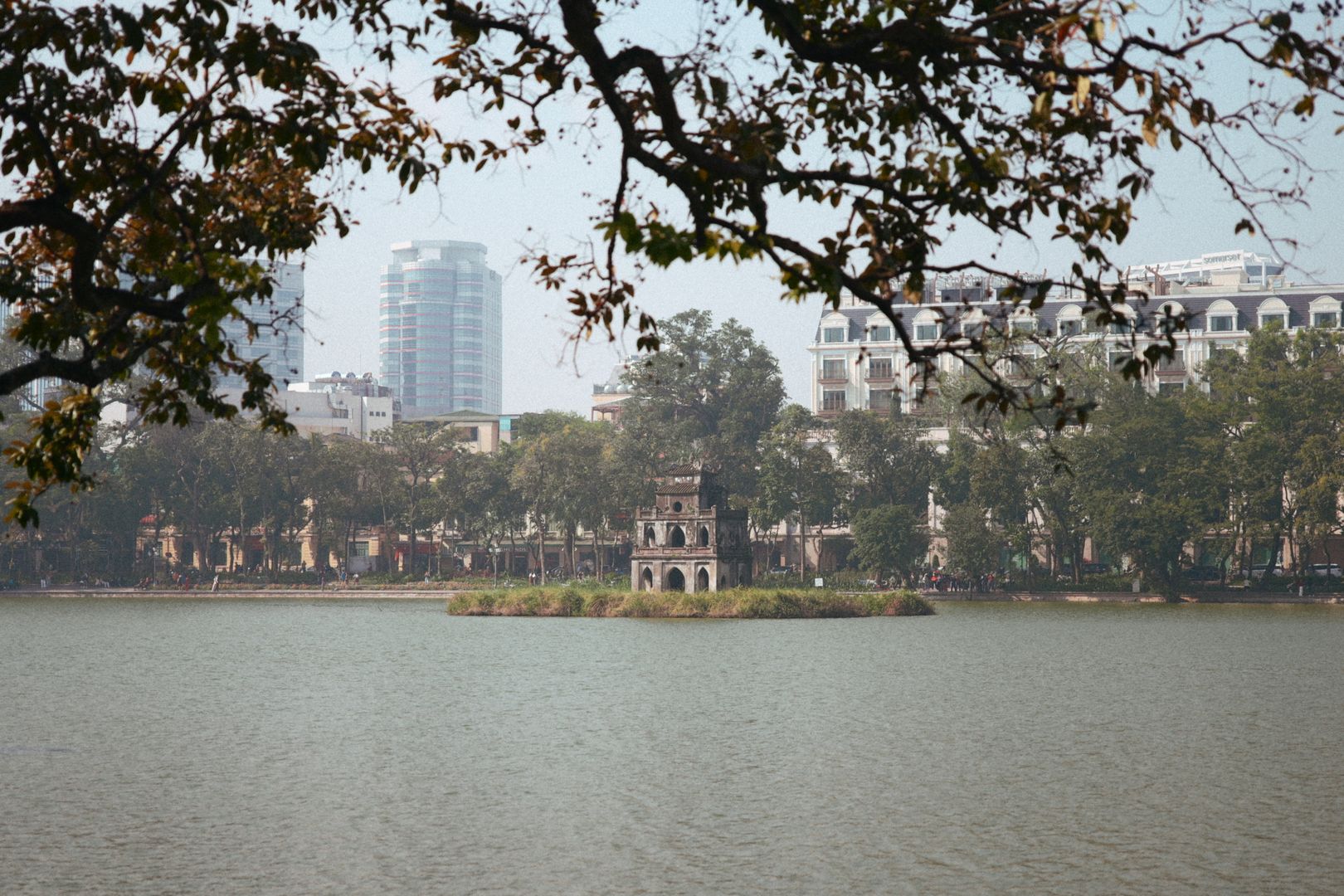
Hanoi's Old Quarter is organized into 36 streets, each historically dedicated to a single trade—silk, silver, coffins, shoes. This grid is walkable only before 8am; after that, motorbikes dominate the 3-meter-wide lanes and it becomes claustrophobic. The French colonial core (around Hoan Kiem Lake and the Opera House) is cleaner and easier to navigate, but the Old Quarter is where travellers end up despite the chaos, because the food and scale are unmatched in the rest of Vietnam.
The city's character depends entirely on when you visit. November through April, temperatures range from 12°C to 22°C—genuine seasons with clear skies and the best light for walking. July through August: 32°C and 85% humidity, with frequent flooding in low-lying streets. May through June and September through October occupy an awkward zone of heat and unpredictable rain. Book accommodation with a ground-floor flood exit if visiting June–September.
Hanoi works as a multi-day base because three major trips anchor themselves here:
Ha Long Bay (2.5–3 hours by road): limestone karsts and overnight cruises. One night minimum; day trips are rushed and exhausting. Book through your hotel or Viator at least 3 days ahead ($60–150 per person). The bay is crowded but architecturally unmatched.
Ninh Binh (2 hours south): river valleys, temples carved into cliffs, fewer tourists than Ha Long. A day trip works if you hire a driver ($25–35 for 8 hours); better as an overnight stay at one of the homestays near Tam Coc village.
Sapa (8 hours by overnight train): mountain town at 1,600 meters, hiking among rice terraces and Hmong villages. Requires two nights minimum (one train journey each direction). The train is atmospheric but slow and crowded. Book through a tour operator, not directly—you'll pay $10 more but the onward logistics are handled.
Hanoi suits travellers with at least five days free and some tolerance for noise and crowded streets. It suits those flying in from Europe (Air France and Vietnam Airlines run direct routes from Paris; KLM and Lufthansa from Amsterdam and Frankfurt); it punishes anyone on a strict two-week itinerary who should have started further south.
Ho Chi Minh City: speed, heat, better connectivity
Ho Chi Minh City (still called Saigon by locals in conversation) runs at a faster clip than Hanoi. The motorbike density is higher, the English is more common in tourist zones, and the cost of a meal is 20% higher. Year-round temperatures sit between 28°C and 36°C; no season is cool. November through April is dry; May through October is wet enough to strand tour buses but rarely prevents travel entirely.
The central attractions are compressed into walking distance but functionally separate:
War Remnants Museum (central district): photographs, weaponry, and the chemical weapons archive. Do not bring children under 12. The collection is historically necessary and intentionally graphic. Book 2 hours minimum.
Ben Thanh Market: the tourist market, but genuinely useful for orientation and lunch. The wet section (fish, meat) is early morning; the souvenir gauntlet dominates the center. Eat pho or bánh mì at one of the stalls for $1–2.
Cu Chi Tunnels (45km northwest): network of underground passages used during the American war. Half-day tour from the city; book through your hotel ($20–40, includes transport and guide). This is tourist-orientated but worthwhile context.
The real advantage of starting in HCMC is the surrounding region. The Mekong Delta is 90 minutes away by bus; a proper visit (two days, one overnight in Can Tho or Vinh Long) beats a rushed day trip. Mui Ne (4.5 hours, fishing village with sand dunes and beach hotels) is a viable extension if beach time is the goal. Da Lat (6–7 hours north, cooler highlands with waterfalls and French villas) works as a two-night stopover with hired driver.
HCMC suits short trips (five days or fewer), anyone flying in from Southeast Asia (Bangkok, Singapore connections are cheap and frequent), and travellers who want to move fast. It also suits those building a beach itinerary down the south coast—Mui Ne and Phu Quoc island are better accessed from here than from Hanoi.
Getting between the two cities

Flights: 1.5 hours, five to eight daily services on Vietnam Airlines, VietJet, Bamboo Airways. Book three to four weeks ahead for $30–60 one-way. Two-week advance bookings cost $50–80; booking the day before or day-of costs $90–150. The airports (Noi Bai for Hanoi, Tan Son Nhat for HCMC) are 30km from city centers; budget 45 minutes and $8–12 by Grab app.
The Reunification Express train: 30+ hours for the full Hanoi–HCMC route, departing once daily in each direction. The soft sleeper costs $50–70; hard sleeper is $25–40. Tickets sold through Vietnam Railways (dsvn.vn) or hotel booking services (+10% markup). This journey is slow but culturally dense and is worth doing once if you have 36 hours to spare. Most travellers break it into segments: Hanoi–Hue (13 hours, depart 7pm, arrive 8am); Hue–Da Nang (8 hours); Da Nang–Saigon (20+ hours, much less popular).
The overlooked middle: the central coast—Hue (imperial capital, tombs, citadel; 2 nights minimum), Hoi An (old merchant town, tailors, lantern town; 2–3 nights), Da Nang (airport hub, beach, but minimal tourism draw). Flying Hanoi to Da Nang ($35–60) then bussing to Hoi An (1 hour, $3–5) and continuing to HCMC by flight or train is the practical alternative to the full overnight journey.
Skip entirely: the overnight bus Hanoi to HCMC. 40 hours on a sleeper bus, departing 6pm and arriving next afternoon, is grinding and leaves you disoriented. The flight costs only $10–20 more and saves 38 hours.
Visas, money, and the practical layer
E-visa: 90-day single-entry, applied online at evisa.xuatnhapcanh.gov.vn. Most nationalities eligible (check the full list on the site). Cost is around $25; processing takes three business days. Do this before you book flights. Extensions to 30 or 90 days are possible but bureaucratic; assume 90 days as your working limit.
Currency: Vietnamese Dong (VND). 1 USD = ~24,000 VND (rates fluctuate). ATMs are everywhere in both cities; street food, local buses, and markets are cash-only. Budget cycles: street food and pho costs $1–3 per bowl; organized tours cost $20–50 per person per day; a beer at a tourist bar costs $2–3; a mid-range dinner is $8–12 per person.
Transport within cities: the Grab app (ride-hailing and motorbike taxis) works across Vietnam. Use it instead of flagging taxis; rates are metered and fixed via app. A motorbike ride across central Hanoi costs $1–2; central HCMC costs $1.50–3. Walking is practical in central areas but uncomfortable in heat above 32°C.
Daily budgets: budget travellers spend $35–50/day (hostel bed, street food, local buses, free temples); mid-range spend $80–130/day (private room, restaurants, occasional paid tours); comfort budgets run $180+/day (hotels, all meals out, tours, flights between cities).
Which city to start in: a practical decision tree
Arriving from Europe, December–April: Start Hanoi. Direct flights from Paris, Amsterdam, Frankfurt, and other hubs; the north is in its cool, dry season (12–20°C, clear skies). You can spend 5–6 days around Hanoi (including Ha Long or Sapa), then fly south to explore the central coast and Mekong Delta while the north's season fades.
Arriving from Europe, May–November: Start HCMC. The north is either cold and wet or oppressively hot. Spend 4–5 days around HCMC and the Mekong Delta, then consider flying north to Hue and Hoi An if time permits (the central coast is wet but not impassable).
Arriving from Australia or Southeast Asia, anytime: Start HCMC. The airport connections are better; you can decide whether to extend north based on how much time you have. If you have 10+ days, moving north makes sense. With 6 days, stay regional (Mekong, Mui Ne, Phu Quoc).
The north-to-south vs. south-to-north question: North to south follows geography and colonial history (Hanoi–Hue–Saigon was the old French colonial flow) but requires coordinating two separate climate windows. South to north works equally well and front-loads the heat and speed, saving the cooler, slower north for later. Neither sequence is objectively better.
Reality check: what to expect in either city

Vietnam is safe to travel alone. Petty theft (bag snatching from motorbikes, pickpocketing in crowded markets) happens but is not epidemic. Violent crime against tourists is rare. The main concerns are traffic (cross streets slowly, use pedestrian crossings, assume motorbikes ignore red lights) and food safety (eat where locals eat, avoid ice from street vendors in rural areas). Women travelling alone report fewer problems in Hanoi than in HCMC, though both are safer than most Southeast Asian capitals.
The people speak limited English outside tourist zones, but translation apps work well for menu ordering and directions. Bargaining is expected in markets but not in restaurants or hotels. Tipping is not customary; rounding up your bill is sufficient.
For a first trip, eight to twelve days is the baseline to see either region properly without feeling rushed. Five days is survivable if you stay in one city and take one day trip. Three weeks allows north-to-south transit with two-night stops in three to four places.
Who should start where, and when
Start in Hanoi if you have 10+ days, are arriving November–April from Europe, and want to slow down for temples, history, and nearby treks. Start in Ho Chi Minh City if you have 6–9 days, are arriving from Southeast Asia or Australia, or want to combine city exploration with beach time. If you have exactly two weeks and are undecided, start where your flight is cheapest—the time saved in transport logistics matters more than the region's inherent appeal. Book your onward transport (flight or train) only after you've arrived and felt the rhythm of the first city.
Frequently Asked Questions
Should I start in Hanoi or Ho Chi Minh City?
Start in Hanoi if you have 10+ days and are arriving November–April from Europe; the north is cool and dry then. Start in HCMC if you have 6–9 days, are coming from Southeast Asia or Australia, or want beach time. If you have exactly two weeks and are unsure, book whichever city has cheaper flights—the time saved matters more than regional preference.
What is the best time to visit Hanoi and HCMC?
Hanoi: November–April (12–22°C, clear skies, dry). July–August is 32°C with 85% humidity and frequent flooding. HCMC: November–April is dry; May–October is wet but not impassable. HCMC has no cool season—expect 28–36°C year-round.
Can I do a day trip from Hanoi to Ha Long Bay?
Not recommended. Ha Long requires one night minimum; day trips are rushed and exhausting. Book through your hotel or Viator at least 3 days ahead ($60–150 per person). Overnight cruises let you see the limestone karsts properly.
Is Vietnam safe for solo travellers?
Yes. Violent crime against tourists is rare. Petty theft (bag snatching from motorbikes, pickpocketing in markets) happens but is not epidemic. The main concerns are traffic—cross streets slowly and assume motorbikes ignore red lights—and food safety. Women travelling alone report fewer problems in Hanoi than HCMC.
How much should I budget per day in Vietnam?
Budget travellers: $35–50/day (hostels, street food, local transport). Mid-range: $80–130/day (private rooms, restaurants, occasional tours). Comfort: $180+/day (hotels, all meals out, flights between cities). Street food and pho cost $1–3; organised tours cost $20–50 per person per day.