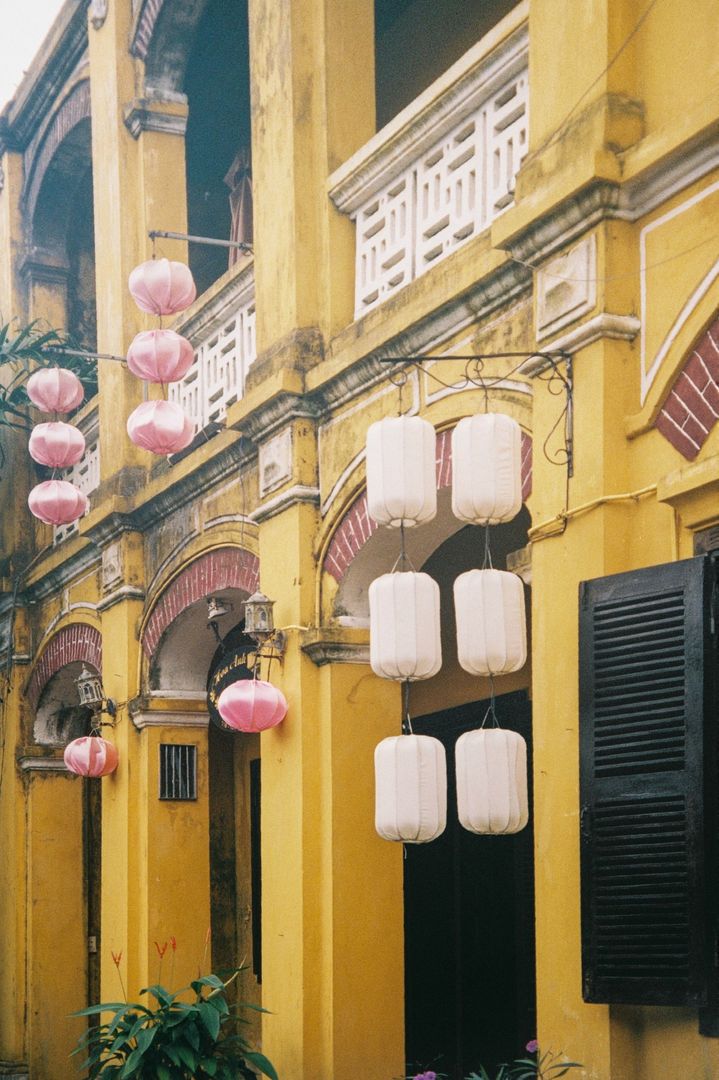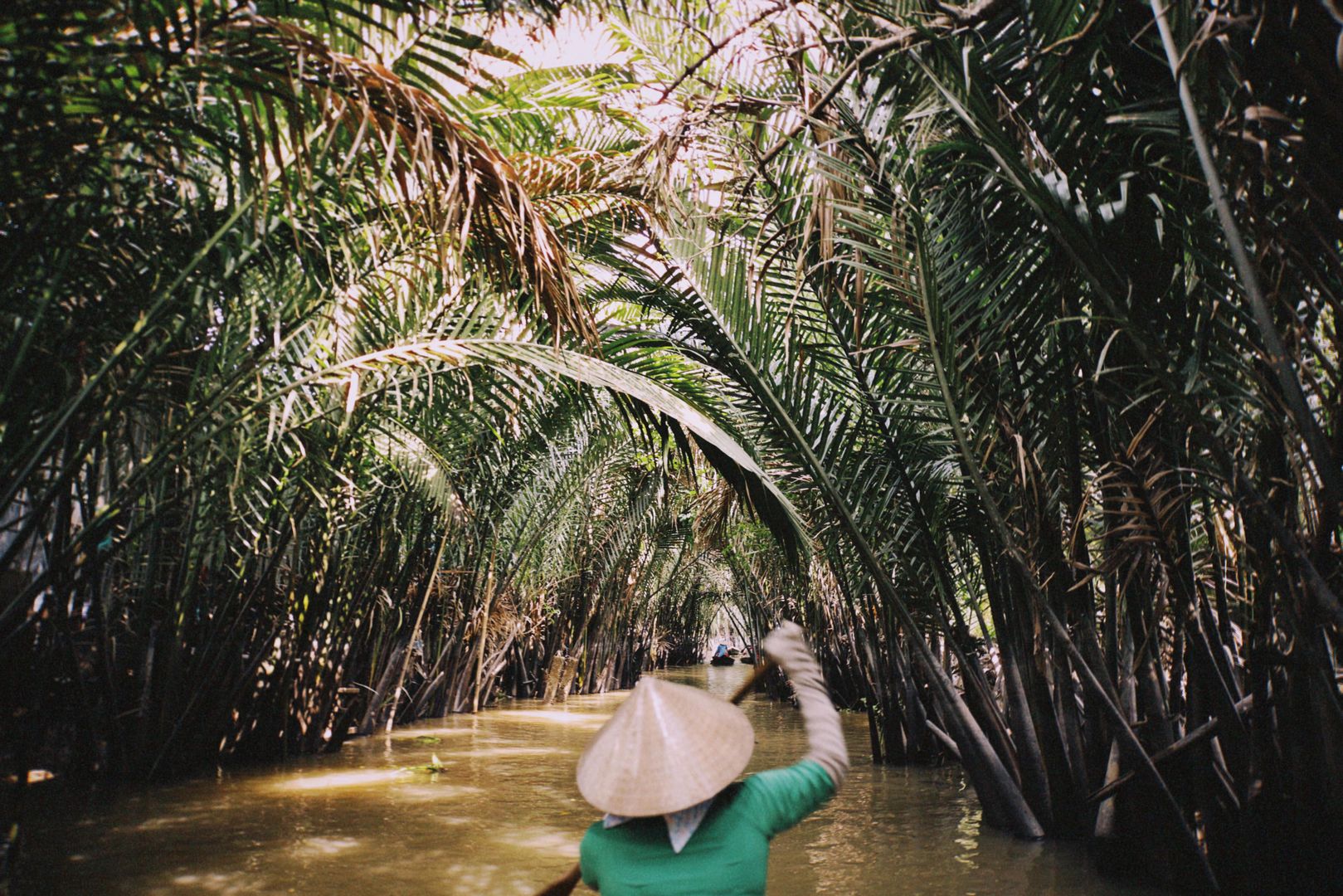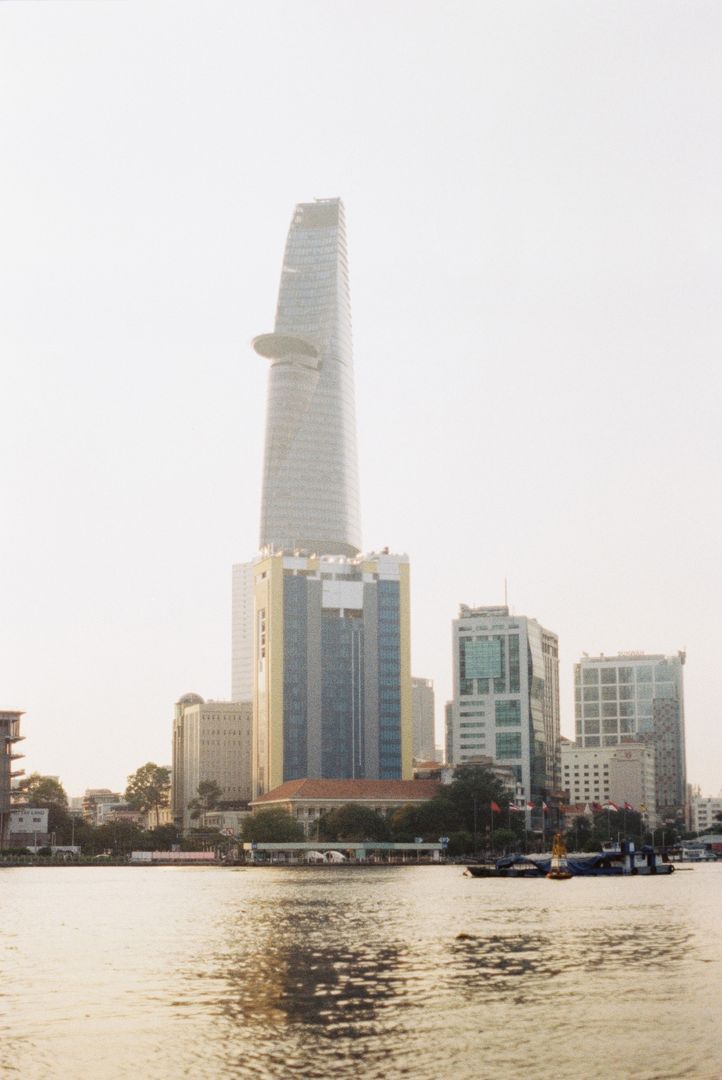

Huế sits on the central Vietnamese coast, 650km north of Ho Chi Minh City and 100km south of Da Nang, in a narrow coastal plain between the Annamite mountains and the sea. The Nguyen dynasty ruled Vietnam from here between 1802 and 1945, constructing a citadel complex modelled on Beijing's Forbidden City and a series of royal tombs in the hills south of the city. The 1968 Tet Offensive saw some of the heaviest urban fighting of the American War, destroying significant portions of the citadel and killing an estimated 5,000 civilians. The reconstruction has been ongoing since 1975 and is still incomplete. What remains is enough to make Huế the most architecturally significant city in central Vietnam.
The Imperial Citadel
The Imperial Citadel (Đại Nội, USD 7) is a walled compound 600m per side inside a moat, within a larger fortified area 2.5km per side. The compound follows the Chinese principle of three concentric enclosures: the Kinh Thành (Capital City), the Hoàng Thành (Imperial Enclosure), and the Tử Cấm Thành (Forbidden Purple City, the innermost section reserved for the emperor and immediate family).
The Ngo Mon (Noon Gate) is the main ceremonial entrance — a platform above five arches where the emperor appeared on important occasions. The Thai Hoa Palace (Throne Room) directly behind it is the most intact building inside the compound, its wooden columns lacquered in red and gold, its throne still in place. The Duyet Thi Duong (Royal Theatre) has been restored and performs traditional nhã nhạc court music twice daily (10am and 3pm, admission included in the citadel ticket).
The destruction of the Forbidden Purple City in the 1968 battle is visible in the stone foundations and low walls that cover much of the compound's inner section — detailed interpretation panels at each site explain what stood here and what was lost. The reconstruction is genuine rather than theme-park: they rebuild where documentation exists, leave foundations where it doesn't. The overall experience is better with the audio guide (USD 3 rental), which fills the interpretive gaps between standing buildings.
The Royal Tombs
Seven royal tombs are distributed in the hills and forests south of the city, constructed by individual emperors during their lifetimes as complexes of temples, pavilions, ponds, and the burial vault itself. Each reflects the personality and aesthetic preferences of its builder, making them more individually interesting than they would be as a collective.
Tu Duc's tomb (7km south of the city, USD 7) is the most atmospheric — a complex of pavilions around an artificial lake, built between 1864 and 1867. Tu Duc used the pavilions for poetry and duck hunting during his lifetime; he died in 1883 having never been buried here (his actual burial location was kept secret to prevent tomb robbing). Khai Dinh's tomb (10km south, USD 7) is architecturally the most distinctive — a hybrid of Vietnamese imperial and French Baroque design, completed in 1931 under French colonial rule, with an interior of mosaic and concrete rather than the traditional Vietnamese materials. Minh Mang's tomb (12km south, USD 7) is the most symmetrically planned — a formal Chinese-influenced layout of gates, courtyards, and pavilions approaching the stele pavilion where the emperor's virtues are recorded in stone.
The tombs are spread across a wide area; visiting all three in a day by bicycle (USD 3–5 hire) or motorbike (USD 8–12 hire) is possible but tiring. A half-day boat trip on the Perfume River stopping at Thien Mu Pagoda and two of the tombs (USD 5–8 per person in a shared boat) is the more relaxed approach, if slower.
Thien Mu Pagoda and the Perfume River

Thien Mu Pagoda, 5km west of the city on a bend of the Perfume River, is the most recognisable landmark in Huế — a seven-storey octagonal tower (Phuoc Duyen, built 1844) visible from the river and from much of the western city. The grounds contain a garden, a car (a powder-blue Austin Westminster that transported the monk Thich Quang Duc to his 1963 self-immolation in Saigon), a bell cast in 1710, and an active monastery. Free to visit.
The Perfume River (Sông Hương) gets its name from the herbs and flowers that grow along its upper reaches and are said to scent the water — a claim that requires some imaginative participation at city level. Boat trips on wooden dragon boats (negotiated on the riverside, USD 4–8 per hour) cover the stretch from the citadel past Thien Mu and on to Minh Mang's tomb. The river is the logical way to understand the spatial relationship between the citadel, the pagoda, and the tomb sites.
Huế Food
Huế has a reputation as Vietnam's food capital — a city where cooking was elevated to an art form under imperial patronage (the court cuisine of the Nguyen emperors is a distinct culinary tradition) and where the street food that developed around it is the most interesting in the country. The key dishes are geographically specific: bún bò Huế (spicy beef and pork noodle soup, with lemongrass and shrimp paste, fundamentally different from the milder phở), bánh khoái (crispy rice crepe stuffed with shrimp, pork, and bean sprouts, dipped in a fermented soybean-peanut sauce), and cơm hến (tiny clams served over rice with a complex array of condiments — shredded banana flower, pork crackling, peanuts, chilli, fish sauce — that combine into something denser than the sum of its parts).
Bún bò Huế is breakfast; the best versions are found at street stalls opening at 6am and selling out by 9am. Banh Khoai Ba Do on Dinh Tien Hoang Street is the most-cited reference for bánh khoái. Cơm hến stalls are concentrated on Hang Me Street, near the citadel moat. Bánh mì in Huế uses different fillings than the Saigon version — more lemongrass paste, less pâté. Nem lụi (minced pork on lemongrass skewers, grilled, wrapped in rice paper) is the appetiser that appears on every restaurant menu and is usually good.
Getting to and Around Huế
Trains from Hanoi (13–14 hours, VND 350,000–600,000 depending on class) stop at Huế station in the west of the city. From Da Nang, the train takes 2.5–3 hours (VND 55,000–120,000) and passes through the Hai Van Pass — a 21km mountain crossing where the track runs at 500m elevation with views over both the Da Nang and Huế sides. The pass section is one of the most scenic rail journeys in Southeast Asia. The Da Nang–Huế stretch is the practical approach for travellers on the Hanoi–HCMC route who want to include both cities.
Within Huế, rented bicycles (USD 3–5) cover the citadel and city comfortably; the tombs require a motorbike (USD 8–12, driven by you or by driver) or a guided half-day boat trip. Grab operates in Huế for point-to-point trips. Cyclo (pedicab) rides are available in the citadel area — tourist-oriented, slow, good for the citadel moat circuit.
Practical Costs

Guesthouses in Huế run USD 15–35; mid-range hotels USD 50–100. Restaurant meals: USD 3–8 for local Vietnamese food; USD 12–20 at the better restaurants. Citadel and tombs entry: USD 7 each (combined tickets available). Boat trip on the Perfume River: USD 4–8 per hour. Daily costs (excluding accommodation) of USD 25–45 are realistic. Huế is considerably cheaper than Da Nang or Hanoi and, for the density of significant sites per dollar, one of the better-value cities in Vietnam.