

Hua Hin has hosted the Thai royal family since 1923, when King Rama VII built Klai Kangwon Palace on the Gulf coast—a fact that still shapes the town's character today. While most travellers flying south from Bangkok head for islands or Phuket, Hua Hin sits just 2.5 hours away by train, offers a cleaner beach than Pattaya, and serves better seafood than either. It's Thailand's oldest beach resort, favoured by Thai families and retirees rather than backpackers, which means fewer neon bars, fewer jet-ski touts, and a distinctly more local atmosphere. For anyone with four to five days and a base in Bangkok, Hua Hin avoids the flight-connection trap while delivering a genuine beach break—just not the one you've seen on Instagram.
| Pattaya | Hua Hin | |
|---|---|---|
| Distance from Bangkok | 1.5 hours | 2.5 hours |
| Beach quality | Average, crowded | Good sand, quieter |
| Water colour | Gulf green | Gulf green |
| Nightlife | Extensive, commercial | Minimal, local |
| Food scene | Touristy, chains | Fresh seafood focus |
| Best for | Budget, quick escape | Families, couples |
| Mid-range daily cost | €35–50 | €45–65 |
| Peak crowds | November–February | November–February |
| Typical stay | 1–2 days | 2–4 days |
| Royal heritage | None | Active (Rama VII) |
Getting to Hua Hin from Bangkok: Three viable routes
The train is the only genuinely pleasant way south. Hua Lampong Station runs five to seven departures daily to Hua Hin; the air-conditioned 2nd-class service takes 2.5 to 3.5 hours depending on the train type and costs 220–320 THB (roughly €6–9). Buy tickets via 12Go Asia or at the station itself—advance booking is useful only on Friday afternoons or Sunday evenings. The 3:45 PM express takes 2 hours 45 minutes and passes through green Gulf-coast plains; the slower morning trains offer identical views and cost the same. Arrive at Hua Hin station in the town centre.
Buses leave Southern Bus Terminal (Sai Tai Mai) every 30 minutes, take three to four hours, and cost 120–180 THB. The journey follows Highway 35 inland—no coast views, cramped seats, and minimal air conditioning on cheaper services. Use buses only if trains are fully booked, which is rare.
Driving from central Bangkok via Highway 35 and 4 covers 200km in 2.5 hours with no traffic. Leave at 6 AM and you arrive by 9 AM; leave at 5 PM on a Friday and add two hours. Rent a car at Suvarnabhumi Airport (Hertz, Avis, Budget all present) for €25–40 per day. The road is well-maintained and largely straight. Highway tolls (Bangkok to Hua Hin) run roughly 200 THB one-way.
Why the train matters: it's the only option that feels like part of the trip rather than endurance. Bring a book, watch the landscape change from suburbs to rice fields, and arrive without the stiffness of three hours in a minivan. For couples or solo travellers, it's non-negotiable.
Hua Hin versus Pattaya: The Bangkok beach choice that matters
Both sit close enough to Bangkok for a long weekend escape, but they serve opposite constituencies. Pattaya (1.5 hours southeast) has been a commercial beach destination since the 1960s and attracts younger travellers, budget tourists, and a specific international crowd that shapes the nightlife. Bars, hostels, and jet-ski rental shops line the waterfront; the beach itself is grey sand, often crowded, and water clarity varies widely depending on recent rainfall.
Hua Hin sits 120km southwest and feels like a different country. The beach is longer (5km versus Pattaya's 3km), the sand is lighter, the water is cleaner, and the atmosphere is distinctly Thai—families eating seafood on piers, not tour groups bouncing between bucket bars. The royal family's continued presence (Klai Kangwon Palace is still an active royal residence) creates an unspoken standard of behaviour; it's not oppressive, just different. There are no go-go bars. The night market sells food, not synthetic experiences.
Where Pattaya wins is simplicity and price: mid-range hotels run 1,200–1,800 THB in Pattaya versus 2,200–3,500 THB in Hua Hin. If you want maximum nightlife and minimum friction for one night, Pattaya is faster and cheaper. For 2–4 days with a partner, a family, or solo travellers who actually want a beach, Hua Hin is the serious choice. Most couples heading south from Bangkok should skip Pattaya entirely.
The beach: what you're actually getting
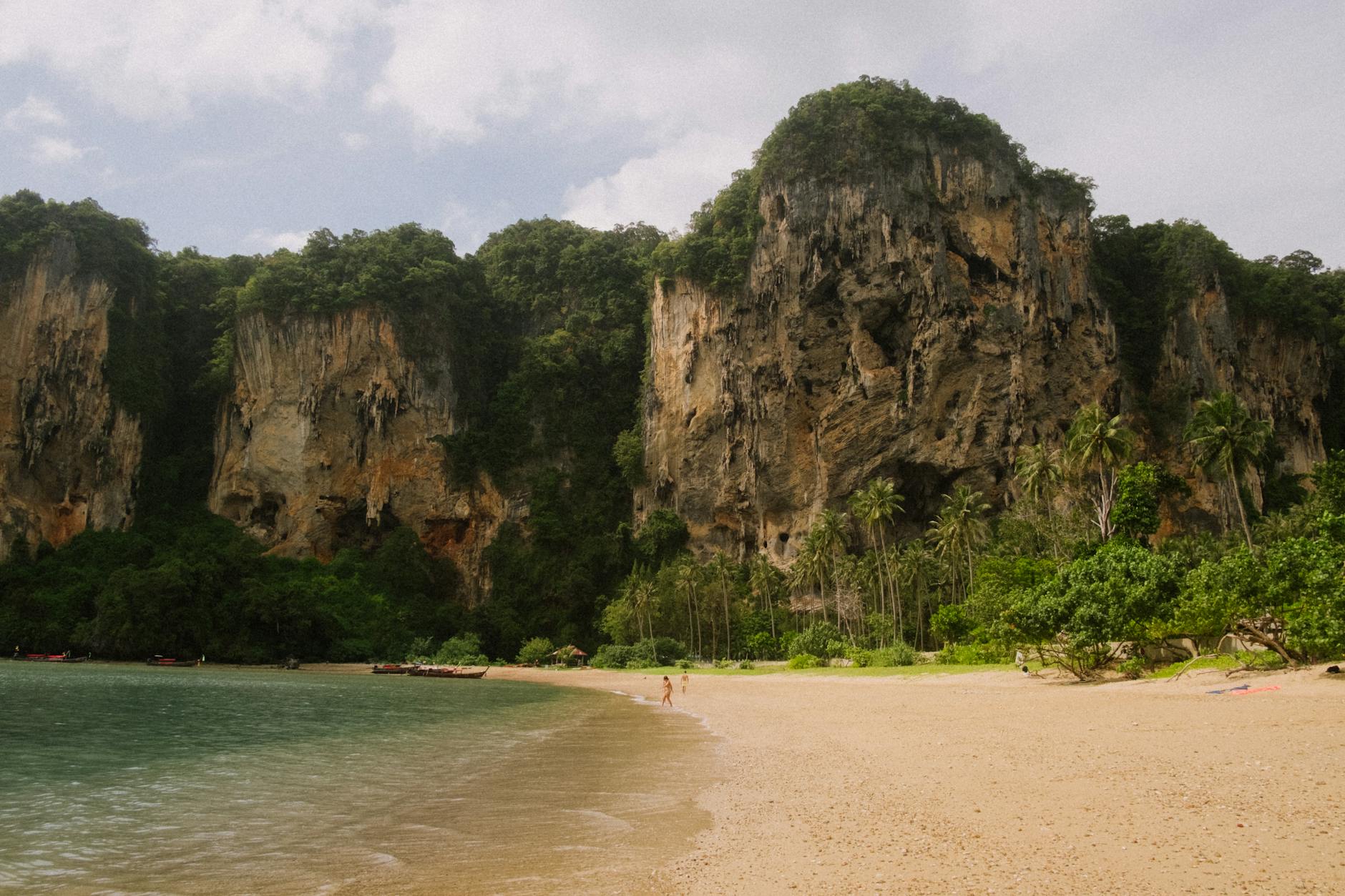
Hua Hin's main beach stretches 5km from the town pier south to Khao Takiab, a limestone headland that rises 100 metres above the water. The sand is fine and light-coloured; the water is warm year-round (26–29°C). This is the Gulf of Thailand, not the Andaman, so expect water that reads as blue-green rather than turquoise—clarity depends on tide and rainfall, but generally runs 8–12 metres of visibility.
The northern section (near the pier and Decathlon) has the most action: jet-ski operators, horse-riding stalls, and parasailing. These are casual, not aggressive; a polite "mai sop krap" (no thanks) ends any approach. Prices are reasonable—jet-ski hire runs 1,200 THB per hour, horse rides 300 THB for 30 minutes. Avoid dawn or late afternoon on the water itself due to local fishing boats.
The southern beach, from the Centara Grand down to Khao Takiab, is quieter. Fewer vendors, fewer swimmers, better for sunbathing or swimming without company. The sand becomes slightly coarser near the headland.
Khao Takiab (literally "chopstick mountain," though the etymology is disputed) sits 7km south of the town centre and is worth a half-day trip. A winding road leads to a parking area; from there, either climb 150 steps to a white standing Buddha at the summit or take a narrower coastal path that winds past a small fishing village. The monkey colony (macaques) is active and habituated to humans—they steal sunglasses and bag snacks, so don't carry loose items. The temple at the top offers views back toward Hua Hin and south along the coast. A seafood shack (Baan Ploy) serves fresh crab and prawns at the base; expect to pay 400–600 THB per person.
The water at Khao Takiab is slightly clearer than the main beach and less crowded. A long-tail boat operator (ask at the parking area) runs half-day fishing or sightseeing trips for 1,500–2,000 THB per boat (up to five people).
The markets and eating: where the city reveals itself
Chatchai Market sits three blocks north of Hua Hin station and runs nightly from 4 PM to 10 PM. It's the town's primary night market and the single best reason to stay overnight. Vendors sell whole grilled prawns, mantis shrimp, crab, squid, and fish by weight—point at what you want and negotiate price per kilogram (typically 150–400 THB/kg depending on the species). Two people eating well: 600–900 THB. Sit at communal plastic tables, squeeze lime over everything, and eat better than any restaurant in Hua Hin. A vendor named Noi (recognizable by the neon-pink awning) grills scallops and white fish; arrive by 6 PM before the good stock empties.
Cicada Market occupies a larger compound 2km from the town centre (near Decathlon, or ask a taxi to take you to "Cicada Market") and runs Friday, Saturday, and Sunday evenings from 5 PM to 11 PM. It's a step up—artisan Thai food (satay, khao lam, grilled fish cakes), craft beer stalls, live music, and higher prices (50–150 THB per item). Worth a visit once; it's more curated than the town's other night markets and attracts Thai tourists from Bangkok.
Naeb Kehat Pier, extending into the bay from the town centre, has four or five small seafood restaurants where fishermen unload the catch. Arrive by 5 PM, sit at basic wooden tables, and order directly from whatever's swimming in the tank. Ask the price before ordering (essential). A whole grilled sea bass costs 250–350 THB; crab soup, 150–200 THB. No English menus; pointing works. Pay cash only. The water laps beneath the tables and the light changes from blue to orange as sunset arrives—it's the most atmospheric meal in town.
For sit-down dinner with a menu, Sup Lae (a long-standing Thai restaurant near the clock tower) serves khao pad poo (crab fried rice), papaya salad, and grilled fish in a modest two-storey shophouse; expect 300–500 THB per person. Avoid resort restaurants unless you're staying at the Centara Grand.
Things to do: beyond the beach
Khao Sam Roi Yot National Park (90km south, 1.5 hours by car) is worth a day trip or overnight. "Sam Roi Yot" means "three hundred peaks"—a landscape of limestone hills, mangrove channels, and sea caves. The Sam Phraya cave, the largest, contains a royal pavilion built for Rama IX's visits; tour boats paddle through the cave entrance and into a cathedral-like chamber with shafts of light from the ceiling (boat tour: 400–600 THB per person). The park also has trails through dense mangroves where birders spot kingfishers, herons, and eagles. Entry to the park is 200 THB; hire a driver or rent a car and drive.
Santorini Park is a deliberately absurd "Greece-themed" amusement park 4km north of town—white cubic architecture, blue-domed buildings, a miniature windmill—popular with Thai families and Instagram tourists. If you've been to Santorini, skip it. If you haven't, it's harmlessly diverting for two hours. Entry is 590 THB; food and photo prints are marked up substantially. Worth it only if you're travelling with children or want obvious photo content.
Black Mountain Water Park sits 13km north on the road toward Bangkok. A full waterpark with slides, pools, and lazy river, entry 750–850 THB. Spend a half-day if you're with children or need a break from the beach.
Golf: Hua Hin has six courses within 30km. Black Mountain Golf Club (18km north, near Black Mountain Water Park) is the most famous—the 18th hole frames a dramatic mountain backdrop that photographs well. Green fees run 2,800–3,500 THB per round. Courses are in good condition and less crowded than Bangkok clubs. Booking via Golfasian or direct; usually same-day tee times are available.
Pier and train station: the original train station (built 1910) is the town's architectural anchor, now freshly restored and housing a small railway museum and café. A morning coffee on the platform is more interesting than it sounds. The wooden pier at the town centre has daily life—fishermen, vendors, old men playing cards—and costs nothing to walk.
Best time to visit: the seasonality advantage

Hua Hin sits on the Gulf of Thailand's east coast and benefits from opposite seasonality to the Andaman coast (Phuket, Krabi). November through May is dry season—the water is clear, beaches are sunny, and rainfall is minimal. December and January are the coolest months (26–28°C daytime), comfortable for walking around town. February through May warms up (32–34°C); March and April are noticeably hot.
July through October brings occasional rain, but not the persistent monsoon that hammers the Andaman. A typical July afternoon has a thunderstorm at 3 PM and clears by evening. Rain rarely ruins a full day at the beach.
The practical advantage: you can combine Hua Hin with Bangkok in the same trip without flying south. Take the train down for three days, return to Bangkok for two days of museums and eating, and fly home. No internal flights, no luggage transfers, minimal friction.
Peak crowds run November through February—Thai school holidays and cool-weather appeal. June and September are cheapest for accommodation (monsoon deterrent) but weather is less reliable. August through early November are genuinely quiet months with acceptable weather.
Where to stay: a short list
Centara Grand Beach Resort Hua Hin (~5,000–7,000 THB/night) is the landmark property, built in 1923 with colonial architecture, a pool, a private beach section, and a history of hosting royals. It's visibly old compared to modern chains, but the location and heritage justify the premium once. Stay one night; it's an experience rather than an economic choice.
Dusit D2 Hua Hin (~2,500–3,500 THB/night) is modern, five minutes' walk to the main beach, has a pool and reasonable breakfast. Standard mid-range competence without character.
Huahin Seaside Resort (~2,000–2,800 THB/night) is slightly less polished than the Dusit but cheaper and still acceptable.
Guesthouses near the train station (Baan Tara, Hua Hin Guesthouse, Ban Suan Rim Haad) run 800–1,500 THB/night. Basic but functional, 10-minute walk to the beach and night market.
Book accommodation directly via the hotels' websites or Booking.com; prices rarely differ. Peak season (December–January) books four to six weeks ahead; shoulder season (November, February–April) books two weeks ahead.
FAQ
Can you visit Hua Hin for just one night from Bangkok?
Yes, but it's tight. Take the 3:45 PM train from Hua Lampong (arrives 6:45 PM), eat at Chatchai Market, sleep, spend the morning at the beach or Khao Takiab, and catch the 2 PM return train (arrives Bangkok 4:45 PM). You'll see the town but feel rushed. Two nights is the practical minimum.
Is Hua Hin safe to swim in? Are there currents or riptides?
The beach is safe for swimming. Water visibility and clarity vary; after heavy rain, visibility drops. No significant riptides in the main beach area. Avoid the water near the pier where fishing boats operate (dawn and dusk). Lifeguard presence is minimal compared to Western beaches.
How much should I budget per day in Hua Hin?
Budget €45–65 per day for mid-range travel (3,000 THB guesthouse, 200 THB breakfast, 400–500 THB lunch, 600 THB dinner, 300 THB activities or transport). Budget €30–40 for pure backpacker mode (800 THB guesthouse, street food). Budget €80+ for resort comfort.
Is Hua Hin better than Pattaya?
For most people, yes—the beach is cleaner, the food is better, and the atmosphere is less commercial. Pattaya suits travellers who want maximum nightlife in one night and don't care about beach quality. Families and couples heading south should choose Hua Hin.
What's the difference between Hua Hin and the islands (Koh Samui, Koh Phangan)?
Hua Hin is beach plus town—you get markets, restaurants, a pier, and local life alongside the beach. Islands are more isolated and beach-focused. Hua Hin is reachable by train from Bangkok; islands require a flight or eight-hour bus journey. Hua Hin is cheaper and busier; islands are quieter and more expensive.
Can you visit Khao Sam Roi Yot without a car or guide?
Yes. Minibuses run hourly from Hua Hin town centre to the park entrance (90 minutes, 100–150 THB). Once at the park, hire a boat guide at the pier for mangrove and cave tours. It's self-contained and foreigner-friendly, though basic English only.
Who should go. Hua Hin suits couples, families, and solo travellers with 3–5 days in Thailand who want a genuine beach without the noise of Phuket or the overnight-trip feel of Pattaya. Go in November through February for clear weather and minimal rain. Go in June or September if you want solitude and cheaper rates. Book the train in advance only during Thai school holidays (mid-October, mid-March, early June); otherwise, same-day tickets are standard. The one honest advantage: you can sit in a Bangkok café, catch a train four hours later, and be eating fresh crab on a quiet beach by sunset—no flights, no luggage drama, no wasted travel day. It's the closest Thailand gets to a weekend escape that actually works.


