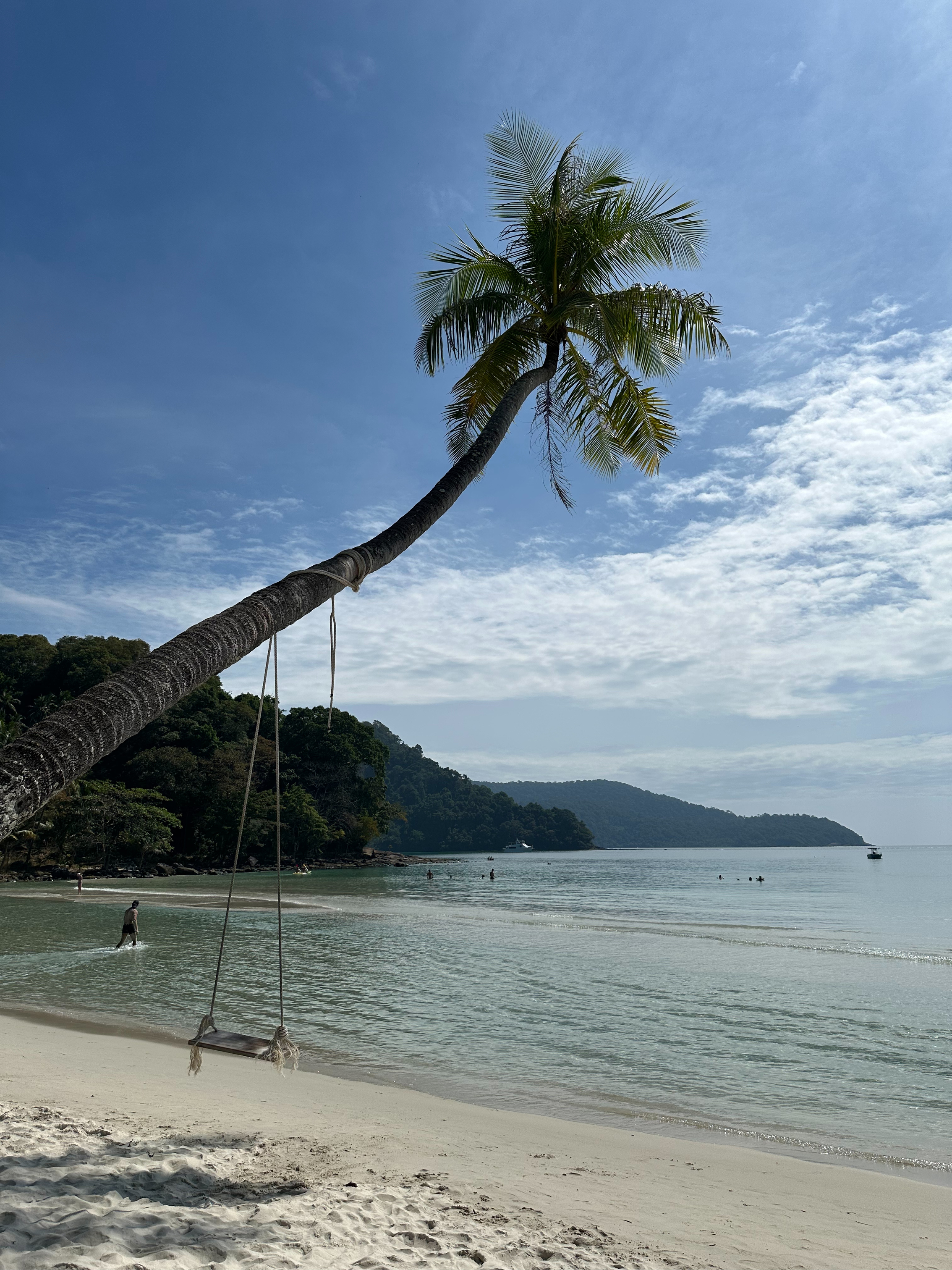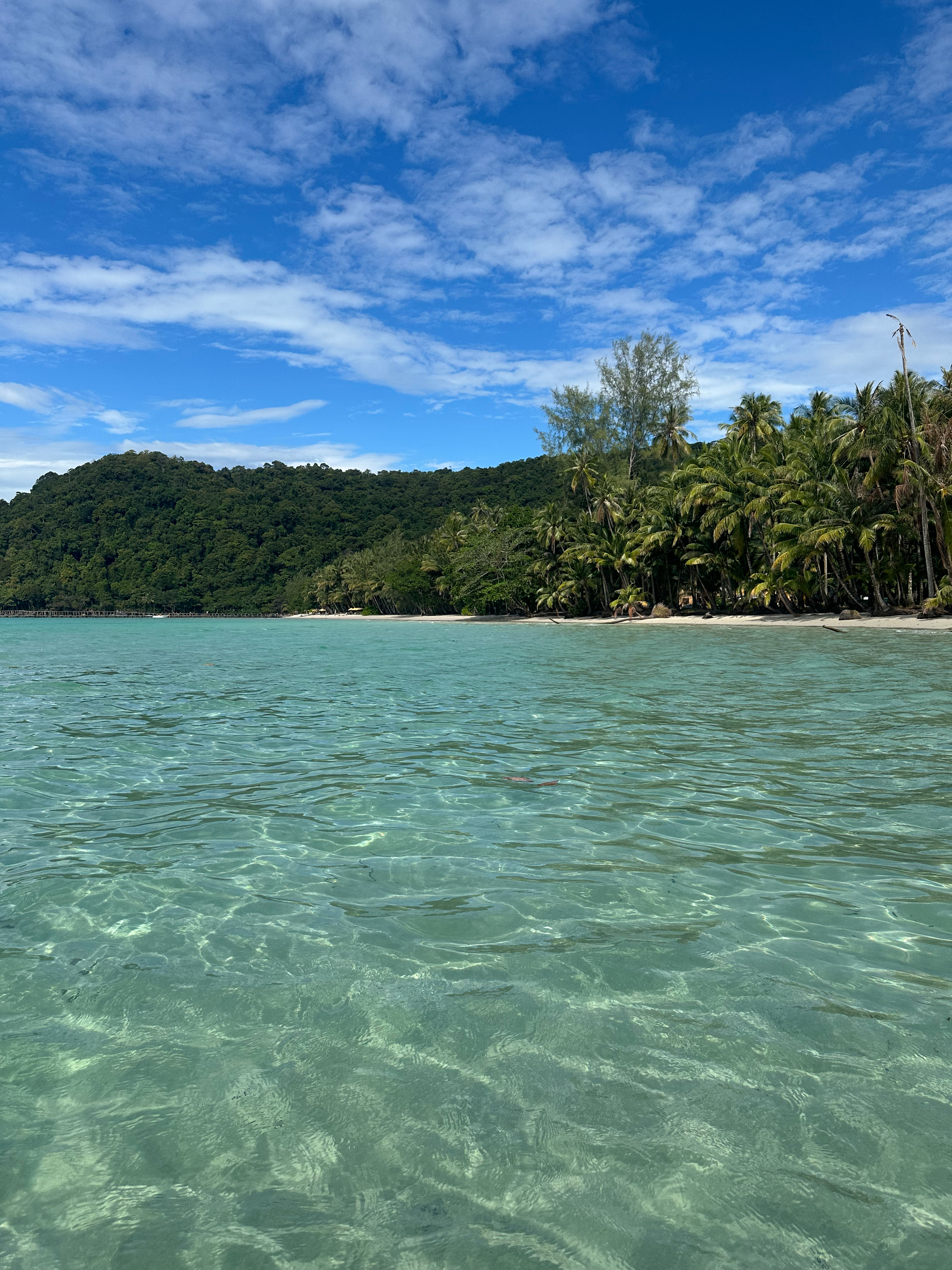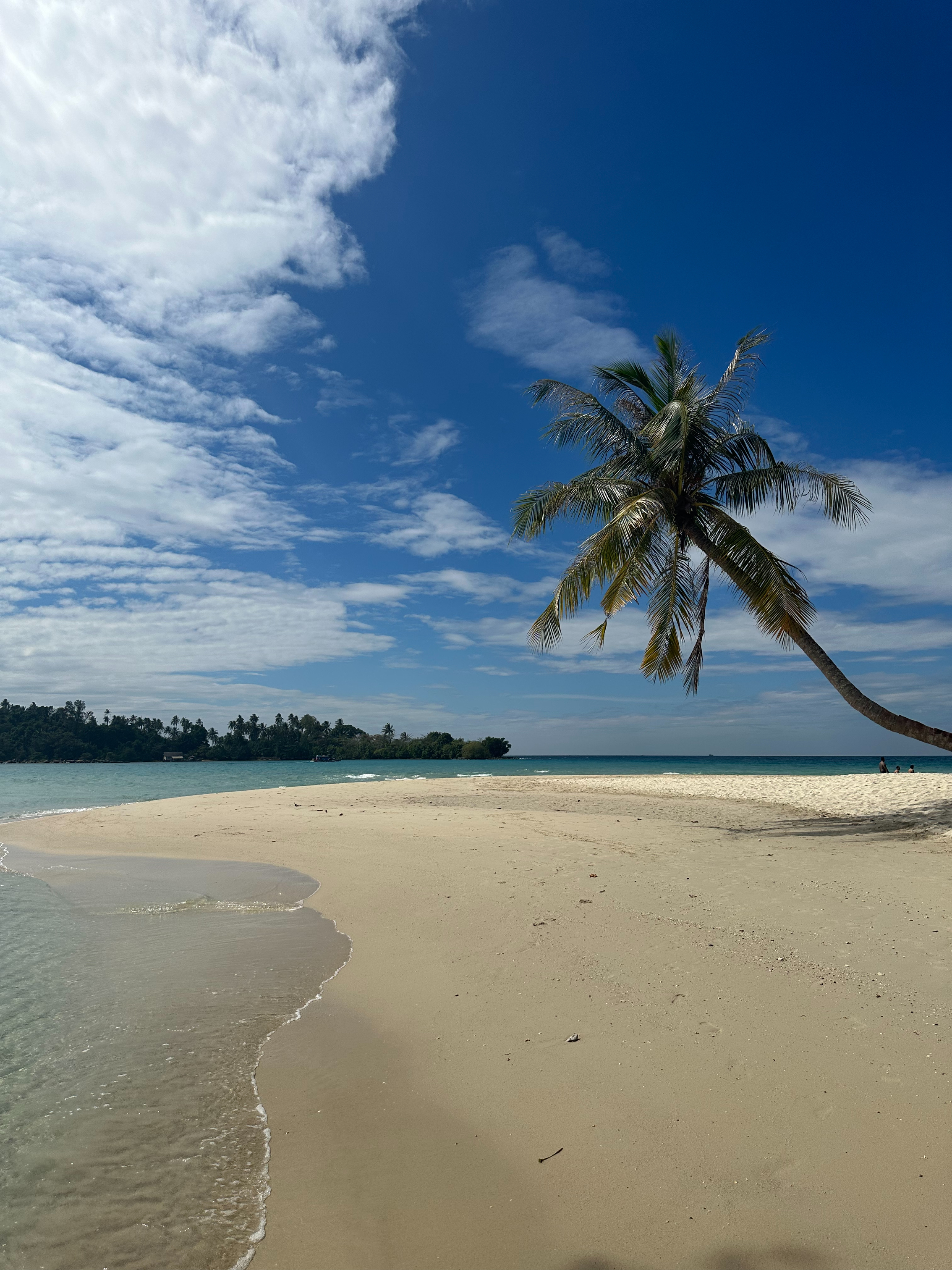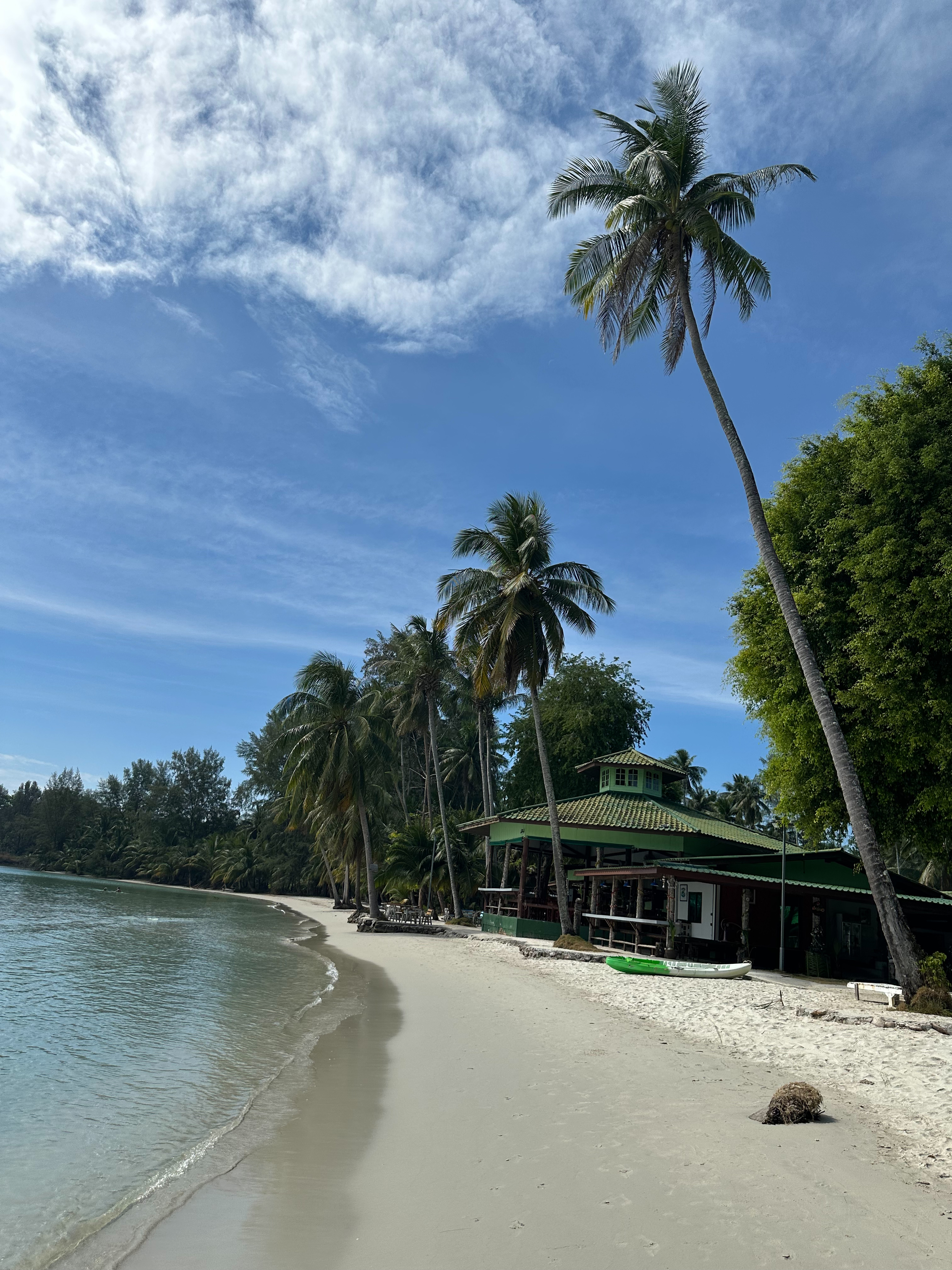

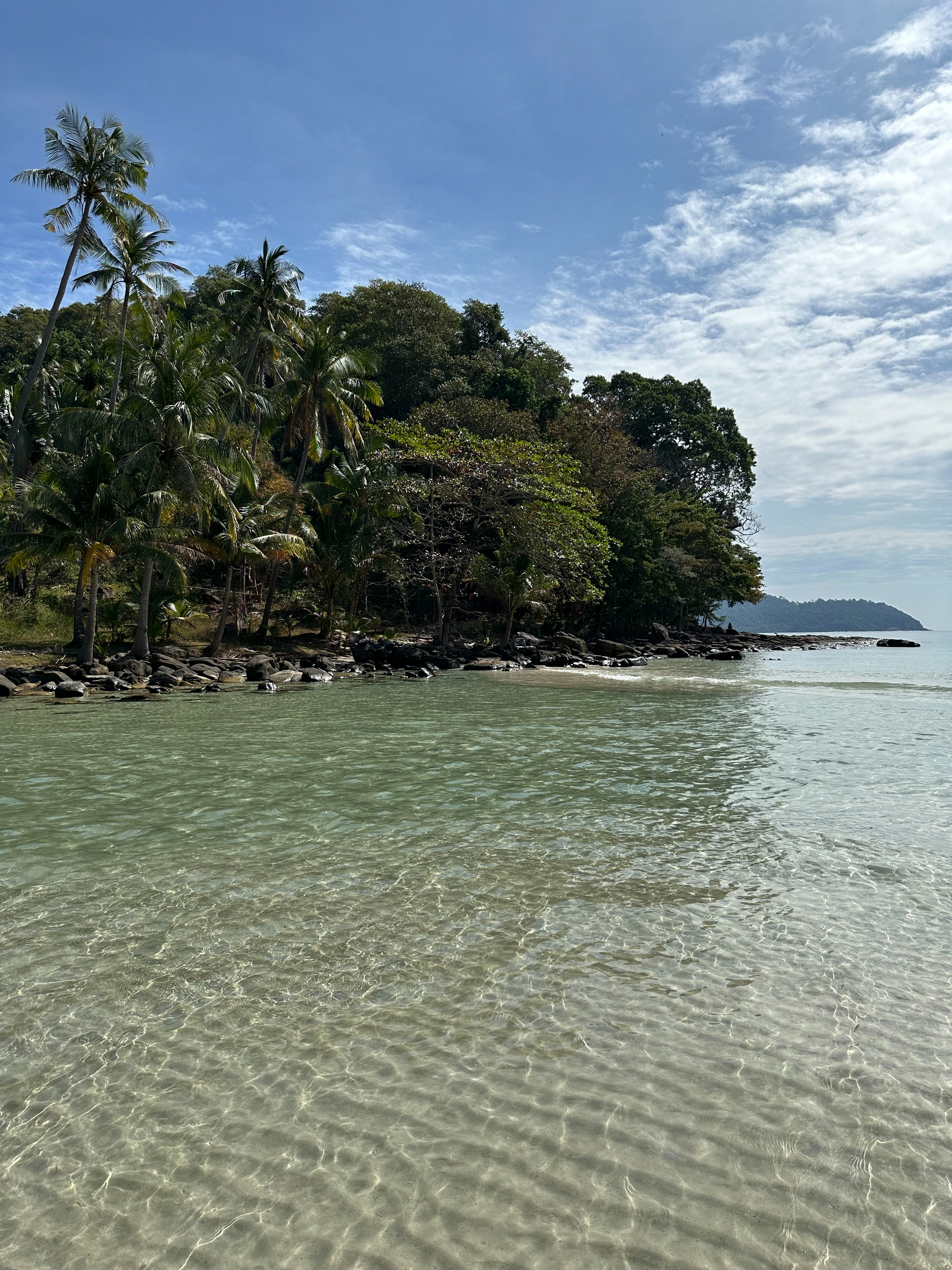
Koh Kood is Thailand's fourth-largest island and its least developed major one—105 sq km with around 3,000 permanent residents, no McDonalds, no 7-Eleven, one ATM with a 20,000 THB daily limit, and 24-hour electricity only recently reliably available across the island. The photographs are accurate: deep green water, white sand, and beaches with perhaps ten people on them. This is rare—the marketing matches reality. What you need to understand before going: Koh Kood requires planning, costs more than Koh Chang or Koh Mak, and rewards patience over speed.
How to reach Koh Kood from the mainland
Ferry access runs through Laem Ngop pier in Trat province, 220km from Bangkok. The speedboat journey takes 1.5–2 hours and costs 700–900 THB per person; departures run 2–3 times daily during peak season (November–February), dropping to 2–3 weekly during low season (June–October). Weather dictates reliability—delays or cancellations are common in the monsoon months. Missing a departure means staying another night on the mainland.
Bangkok Airways flies directly from Suvarnabhumi Airport to Trat Airport (70 minutes, 3,000–6,000 THB one-way). A taxi from Trat Airport to Laem Ngop takes 30–40 minutes and costs 400–600 THB. This route works if you value speed over cost and are arriving in Bangkok already.
From Koh Chang's Bang Bao pier, speedboats run to Koh Kood in 1–1.5 hours (500–700 THB). From Koh Mak, the crossing is 30–40 minutes (400–600 THB). Both serve island-hopping itineraries, though schedules contract sharply outside peak season.
Book transport the day before travel—online booking platforms work, but calling the pier directly is more reliable. Expect your resort to arrange transfers if you confirm arrival details.
The beaches: which one, and why
Ao Ngam Kho (northeast coast) is the island's postcard beach—a narrow band of white sand with overhanging trees, water ranging from clear to emerald depending on light and tide. Almost no resort development directly on the sand; the best approach is walking in from a nearby bungalow or arriving early from a distance. This is where the marketing photographs originate. The catch: no lifeguard, no facilities within 200m, and shallow water extending far out at low tide—unsuitable for young children without close supervision.
Ao Bang Bao (south) stretches longer and attracts more resort density, but remains quiet by Thai standards. Snorkelling at the southern rocky points yields encounters with parrotfish and wrasse. The beach shelves steeply; good for swimmers and poor for waders.
Ao Phrao (northwest) mixes sand and rock in shallow, calm water. Kayakers favor this bay for launches toward the mangrove channels. The foreshore is muddy at low tide.
Ao Salat (north) is a working fishing village, not a swimming beach. The draw is functional—fishing nets drying, fresh seafood stalls, and a genuine view of how the island operates day-to-day. Worth a morning visit to eat grilled fish for breakfast.
Khlong Chao Beach (west coast) sits near the estuary. Water quality fluctuates: clear and warm in dry months, silty and cool after rain. The river outflow can discolor the water 50–100m offshore. Several bungalows line the beach; this is where most visitor infrastructure clusters.
Waterfalls

Khlong Chao Waterfall, the largest and most accessible, lies a 30-minute walk inland from Khlong Chao village. Multiple tiers create swimming pools at the base; entry is free (unlike Koh Chang's national park fee system). Arrive before 9:00 AM to avoid afternoon crowds (modest, but noticeable by Koh Kood standards). The walk is straightforward, but wet shoes are essential—paths cross streams repeatedly.
Khlong Yai Kee Waterfall, smaller and less visited, reaches through a rubber plantation. The 45-minute round trip attracts few visitors; solitude is the draw, not scale. A local guide improves the experience and costs ~400 THB.
Snorkelling, diving, and water activities
Water clarity around Koh Kood exceeds that of Koh Chang or Koh Mak—visibility often reaches 10–15m in the dry season (November–April), versus 5–8m around its larger neighbours. Boat exhaust fumes are rare; commercial traffic is light. Day trips to Koh Raet and Koh Maiyut, islands 8–12km offshore, yield coral formations and small schools of trevally.
Diving operators run from resorts; expect 2,500–3,500 THB per two-tank dive or 5,000–7,000 THB for an introductory course. Most boats carry 6–8 divers per trip, unlike the cattle boats around Koh Chang. Night dives are rare due to demand; ask your resort weeks ahead if interested.
Kayaking is strong here. Resorts rent single kayaks (200–400 THB/day) and guide tours (1,200–1,800 THB for 3 hours). Paddle upstream from Khlong Chao Beach into mangrove-lined estuaries to access tidal pools and bird habitat. Plan for incoming tide to return easily; outgoing tide means paddling upriver hard.
Fishing trips (4–6 hours) can be arranged through resorts for 800–1,200 THB per person. You will catch small reef fish and perhaps grouper. This is a social activity, not a sporting one—expect lots of waiting and Thai-language banter among other anglers.
The real activity on Koh Kood is the hammock. Bring a book. The island's rhythm penalizes hurry.
Where to stay
No budget hostels or dormitories exist on Koh Kood. The cheapest functional private room costs ~1,200 THB/night and is basic. Budget resorts begin around 1,500 THB.
Cham's House (Ao Ngam Kho area) is small and family-run, closest to the postcard beach. Simple bungalows with fans and shared bathrooms are 1,500–2,500 THB. Book well ahead; occupancy limits are tight. The owner arranges fishing trips and kayak access.
Tinkerbell Resort (Ao Bang Bao) offers a mix of bungalows and villas, 2,000–5,000 THB/night. The restaurant is reliable, and staff speak English. Mid-range comfort without premium pricing.
Koh Kood Beach Resort (mid-island) is larger and dependable, 2,500–4,000 THB. Amenities include a pool and a dive shop on-site. Suitable for those seeking modest infrastructure.
Peter Pan and The Beach Natural Resort are the island's premium properties, 5,000–12,000 THB/night. Both deliver significantly better service, food, and facilities than mid-range options. Peter Pan specializes in diving packages; The Beach Natural Resort emphasizes spa and wellness. Worth the premium if comfort is a priority.
High-end resorts tend to include speedboat transfers from Laem Ngop (normally 800–1,200 THB charged separately). Confirm this before booking.
Electricity and water are now reliable across the island, though remoter bungalows may still experience brief outages during rainy season. Confirm 24-hour power availability when booking.
Cash, mobile signal, and medical
Bring sufficient cash from Trat or Bangkok. The single ATM on the island operates near Ao Salat, carries a 20,000 THB daily withdrawal limit, and is sometimes offline due to power or connectivity issues. ATM-dependent travel here is unwise.
AIS and DTAC provide mobile coverage across most populated areas. Remote beaches and inland paths may have weak or no signal. Download offline maps of the island before arrival—Google Maps works, but won't load in weak reception areas.
The island has no hospital. Minor injuries are treated at a health centre near Ao Salat. Serious medical events require evacuation to Trat Provincial Hospital (45 minutes by speedboat). Travel insurance is not optional here; ensure your policy covers evacuation. Confirm coverage before travel.
Daily costs and how long to stay
| Budget | Cost/day | Accommodation | Food/activities |
|---|---|---|---|
| Budget | 2,000–3,500 THB | Cheapest guesthouse | Local food, minimal activities |
| Mid-range | 4,000–7,000 THB | Proper bungalow, mid-level resort | Resort meals, kayak or snorkel trip |
| Premium | 8,000–15,000 THB | High-end resort bungalow | Restaurant dining, diving, guides |
Koh Kood is the most expensive of the three main eastern Gulf islands. This is worth understanding before arrival—accept it or choose Koh Chang instead.
Spend 3–5 nights minimum. Fewer than three nights makes the travel-to-stay ratio poor; the island reveals itself slowly. Best beaches require walking or kayaking. Waterfalls take a morning. The slower pace means four nights doesn't feel long. Six nights is possible but unnecessary unless you're diving intensively or using the island as a base for day trips to nearby islands.
Frequently Asked Questions
Is Koh Kood worth the higher cost compared to Koh Chang?
If you prioritize water clarity, seclusion, and walking distance to uncrowded beaches, yes. If you want nightlife, diverse dining, or budget guesthouse networks, Koh Chang is better value. Koh Kood costs 30–50% more for fewer facilities and slower rhythms. That's the trade.
What's the best time to visit Koh Kood?
November to February. Dry season delivers reliable sunshine, flat seas for snorkelling and diving, and ferry consistency. March–May is hot and humid but still viable. June–October brings low season pricing and fewer visitors—but ferries run 2–3 times weekly, electricity can be unreliable, and afternoon rains are frequent. Avoid monsoon travel unless flexibility is your only constraint.
Can I visit Koh Kood as a day trip from Koh Chang?
Technically, yes—a 1–1.5 hour speedboat from Bang Bao. Practically, no. By the time you dock and arrange a kayak or beach visit, you'll have four hours before the return ferry. Stay overnight minimum; three nights is better.
Which beach should I base myself on?
If you want the postcard experience, stay near Ao Ngam Kho (via Cham's House or a nearby bungalow). If you prefer walkable amenities and easier access to snorkelling, choose Khlong Chao Beach or Ao Bang Bao. All other beaches require dedicated travel; they're day-trip destinations, not bases.
Do I need a dive certification to snorkel around Koh Kood?
No. Snorkelling is in 3–6m of water; no certification is required. Diving reaches 15–25m depth and requires PADI Open Water or equivalent. Most resorts can arrange beginner dives (confined water training in shallow bays first, then shallow reef dives).
What happens if my ferry is cancelled due to weather?
You stay another night. Storm cancellations are rare but happen June–October. Book accommodation flexible, maintain cash reserves for unplanned nights, and avoid tight domestic or international connections immediately after ferry days. Low-season travel requires margin.
Koh Kood suits travellers seeking isolation and water quality over convenience and nightlife. If you're willing to plan ahead, carry cash, accept higher prices, and spend 3–5 nights unrushed, the island delivers what the photographs promise. If you need ATM access, restaurant choice, or flexible transport, Koh Chang is the better call. Time constraints favour Koh Mak—a shorter ferry, easier logistics—but Koh Kood rewards patience with the clearest water and emptiest beaches in the eastern Gulf.