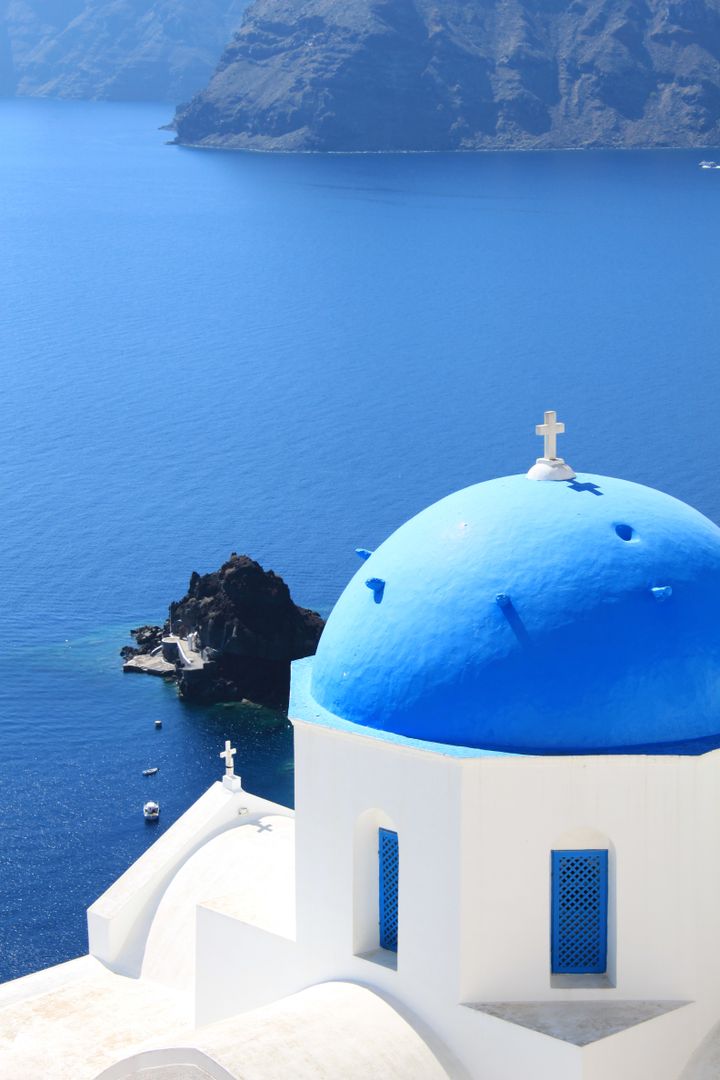
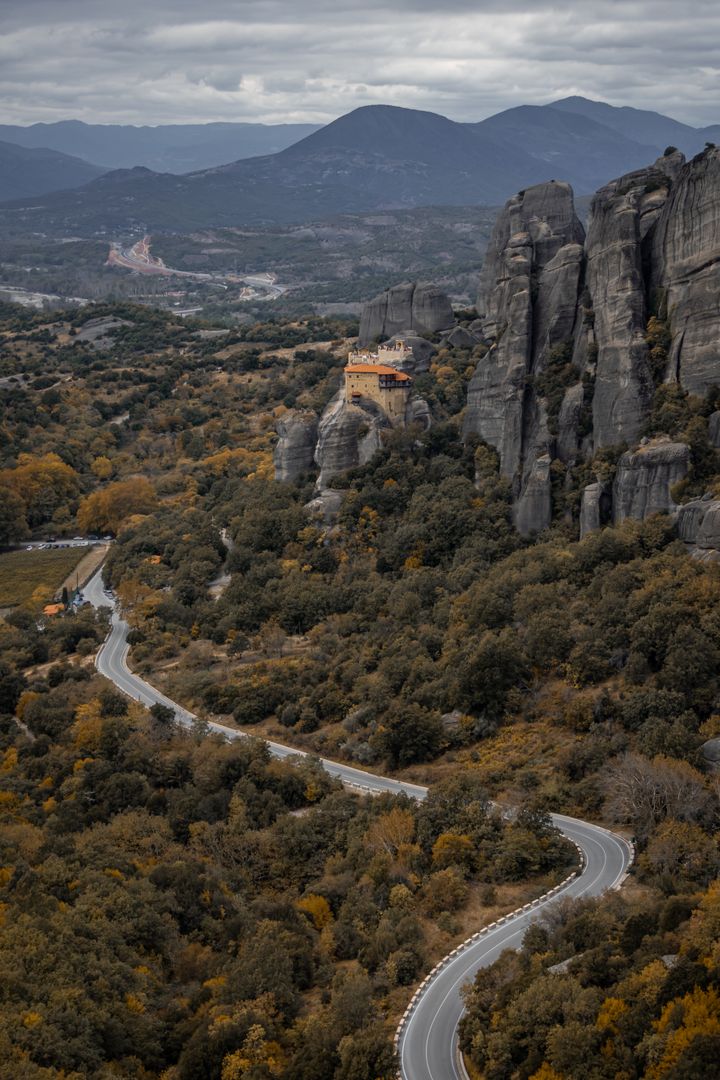
Nafplio served as the first capital of the modern Greek state from 1821 to 1834, before the seat of government moved to Athens. Three fortresses — the Venetian-built Palamidi on the hill above the town, the sea fortress Bourtzi on a small island in the bay, and the older Akronafplia on the headland — give Nafplio a defensive density unusual even by Greek standards. The town sits on the Argolid peninsula of the Peloponnese, 150km from Athens by road, 2.5 hours by bus. It has a population of about 14,000 and the best-preserved neoclassical old town in the Peloponnese, which makes it both a reasonable destination in itself and the best base for visiting Mycenae and Epidaurus.
The Three Fortresses
Palamidi is the main event. Built by the Venetians between 1711 and 1714, it sits at 216 metres above the town on a sheer cliff, connected to the lower town by 999 steps carved into the rock (the number is approximate — most people lose count after 500). The fortress contains eight bastions arranged around the hilltop, the most important being the Bastion of St Andrew, which houses the prison cell where the Greek revolutionary hero Kolokotronis was briefly held in 1833. The climb takes 20–30 minutes at a moderate pace; take water and go before 10am in summer. Entry €8; the ticket also covers Akronafplia. Allow 1.5–2 hours.
A road winds to the top for those unwilling to climb — taxi or car only, no public bus. Driving removes the best part of the visit.
Bourtzi is a 15th-century castle on a small island 600 metres offshore in Nafplio bay, built by the Venetians to control the bay's entrance alongside a chain stretched to the shore. Boat trips run from the harbour (€5 return, every 30 minutes in season) and take 5 minutes. The interior is basic — a single tower and fortified walls — but the view back to the town with Palamidi above it is the best single image of Nafplio.
Akronafplia is the oldest fortification, the headland itself, with layered fortifications from Byzantine, Frankish, and Venetian periods. Less impressive than Palamidi in scale but free to walk from the base.
The Old Town
Nafplio's old town occupies a small peninsula. The streets are narrow, paved with stone, and almost entirely pedestrian — a practical consequence of the town's layout rather than tourist management. The two main squares are Plateia Syntagmatos (Syntagma Square), which has the Venetian arsenal (now the archaeological museum) on its north side, and Plateia Kapodistrias, named for the first governor of Greece, who was assassinated on the steps of the Church of St Spyridon in 1831.
The Archaeological Museum (€3, allow 1 hour) covers the Argolid region from Neolithic through Roman, with particular strength in Mycenaean period material: Linear B tablets, gold jewellery, bronze swords. One of the better small regional museums in Greece.
Staikopoulou Street is the main commercial lane — cafes, shops, jewellers. Walk it once and then move to the quieter streets behind it for actual exploration.
Day Trips: Mycenae and Epidaurus
Nafplio is the logical base for both sites.
Mycenae (30km northwest): the Bronze Age citadel of the Mycenaean civilisation (1600–1100 BCE), including the Lion Gate (1250 BCE, the oldest monumental sculpture in Europe), the Treasury of Atreus (a corbelled tholos tomb 14 metres high), and the Grave Circles where Schliemann found the gold death masks. Entry €12, allow 2 hours. Buses from Nafplio operate twice daily; a taxi costs €25–30 return.
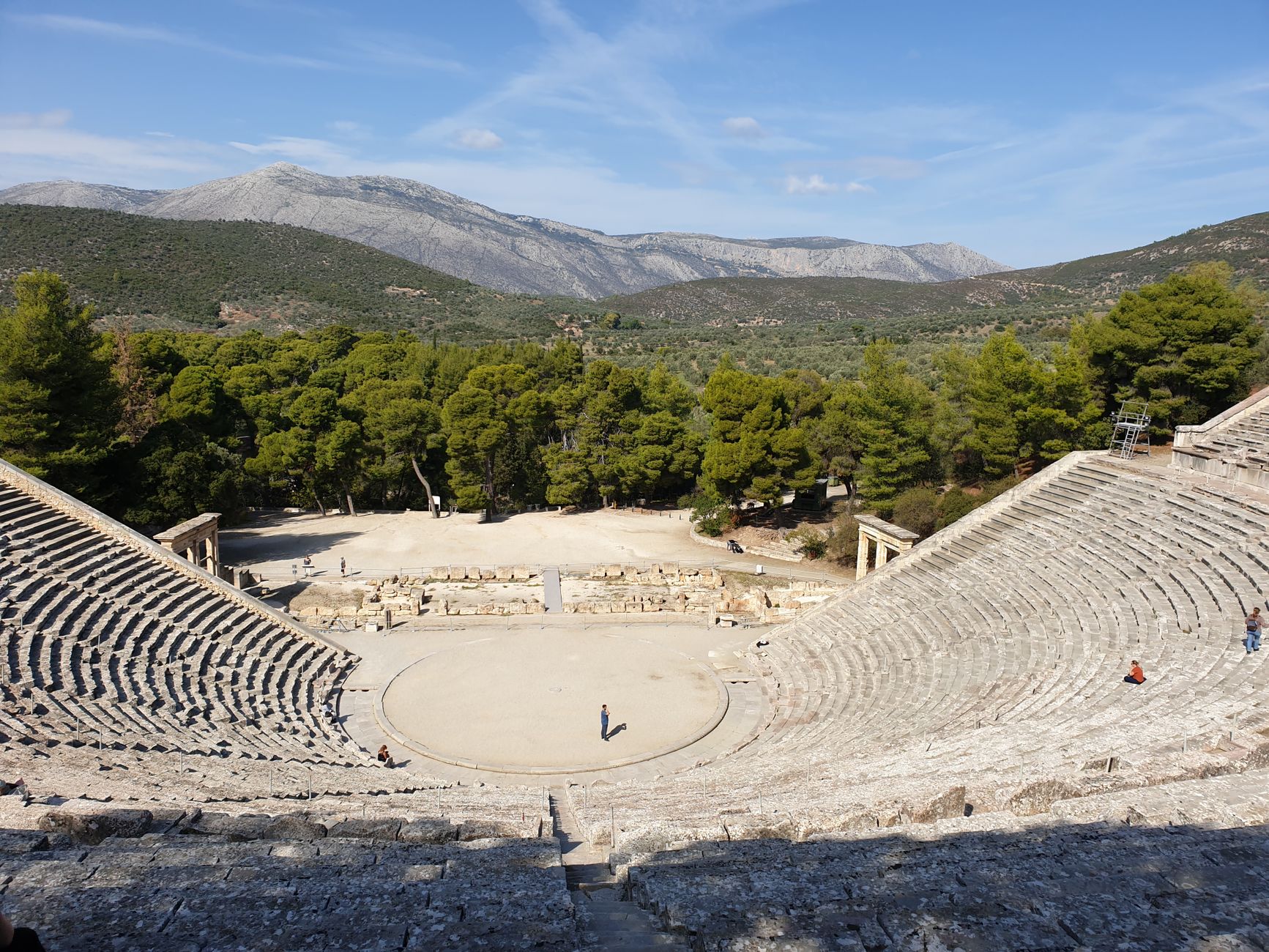
Epidaurus (30km east): the sanctuary of Asclepius and the best-preserved ancient Greek theatre anywhere — 14,000 seats, 4th-century BCE, acoustics documented by modern engineers as exceptional. Entry €12. The Epidaurus festival (July–August) stages classical drama in the theatre on summer weekends — book 3–4 months in advance for the better productions.
Combining Mycenae in the morning and Epidaurus in the afternoon in a single day is possible by car; by bus it requires two days.
Getting to Nafplio
There is no train. The connection is entirely by road.
From Athens: KTEL Argolida buses depart from the Kifissos terminal (Terminal A) in Athens, 2h30–3h, €13–16, several daily. The bus drops at Nafplio's main bus station near Plateia Kapodistrias.
By car: 150km from Athens via the Corinth canal and the E65. Allow 2–2.5 hours depending on Athens traffic. Parking is available around the perimeter of the old town.
From Corinth: 100km by road, approximately 1.5 hours.
There is no commercial airport near Nafplio. Fly to Athens (ATH) and take the bus or car.
When to Visit Nafplio
April–May: ideal. Temperatures 18–24°C, Mycenae and Epidaurus uncrowded, wildflowers on the Argolid hillsides, sea temperature reaching 18–20°C by late May. The best month for this part of Greece.
September–October: similarly good. Summer crowds have left, temperatures 22–27°C in September, the Epidaurus festival has concluded but the archaeological sites are at their calmest.
June–August: hot (28–36°C July–August), and Nafplio gets significant domestic Greek tourism in August. The town copes with it better than Santorini or Mykonos — it is not a party destination. Mycenae in August midday is brutal; go before 9am.
November–March: quiet, cooler (10–15°C), some restaurants and hotels close or reduce hours. Palamidi without another tourist on the steps is a specific experience worth seeking.
Frequently Asked Questions
How many days do you need in Nafplio?
Two days is the minimum if you want to see Palamidi, the old town, and one archaeological site. Three days allows for both Mycenae and Epidaurus without rushing. A day trip from Athens is possible but leaves you with 4–5 hours in town, which is tight.
Is Nafplio better than Athens for a Greece trip base?
For the Peloponnese sites (Mycenae, Epidaurus, Corinth, Olympia), yes — it puts you closer and in a much more atmospheric setting. For Attica, the islands, or Delphi, Athens remains the better base.
How many steps are there to Palamidi?
The standard number given is 999, but counts vary from 857 to 1,000 depending on what counts as a step and where you start. The climb takes 25–35 minutes at a moderate pace. Water and a morning start are both non-negotiable in summer.
Can you take a boat to Bourtzi from the harbour?
Yes. Small boats depart from the harbour every 30 minutes during operating hours (roughly 9am–9pm in season). Round trip is €5. The crossing takes 5 minutes.
Is Nafplio a good base for families?
Yes. The old town is flat and walkable, there is a pebbly beach at the southern end of the peninsula, the town is safe, and Mycenae and Epidaurus are both achievable half-day trips.