There are 227 inhabited Greek islands. Most travel articles recommend the same five: Santorini, Mykonos, Crete, Rhodes, and Naxos. This guide strips away that noise and matches you to the island that actually fits how you travel, what you value, and how much time you have. The goal isn't comprehensiveness — it's a decision framework that works.
The four questions that determine your island
Before scrolling through options, answer these four things honestly:
What matters most to you? Beach quality and swimming, historical sites and culture, local food and wine, nightlife and meeting other travellers, or dramatic scenery. Pick one as your primary driver — everything else flows from that.
How much time do you have? Four to five days means committing to one island (plus maybe a quick day trip). Seven to ten days opens island hopping. More than two islands in a week creates logistics drag that wastes time.
What's your real budget? Strict budget means €35–50 per day for food and lodging. Mid-range means €60–100. Willing to spend means no ceiling constraint. This shapes ferry choices, where you'll eat, accommodation type.
How do you actually travel? Some people want hotels pre-booked, day-trip itineraries planned, tours arranged. Others want to show up and figure it out as they go. Neither is wrong — but it determines which islands work for you. Islands with minimal tourism infrastructure suit independent travellers; islands with established infrastructure suit planners.
By travel style: where to go and why
First-timer to Greece: the iconic experience
Go to: Santorini (4–5 days) plus Athens (2 nights before or after).
Why: Santorini delivers the image people have of Greece — white-washed villages, that caldera view, decent beaches on the east coast (Perissa, Kamari). You can see it properly in 4 days without rushing. The nightlife exists but doesn't dominate the island, so you won't feel pressured into it.
The honest part: Santorini is crowded (400,000+ day-trippers annually as of 2026), expensive (€18–28 for a basic meze plate), and ferry-dependent from Athens (5–9 hours depending on boat speed). The sunsets are real but fought over. Come in May, June, September, or October — July and August are chaotic.
The logistics: Fly Athens to Santorini (1 hour), or take the overnight ferry from Piraeus (9 hours). Book ferries 3–4 weeks ahead in summer. Rent a car or use local buses; taxis and scooter rentals exist but the roads are narrow and steep.
Good beaches, swimming, easy logistics
Go to: Crete, specifically the west coast (Chania, Rethymno).
Why: Crete is large enough to fill seven days with different beaches, villages, gorges, and food without feeling repetitive. Chania has an actual old town with Venetian architecture, working fishing harbour, and reasonable restaurants that don't solely serve tourists. The north coast has calm water suitable for families. The south coast (Balos, Falassarna) has dramatic rock formations and clearer water.
The cost reality: Crete is cheaper than Santorini or Mykonos. Meals average €12–16, rooms €60–90 in shoulder season. The international airport in Heraklion connects to most European cities directly, meaning no ferry from Athens.
The trade-off: Crete is large (8,336 km²) — you need a car to see it properly, or accept staying in one town. The beaches are good but not uniquely dramatic compared to other islands. It's reliably open year-round, which matters if you travel November–March.
Party, meeting other travellers
Go to: Mykonos (July–August specifically) or Ios (June–September, cheaper).
Why: Mykonos in peak season has a genuine party infrastructure — multiple clubs stay open until 6 a.m., beach bars with DJs, restaurants designed for groups. The town itself has energy. Ios offers the same vibe at half the price (€35–50 rooms, €10–14 meals) but with fewer established venues and less reliable nightlife outside peak summer.
What nobody mentions: The people who come to party in July–August are mostly there for the same reason — it's not an accident you'll meet other travellers. The downside: real nightlife collapses outside June–September. By October, the clubs are shut. By November, the island feels abandoned.
Ferry logistics: Mykonos is 3–5 hours from Athens (daily ferries, book 2 weeks ahead). Ios is 4–6 hours. Both are in the Cyclades and connect to other islands (Paros, Naxos, Santorini) easily.
Culture, history, authenticity
Go to: Rhodes (Dodecanese) or Naxos (Cyclades).
Rhodes: The Medieval Old Town is genuinely intact — 700 years of Venetian, Ottoman, and Knights Hospitaller architecture in walkable streets. The Palace of the Grand Masters, city walls, and harbours give you something to do beyond beaches. The island is large (1,398 km²), so you can explore villages inland. The con: Rhodes gets package-tour volume; August is wall-to-wall people.
Naxos: The Kastro (Venetian fortress town) is smaller but authentic — lived-in, not museumified. Naxos has marble quarries, working agricultural land, and villages where you'll see Greek families eating, not tourists. The beaches are wider and better than you'd expect. Food is genuinely cheaper because the economy isn't solely tourism-driven. The ferry from Athens is 5–6 hours, but once you're there, you can stay seven days without needing to move.
Seasonality matters here: Rhodes works year-round (museums, covered activities). Naxos is best May–October.
Dramatic scenery without the crowds
Go to: Milos.
Why: Milos has volcanic geology that creates sea caves, coloured rock formations, and water so clear you see the bottom at 10 metres depth. It's visually distinctive — different from Santorini despite being in the same region. The island has maybe one-fifth the tourist density of Santorini and half the infrastructure, which means fewer day-trippers, smaller restaurants, actual local rhythm.
The specifics: Kleftiko beach (accessible only by boat), Sarakiniko (white volcanic rocks and turquoise water), and Tsigrado (cave-accessed beach) are the draws. You need a car or scooter; public transport is minimal. Book boat tours through your accommodation — they're €20–35 per person and necessary to see the main attractions.
The reality check: Milos is smaller and quieter than Santorini, which is its appeal and its limitation. There are maybe eight decent restaurants, one supermarket, and no nightlife to speak of. It's for people who want landscape, swimming, and quiet, not for people who want activities or entertainment.
Ferry: High-speed catamaran from Santorini (2 hours, twice daily in summer), or ferry from Piraeus Athens (4–5 hours).
Off-the-beaten-path, very local
Go to: Ikaria, Tilos, or Kalymnos.
Why: These islands have minimal tourism infrastructure by design, not accident. Ikaria is known for longevity — residents reportedly live into their nineties at high rates, attributed to diet and lifestyle. There are almost no hotels (mostly rooms in family homes), one or two tavernas per village, and no organized tours. You show up and adapt. The beaches are fine, the hiking is excellent, the food (if you eat where locals eat) is exceptional. Tilos and Kalymnos offer similar authenticity with slightly more amenities — a few family hotels, reliable ferries, fewer tourists but still functional.
The trade-off: You need to be independent-minded. You'll book rooms by calling ahead (not on Airbnb), navigate minimal English, and eat wherever is open, not where a review sent you. Pharmacies, banks, and shops operate on Greek time (closed 2–5 p.m., closed Sundays). There's no Uber, no app-based anything. If that sounds exhausting, skip it.
Ferry access: Ikaria is 6–9 hours from Athens. Tilos and Kalymnos are in the Dodecanese (Rhodes hub, then ferry connection — 8–12 hours total).
Families with children
Go to: Corfu or western Crete (Chania area).
Why: Corfu (in the Ionian Sea, northwest of mainland Greece) has calm, shallow water on much of its coast — safer for kids than the choppy Aegean. The island has organized beaches with shade structures and lifeguards, British-influenced food alongside Greek cuisine, and a developed tourism infrastructure with bike rentals, boat tours, and family-friendly restaurants. Chania in Crete offers similar calm northern waters, sandy beaches (Balos), and organized activities (gorge hikes with kids, boat trips) without the British expat feel.
Cost: Corfu rooms run €70–110 in shoulder season, Chania €60–90. Both have grocery stores for self-catering, which saves money with kids.
Logistics: Corfu has an airport (budget flights from northern Europe). Chania is on Crete's west coast, 1 hour from the international airport.
Season: May–June, September–October. July–August is possible but hot and crowded.
Budget priority
Go to: Lefkada or Naxos.
Lefkada is connected to the mainland by a bridge — no ferry required. This saves €10–20 per person each way. Beaches are among Greece's best (Porto Katsiki, Kathisma). Rooms run €50–75, meals €10–13. The downside: it's less "island-ish" (you can drive straight on from the mainland), and it's become popular with package tourists in recent years.
Naxos keeps prices low because it has an agricultural economy — marble, potatoes, and wine support locals alongside tourism. Rooms €55–80, meals €11–15. Beaches are excellent and wide. The island hopping is easy (ferries to Paros, Mykonos, Santorini). The con: a 5–6 hour ferry from Athens.
Also consider: Thassos and the northern Aegean islands (Samothraki, Limnos). These are cheap (€45–70 rooms, €9–12 meals), beautiful, and minimally touristed, but they're far from Athens (8–10 hours by ferry or 1 hour by domestic flight) and most travellers don't know them. They're worth it if you have time.
Ferry reachability from Athens (Piraeus) — 2026
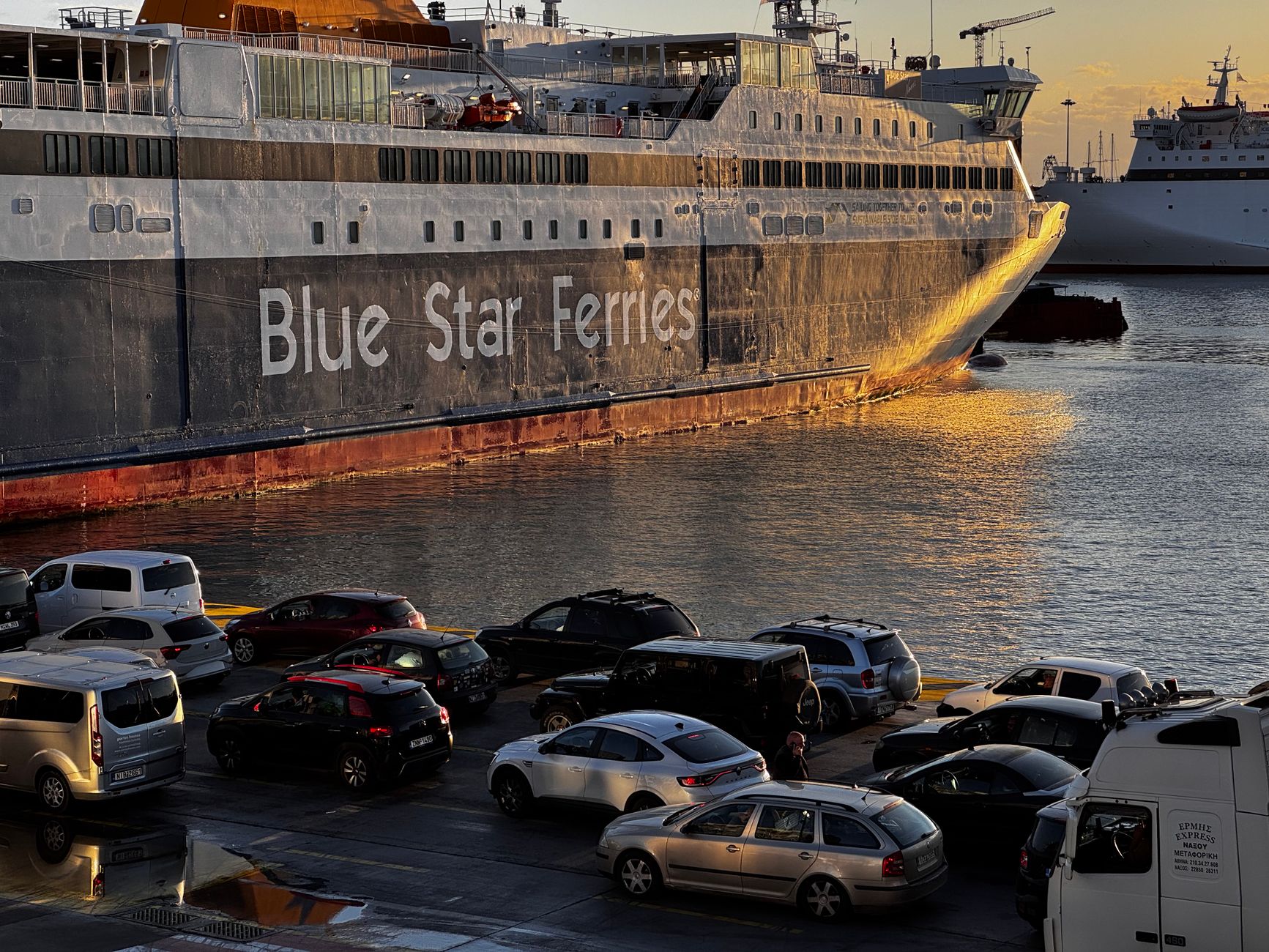
Under 3 hours
Aegina, Poros, Hydra. These are Saronic Gulf islands — day-tripable from Athens, mostly used by Athenians on weekends. Skip them if you want a multi-day island experience; use them if you're in Athens and want a beach day.
3–5 hours
Syros, Paros, Naxos, Mykonos. Daily connections, 2–4 ferries per day in summer, 1–2 in winter. Book 2–3 weeks ahead in July–August, 1 week ahead in shoulder season. High-speed catamarans (€25–45) are faster; conventional ferries (€18–30) are cheaper but slower.
5–9 hours
Santorini, Crete, Corfu. Regular ferries connect these, but the journey is long. Most travellers fly instead (1–2 hours, €25–60 if booked ahead). Consider an overnight ferry from Piraeus to Crete or Santorini if you want to save a hotel night — you travel at night, arrive in the morning, skip the ferry cost, skip the hotel. Overnight ferries cost €35–80 and include a cabin or reclining seat.
Remote or flight-preferred
Dodecanese (Rhodes, Kos, Kalymnos): 8–12 hours by ferry from Athens via Paros or Naxos, or a 1-hour flight. Fly.
Northern Aegean (Ikaria, Lesbos, Chios): 6–10 hours by ferry; daily flights available. Fly.
Island hopping: realistic chains
7–10 days in the Cyclades
Paros → Naxos → Santorini. Daily ferry connections between all three, 1–2 hours each leg. This works geographically and logistically. Stay 2 nights in Paros (working port town, decent nightlife, good value), 3 nights in Naxos (beaches, culture, food), 3 nights in Santorini (sunset, caldera, nightlife). Return to Athens by ferry (5–6 hours) or fly.
7–10 days: Crete deep dive
Skip island hopping. Rent a car, spend the entire week on Crete. Chania (west) → Rethymno (central coast) → Heraklion area (central and east). Each region has different beaches, gorges, villages, and food. One island, one week, no ferry logistics. This is underrated.
If combining island groups
Santorini + Milos (2-hour catamaran, worth it for contrasting landscapes). Corfu is in a different sea (Ionian) and doesn't logically combine with Aegean islands — choose one or the other, not both, on a single trip.
The island-hopping trap
Four islands in six days creates ferry time, check-in/check-out stress, and shallow experience. You'll remember ferry schedules better than the places. For a first Greece trip, pick one island and stay put.
Seasonal reality: when to go
| Month | Weather | Crowds | Verdict |
|---|---|---|---|
| January | Cold, rainy | Almost empty | Avoid (infrastructure closed on small islands) |
| February | Cold, rainy | Almost empty | Avoid (infrastructure closed on small islands) |
| March | Cool, unpredictable | Minimal | Shoulder (limited services; good for self-sufficient travellers) |
| April | 18–22°C, sunny | Low | Shoulder (spring, fewer crowds, not all ferries running) |
| May | 22–26°C, sunny | Moderate | Best (warm, swimmable, not yet peak) |
| June | 26–29°C, sunny | Moderate-High | Best (peak but not yet July chaos) |
| July | 29–32°C, sunny | Very high | Good (everything open; avoid popular islands unless you like crowds) |
| August | 29–32°C, sunny | Extreme | Good (warmest; most expensive; most crowded) |
| September | 27–29°C, sunny | High | Best (warm, manageable crowds, prices drop) |
| October | 22–26°C, sunny | Moderate | Best (still swimmable, fewer crowds, prices drop further) |
| November | 15–20°C, rainy | Low | Avoid (autumn storms; infrastructure closes on small islands) |
| December | 13–17°C, rainy | Low | Avoid (cold; most services closed) |
Optimal window: May, June, September, October. You get warm water (19–26°C), manageable crowds, and fully operational infrastructure. July–August are viable but expensive (30–50% premium on rooms and meals) and crowded.
Winter travel: Crete and Rhodes stay partially open year-round. Most Cyclades islands (Mykonos, Santorini, Naxos) close significant services November–March. Athens is fine in winter — museums, food, culture all operate normally.
The honest summary: how to actually plan
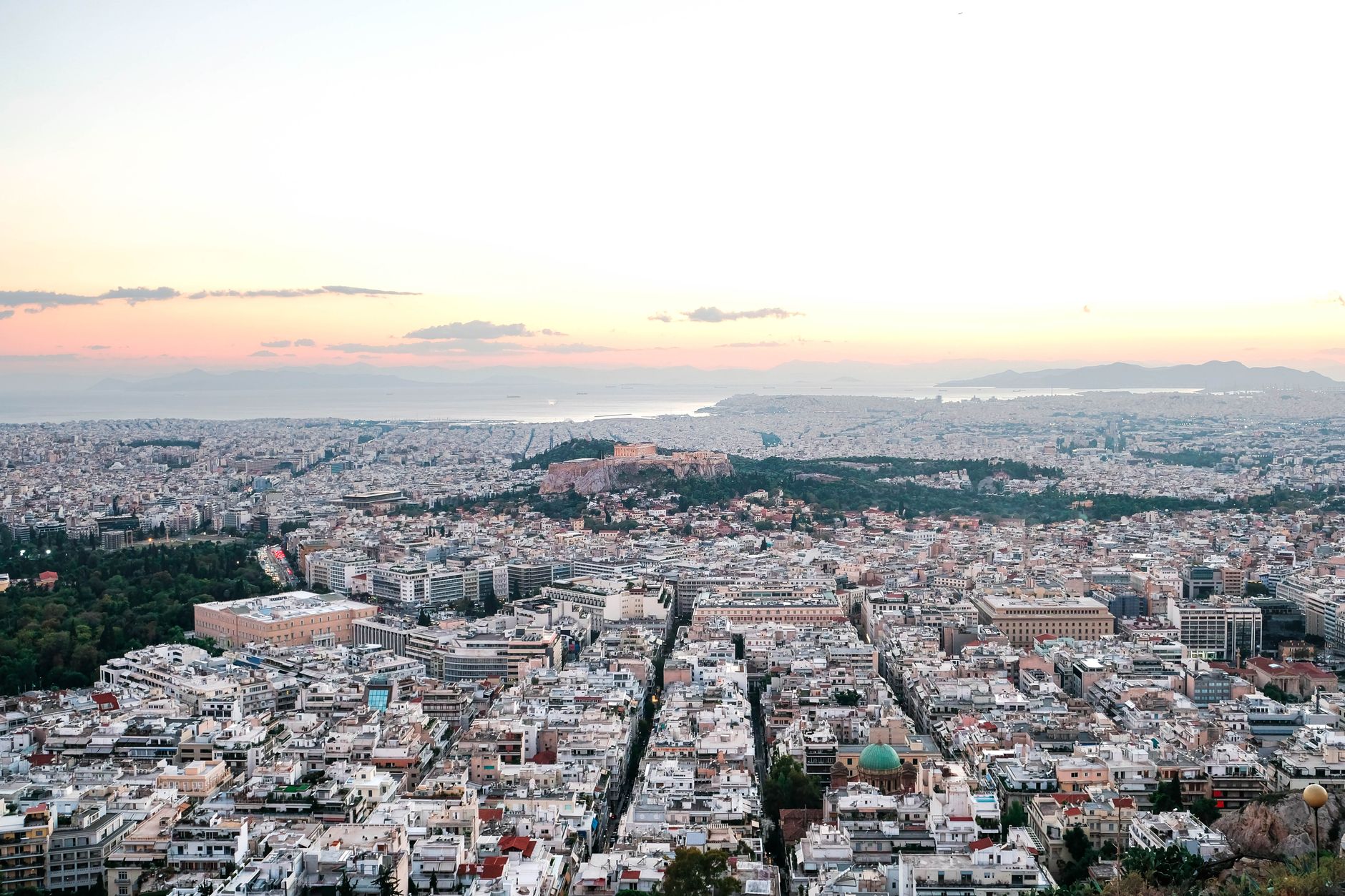
For a first Greece trip (7 days total): Athens (2 nights) to see museums, eat, understand the culture, then one island (5 nights). Santorini or Crete. Don't try three islands. Don't try to see everything. The ferry logistics and packing/unpacking tax your time more than adding island experiences.
For a second trip (7–10 days): Crete for a week (no island hopping; just move within one island), or commit to two islands that connect well (Paros + Naxos, or Santorini + Milos). Skip Athens this time.
For 10–14 days: The Cyclades island-hop (Paros → Naxos → Santorini) plus one night in Athens (5 days travelling, 5 days based in islands, 2 nights in Athens). Or skip the hopping and do Crete west-to-east over seven days, then add a second island (Rhodes or Corfu) for a week.
Budget reality, 2026:
- Budget traveller (Naxos, Lefkada, local food): €50–70 per day
- Mid-range traveller (Crete, decent hotel, mixed restaurants): €80–120 per day
- Willing to spend (Santorini, Mykonos, good restaurants): €150–250+ per day
Ferry costs are €15–45 per journey. Flights (Athens to island) are €25–70 if booked 2–3 weeks ahead.
Frequently Asked Questions
Which Greek island should I visit if I only have 5 days?
Pick one island and stay put. Santorini (iconic caldera), Crete west coast (beaches, culture, variety), or Naxos (beaches, food, less crowded). Avoid ferry-hopping; the logistics eat your time. If you're in Athens, add 2 nights there and 3 nights on one island.
Is Santorini or Mykonos better for a couple?
Santorini if you want romance, dramatic views, and sunset focus. Mykonos if you want nightlife, meeting other travellers, and energy. Santorini is 30% more expensive. Both are crowded July–August; come May, June, September, or October instead. Neither is authentically Greek — both are tourism-optimized, which is fine if that's what you want.
What's the cheapest Greek island to visit?
Lefkada (bridge access, no ferry cost: saves €15–30 per person). Naxos (agricultural economy keeps food prices low: €11–15 meals versus €18–25 on Santorini). Thassos and the northern Aegean islands are cheaper still but require longer ferry times from Athens. Budget €50–70 per day on Lefkada or Naxos, €80–100 on Crete, €120–180 on Santorini or Mykonos.
Can you island-hop in Greece without booking ferries in advance?
Yes in shoulder season (May, June, September, October) — walk-up tickets are usually available with 1–2 days' notice. July–August requires booking 2–4 weeks ahead; slots fill fast, especially for high-speed catamarans. Winter (November–April) has reduced service; book ahead or expect delays. Ferry schedules are published on openseas.gr and ferryhopper.com (both free, updated regularly).
What's the easiest Greek island for first-timers without a rental car?
Naxos or Mykonos. Both have developed bus systems, taxi stands, and enough walkability that you can function without a car. Santorini also works — taxis are expensive (€15–20 between towns) but available. Avoid Milos and Ikaria without a car; infrastructure is minimal. Crete requires a car unless you're staying in one town (Chania works car-free).
Is it better to visit in July–August or should I avoid peak season?
Avoid July–August unless nightlife is your priority. You'll pay 30–50% more for rooms and food, face crowded beaches and villages, and wait in lines. Come May, June, September, or October — warm water, open infrastructure, manageable crowds, and 20–30% lower prices. July–August is viable for parties (Mykonos, Ios) and families with school holidays, but not necessary for beaches or scenery.
Pick one thing you want most — beach, history, nightlife, quiet, or food — then match it to the island above that list it under. Ignore the articles that try to convince you to visit five islands in a week. Book one island that fits what you actually value, spend four to five days there, and do that thing well. You'll remember a single week on the right island longer than rushing through three islands trying to tick boxes.