
Koh Chang is Thailand's second-largest island at 429 sq km with a paved ring road, 7-Elevens, pharmacies, a hospital, and bars that stay open past midnight. Koh Mak is 16 sq km with one unreliable ATM, no nightlife, and restaurants that close at 9pm. This isn't a quality difference — it's a purpose gap. You pick based on whether you want infrastructure and options or silence and simplicity.
| Category | Koh Chang | Koh Mak |
|---|---|---|
| Best for | First-timers, families, budget travellers | Couples, repeat visitors, silence-seekers |
| Vibe | Busy, accessible, village-like | Empty beaches, resort-based, deliberate quiet |
| Key draw | Infrastructure + beaches | Isolation + turquoise water |
| Beaches | 4+ named, varying crowds | 2 main beaches, nearly empty |
| Nightlife | Bars, fire shows, reggae venues | None; guests asked to respect quiet hours |
| Daily cost (mid-range) | 1,500–3,500 THB | 3,000–5,000 THB |
| Peak crowds | Moderate; still feels local | Minimal even in December–February |
| Best months | November–February | November–February |
| Recommended stay | 3–5 nights | 2–3 nights (or as add-on) |
Size and infrastructure: what you actually need access to
Koh Chang's 429 sq km means a real island with a functioning economy. A paved road circles most of it. White Sand Beach, the main settlement, has ATMs (multiple), a pharmacy, a dive school with PADI certification, a private clinic, and a police station. Lonely Beach further south has its own ATM and restaurant strip. Need cash at 3am? Koh Chang has a 7-Eleven. Emergency appendix? Koh Chang has a hospital that handles foreign patients.
Koh Mak's 16 sq km means you can cycle the entire circumference in two to three hours. It has one ATM, located in a resort office — unreliable, often empty. No pharmacy. No dive certification possible. Medical care means a clinic run by a nurse (adequate for cuts and stomach trouble, not for serious injury). The island runs on grid electricity, not generators, which is why it stays quiet. There are no 7-Elevens, no late-night options, no backup plan.
This matters only if you need it. For a three-night stay with cash already in hand and no plans to dive, Koh Mak's limitations don't matter. For a week-long stay where you might want to top up money, book a diving course, or have a medical problem, Koh Chang's infrastructure becomes the actual draw.
Beaches: volume versus vacancy
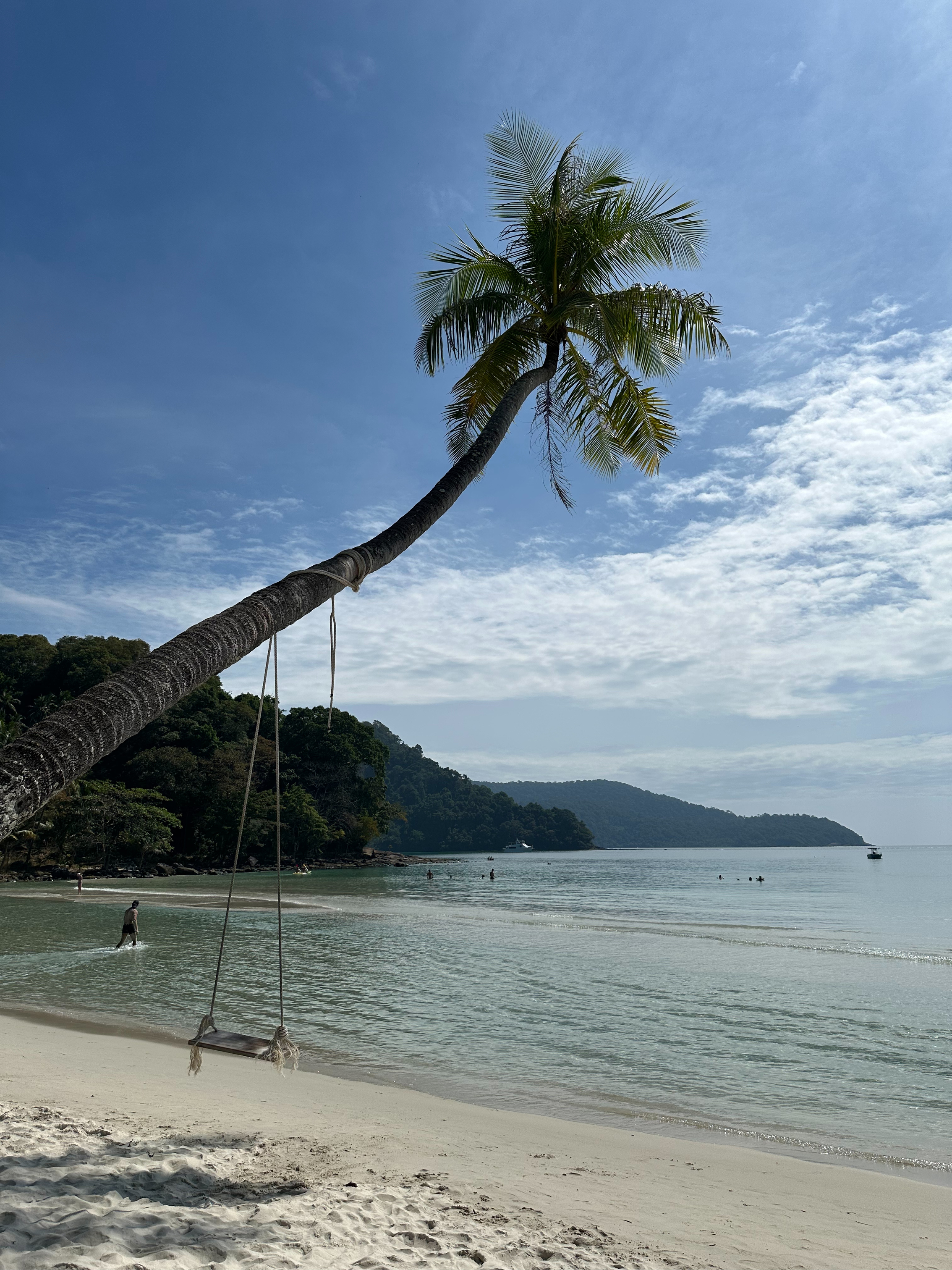
Koh Chang has four main beaches, each with a distinct character. White Sand Beach (Hat Sai Khao) is 3 km long, busy, lined with restaurants and bars, and has the most services. Good if you want company and choices; rough if you want solitude. Klong Prao Beach, on the west coast, is quieter and family-oriented — still developed but less crowded. Lonely Beach (Hat Tha Nam), the southernmost, skews younger and louder, with reggae bars and fire shows. Bailan Beach on the northeast is sandier and emptier than White Sand but still accessible.
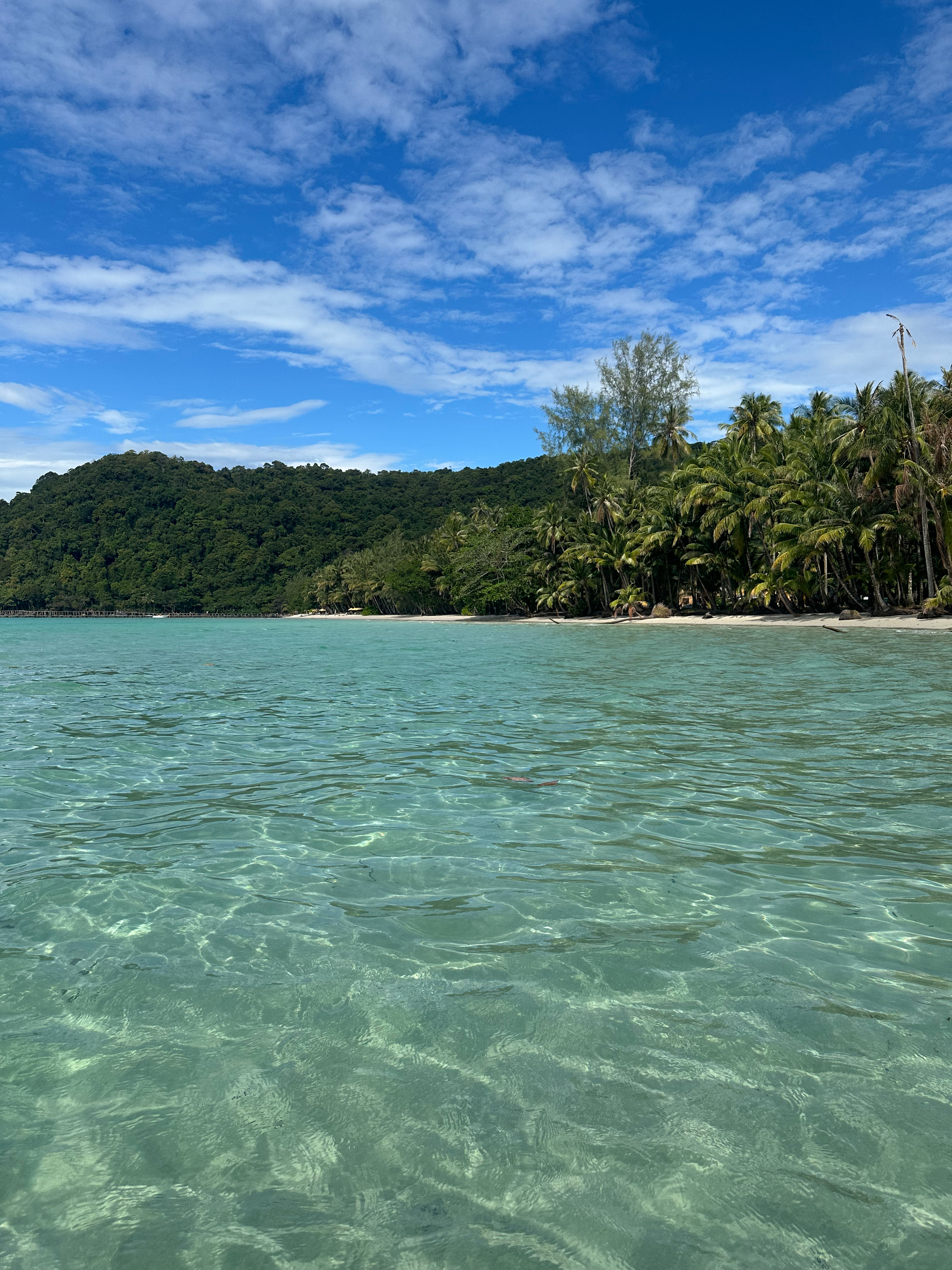
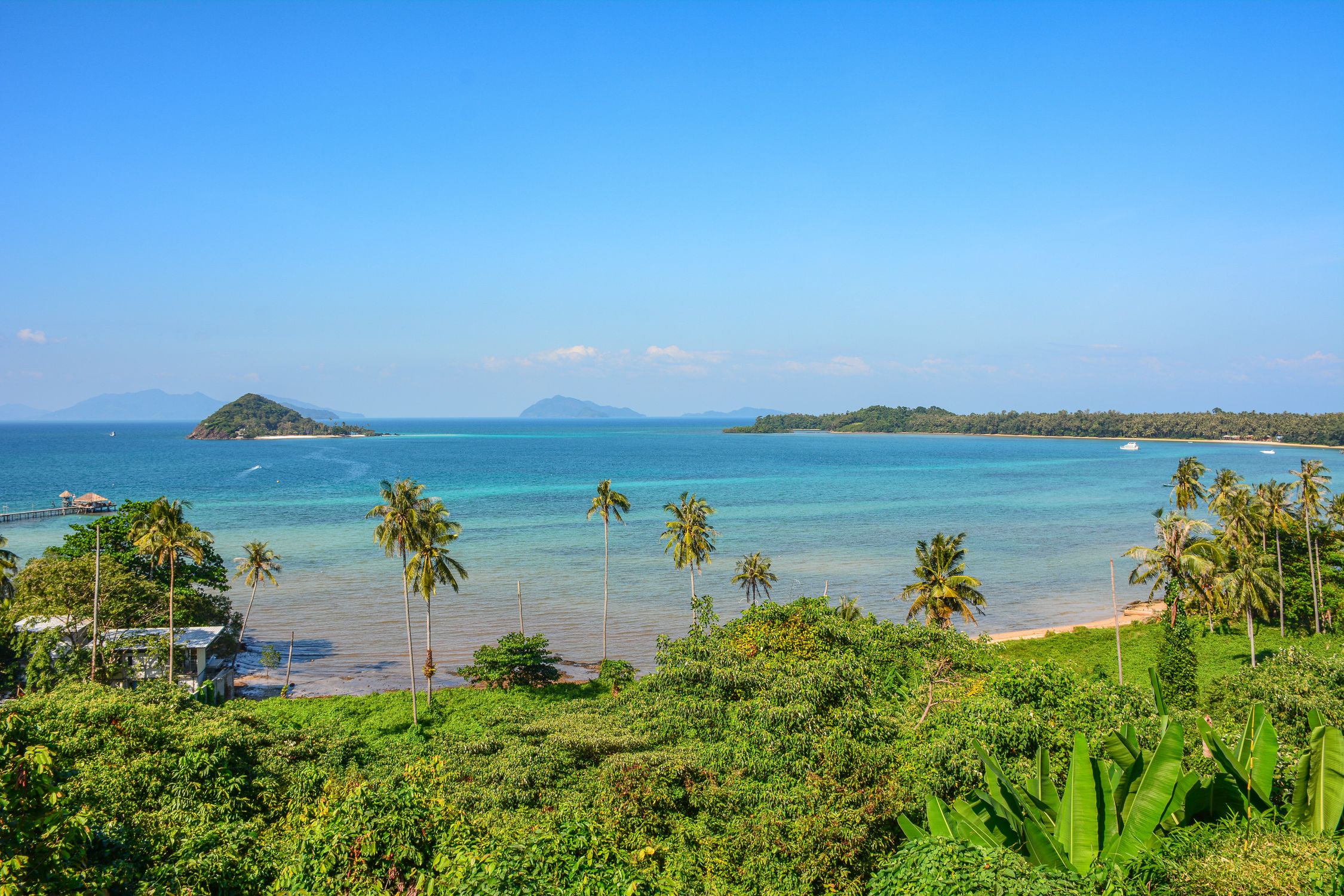
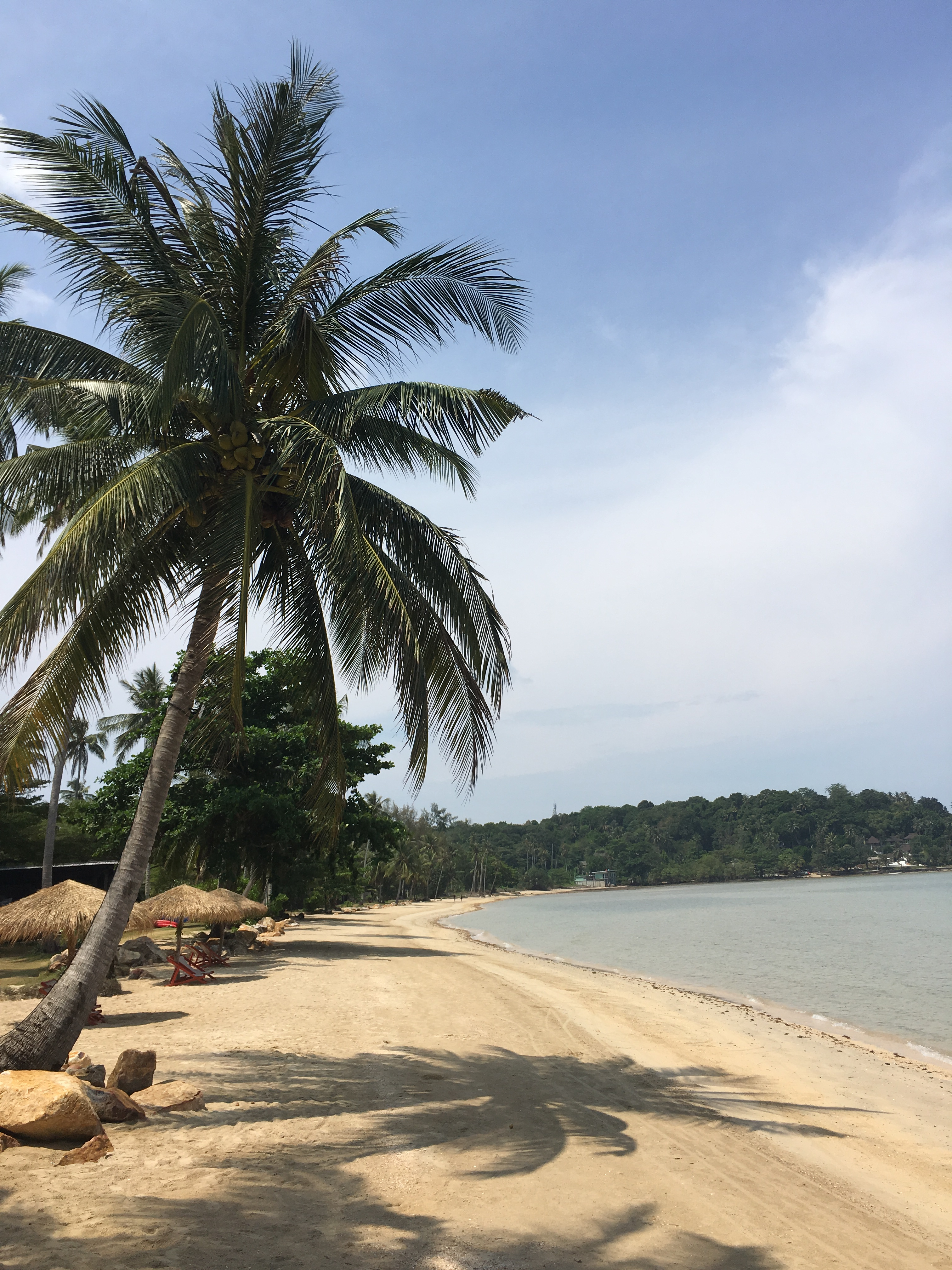
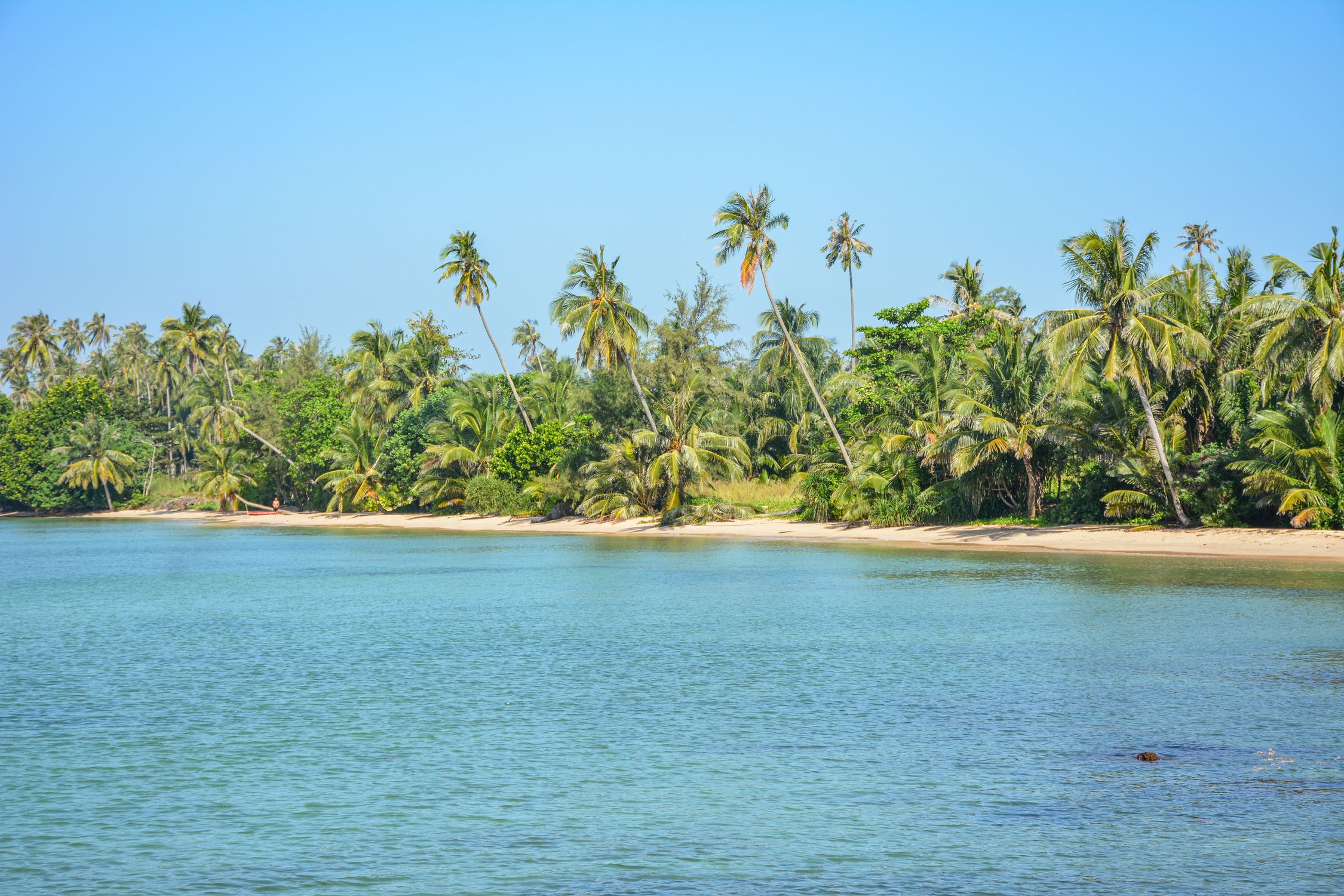
Koh Mak has two main beaches. Ao Kham, on the southeast, is shallow (waist-deep for 100m), turquoise, and backed by a handful of resorts. Even in December–February, it stays nearly empty — you might see a dozen people midday. Ao Suan Yai on the southwest is longer and rockier at its edges, with a few more resorts and marginally more activity. Neither beach has a bar scene; Ao Kham has a restaurant that serves lunch and dinner but stops taking orders at 9pm.
The trade-off is direct: Koh Chang offers choice and company; Koh Mak offers vacancy. If you came to an island to avoid other tourists, Koh Mak delivers that more reliably.
Accommodation: range versus consistency
Koh Chang's accommodation spans the full spectrum. Dorms start at 400 THB per night (White Sand Beach has two hostels). Guesthouses and beach bungalows range 800–2,000 THB. Mid-range resorts (swimming pool, air-con, restaurant) run 2,000–4,000 THB. Boutique properties push 8,000+ THB. If you're flexible on budget, Koh Chang has an option for almost any traveller.
Koh Mak has no hostels and no dorm culture. The cheapest private room is around 800–1,000 THB per night (simple fan bungalow, shared bathroom). Most options cluster in the 1,500–3,000 THB range (fan or air-con, private bathroom, basic but clean). A few higher-end resorts reach 5,000–8,000 THB. The trade-off: consistency and quality, but no budget escape hatch.
Most Koh Mak properties are small (under 30 rooms), owner-managed, and run the same way year-round. You're unlikely to find a dump, but you'll also find less variation in style and service. If you're booking sight unseen, Koh Mak's narrower range means less risk of a bad choice.
Food: variety versus repetition
Koh Chang's White Sand Beach has dozens of restaurants within a 10-minute walk. Thai, Western (pasta, burgers), Russian (common because of the tourist demographic), seafood grilled to order. Prices range 60–150 THB for a pad thai or curry. Mid-range restaurants (prawn satay, crab omelette) run 200–300 THB. Western mains 250–400 THB. Lonely Beach has a similar spread. Even Klong Prao has five or six solid options. Late-night hunger? 7-Eleven sells instant noodles, sandwiches, and coffee until midnight.
Koh Mak has resort restaurants at each property and maybe two standalone beach restaurants. Quality is fine — the fish is fresh, curry paste is house-made. But by the third evening, you've eaten everything on offer. A prawn curry or pad thai costs 150–180 THB. A grilled fish costs 200–250 THB. There's no 7-Eleven, no "let's try somewhere new," no late-night option beyond a bowl of soup if you're lucky.
This is the single most under-reported difference between the two islands. Koh Mak visitors often mention food boredom by day four. Koh Chang visitors never do.
Nightlife: bars versus silence
Koh Chang has a genuine nightlife strip on White Sand Beach. Bars with reggae bands, fire-eating shows, bucket drinks (40–80 THB), and live music until 1–2am. Lonely Beach has a more backpacker-oriented scene with similar hours. Neither island is Koh Phangan; the scene is smaller and less frenetic. But if you want to drink beer, hear live music, and talk to other tourists, it's there.
Koh Mak has no bars, no nightlife, and no exception to this rule. Resorts request that guests keep noise to a minimum after 10pm. If you're the type who reads this as "boring," Koh Mak is not your island. If you read it as "finally," then it probably is.
Getting there: accessibility and schedule
To reach Koh Chang from Bangkok: take a bus or minivan from the Eastern Bus Terminal or Ekamai (2.5–3 hours, 150–250 THB) to Laem Ngop pier, then a 30–45 minute ferry (50–100 THB). Total time: 5.5–7 hours. Ferries run five to seven times daily year-round. This is the standard route and highly reliable.
To reach Koh Mak from Bangkok: the same bus journey to Laem Ngop, then a 1-hour speedboat (200–300 THB). Total time: 6.5–8 hours. Speedboats run once or twice daily in high season (November–February), sometimes once daily in low season. Service is less frequent than Koh Chang and can be cancelled in rough seas.
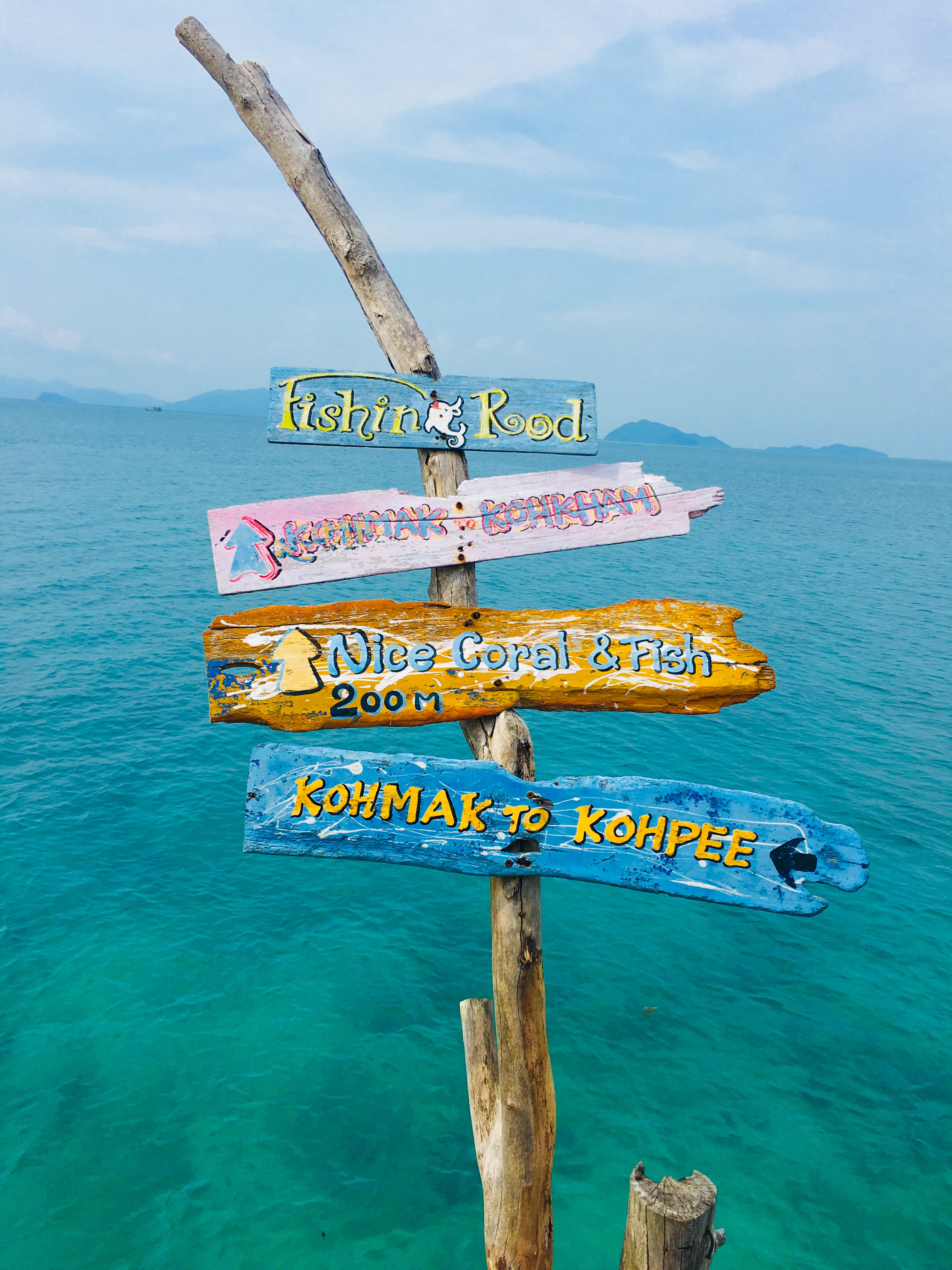
The practical advantage: you can island-hop. A speedboat runs between Koh Chang and Koh Mak most days in high season (40–60 minutes, 300–500 THB per person). The common pattern is three to four nights on Koh Chang, then two to three nights on Koh Mak, taking the boat between them. This works well because Koh Chang's infrastructure lets you pre-book the Koh Mak speedboat, whereas doing it the other way around is harder.
Cost: budget range and baseline
Koh Chang can be done cheaply. A backpacker staying in a dorm (400–600 THB), eating street food and noodle shops (60–100 THB per meal), and skipping activities might spend 1,200–1,500 THB per day. Mid-range travellers (private bungalow, restaurant meals, some activities) spend 2,000–3,500 THB per day. Comfortable travel with nicer resorts and meals runs 4,000–6,000 THB per day.
Koh Mak has a higher baseline. There are no dorms. A basic private bungalow costs 800–1,000 THB. Meals at resort restaurants are 150–250 THB (higher than Koh Chang's street food). There's less price competition because there are fewer operators. A realistic budget for Koh Mak: 2,000–2,500 THB per day (basic, no extras), 3,000–5,000 THB per day (comfortable), 6,000+ THB per day (upmarket resort).
Koh Mak is expensive because remoteness and limited supply drive up prices. This isn't a flaw; it's the cost of isolation.
Who picks which island
Choose Koh Chang if: you're visiting Thailand for the first time, you're travelling with family and need pharmacies and medical backup, you want to mix beach time with nightlife options, you're on a tight budget, you want to book activities (diving, snorkelling) without pre-planning, you need to find money at 3am.
Choose Koh Mak if: you've been to Thailand before and want something different, you're travelling as a couple and value silence and company over options, your ideal day involves reading in a hammock and not being approached about boat tours, you want nearly empty beaches in high season, you're willing to pay more for fewer people.
Can you do both? Yes, and it's the most common pattern. A typical itinerary: fly to Bangkok, take a bus to Koh Chang, stay three to four nights, take the speedboat to Koh Mak, stay two to three nights, return to Koh Chang or straight to Laem Ngop pier. This combination works because Koh Chang's services let you sort out any problems, and Koh Mak's smallness rewards a short stay (by day four, you've cycled everywhere and eaten every meal).
Direct verdict: Choose Koh Chang if you value access, variety, and company — it's a working island with infrastructure. Choose Koh Mak if you value emptiness and simplicity — it's a resort, not a destination. Koh Chang suits first-timers and budget travellers; Koh Mak suits couples and repeat visitors who've already done the standard Thailand circuit. Neither choice is wrong; they serve different purposes.
Frequently Asked Questions
Is Koh Mak really quieter than Koh Chang?
Yes, consistently. Koh Chang's White Sand Beach and Lonely Beach have dozens of tourists and daily activities; Ao Kham on Koh Mak often feels empty even in peak season (December–January). The difference is structural, not seasonal — Koh Mak has fewer beds, no nightlife, and limited food options, so fewer people have reason to stay.
Which is better for couples?
Koh Mak, if you want isolation and uninterrupted time together. Koh Chang, if you want the option to go out, meet other people, or do activities without pre-planning. A couple on a tight schedule usually chooses Koh Chang; a couple with a week and a preference for quiet chooses Koh Mak.
Can you visit both islands in one trip?
Yes, and it's common. Take a bus from Bangkok to Koh Chang (5.5–7 hours), stay three to four nights, then speedboat to Koh Mak (40–60 minutes, 300–500 THB), stay two to three nights, and return. Speedboats run most days in high season but check schedules before arriving on Koh Chang.
What month is best to visit either island?
November–February for both. Weather is dry, seas are calm, and ferries run reliably. March–May is hot and crowded; June–October is rainy and rough seas can cancel ferries, especially the less frequent Koh Mak service. December–January peak season means more people on Koh Chang but still minimal crowds on Koh Mak.
Do you need to book accommodation in advance?
On Koh Chang, no — White Sand Beach has dozens of properties and you can walk in. On Koh Mak, yes. It has fewer than 20 small resorts and in peak season (December–January) they fill by mid-afternoon. Book at least two weeks ahead for December–January; one week ahead for other months.
What's the biggest mistake people make choosing between these islands?
Thinking Koh Mak is "Koh Chang but quieter." It's not. It's fundamentally smaller, more remote, and more limited. A traveller expecting the same food variety, nightlife options, and beach activity will be disappointed. Koh Mak demands that you want what it is, not that you want Koh Chang with fewer people.