Thessaloniki is the city Greeks from Athens recommend when you tell them you're going to Greece. It has better food, a more vibrant street culture, and a Byzantine history as deep as Athens' ancient one. It's also consistently underbooked by international visitors — which makes it one of the better-value cities in the country. Most visitors treat it as a side trip. It deserves to be the main event.
Thessaloniki vs. Athens: What's actually different
| Category | Thessaloniki | Athens |
|---|---|---|
| Best for | Food, Byzantine history, walkable ease | Ancient ruins, nightlife scale, museums |
| Vibe | Neighbourhood-driven, student energy | Tourist circuits, hill chaos |
| Main draw | Street food, waterfront walks, local bars | Acropolis, Parthenon, classical sites |
| Byzantine culture | Churches, mosaics, Ottoman layers | Minimal pre-Ottoman presence |
| Daily cost (mid-range) | €50–70 | €70–100 |
| Peak crowds | August | July–August, Easter |
| Best months | May, October | April–May, September–October |
| Recommended stay | 2–3 days | 3–4 days |
Thessaloniki has 1.1 million people in the metro area — Greece's second city after Athens — but feels less exhausted by tourism. You can walk the entire historic core in three hours. The waterfront runs uninterrupted for 6km, not chopped up by shipping ports or industrial zones. The food isn't positioned for tourists; it's food that feeds the city.
What Thessaloniki actually is
Founded in 315 BCE by Cassander, a Macedonian general, and named after his wife (half-sister of Alexander the Great), Thessaloniki was a Roman port city, then the capital of Byzantine Macedonia until 1430, then under Ottoman rule for 483 years until 1913. This layered history is why walking here feels different from Athens. A 15th-century Ottoman minaret stands next to a 4th-century Byzantine church. A Sephardic synagogue sits two blocks from an Art Nouveau mansion from the 1900s.
The city's Jewish history is essential to understanding it — and nearly invisible now. Sephardic Jews made up 50% of the population before 1943; around 55,000 people lived here, one of the largest Sephardic communities in Europe. Almost all were deported and killed in the Holocaust. A memorial plaza and Jewish Museum remain; the absence is the point.
The result is a city without Athens' archaeological weight but with something more complex: proof that empires layered on top of each other. You see it in the architecture, the street names (some still in Ottoman Turkish), the food.
The White Tower and the waterfront
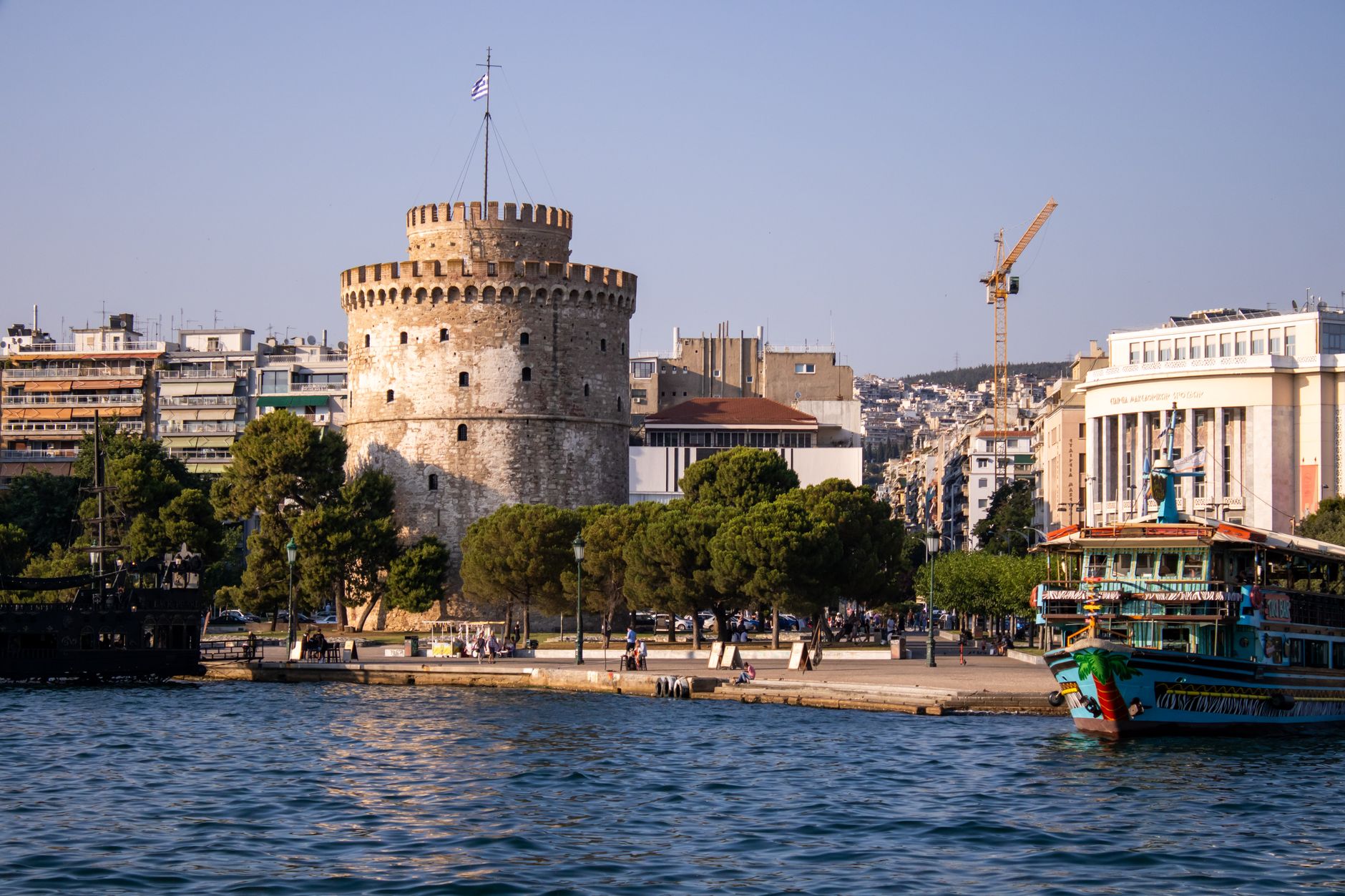
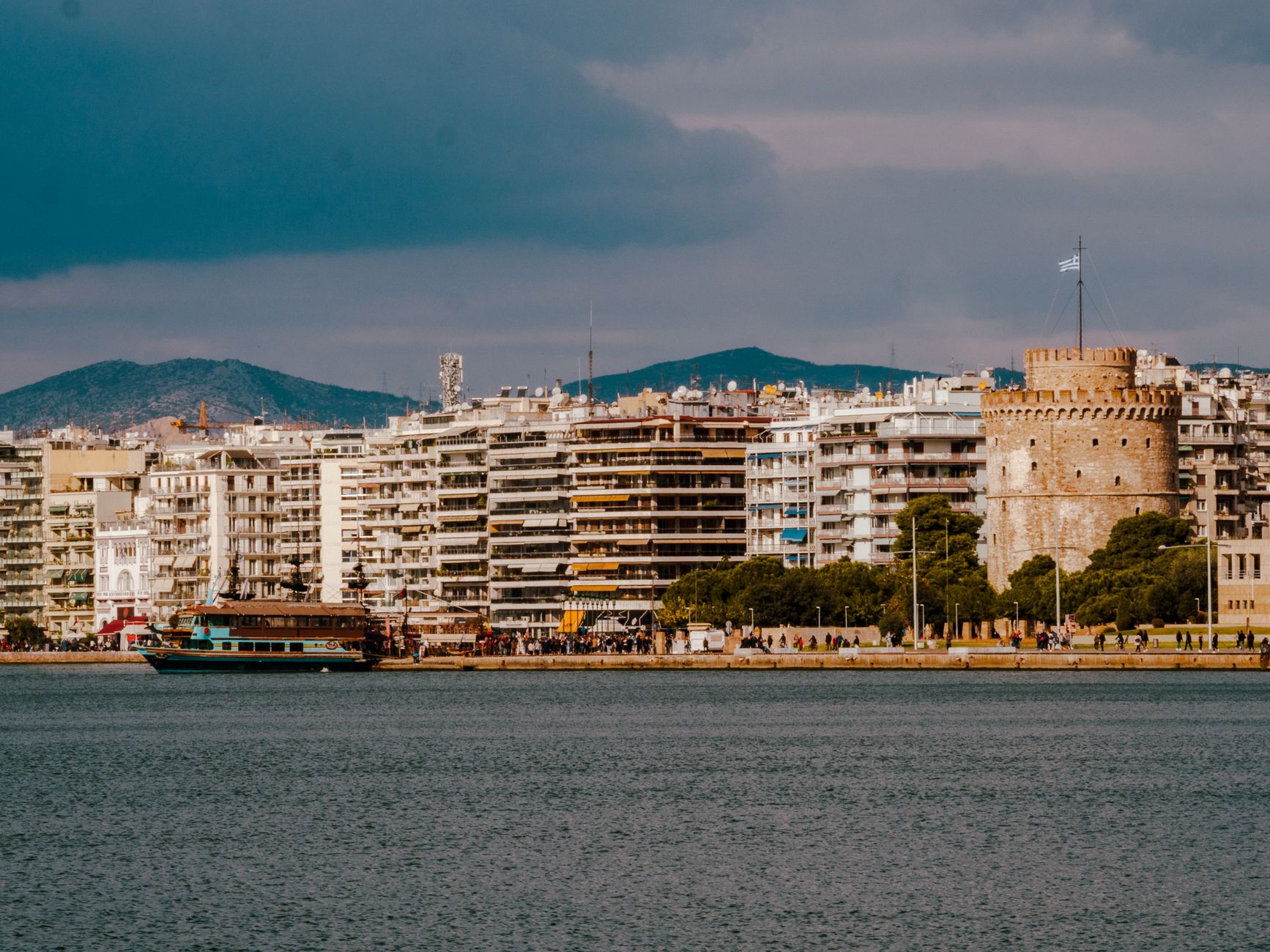
The White Tower anchors the waterfront. This 15th-century Ottoman tower — originally part of the city's defensive walls — is now the visual symbol of Thessaloniki, painted cream-white and converted into a Byzantine museum. Entry is €4. You can walk around it and understand the city's fortification in 15 minutes, or spend 45 minutes inside looking at Byzantine mosaics, coins, and religious vestments. Most visitors skip the interior; it's not essential.
The waterfront itself is the point. Walk east from the tower for 2km to the Arch of Galerius — a triumphal arch built around 300 CE by Roman Emperor Galerius. It marks the old Via Egnatia, the Roman highway that connected Rome to the eastern provinces. The arch is free to walk around; it's smaller than you'd expect but photogenic at late afternoon.
Next to the arch is the Rotunda, a circular temple Galerius built for himself. It's now a museum (free entry) with 4th-century mosaics still visible on the dome — gold and blue tesserae showing geometric patterns and possibly Christian imagery (the dating is debated). It's the sort of place that clarifies how porous the boundaries were between Roman pagan and early Christian art. Spend 20 minutes here.
Continue east to Yedi Kule, the Ottoman fortress at the eastern end of the city walls. Entry is free. You'll see almost no tourists. The views of the city and the Thermaic Gulf are unobstructed. This is where locals come on weekend afternoons, not a scheduled stop. Go at 5 p.m. for the light.
The Archaeological Museum and the Derveni Krater
The Archaeological Museum of Thessaloniki (€10 entry) is the second reason to come here instead of skipping to Crete or Delphi. This museum rivals Athens for Macedonian-period artefacts — the kingdom that produced Alexander the Great. Most of the best pieces from the royal tombs at Vergina are here, not in Athens.
The centerpiece is the Derveni Krater, a bronze vessel from around 330 BCE covered in mythological scenes in high relief. It's one of the finest ancient Greek metalwork pieces in existence — probably a wine mixer for a Macedonian noble. Looking at it in person clarifies why ancient Greek bronzework mattered: the precision, the narrative density, the understanding of how metal moves under hammer and chisel. Photographs don't convey the scale (it's taller than a human torso) or the three-dimensionality.
The museum is not large. Two hours is sufficient. The collection emphasizes the Macedonian court and the Hellenistic period after Alexander. If you're interested in how Greek culture moved east after the conquests, this is the place to see the material evidence.
Ano Poli: the old city and the walls
Ano Poli — literally "Upper City" — is the neighbourhood above the modern waterfront, still enclosed by Byzantine walls. This is where Thessaloniki lived for 500 years before the city expanded downhill in the 19th century. Now it's a warren of narrow streets, traditional stone houses with courtyards, and views across the city to the bay.
There's no single "sight" here. The point is the atmosphere and the unscripted urban texture. Start at the Yedi Kule fortress and walk west along the inside of the walls. You'll pass the Eptapyrgion (Seven Towers), another fortress from the 15th century, now a state of picturesque ruin but accessible and free. Continue for 90 minutes and you've seen most of the wall circuit. Pause in the small tavernas that serve lunch to locals, not tourists. A grilled chicken with village salad and wine costs €12.
The Vlatadon Monastery, one of the oldest in the city (14th century), is accessible inside Ano Poli. Entry is free if the gates are open (they sometimes aren't). The church has Byzantine mosaics and a courtyard with views to the gulf.
Plan two hours minimum for Ano Poli, more if you stop for food or drinks.
Food: why Greeks say Thessaloniki is the capital
Four things anchor Thessaloniki's food reputation:
Bougatsa. A custard-filled phyllo pastry, served warm from specialist shops. This is breakfast ritual, not a tourist meal — locals queue at 7 a.m. for the first batch. Bougatsa Bantis (on Aristotelous Street, near the waterfront) has been operating since 1970 and sells nothing else. A portion costs €2.50. The pastry should be crisp on the outside and the custard still steaming inside. This is the single meal that explains the food reputation.
Koulouri. Sesame-crusted bread rings sold from street carts throughout the city (€0.80). The Thessaloniki version is thicker and chewier than what you'll find in Athens — more Balkan influence. Buy one in the morning from a cart near Modiano Market.
The fish market and grilled seafood. Modiano Market (built 1922, iron and glass structure) is still a functioning market, not a tourist food court. The fish stalls sell daily catch from the Thermaic Gulf. Walk through early morning (6–8 a.m.) to see the trading. In the evening, the tavernas along Olimpou Street (one block north of the waterfront) grill fish by weight — typically €18–25 per kilo for seasonal white fish or red mullet. Order whole fish, grilled plain with lemon and olive oil.
Grilled meat and Balkan influence. Thessaloniki's proximity to the Balkans shapes the meat culture. Soutzoukakia (elongated meatballs spiced with cumin and cayenne, served in tomato sauce) appear everywhere. Pastourma (cured, spiced meat) is more common here than in Athens. Souvlaki shops like Ouzeri to Trigono (Ladadika neighbourhood) serve meat cooked over charcoal. A lamb souvlaki with pita costs €6.
Ladadika neighbourhood — the old merchant quarter of converted warehouses — is the evening gathering point. The streets are lined with tavernas, bars, and ouzeries. The food is adequate, the atmosphere is the draw: narrow pedestrian streets, late dining (locals eat at 10 p.m.), a mix of students and families. This is where the city's social life concentrates. Eat here twice if you have two days.
Getting to Thessaloniki
From Athens: Three options. The train (Hellenic Railways, about 5.5 hours, €20–40 for intercity) departs from Larissa Station and arrives at Thessaloniki Central Station, which is 1.5km north of the waterfront. The bus (KTEL intercity bus, 5.5 hours, €35) leaves from the Liosion terminal and arrives at the intercity bus station north of the city. A domestic flight (Olympic Air or Aegean Air, 45 minutes, €60–120) takes you to Thessaloniki Airport (SKG), 15km south of the city. Book flights at least two weeks ahead for better prices. The train is slowest but most reliable. The bus is cheapest and arrives centrally.
From the airport: Bus 78X (€2, runs every 30 minutes) takes 45 minutes to reach the city centre (stops at Aristotelous Square). A taxi costs around €25 and takes 20 minutes depending on traffic.
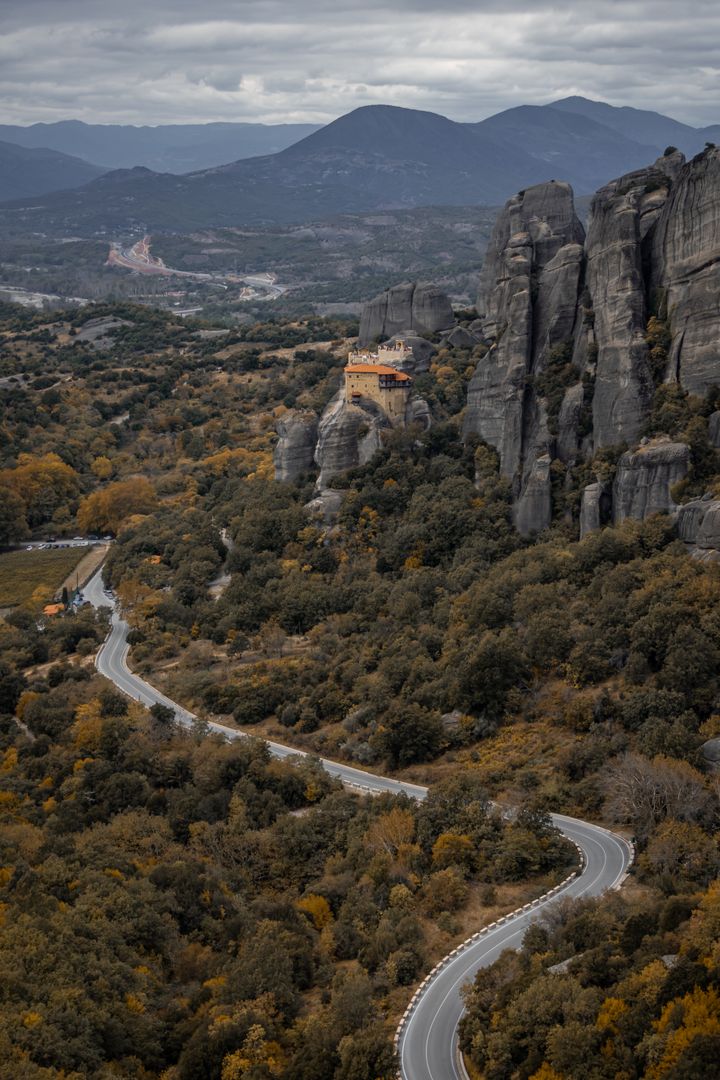
Longer stays: If you're staying three days or more, consider basing yourself in Thessaloniki and taking day trips — the Meteora monasteries are three hours north, Mount Olympus and Dion archaeological site are 90 minutes south.
Two days: the itinerary
Day 1: Waterfront and museums
Start at the White Tower (€4, or free if you just walk around the exterior). Walk the waterfront east to the Arch of Galerius and the Rotunda (free). Lunch in Modiano Market (€10–15 for grilled fish) — arrive by 1 p.m. before the market traffic peaks.
Afternoon: Archaeological Museum (€10, book tickets online to avoid queues). Two hours is sufficient. Late afternoon, walk or taxi to Ladadika neighbourhood and explore the narrow streets. Dinner at a taverna here (€18–28 for a full meal with wine).
Day 2: Upper city and Byzantine culture
Morning: Take a taxi to Yedi Kule fortress (free, excellent views). Walk west along the inside of the walls for 90 minutes, passing the Eptapyrgion. Stop for lunch at a small taverna in Ano Poli (€12–15).
Afternoon: Either the Museum of Byzantine Culture (€8, one hour) or the Jewish Museum (€5, 45 minutes). Both are small but essential if you want the full historical context. The Jewish Museum especially clarifies the city's pre-1943 character.
Evening: Drinks and dinner in Bit Bazaar neighbourhood (east of the city centre, a cooler evening district with craft beer bars and younger crowd). Or return to Ladadika if you prefer the more established atmosphere.
When to visit
May and October are optimal: temperatures 22–26°C, low crowds, waterfront walks are comfortable. July and August are hot (32°C+) but the city doesn't empty like Athens — locals remain, shops stay open late, the street food culture continues. December brings Christmas lights and the International Thessaloniki Film Festival (November), a major cultural event that fills hotels early.
Avoid August if you dislike heat and don't want to compete for restaurant tables. Winter (November–February) is mild but grey; the city is less appealing without sun on the waterfront.
Frequently Asked Questions
Is Thessaloniki worth visiting instead of Athens?
Yes, if you care about food, street-level atmosphere, or Byzantine history. Athens has the Acropolis; Thessaloniki has better neighbourhoods, cheaper meals, and less tourist fatigue. The two cities serve different purposes — not rivals. Many visitors do both.
What's the best meal to eat in Thessaloniki?
Bougatsa at Bougatsa Bantis for breakfast (€2.50), grilled fish by weight at a taverna near Modiano Market for dinner (€18–25 per kilo). The bougatsa is the signature experience.
Can you see Thessaloniki in one day?
Technically yes — White Tower, Arch of Galerius, Rotunda, Ladadika, all in six hours. But the city deserves two days to include Ano Poli, the museums, and the evening neighbourhood crawl that defines local life.
How far is Thessaloniki from the beaches?
The Thermaic Gulf is directly south, but the city beaches (Kalamaria, Peraia) are unremarkable and crowded in summer. Better beaches are 45 minutes south at Nea Moudania or two hours north on the Pelion peninsula. Don't come to Thessaloniki for the beach — come for the city.
What's the difference between Thessaloniki and Santorini?
Thessaloniki is urban, walkable, food-focused, and historically layered. Santorini is resort-based, island pace, sunset tourism, and Cycladic blue-and-white aesthetics. They serve opposite travel needs. Choose Thessaloniki if you want to walk and eat; choose Santorini if you want scenic calm.
Do you need a guide in Thessaloniki?
No. The city is compact, street signs are in Greek and English, and locals are helpful. Hire a guide only if you want deep Byzantine or Ottoman history context — otherwise, wander.
Thessaloniki belongs on a Greece itinerary before or after Athens, not instead of it. Go for two days if you have five days in the country; go for three if you have eight. Base yourself here if you value local food culture and walkable neighbourhoods over archaeological blockbusters. The bougatsa at sunrise, grilled fish at dinner, and a late-night drink in Ladadika explain why Greeks who've left the city talk about it with something like homesickness. You'll understand why after the first meal.