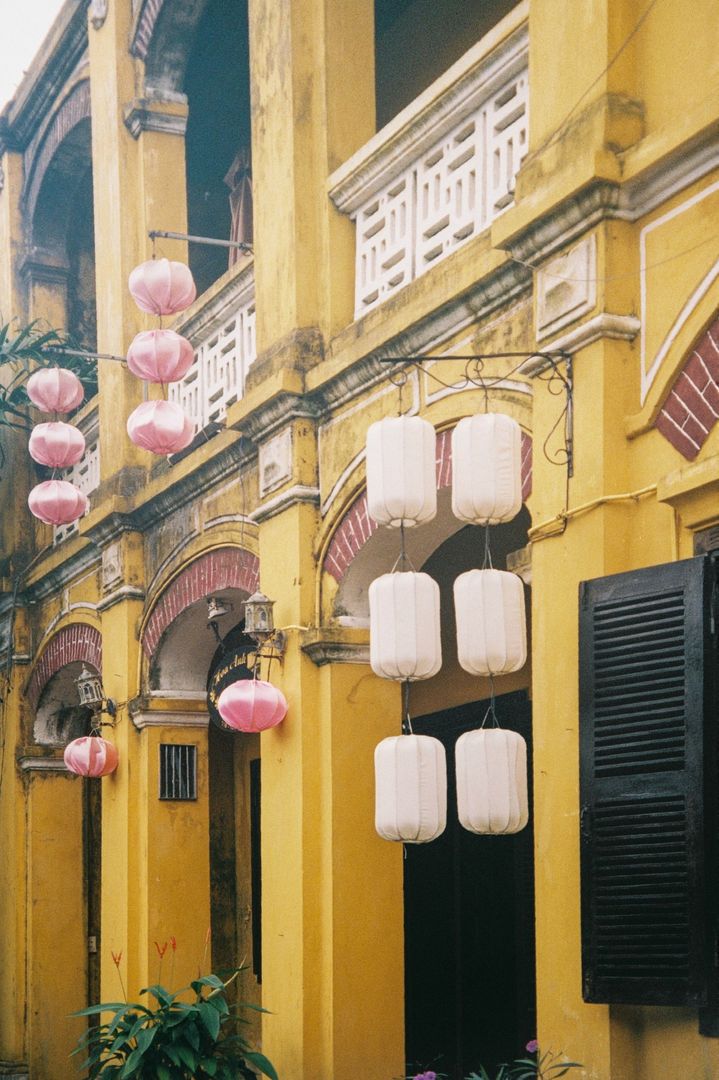

Hoi An was a major Southeast Asian trading port from the 15th to the 19th century. Japanese, Chinese, Dutch, and Portuguese merchants all maintained warehouses and residences here, which explains why the architecture of the Ancient Town looks the way it does — a dense mix of Japanese-style merchant houses, Chinese assembly halls, and French colonial buildings compressed into a few square kilometres that floods regularly and has been designated a UNESCO World Heritage Site since 1999. The designation brought attention. The attention brought tailors, restaurants, and lanterns. Hoi An is now one of Vietnam's most photographed destinations, and the experience of walking through the Ancient Town in July feels correspondingly crowded. The town works better in the shoulder months or with early mornings.
The Ancient Town: What's Actually There
The Ancient Town covers about 30 square kilometres on the south bank of the Thu Bon River. Most of the significant buildings are within a walkable core of roughly 1km². Entry to the main historic sites requires a combined ticket (₫120,000, around €4.50) that gives access to five attractions from a list of 21 — you choose which five. The Japanese Covered Bridge, which dates to the 16th century and connects the Japanese quarter to the Chinese one, is included in most people's selection and is the most photographed single structure in the town. The Chinese assembly halls (Cantonese, Fujian, Chaozhou) are less visited and often more interesting — functional religious buildings still in active use.
The merchant houses are the core of the UNESCO designation: the Tan Ky house and the Phung Hung house give the clearest sense of how wealthy trading families lived here in the 18th and 19th centuries. Both are privately owned and still partially inhabited by descendants of the original families, which adds something.
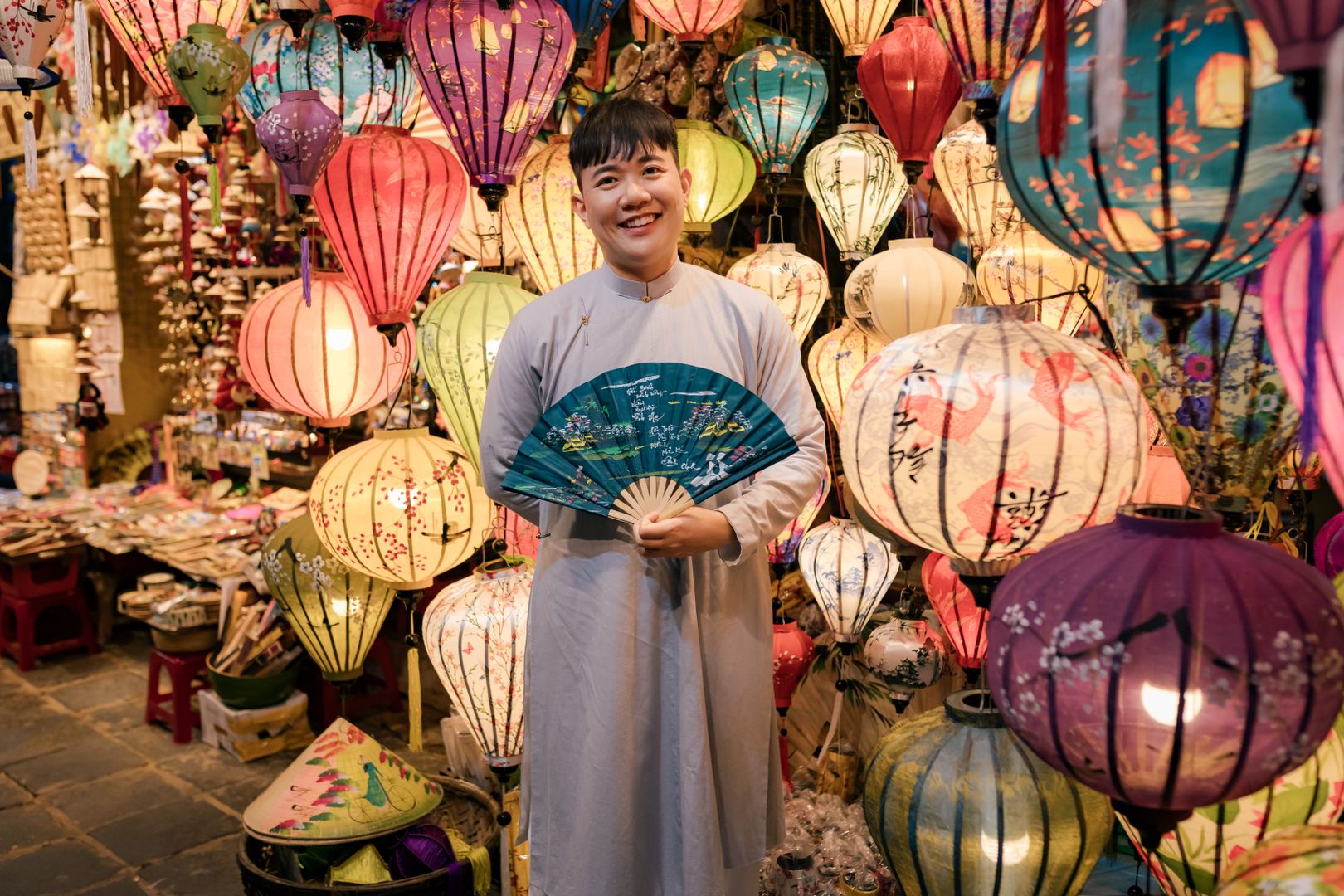
Outside the ticketed sites, the streets themselves are the main attraction — the scale and density of preserved buildings is genuinely unusual for Southeast Asia. The streets are pedestrianised in the evenings, which improves the atmosphere but concentrates the lantern shops and tourist restaurants.
The Tailors: How It Works
Hoi An has around 400 tailoring shops. The quality range is enormous and the 24-hour turnaround suits exist primarily to generate Instagram content rather than wearable clothing. For anything that fits properly, allow 3–4 days minimum: one day for measurements and fabric selection, one day for the first fitting, one day for adjustments, and a day to collect. Suits, dresses, and ao dai (Vietnamese traditional dress) are the most common commissions.
Price varies by shop and fabric. A basic suit from a mid-range tailor using local fabric runs €80–150; international fabric (wool, linen) adds €50–100. Yaly Couture, A Dong Silk, and Bebe Tailor are frequently mentioned by return visitors for consistency. Avoid shops that pressure you to decide same-day or promise next-morning delivery for complex garments. Take a photo of anything you commission before leaving the shop, and check the fit at every stage.
Beaches Near Hoi An

An Bang Beach is 4km from the Ancient Town and the closest beach with a functioning strip of restaurants and sun loungers. The water is warm and generally calm from March through August; surf picks up from September onward. Cua Dai, slightly closer to town, is more developed with resort hotels and has experienced significant sand erosion since 2014. An Bang is the better option for a day at the beach.
My Khe Beach in Da Nang, 30km north, is the longest and most consistent beach in the area — 30km of sand with a strong wave pattern that makes it popular for surfing from October through February. Da Nang is 45 minutes from Hoi An by taxi or motorbike and is worth a day trip for the beach and the marble mountains.
When to Visit Hoi An
February through April is the driest and most reliably pleasant period — temperatures 22–30°C, low humidity, minimal rain. The Lunar New Year (Tết) in late January or February brings a busy week but also the most elaborate lantern displays of the year.
The rainy season runs October through December, with October and November seeing the heaviest rainfall — 400–600mm in November. Flooding in the Ancient Town is an annual event in October–November; the town manages it (wooden boards across thresholds, boat transport on the worst days) but it limits access to ground-floor sites. July and August are hot (34–36°C) with humidity; the beaches are at their best for swimming but the Ancient Town is exhausting to walk midday.
The full-moon lantern festival on the 14th of every lunar month, when the streets are lit by lanterns and motorbikes are banned for the evening, happens monthly and is worth planning around if your dates are flexible.
Getting to Hoi An
Hoi An has no airport. The nearest is Da Nang (DAD), 30km north, which has direct flights from most major Southeast Asian hubs including Singapore, Bangkok, Kuala Lumpur, and Hong Kong. A taxi from Da Nang airport to Hoi An costs around €12–18 and takes 45 minutes; Grab (the regional Uber equivalent) is cheaper at €8–12. There is no direct public bus from the airport to Hoi An; the buses from Da Nang city centre run hourly and cost ₫50,000 (€2).
From Hanoi, overnight trains to Da Nang take 15–16 hours and cost €15–40 depending on class; from Ho Chi Minh City, 18–19 hours. Flying is typically cheaper and faster for long distances.
Costs and Practical Notes
Hoi An is more expensive than most Vietnamese cities but less so than Hanoi or Ho Chi Minh City for accommodation. A good guesthouse runs €20–40 per night; boutique hotels with pools run €60–100. Restaurant prices in the Ancient Town are 30–50% higher than in Hanoi for equivalent food — budget ₫150,000–250,000 (€5.50–9.50) for a main course at a sit-down restaurant in the centre.
The best-value food is at the night market near the central market — fresh seafood sold by weight, grilled on the spot — and at the morning market (Chợ Hội An) on Trần Phú Street, which opens at 6am and is primarily for locals buying produce. White Rose dumplings (bánh bao vac) and Cao Lầu noodles are the two dishes specific to Hoi An; both are made with local water and are difficult to replicate elsewhere, which is partly marketing and partly true.